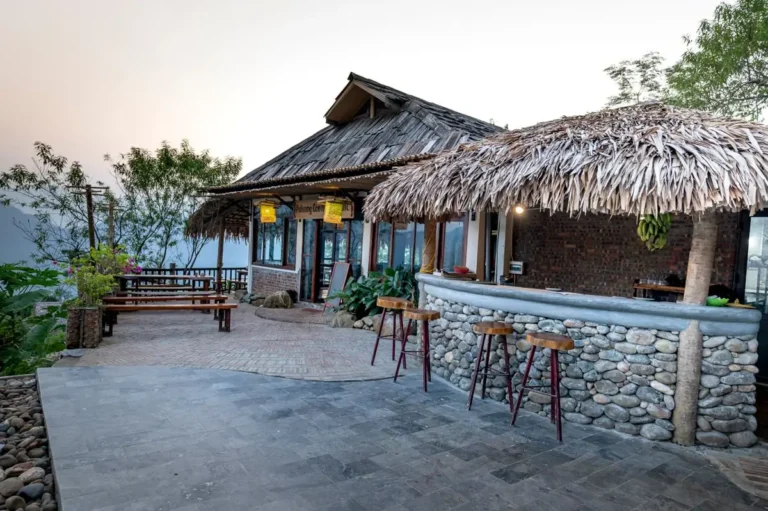
For outdoor commercial areas — hotel pool decks, rooftop terraces, retail plazas, restaurant patios and school courtyards — 20 mm porcelain pavers are the right specification when the project needs consistent slip performance, near-zero water absorption, repeatable batches and light weight on pedestals or suspended slabs; natural stone is the right specification when the design depends on the depth and variation of a real material, the substrate can carry 30 mm slabs, and the operator accepts sealing and batch approval as part of the package. Porcelain pavers absorb less than 0.5% water, are supplied with a tested slip rating and arrive in matched production lots; granite absorbs up to 0.4%, but sandstone and limestone can absorb 3–8%, and every stone order is a quarry lot that must be approved before it is cut. On most commercial projects sourced from China the decision is settled by three things: the slip rating the local code demands, the load the structure can take, and how many phases the project will be delivered in. FBM Sourcing is your sourcing partner in China: it holds no inventory and has no product range of its own.
What Is the Physical Difference Between a Porcelain Paver and a Stone Slab?
A porcelain paver is a fully vitrified ceramic body pressed at high pressure and fired above 1,200°C, then made 20 mm thick (against 8–10 mm for a standard floor tile) so it can be laid loose on pedestals, in gravel or on sand as well as bonded on a mortar bed. Its properties are set by the factory recipe and are the same in every carton of a production run. A natural stone slab is cut from a quarry block, calibrated to thickness and given a surface finish (flamed, bush-hammered, sandblasted, honed); its properties are set by geology, and they vary from block to block and sometimes within one block.
- Water absorption: porcelain pavers ≤0.5% (ISO 13006 / EN 14411 group BIa; ASTM C373 “impervious”). Granite ≤0.4% (ASTM C615). Marble typically 0.2–0.7%. Sandstone and limestone commonly 3–8%, some higher.
- Thickness and weight: 20 mm porcelain ≈ 44–48 kg/m². 30 mm granite ≈ 80–85 kg/m². 40 mm flamed granite for vehicular or heavy pedestrian traffic ≈ 108–112 kg/m².
- Breaking strength: 20 mm porcelain pavers are typically tested to EN ISO 10545-4 with a centre-point breaking load above 10,000 N; stone flexural strength is reported to ASTM C880 or EN 12372 and depends on the stone (granite ≥8.27 MPa under ASTM C615, sandstone and limestone lower).
- Frost resistance: porcelain pavers pass EN ISO 10545-12 freeze–thaw cycling as a matter of course; stone with open pores must be tested to EN 12371 or ASTM C666 if the site freezes.
- Slip resistance: both can be supplied to a target rating, but porcelain is manufactured to it and stone is finished to it — a flamed granite loses part of its texture within a few years of foot traffic; a structured porcelain surface does not.
Those numbers explain most of the practical differences that follow: the paver that absorbs almost nothing does not stain, does not grow algae in the body of the material and does not need sealing; the slab that absorbs 5% needs a penetrating sealer, periodic re-application and a maintenance plan the operator has to keep.
Which Slip Rating Does an Outdoor Commercial Area Actually Need?
Slip resistance is the specification item that most often decides an outdoor paving package, because it is the one the certifier or the insurer will check. The requirement is set by the destination country, and it is different in each of FBM Sourcing’s main markets.
United States: DCOF under ANSI A326.3
ANSI A326.3 sets product-use categories rather than a single number: Interior Wet requires DCOF ≥0.42; Exterior Wet requires ≥0.55; the Exterior Wet Plus category, which covers pool decks, ramps and areas that stay wet, requires ≥0.60. A porcelain paver intended for a hotel pool deck therefore needs a test result at 0.60 or above, not the 0.42 that most importers remember, and the result must be for the exact surface finish being ordered, because a smooth and a structured version of the same design will test differently.
Australia: P ratings under AS 4586
Australian projects specify pendulum P classifications under AS 4586, with the recommended class for each location set out in Standards Australia HB 198. External pavements and pool surrounds are typically P4; external ramps steeper than 1:14 and swimming-pool ramps are P5. Chinese factories can supply P4 and P5 porcelain pavers, but the rating must come from a wet pendulum test on the finished product, not from a DCOF result converted by assumption. We covered how R ratings, P ratings and DCOF relate in our guide to slip resistance ratings on commercial tiles from China.
UK and Europe: pendulum PTV and R classes
UK projects use the pendulum test to BS 7976 (or EN 16165) and treat a wet PTV of 36 or higher as low slip potential; many European specifications still call up DIN 51130 ramp classes, with R11 the common minimum for exterior walkways and R11 with a displacement volume class for pool surrounds. External natural stone paving in Europe is covered by EN 1341, which reports slip as an unpolished slip resistance value (USRV) using the same pendulum principle.
The important point for a project team is that porcelain pavers ship with a factory test report for the specific finish, whereas stone slip performance depends on the finish applied to that lot. If the certifier wants a document, porcelain gives you one that will still be true in five years; stone gives you one that describes the surface on the day it was tested.
Weight, Substrate and Installation Method: Where Porcelain Pavers Win
Outdoor commercial areas are increasingly on structure: rooftop bars, podium terraces over car parks, pool decks above plant rooms. On any suspended slab the paving weight is a structural input, and 20 mm porcelain at 44–48 kg/m² is roughly half the dead load of 30 mm granite. That difference is what allows porcelain to be laid on adjustable pedestals over a waterproof membrane, with open joints that drain straight to the deck, and to be lifted and re-laid for membrane repairs without a saw.
The installation methods available for each material are:
- Pedestal (raised) systems: 20 mm porcelain in 600×600, 600×1200 and 900×900 mm formats is designed for this. Stone can be pedestal-laid but normally needs 30–40 mm thickness and a structural check on each format.
- Loose-laid on gravel or sand: porcelain pavers at 600×600 or 400×800 mm are laid dry on a compacted base with a bedding layer; suitable for landscape paths and low-traffic plazas. Stone flags in 40–60 mm can be laid the same way.
- Bonded on a mortar bed: both materials. Porcelain needs a polymer-modified cementitious adhesive with full-bed coverage; stone needs the same, with a rapid-set or white adhesive on light or translucent stones to avoid picture-framing and staining.
- Vehicular areas: porch drop-offs and service lanes normally go to 40 mm flamed granite or to concrete unit paving; 20 mm porcelain is a pedestrian product and should not be specified under vehicle loads unless bonded on a designed slab.
Format is worth deciding early. A 600×1200 porcelain paver on pedestals gives fewer joints and a calmer look, but a single 20 mm unit at that size weighs about 33 kg, and pedestal spacing, edge support and wind uplift on high roofs all have to be designed for it. Stone in the same format at 30 mm is 60 kg per piece and is a two-person lift.
Sourcing this for a commercial project?
FBM Sourcing works with project owners, developers, main contractors and FF&E contractors on hotel, apartment, school, office and other commercial building projects. Send us your BOQ, drawings or product list — our team will review it and get back to you.
Where Natural Stone Still Wins on a Commercial Project
Porcelain has closed most of the visual gap, and the better Chinese factories now print stone-look pavers from high-resolution scans with structured surfaces and multiple faces per design. But there are project situations where stone remains the correct answer.
Depth, edge and continuity of material
A flamed granite step with a bullnosed or bush-hammered edge, a solid stone coping on a pool, a kerb or a planter wall cut from the same block as the paving — these are through-body details that porcelain cannot copy, because a porcelain paver is a printed surface on a body of a different colour. Where the design shows exposed edges, thick treads, monolithic benches or copings that meet the paving, stone gives one material throughout; porcelain gives you a mitred edge or a colour-matched profile.
Heritage, civic and landscape contexts
Municipal plazas, university courtyards and civic buildings often have design guidelines or heritage conditions that require natural stone. Chinese granite from Fujian and Shandong — the G6xx series such as G603, G654 and G682 — is a long-established export product for exactly these projects and is available in flamed, bush-hammered and sawn finishes at 30, 40, 50 and 60 mm, with kerbs, setts and steps from the same quarry.
Repair and re-finishing
Stone can be re-flamed, re-honed or ground in place; a scratched or stained porcelain paver is replaced. On a pedestal system replacement is easy; on a bonded pool deck it is not, and an operator who expects to refinish rather than replace will prefer stone.
What natural stone requires in return is discipline in the procurement: block or lot approval before cutting, a control range agreed on physical samples rather than photographs, dry-lay approval of the first pallets, and a sealing and maintenance specification the operator will follow. Our guide to sourcing marble and natural stone from China for project work sets out how batch control and quarry inspection are handled.
Batches, Phasing and Reorders: The Question Most Projects Miss
A commercial outdoor area is rarely paved once. Pool decks are extended, retail plazas are re-tenanted, phase two of a resort is built three years after phase one, and a school courtyard is added to when the next block opens. The two materials behave very differently when you come back for more.
Porcelain is a manufactured product with a shade code and a calibre per production run. A second order will be a different lot, and the factory can be asked to match to a retained reference tile from the first order; because the design is printed from a digital file, colour drift between runs is small and controllable, and a mixed lay of two lots is normally invisible. Natural stone from the same quarry face two years later can be measurably different in tone and veining, and there is no file to print from — the practical answer is to buy attic stock at 10–15% for future patching, or to accept a visible boundary between phases. On phase-two matching generally, see how to match existing finishes on a phase-two order from China.
Wastage should be planned into the first order for both. Straight-lay 600×600 porcelain pavers on pedestals typically carry a 5–7% allowance for cuts and breakage; bonded stone in mixed formats or diagonal patterns runs 10–15%. The reasoning is in our note on tile and stone wastage allowances.
Container Planning: How Much Paving Ships in One Box?
Paving is heavy, so a container of pavers hits its weight limit long before it runs out of space. Working figures we use at quotation stage:
- A 20′ container has a practical payload of about 24–26 tonnes on most trade lanes (road weight limits at the destination often bite before the box’s rated 28 tonnes).
- 20 mm porcelain pavers at ≈46 kg/m² plus pallets and cartons: roughly 480–520 m² per 20′ container.
- 30 mm granite tiles at ≈83 kg/m² plus crating: roughly 260–290 m² per 20′.
- 40 mm granite: roughly 200–220 m² per 20′.
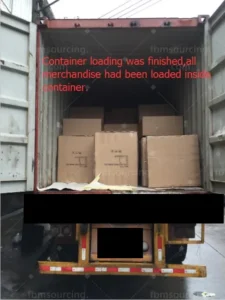
Two consequences follow. First, a 3,000 m² pool and terrace package is six 20′ containers in porcelain and eleven or twelve in granite — that difference is real freight and real handling on site. Second, a heavy paving order almost never fills a 40HQ by weight, so a 40′ box is used only when it is combined with lighter products from the same project. We always ship by full container: where the paving quantity alone is short of a full box, it is consolidated with other categories from the same project (pool furniture, sunshades, sanitary ware, lighting) into one full container rather than sent as loose freight. Weight limits, axle rules and how a mixed container is planned are in our guide to 40ft container loading, CBM and weight limits.
Where Are These Products Made in China, and What Are the Lead Times?
Porcelain pavers for export are concentrated in Foshan (Guangdong), with further capacity in Zibo (Shandong), Gaoan (Jiangxi) and Jinjiang (Fujian). Standard 600×600 and 600×1200 pavers in current designs are often available from factory stock and can be inspected and loaded within 2–3 weeks; made-to-order designs, special formats and matched project lots run 30–45 days from approved sample to ready-to-ship. Natural stone is centred on Shuitou in Nan’an (Fujian) for granite and imported marble, with granite quarries in Fujian and Shandong; cut-to-size paving, steps and copings typically run 30–45 days after block approval, longer for large-format slabs or unusual finishes, and quarry availability of a specific colour has to be confirmed before a programme date is promised.
For both materials the pre-shipment inspection is what protects the site: shade and calibre sorting per pallet, thickness and squareness on a sample per lot, surface finish against the retained reference, packing that will survive a sea voyage and a forklift, and pallet labelling that ties each pallet to a lot number and to a zone on the layout drawing. All inspection is carried out by FBM Sourcing’s own team on the factory floor, with photo and video records delivered before shipment. Where the specification calls for a slip or absorption figure the certifier will rely on, we distinguish between the factory’s own test sheet and a report from an accredited laboratory — see factory test reports vs accredited lab testing.
Porcelain Pavers vs Natural Stone: Decision Table for Project Teams
| Project condition | Better fit | Why |
|---|---|---|
| Roof terrace, podium or pool deck on structure | 20 mm porcelain | Half the dead load; pedestal-ready; lift-and-relay for membrane access |
| Certifier requires a documented slip rating (DCOF ≥0.60 / P4–P5 / PTV ≥36) | Porcelain | Manufactured to a rating; report is valid for the life of the surface |
| Multi-phase delivery, chain rollout, expected reorders | Porcelain | Digital design; lot-to-lot matching is controllable |
| Steps, copings, kerbs and paving in one material | Natural stone (granite) | Through-body material; solid edges and profiles |
| Heritage, civic or landscape design conditions | Natural stone | Often mandated; long export track record for granite |
| Vehicular drop-off or service lane | 40 mm flamed granite | 20 mm porcelain is a pedestrian product |
| Freeze–thaw climate with de-icing salts | Porcelain or dense granite | ≤0.5% absorption; avoid porous sandstone/limestone |
| Coastal or tropical resort with heavy rain and organic growth | Porcelain | No sealing; algae stays on the surface, not in the body |
How FBM Sourcing Handles an Outdoor Paving Package
FBM Sourcing manages the entire China procurement package for overseas construction projects. For an outdoor paving package that means starting from the layout drawing and the certifier’s slip requirement rather than from a catalogue: we confirm the rating and the test method the destination will accept, shortlist factories whose current production can meet it, obtain physical samples in the exact finish, and hold the retained reference against which every pallet is inspected before shipment. Stone lots are approved at block or slab stage before cutting; porcelain lots are shade- and calibre-sorted per pallet.
All quotations, invoices and shipping documents are issued by FBM Sourcing — you deal with us, and we carry the responsibility. For suppliers you nominate, we charge a 5% commission; for products we source for you, we quote a direct price. Paving is planned by weight into full containers together with the other categories from the same project, and pallets are labelled by zone so the site receives them in laying order. As a building material sourcing agent working across the whole package, we also carry the paving decision through to the copings, drains, pool furniture and shading that sit on it, so the surfaces that meet each other are approved together.
Specifying an outdoor area in Australia? The rating you need is a P classification under AS 4586 — see AS 4586 P ratings vs R ratings for Australian projects.
Get a China Procurement Quote for Your Project
If you are specifying pool decks, terraces, plazas or courtyards for a hotel, apartment, school, retail or civic project and want porcelain pavers or natural stone sourced and inspected in China as part of the full package, send us the layout drawing, the areas in square metres, the slip rating or standard your certifier requires, the destination port and the required-on-site dates. Our team will review the package and set out a quotation with the service fee stated clearly.
Use the quote button above or WhatsApp +86 135 6007 5057 to start the conversation.