Commercial signage from China is not one industry but four, and buyers who treat it as one get the wrong factory. Digital and LED display is the segment with genuinely listed, verifiable manufacturers, concentrated in Shenzhen — Absen, Leyard and Unilumin all publish audited accounts. Illuminated signage, meaning channel letters, lightboxes and fascia signs, is made by private fabricators across Guangdong and Zhejiang. Architectural wayfinding, the etched, engraved and fabricated plates and totems that actually direct people through a building, is a metalwork and finishing trade rather than a sign trade. And statutory safety signage — exit, fire and accessibility — is governed by whichever code applies at the destination, which is where most overseas signage orders go wrong.
This guide is written for developers, general contractors, builders, commercial project owners, interior design and construction companies and FF&E solution providers delivering hotels, offices, retail rollouts, transport and healthcare projects. It sets out the four manufacturer types, the certification and code evidence each must produce, and why the sign schedule rather than the sign design decides whether the package works.
Why the Sign Schedule Matters More Than the Sign Design
Signage is the last package specified and the first one blamed at handover. The reason is almost always the same: the project issued artwork but never issued a complete sign schedule, so the factory quoted a sign type and the project needed a hundred and forty individual signs with different messages, different fixings and different substrates.
A workable sign schedule lists every sign location with its type code, its exact message text, its dimensions, its substrate and finish, its illumination or non-illumination, its fixing method and the wall or ceiling construction it fixes to, and its mounting height. Without those last three, a factory will ship signs that cannot be fixed to the wall that exists. Message text in particular must be signed off in writing before production, because a sign with the wrong room name is scrap, not a snag.
Publicly Listed Manufacturers a Buyer Can Verify
We name only companies whose listing and disclosures are public and checkable. All of them sit in the LED display segment, which is where the capital-intensive part of the industry is.
- Shenzhen Absen Optoelectronic (艾比森), Shenzhen Stock Exchange: 300389. Shenzhen-based, listed 2014, one of the large LED display manufacturers with an established export business. Role note: a display manufacturer, not a signage fabricator; relevant to video walls, facade displays and digital directories, not to a wayfinding plate schedule. Evidence to request: pixel pitch and brightness specification for the actual viewing distance and ambient light, IP rating for exterior positions, spare-module provision, and the electrical certification route for the destination market.
- Leyard Optoelectronic (利亚德), Shenzhen Stock Exchange: 300296. Beijing-based, listed 2012, a large display group covering fine-pitch indoor LED and control systems. Role note: strongest on fine-pitch indoor display and control; project-scale rather than single-screen work. Evidence to request: the control and processing specification alongside the panels, and who commissions the wall.
- Unilumin Technology (洲明科技), Shenzhen Stock Exchange: 300232. Shenzhen-based, listed 2011, LED display across indoor, outdoor and rental applications. Role note: broad product range including outdoor display suitable for facade and pylon positions. Evidence to request: outdoor IP rating and wind-load data for the mounting position, and the serviceability route once the building is occupied.
Everything else in the signage market is privately held. A numbered ranking of private sign fabricators would be an opinion presented as a finding, so the rest of this guide is written as manufacturer types with the evidence to request from each.
The Manufacturer Types That Make a Commercial Signage Package
1. Illuminated signage fabricators
- Where: Guangdong, principally Shenzhen, Guangzhou and Foshan, with a second cluster in Zhejiang.
- What they make: channel letters, halo-lit and face-lit lettering, lightboxes, fascia and pylon signs, illuminated logos.
- Evidence to request: the electrical certification route for the destination. In North America an electric sign is normally expected to be a listed assembly, which is a different thing from a component carrying a certificate; in the EU the sign needs a conformity route covering low voltage and electromagnetic compatibility. Also ask for the IP rating of the completed sign rather than of the LED module, the power supply brand and its certification, and a lumen-maintenance figure rather than a headline brightness.
- Common failure: a sign whose LED modules and driver each carry a certificate, but where the finished sign has never been assessed as an assembly. That distinction is what an inspector looks at.
2. Architectural wayfinding fabricators
- Where: Guangdong and Jiangsu metalwork and finishing shops; this overlaps heavily with the architectural metalwork trade covered in top metalwork manufacturers in China for commercial projects.
- What they make: directory boards, floor and room identification plates, totems and monoliths, suspended and projecting signs, engraved and etched stainless steel and brass, acrylic and aluminium composite panels.
- Evidence to request: substrate and thickness, finish specification with a sample rather than a colour name, fixing method matched to the actual wall construction, tolerance on engraved character depth, and a full production sample of each sign type before the batch runs.
- Common failure: finish drift across a large schedule. A hundred brushed stainless plates made over three weeks will not match unless the brush direction, grit and supplier batch are fixed in writing at the start.
3. Statutory and accessibility signage makers
- Where: often the same fabricators as architectural wayfinding, which is exactly the problem — the code knowledge does not travel with the manufacturing capability.
- What they make: fire exit and escape signage, photoluminescent signage, tactile and braille room signage, accessible sanitary signage, statutory notices.
- Evidence to request: the symbol standard being followed and a drawing showing it; for tactile signage, the raised-character height and stroke, the braille type, dot dimensions and dot spacing, the mounting height, and the contrast and non-glare finish requirement. For photoluminescent products, a luminance decay test report rather than a statement that the material glows.
- Common failure: braille that is dimensionally wrong or produced as a raised print rather than to the required dot geometry. It looks correct in a photograph and fails inspection on site. In the United States the governing detail sits in the accessibility standards; Australian projects work to the accessible-signage requirements described in what AS 1428 requires from accessible fixtures.
Pricing a signage and wayfinding package?
FBM Sourcing works with developers, general contractors, builders, commercial project owners, interior design and construction companies and FF&E solution providers on hotel, office, retail, transport and healthcare projects. Send the sign schedule and artwork and we will return it priced by sign type, with the electrical, accessibility and fixing requirements set out against each one.
4. Digital signage and LED display manufacturers
- Where: overwhelmingly Shenzhen, with the three listed companies above plus a deep tier of private module and cabinet makers.
- What they make: indoor fine-pitch video walls, outdoor facade and pylon displays, digital directories and menu boards, poster displays.
- Evidence to request: pixel pitch chosen against the real minimum viewing distance rather than the maximum; brightness against actual ambient light; IP rating and wind-load data for exterior positions; the processor and control specification; spare modules held for the warranty period; and a serviceability plan, because a failed module behind a fixed ceiling is an access problem before it is a parts problem.
- Common failure: buying panels without the control and processing package, then discovering that commissioning is nobody’s scope.
Comparison: Which Manufacturer Type for Which Part of a Signage Package?
| Manufacturer type | Cluster | What it makes | Key evidence | Which projects need it |
|---|---|---|---|---|
| Illuminated signage fabricators | Shenzhen, Guangzhou, Foshan, Zhejiang | Channel letters, lightboxes, fascia and pylon signs | Electrical certification of the assembly, IP rating of the finished sign, driver certification | Any project with external branding or a shopfront |
| Architectural wayfinding fabricators | Guangdong, Jiangsu | Directories, room plates, totems, engraved metal and acrylic | Finish sample, fixing method per wall type, batch consistency control | Every occupied commercial building |
| Statutory and accessibility signage | Same fabricators, different code knowledge | Exit, fire, photoluminescent, tactile and braille signage | Symbol standard drawing, braille and raised-character geometry, luminance decay report | Every project; the line most likely to fail inspection |
| Digital and LED display | Shenzhen | Video walls, facade displays, digital directories | Pixel pitch against viewing distance, IP and wind load, control package, spares | Retail, transport, corporate lobbies, entertainment venues |
Which Procurement Route Fits Which Signage Project?
| Project scenario | Which route fits | Why | What would change the answer |
|---|---|---|---|
| Single hotel or office building, full internal and external signage | One wayfinding fabricator plus one illuminated sign fabricator, consolidated | The schedule is large but the sign types repeat; two factories cover the whole package | If there is a video wall in the lobby, a display manufacturer joins as a third |
| Multi-site retail or F&B rollout | One fabricator held on a repeat specification, shipped per store opening | Consistency across sites is the whole point of a brand signage standard; changing factory changes the finish | — |
| Transport, healthcare or education building with heavy statutory content | Wayfinding fabricator with the accessibility and statutory detail specified by the project, not the factory | The code knowledge has to come from the design team; the factory supplies manufacturing capability | — |
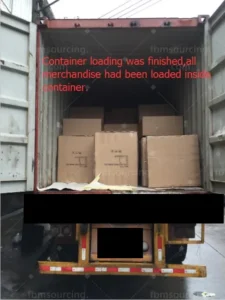
| Signage arriving alongside joinery, lighting and furniture | Sourcing partner covering the fit-out lines together | Signage alone rarely fills a container; consolidating with other lines is what makes the shipping work | — |
That last row is the practical reality of signage procurement: a complete sign package for one building is usually a few cubic metres of goods. Buying it as a standalone import is inefficient, which is why it is normally consolidated with the fit-out lines described in warehouse, industrial and office fit-out sourcing and retail chain rollout procurement.
Where FBM Sourcing Fits
FBM Sourcing is the China sourcing partner in this picture, not a manufacturer and not a showroom. We work for developers, general contractors, builders, commercial project owners, interior design and construction companies and FF&E solution providers, and we do not sell to individual homeowners. On a signage package we work from the sign schedule rather than from artwork alone, confirm substrate, finish, fixing and certification route per sign type before production, approve a full production sample of each type, inspect the batch at the factory with photo and video records before packing, and consolidate the signage with the other fit-out lines so it ships as part of a full container rather than as an expensive small shipment. Illuminated and display items travelling with the package interact with the lighting lines covered in top LED and architectural lighting manufacturers in China, and the US certification route for those is at LED lighting manufacturers for US commercial projects.
Pricing a signage and wayfinding package?
FBM Sourcing works with developers, general contractors, builders, commercial project owners, interior design and construction companies and FF&E solution providers on hotel, office, retail, transport and healthcare projects. Send the sign schedule and artwork and we will return it priced by sign type, with the electrical, accessibility and fixing requirements set out against each one.
Frequently Asked Questions
Which Chinese manufacturers make commercial signage and wayfinding?
Illuminated signage comes mainly from private fabricators in Shenzhen, Guangzhou, Foshan and Zhejiang; architectural wayfinding from metalwork and finishing shops in Guangdong and Jiangsu; and digital and LED display overwhelmingly from Shenzhen, where Absen (SZSE 300389), Leyard (SZSE 300296) and Unilumin (SZSE 300232) are listed and publish audited accounts. A complete signage package normally comes from two or three of these rather than from one supplier.
What certification does an illuminated sign from China need?
It depends on the destination. In North America an electric sign is normally expected to be a listed assembly, which is not the same as a sign built from components that each hold a certificate. In the EU the completed sign needs a conformity route covering low voltage and electromagnetic compatibility. The question to put to a factory is whether the finished sign has been assessed, not whether the LED module and the driver have certificates, because that is the distinction an inspector will draw.
Why does braille signage from overseas suppliers so often fail inspection?
Because accessible signage is governed by dimensional geometry rather than appearance. Raised character height and stroke, braille dot diameter, dot spacing, cell spacing, the position of the braille relative to the text, the mounting height and the contrast and non-glare finish are all specified. Braille produced as a raised print, or with dots at the wrong pitch, photographs correctly and fails on site. The geometry has to be issued to the factory as a dimensioned drawing, and a physical sample checked before the batch runs.
Can a signage package be shipped from China on its own?
It can, but a complete sign package for a single building is usually only a few cubic metres, so shipping it alone is inefficient. FBM Sourcing works on full-container-load orders, so signage is normally consolidated with joinery, furniture, lighting or other fit-out lines from the same project rather than shipped as a standalone consignment.
About FBM Sourcing
FBM Sourcing manages the entire China procurement package for overseas construction projects. Sourcing since 2014, we work with developers, general contractors, builders, commercial project owners, interior design and construction companies and FF&E solution providers as their sourcing partner in China — from the schedule or BOQ through factory selection, sampling, inspection by our own team, consolidation and shipping, with every quotation and shipping document issued in our own name. If you have a signage and wayfinding package to price, start at https://fbmsourcing.com/china-building-materials-ffe-procurement/.