Warehouse and industrial office projects buy two very different material sets under one roof: a structural steel shell and insulated envelope for the warehouse floor, and a conventional office FF&E package for the mezzanine or attached office block — and pricing the wrong scope against the wrong supplier is the most common procurement mistake on this project type. FBM Sourcing manages the entire China procurement package for overseas construction projects, and on a warehouse and industrial office project that means sourcing the steel structure and envelope from a structural fabricator and the office fit-out from a furniture and finishes supplier, coordinated through one sourcing partner instead of two unrelated vendor relationships that never talk to each other.
What Does a Warehouse & Industrial Office Package Actually Cover?
Most projects of this type resolve into four procurement scopes.
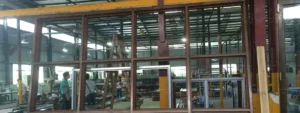
- Structural steel and envelope — the primary steel frame, insulated sandwich wall and roof panels, and any FM-rated fire and insulation requirement the insurer or code demands.
- Warehouse floor systems and dock equipment — high-durability flooring (sealed concrete, epoxy or polished finishes rated for forklift traffic), racking-compatible floor flatness, dock levelers and loading dock doors.
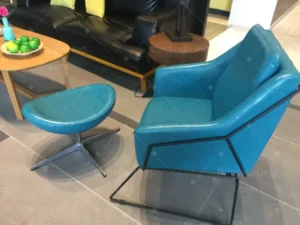
- Mezzanine/office fit-out — the conventional office scope within or attached to the warehouse: partitions, ceiling systems, desking, seating and lighting, sourced to standard commercial office specifications.
- Safety and wayfinding materials — safety flooring markings, guard rail and bollard protection for racking and dock areas, and life-safety signage.
The structural steel and envelope scope is the long pole and the one that sets the building’s insurance and fire-code compliance profile, so it should be locked in before the office fit-out scope is finalized — a change to the envelope’s insulation or fire rating after the office layout is designed can force a costly re-sequence.
How Should the Steel Envelope Be Specified?
Insulated sandwich panel systems used for warehouse walls and roofs should be specified against a named fire rating — FM Global approval is the most commonly requested standard for insurable industrial buildings in the US and international markets, since FM-rated panels have passed large-scale fire propagation testing that a generic CE-marked panel has not necessarily been tested to the same standard on. The panel core material (PIR, PU or rock wool) affects both the fire rating and the thermal performance, and should be confirmed in writing against the project’s insurance and energy code requirements before the structural order is placed. Our note on the metalwork side of this scope covers the fabricator landscape in more detail — see top metalwork manufacturers in China for commercial projects.
How Does the Office Fit-Out Scope Differ from the Warehouse Shell?
Once the steel envelope is locked in, the mezzanine or attached office scope runs on a conventional commercial office fit-out timeline and specification set — partitions, ceiling grid, desking, task seating and lighting — sourced the same way a standalone office project would be, with no wet-area or heavy-load requirements carried over from the warehouse floor below it. Treating the two scopes as one undifferentiated “industrial building” package is a common buyer mistake: the office furniture supplier has no structural steel capability, and the steel fabricator has no office furniture catalog, so a single-source RFQ sent to either one will come back incomplete. For the mechanics of running an office fit-out as its own coordinated scope, see our guide to co-working and office space fit-out sourcing from China.
Sourcing this for a commercial project?
FBM Sourcing works with project owners, developers, main contractors and FF&E contractors on hotel, apartment, school, office and other commercial building projects. Send us your BOQ, drawings or product list — our team will review it and get back to you.
How Should Freight Be Planned Across Two Very Different Scopes?
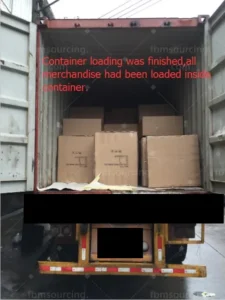
Structural steel ships by tonnage in standard or flat-rack containers depending on component size, and production typically runs 45–75 days after shop drawing approval on a mid-size industrial building. Office FF&E ships by volume in standard high-cube containers on a shorter 6–9 week production cycle. Because the two scopes have different lead times and different freight profiles, they are normally shipped as separate consolidations rather than one combined container plan — trying to force office furniture and structural steel into the same container wastes both the steel’s weight allowance and the furniture’s volume allowance. Sequencing the office FF&E shipment to land after the shell is weathertight avoids the furniture sitting in an unenclosed building through a rainy season.
How FBM Sourcing Runs a Warehouse & Industrial Office Package
FBM Sourcing manages the entire China procurement package for overseas construction projects. On a warehouse and industrial office project that means holding a structural steel fabricator for the envelope scope and an office furniture and finishes supplier for the fit-out scope on one coordinated schedule, checking the envelope’s fire and insulation rating against your insurance requirement before production, and shipping the two scopes as separate, correctly-sequenced consolidations.
Inspection is carried out by our own team on the factory floor, with a full inspection before shipment recorded in photographs and video. All quotations, invoices and shipping documents are issued by FBM Sourcing — you deal with us, and we carry the responsibility. For suppliers you nominate, we charge a 5% commission; for products we source for you, we quote a direct price.
Frequently Asked Questions
How does procurement work for a warehouse and industrial office project?
The project splits into two distinct scopes bought from different types of supplier: a structural steel shell and insulated envelope from a steel fabricator, and a conventional office fit-out for the mezzanine or attached office block from a furniture and finishes supplier. The envelope scope should be locked in first, since a change to its fire or insulation rating after the office layout is finalized forces a costly re-sequence.
What fire rating should warehouse insulated panels carry?
FM Global approval is the most commonly requested fire and insurance standard for industrial building insulated sandwich panels in the US and international markets, since FM-rated panels have passed large-scale fire propagation testing. The panel core material — PIR, PU or rock wool — affects both the fire rating and thermal performance and should be confirmed in writing against the project’s insurance requirement before ordering.
Can the same factory supply both the steel structure and the office furniture?
No, in practice. Structural steel fabricators do not carry office furniture catalogs, and furniture suppliers have no structural steel fabrication capability, so the two scopes need to be sourced from different specialist suppliers on one coordinated schedule rather than a single combined RFQ.
Are the steel structure and office FF&E shipped in the same container?
Generally no. Structural steel ships by tonnage on a 45–75 day production cycle after shop drawing approval, while office FF&E ships by volume on a shorter 6–9 week cycle, so the two scopes are normally shipped as separate consolidations sequenced so the furniture arrives after the shell is weathertight.
Get a China Procurement Quote for Your Project
If your warehouse or industrial office project has a structural scope, an office fit-out list, or both ready — even just preliminary drawings — FBM Sourcing will match each scope to the right factories and sequence delivery so materials arrive when the building is ready to receive them. Submit your drawings or BOQ, quantities, destination port and timeline via our China building materials and FF&E procurement page, and our team will review your requirements and get back to you.
Related reading: for the ceiling, drywall and drop-tile package itself, see our guide to ceiling and partition manufacturers in China for commercial interiors.