
There is no publicly listed Chinese company whose core disclosed business is manufacturing commercial aluminium windows and doors for export to the United States. The listed tier in this category is made up of a timber-aluminium window maker, a facade design-and-build contractor and a building hardware maker — each of which sits at a different point in the supply chain from the one a US specifier is usually shopping for. Everything else is a large private tier of extruders, fabricators and assembly plants that no overseas buyer can verify from public records. This guide sets out what is actually verifiable, how the supplier types differ, and the specific US evidence — NAFS certification, NFRC labels, structural test reports and, in Florida, product approval — that has to be in hand before a purchase order is issued.
What are you actually buying when you buy “aluminium windows” from China?
The phrase covers at least four different businesses, and the answer to “who makes it” depends on which one you are talking to:
- Aluminium extruders. They own the presses and the anodising or powder-coating lines and sell profile by the tonne. They do not make windows. Their quality question is alloy, temper, wall thickness and finish.
- System houses. They design a profile system — the thermal break, the gasket geometry, the drainage path, the hardware interface — and licence or sell it to fabricators, together with the test evidence that belongs to the system.
- Fabricators / window plants. They cut, machine, thermally break, glaze and assemble the finished unit. This is the company whose name should be on your purchase order, and whose plant your inspection covers.
- Facade contractors. They design, engineer, supply and install a facade as a system, taking performance responsibility. Buying from a facade contractor is a different transaction from buying windows: you are buying an engineered outcome, not a product.
Mixing these up is the single most common cause of a quotation that looks 30% cheaper than the rest of the field. An extruder quoting profile and a fabricator quoting finished, tested, glazed units are not quoting the same thing. The same problem shows up on the drawing side, which is why a window and door takeoff has to get from the schedule to an order sheet before anyone can price it comparably.
Publicly listed companies a US project buyer can verify
We name only companies whose listing and disclosures are public and checkable, and we state plainly what each one actually does. Everything else in this guide is written as a supplier type.
- Sayyas Windows (森鹰窗业), Shenzhen Stock Exchange ChiNext: 301227. Founded 1998, listed on ChiNext. Its disclosed core business is high-performance aluminium-clad timber windows — a passive-house-oriented product, not the commercial aluminium curtain wall or storefront that most US project schedules call for. Role note: relevant if your project genuinely specifies timber-aluminium composite; not a substitute for a commercial aluminium fabricator. Evidence to request: which of its lines would produce your units, and whether the product has ever been tested to the North American standard rather than the European one.
- Jangho Group (江河集团), Shanghai Stock Exchange: 601886. Originally Beijing Jangho Curtain Wall, founded 1999 and listed on the SSE main board; building decoration — principally curtain wall and interior fit-out — is the majority of its disclosed revenue. Role note: a facade design-and-build contractor, not a window factory. Evidence to request: completed project references in your destination state, the fabricator it intends to use, and the specific system test evidence it will warrant.
- Kinlong Hardware (坚朗五金), Shenzhen Stock Exchange: 002791. Listed March 2016. Its disclosed core is building hardware built around door, window and curtain wall hardware systems, extending into door control, stainless balustrade components and fire and smoke ventilation. Role note: a hardware supplier, not a window maker — but on a commercial project the hardware is frequently what fails first, so knowing the hardware brand behind a quoted window is a real due-diligence step. Evidence to request: the hardware brand and series proposed for each opening type, and its cycle-test evidence.
Listed status confirms scale and disclosure obligations. It does not confirm that a company has ever shipped a compliant product into the United States, and it is not a substitute for the test evidence set out below.
The supplier types that make up the rest of the market
- Export-oriented commercial window fabricators. Plants whose output is mostly project work for overseas markets, usually holding at least one set of North American or Australian test reports. Evidence to request: the test report numbers, the laboratory that issued them, and the specific configuration and size tested against what you are ordering.
- Domestic-market fabricators. Very large, very capable, and tested only to Chinese national standards. Adapting a domestic line to a US-certified product is a real engineering exercise, not a paperwork exercise. Evidence to request: proof of at least one completed US or Canadian project, not a promise to obtain certification later.
- System houses supplying to fabricators. Where the thermal and structural performance actually originates. Evidence to request: which system is being used, and whether the test evidence belongs to that system and covers the fabricator building your units.
- Extruders and coaters. Sell profile and finish. Evidence to request: alloy and temper certificates, coating specification, and coating warranty documents naming the batch.
- Trading intermediaries. Companies that broker between the buyer and one or more of the above without owning production. Evidence to request: which factory will produce, and whether the intermediary will place its own name on the documents and carry the responsibility.
Sourcing this for a commercial project?
FBM Sourcing works with project owners, developers, main contractors and FF&E contractors on hotel, apartment, school, office and other commercial building projects. Send us your BOQ, drawings or product list — our team will review it and get back to you.
Which supplier route fits which US project?
| Project scenario | Shortlist from this list | Why it fits | What would change the answer |
|---|---|---|---|
| Mid-rise multifamily, punched openings, standard sizes | Export-oriented commercial fabricator | Repeating unit types suit a plant that already holds NAFS test evidence for that configuration | Coastal high-velocity hurricane zone, which changes it to an approved-product question |
| Hotel or student housing with a mixed schedule | Export fabricator plus a named hardware brand | Mixed opening types make hardware cycle life and spares the real risk | An architect-specified proprietary system that only one licensee can build |
| Unitised curtain wall on a tower | Facade design-and-build contractor | Performance responsibility for an engineered system cannot sensibly be split | A US facade consultant already engaged, which may argue for supply-only |
| Florida or Gulf Coast project | Only fabricators that already hold Florida Product Approval or a Miami-Dade NOA | Approval is per product, not per company, and cannot be added retrospectively | Inland county with no HVHZ requirement |
| Passive-house or very high thermal target | Timber-aluminium or high-performance system route | The thermal target drives the product family before the country of origin | A budget that will not carry a triple-glazed unit, which sends you back to double glazing |
Where the thermal target is the driver rather than the country of origin, the underlying decision is the glazing build-up, not the frame supplier — the trade-offs are set out in double glazing vs Low-E vs triple glazing for commercial windows.
What US evidence must be in hand before you order?
This is where a China window purchase most often goes wrong, because the Chinese factory’s own test reports are usually to Chinese standards and are not interchangeable with US ones. The following are the documents a US project team should hold, and each is checkable by a third party:
- NAFS certification. AAMA/WDMA/CSA 101/I.S.2/A440 is the North American Fenestration Standard. Certification is issued for a specific product line, configuration and size range by an accredited certification agency, and it carries a label. Ask for the certification listing, not a test report alone.
- Component test reports. ASTM E283 (air infiltration), ASTM E331 (water penetration under static pressure) and ASTM E330 (structural performance under uniform load), issued by an accredited laboratory. Check that the tested configuration and size envelope covers your largest unit, not the smallest.
- NFRC label certificate. U-factor, Solar Heat Gain Coefficient and Visible Transmittance have to be NFRC-certified values for energy code compliance in most jurisdictions. A manufacturer’s calculated figure is not the same thing. The code side of this is covered in what California Title 24 requires from lighting and glazing on China-sourced products.
- Safety glazing. Compliance with 16 CFR 1201 and permanent marking to ANSI Z97.1 where required by location.
- Florida Product Approval or Miami-Dade NOA for Florida work, including impact testing to ASTM E1886 and E1996 in wind-borne debris regions. This is granted per product, and cannot be obtained after the container has shipped.
- Finish specification. AAMA 2603, 2604 or 2605 defines three very different powder-coat or fluoropolymer performance classes. On a commercial facade, 2605 is normally the one being specified, and the price difference between the three is real.
- Structural calculations for anchorage and for the units themselves, sealed by an engineer licensed in the project state where the authority having jurisdiction requires it.
If a market other than the United States is also in scope, the cross-market comparison of what each jurisdiction demands is set out in window and door export certifications by market.
How do aluminium windows ship on a US project?
Windows are a volume cargo rather than a weight cargo: a container of glazed units reaches its cubic limit long before it reaches its payload limit, and the packing method is the difference between a clean delivery and a damage claim. Units are normally shipped in steel or timber A-frames or in purpose-built crates, with glass edges protected and interleaved, and the frames braced so nothing racks in transit.
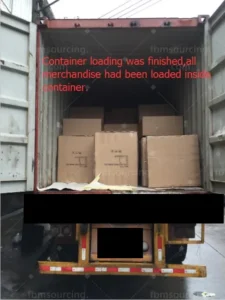
Three points decide whether the delivery works: the sequence of loading has to match the installation sequence by floor or elevation, the packing list has to identify every unit against the window schedule mark, and the loading itself has to be documented before the doors close. What that documentation should contain is set out in what a container loading report should show for a commercial project. Where windows travel alongside other categories for the same building, the consolidation decision belongs at package level, not per product.
Why this list has no scores, ratings or supplier links
We publish no score column and no outbound links to the companies named. A score would imply we had audited every company against the same criteria in the same period, which we have not. What we do instead is state what is publicly verifiable, describe the supplier types honestly, and set out the evidence to request — the judgement stays with the project team, its facade consultant and the authority having jurisdiction.
We also publish no prices for windows. Unit price moves with system, thermal break depth, glass build-up, hardware, finish class, size and quantity, and a number published today would mislead a reader next year.
About FBM Sourcing
FBM Sourcing manages the entire China procurement package for overseas construction projects. Sourcing since 2014, we have shipped 1,000+ containers to project sites in 20+ countries, working with project owners, developers, main contractors and FF&E contractors on hotels, apartment buildings, schools, offices and other commercial buildings. All quotations, invoices and shipping documents are issued by FBM Sourcing — you deal with us, and we carry the responsibility. For suppliers you nominate, we charge a 5% commission; for products we source for you, we quote a direct price.
If you have a window and door package for a US project, send us the window schedule, the elevations and the state or county the project sits in at https://fbmsourcing.com/china-building-materials-ffe-procurement/.
Frequently asked questions
Are there listed Chinese companies making aluminium windows and doors?
Yes, but none is a pure commercial aluminium window exporter. Sayyas Windows (301227, Shenzhen ChiNext) discloses aluminium-clad timber windows; Jangho Group (601886, Shanghai) is a listed facade design-and-build contractor; and Kinlong Hardware (002791, Shenzhen) is a listed building hardware maker. Most export window fabricators are private companies without public disclosure.
Does a Chinese test report satisfy a US building department?
Generally no. US authorities work from NAFS certification under AAMA/WDMA/CSA 101/I.S.2/A440 and from ASTM E283, E330 and E331 reports issued by an accredited laboratory, plus an NFRC label certificate for energy performance. A Chinese national standard report is not interchangeable and will normally be rejected.
What is different about ordering windows for a Florida project?
Florida requires product approval, and the high-velocity hurricane zone counties require a Miami-Dade Notice of Acceptance, including impact and cyclic pressure testing to ASTM E1886 and E1996. Approval attaches to a specific product, so it has to exist before the order, not after.
What does AAMA 2605 mean on a window quotation?
It is the highest of three AAMA finish performance classes for organic coatings on aluminium extrusions, above 2604 and 2603, with the most demanding weathering, chalk and colour retention requirements. Commercial facades are commonly specified to 2605, and quotations that quietly drop to 2603 will look cheaper for the same-looking product.
What is the minimum order for windows from China?
We do not handle loose freight. The practical minimum is a full container load consolidated for one client, and windows can share containers with the other product categories of the same project.