ISO 9001 and ISO 14001 on a Chinese factory quotation are management-system certificates, not product certificates. ISO 9001:2015 says the plant runs a documented quality management system; ISO 14001:2015 says it runs a documented environmental management system. Neither one says the door is fire-rated, the fabric passes CAL 117, the panel is E0 or the luminaire is safe on 120 V. They are worth having — but only after you have checked three things on the certificate itself: the scope, the site address and the accreditation mark of the body that issued it. This guide explains what each standard actually certifies, how to verify a certificate in the public databases in under five minutes, the four ways these certificates fail on real project orders, and what a China sourcing agent and sourcing partner looks at instead.
What Does ISO 9001 Actually Certify?
ISO 9001:2015 is a quality management system standard. An accredited certification body has audited the factory against the requirements of the standard and concluded that the organisation plans, controls, measures and improves its processes in a documented way. The audit looks at the system, not at your product. A plant can hold a clean ISO 9001 certificate and still ship you the wrong finish, because the standard does not tell the factory what your finish should be — your specification does.
Where ISO 9001 does earn its place is that it obliges the factory to keep records you can ask for. Those records are the useful part of the certificate, and they are the reason a certified plant is usually an easier plant to run a project through.
- Clause 8.4 — control of externally provided processes: the factory must evaluate and re-evaluate its own suppliers. On a door package that means the ironmongery and the core board have a traceable source.
- Clause 8.5.2 — identification and traceability: production batches can be traced back to incoming material. This is what lets a defect claim be closed out against a specific batch rather than argued about.
- Clause 7.1.5 — monitoring and measuring resources: gauges, hardness testers, coating-thickness meters and moisture meters must be calibrated against traceable standards, with records.
- Clause 8.7 — control of nonconforming outputs: rejected product has to be identified and segregated, and the disposition recorded. Without this, rework quietly re-enters the good stock.
- Clause 9.2 — internal audit: the plant audits itself on a planned programme, and the findings are written down.
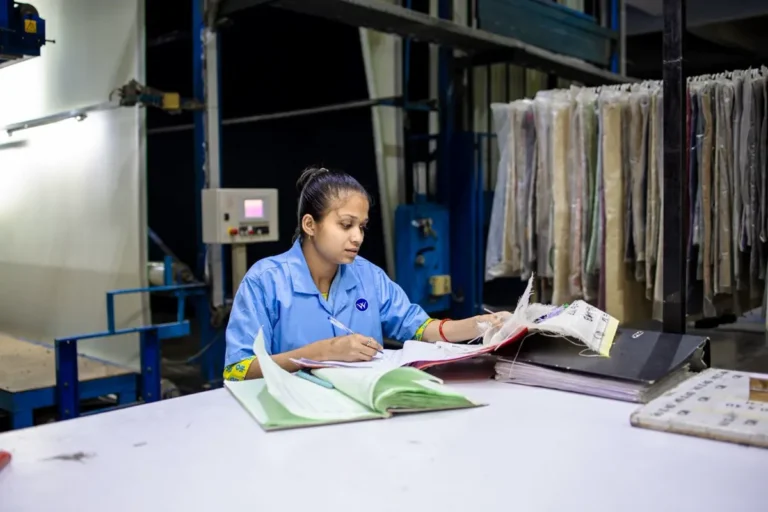
When a factory says “we are ISO 9001 certified”, the correct follow-up is not to file the certificate. It is to ask for the calibration register, the last internal audit report and the nonconformance log for the production line that will build your order. A plant with a real system produces these in a day. A plant with a bought certificate does not produce them at all.
What Does ISO 14001 Certify, and When Does It Matter on a Project?
ISO 14001:2015 certifies an environmental management system: the factory has identified its environmental aspects, complies with applicable legal requirements, sets objectives and monitors performance on things like emissions, effluent, waste and energy. Again, it is about the organisation, not the product. ISO 14001 does not certify that the lacquer is low-VOC or that the panel meets CARB Phase 2 — that is a product emission test, and it comes on a separate report.
ISO 14001 matters on a project in two concrete places. First, on green-building submissions: under LEED v4/v4.1 the MR credits are earned by product-level documentation — EPDs, HPDs, material ingredient reporting — but a certified EMS supports the supplier-side narrative and is often requested in the ESG questionnaires that institutional owners now attach to procurement. Second, on public and institutional tenders in the UK, the EU, Australia and the Gulf, where an EMS certificate is a routine pass/fail line in the pre-qualification questionnaire. If your tender documents ask for it, the certificate has to be in the name of the manufacturing entity and current on the day of submission. See our guide to LEED and WELL documentation from Chinese factories for what the product-level paperwork looks like.
How Do You Verify an ISO Certificate from a Chinese Factory?
Every genuine certificate can be checked in a public database in a few minutes, without contacting the factory. If it cannot be found in any of them, treat it as unverified.
- IAF CertSearch (iafcertsearch.org): the global database run by the International Accreditation Forum. It holds accredited certifications submitted by accreditation bodies and certification bodies worldwide. Search by company name or certificate number.
- CNCA / cx.cnca.cn: the Certification and Accreditation Administration of China publishes management-system certificates issued in mainland China. This is the fastest check for a Chinese-issued certificate.
- The certification body’s own validity checker: every major certification body publishes a certificate-check page on its own website. Use the certificate number printed on the document, not a name search.
- The accreditation mark: a credible certificate carries the mark of an accreditation body that is a signatory to the IAF MLA — CNAS in China, UKAS in the UK, ANAB in the US, JAS-ANZ in Australia and New Zealand. A certificate with only a certification body logo and no accreditation mark is unaccredited: it is not fraudulent, but it carries no international recognition and most tender panels will not accept it.
The certification cycle itself is fixed and worth knowing, because dates are where fakes fall over: certification runs on a three-year cycle, with a surveillance audit at least once in each of the two intervening years and a full recertification audit before the three years expire. A certificate showing a five-year validity, or no expiry date at all, is not an accredited ISO certificate.
Sourcing this for a commercial project?
FBM Sourcing works with project owners, developers, main contractors and FF&E contractors on hotel, apartment, school, office and other commercial building projects. Send us your BOQ, drawings or product list — our team will review it and get back to you.
The Four Ways ISO Certificates Fail on Real Project Orders
On packages we quote, a certificate almost never turns out to be a crude forgery. It fails in quieter ways, and all four are visible on the face of the document if you read it properly.
- Scope mismatch. The scope line reads “sales and trading of building materials” when you needed “design and manufacture of aluminium windows and doors”. The certificate is genuine; it just does not certify manufacturing. This is the single commonest finding.
- Address mismatch. The certificate names a parent company or a sister plant in another city. Your order will be built in a workshop that is not on the certificate. Compare the address on the certificate against the address on the quotation, the business licence and the loading address on the proforma.
- Unaccredited issuer. No IAF-member accreditation mark. Common with certificates bought as a marketing asset. It will be rejected by a UK, EU or Australian tender panel.
- Expired, suspended or withdrawn. The PDF in the sales folder is three years old. Certificates are suspended for missed surveillance audits more often than buyers expect, and the public databases show current status — the PDF does not.
Read against the wall clock of a project, the point is simple: the certificate is a filter you apply before you spend time on a plant, not evidence you can put in a handover file. What goes in the handover file is product-level test evidence — and that is a different document from a different kind of laboratory. Our comparison of factory test reports and accredited laboratory testing sets out which is which.
ISO 9001 vs Product Certification: What Belongs in Your Specification?
The distinction decides what you write into the purchase order, so it is worth stating plainly. A management-system certificate belongs in the supplier pre-qualification section. Product compliance belongs in the technical specification, line by line, and it is always a test report or a listing against a named standard.
- Management system (pre-qualification): ISO 9001 quality, ISO 14001 environmental, ISO 45001 occupational health and safety. Company-level. Three-year cycle.
- Product performance (specification): AS 2047 for windows in Australia, UL 10C and NFPA 80 for US fire doors, EN 1090 for structural steelwork, EN 12150 for toughened glass, CAL TB 117-2013 or BS 7176 for upholstery fire performance, CARB Phase 2 or TSCA Title VI for formaldehyde. Product-level and test-based.
- Market access (import condition): CE or UKCA marking, RCM/SAA for Australian electrical goods, cUPC or WaterMark for plumbing fittings. Legal requirement in the destination market, not a quality opinion.
Where this bites is the tender response. If your specification says “supplier to hold ISO 9001” and nothing else, a compliant bid can be built entirely from certified traders holding no product evidence at all. If it says “toughened glass to EN 12150-1 with test report from an accredited laboratory, supplier to hold ISO 9001 accredited to an IAF MLA signatory”, the same bid list halves and the survivors are manufacturers. The same logic runs through our note on fire rating standards for building materials and finishes.
What Should You Ask For Instead of the Certificate?
Once the certificate has passed the database check, stop collecting certificates and start collecting evidence that the system is being used on your line. Five requests separate a working plant from a certified one, and none of them is unreasonable to ask of a factory quoting a container-scale order.
- The calibration register for the instruments that will measure your product — coating thickness, moisture content, hardness, dimensional gauges — with the last calibration dates.
- The incoming material inspection record for the key input: the aluminium billet certificate, the board emission grade, the glass supplier’s test report.
- The nonconformance and corrective action log for the past year on that production line. What matters is not that it is empty — an empty log means it is not being kept — but that the corrective actions close out.
- The control plan or inspection standard for your product type: what is checked, at what frequency, to what tolerance, by whom.
- The last internal audit report under Clause 9.2 and the management review minutes under Clause 9.3.
This is also the point at which a factory visit earns its cost. A factory audit before the order is placed answers in half a day what a certificate cannot: whether the workshop that will build your order is the workshop on the certificate, and whether those five records exist in physical form on the shop floor.
How FBM Sourcing Uses ISO Certificates on a Project Package
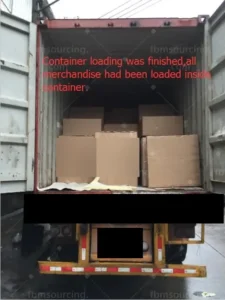
FBM Sourcing manages the entire China procurement package for overseas construction projects. On a hotel, apartment, school, office or healthcare package we treat ISO 9001 and ISO 14001 as a screening filter at the shortlisting stage, not as evidence for the handover file. Every certificate we receive is checked in the public database for status, scope wording and site address, and the address is matched against the business licence and the loading address before an order is confirmed. Where a plant’s certificate covers trading rather than manufacture, we say so. Product compliance is handled separately, line by line against the specification, with test reports and listings collected in the name of the manufacturing entity. Before shipment our own FBM Sourcing QC team inspects the goods at the factory, with photo and video records. All quotations, invoices and shipping documents are issued by FBM Sourcing — you deal with us, and we carry the responsibility. For suppliers you nominate, we charge a 5% commission; for products we source for you, we quote a direct price. Sometimes, on a large project, the doors alone fill full containers; sometimes the doors share containers with the other product categories of the same project; and sometimes, in one batch, we combine a dozen or more product categories from several projects of the same client into a few containers — always full containers, and for us this is routine, well-practised work. The certificate set travels with the shipping and customs document set.
If you are qualifying Chinese factories for a commercial project, send us the product list, the specification clauses that name a standard, the destination port and the required-on-site dates. Our team will review the package and set out a quotation — use the quote button above or WhatsApp +86 135 6007 5057.