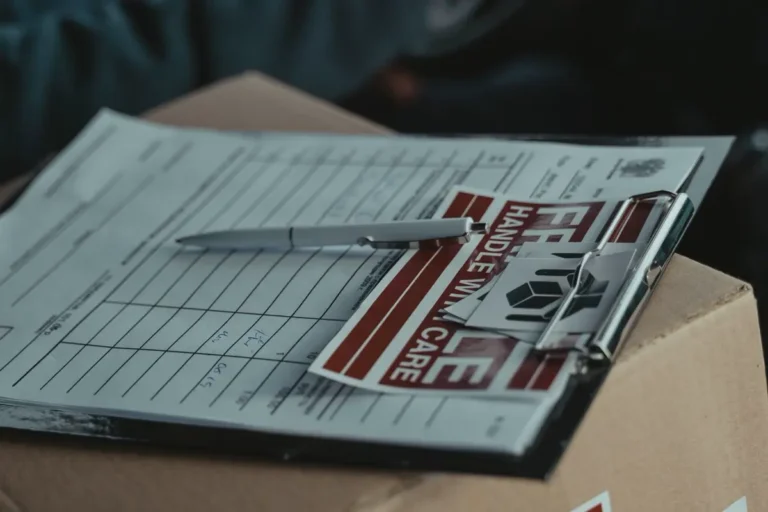
Every China project shipment travels with a core document pack: commercial invoice, packing list, bill of lading (or telex release), certificate of origin, fumigation/ISPM-15 declaration for wood packaging, and the product test reports or certificates named in your purchase order. Destination rules then add country-specific documents — Lacey Act declarations and TSCA Title VI certificates for the US, biosecurity and timber treatment evidence for Australia, CE/UKCA documentation for Europe and the UK. Documents are finalised within 3–5 days of vessel departure, and a single inconsistency between them — an HS code, a value, a product description — is the most common cause of avoidable customs delay on project cargo. On projects like this, FBM Sourcing works as your dedicated sourcing partner.
The core pack, shipment by shipment:
- Commercial invoice — values, currency, Incoterm, buyer/seller of record
- Packing list — carton-level contents, weights, volumes; on project cargo, coded to room/floor/building
- Bill of lading — original set or telex release; container and seal numbers
- Certificate of origin — standard CO, or an FTA form where a preferential rate applies (e.g. ChAFTA for Australia)
- Fumigation / ISPM-15 — for solid-wood packaging, pallets and crates
- Test reports & certificates — fire ratings, formaldehyde class, structural or cycle tests, exactly as specified in the PO
Which Documents Are in Every China Shipment Document Pack?
The invoice, packing list and bill of lading are the customs triangle — every declared fact must agree across all three. The invoice carries the transaction: unit values, total value, currency and the Incoterm that defines what the price includes (the differences are unpacked in our FOB vs CIF vs DDP guide). The packing list turns that into physical cargo: cartons, weights, cubic volumes — and on a well-run project it is the same room-coded list the site team will unload against. The bill of lading is the contract of carriage and the key to releasing cargo at destination; project buyers should decide early between couriered originals and telex release, because chasing original BLs during a customs window is a self-inflicted delay.
The certificate of origin does double duty: proof of origin for customs, and the qualifying document where a free-trade agreement reduces duty. Getting the right FTA form issued costs nothing at shipment time and is unrecoverable afterwards.
What Extra Documents Do Specific Destinations Require?
- United States: customs entry via your broker, Lacey Act declarations for wood products and TSCA Title VI compliance certificates for composite wood (cabinets, engineered flooring, casegoods); ocean shipments also require ISF (10+2) filing before the vessel sails from China
- Australia: biosecurity screening — evidence of timber treatment, bark-free packing and container cleanliness; illegal-logging due diligence documentation on timber products; WaterMark and AS-standard certificates where specified
- EU/UK: CE or UKCA declarations of conformity on construction products, EN test reports behind them, and timber due-diligence records under EUTR/UKTR
- Middle East: conformity programmes such as SABER/SASO for Saudi-bound cargo, attested COs for several Gulf states
None of these are exotic — factories exporting to project markets produce them routinely — but every one must be requested at purchase-order stage. A TSCA certificate cannot be conjured after the container is on the water, and 2026’s shifting tariff and screening environment (tracked in our sourcing from China in 2026 update) has only increased how often border agencies actually ask.
Who Prepares and Checks These Documents?
The factory drafts what relates to its goods; the forwarder issues transport documents; the customs broker files the entry. What that division of labour lacks is a single party checking that all of it agrees — and on a consolidated shipment from six factories under one bill of lading, document consistency is where projects are won or lost. One factory describing goods differently from the invoice line, one HS code chosen carelessly, and the whole container sits while queries go back and forth.
This is why document compilation belongs with whoever manages the consolidation itself — the same party that built the loading plan, as described in how multi-factory consolidation works. One document pack, one set of consistent declarations, one accountable checker before anything is filed. Classification sits underneath all of it — see which HS codes apply to furniture and building materials imports.
Sourcing this for a commercial project?
FBM Sourcing works with project owners, developers, main contractors and FF&E contractors on hotel, apartment, school, office and other commercial building projects. Send us your BOQ, drawings or product list — our team will review it and get back to you.
What Documentation Errors Cause Customs Delays?
The same handful of errors account for most held containers on project cargo:
- HS code mismatches — the invoice says one code, the entry another; or a code chosen to chase a lower duty rate that doesn’t survive inspection
- Value inconsistencies — invoice, packing list and insurance certificate telling different stories
- Vague descriptions — “furniture, 300 cartons” invites inspection; “upholstered hotel lounge chairs, model X, 300 pcs” does not
- Missing ISPM-15 evidence — untreated or unmarked wood packaging can mean fumigation at destination or outright re-export
- Certificates not matching the batch — a test report for a different finish or production run than the goods in the box
Each of these is a five-minute check in China and a multi-day, storage-billing problem at the destination terminal.
How FBM Sourcing Compiles the Document Pack
As the china sourcing agent holding the whole package, FBM Sourcing compiles one document pack per shipment: factory documents collected and cross-checked against the purchase orders, certificates verified against the actual production batch during our own QC inspections, packing lists generated from the loading plan our team supervised, and the full set reconciled — codes, values, descriptions — before it goes to the forwarder and broker. Buyers receive the complete pack digitally before vessel arrival, so the destination broker files from clean data. It is unglamorous work, and it is the difference between a container that clears in days and one that pays demurrage. The end-to-end schedule context is in our China sourcing and shipping timeline guide.
Knowing which documents travel with the shipment is a separate question from knowing who is legally responsible for the declaration — we set out who clears customs on a project import and how Incoterms decide it.
Document requirements change by destination. For Gulf shipments in particular, the national conformity schemes decide what has to exist before a consignment can be cleared — see conformity rules in Qatar, Kuwait, Oman and Bahrain.
Get a China Procurement Quote for Your Project
Sourcing a project package and want the paperwork handled properly? Send us your BOQ or product list with quantities, destination port and timeline — the sourcing plan we return includes the compliance and documentation matrix for your destination: China building materials & FF&E procurement.
Beyond the customs paperwork, the technical file matters on site: see what FF&E installation drawings and assembly documents should arrive with a China project order.