US import duty on furniture and building materials from China is not one rate. It is a stack: the general HTS rate for the product’s 10-digit classification, plus any Section 301 additional duty that applies to that subheading, plus antidumping and countervailing duty if the goods fall inside an active order, plus the two federal user fees on every ocean entry — Merchandise Processing Fee at 0.3464% of entered value and Harbor Maintenance Fee at 0.125%. Because the stack is driven by classification rather than by product description, two items that look identical in a BOQ can land at very different totals, and the only way to know your number before you commit is to get the classification and the order coverage checked against the specific construction and material of what you are buying. This kind of coordination is what a sourcing partner like FBM Sourcing is for.
What Are the Layers on a US Duty Calculation?
Every entry filed with US Customs and Border Protection is built the same way. Understanding the layers is what lets a project team price a package instead of guessing at it.
- Entered value: normally the transaction value — the price actually paid for the goods, on an FOB basis. Unlike the European Union, the United States does not include international ocean freight and insurance in dutiable value.
- General (Column 1) duty rate: set by the 10-digit HTSUS subheading. Many Chapter 94 furniture lines carry a free general rate; many Chapter 69, 70, 73 and 76 building product lines do not.
- Section 301 additional duty: applies by HTS subheading, not by product category, and sits on top of the general rate.
- Antidumping / countervailing duty: applies only if the goods fall within the scope of an active order and are from a covered country. Rates are producer-specific and are cash-deposited at entry, not final.
- Federal user fees: Merchandise Processing Fee at 0.3464% of entered value (subject to a statutory per-entry minimum and maximum), and Harbor Maintenance Fee at 0.125% of entered value on ocean shipments only.
That last point is worth stating plainly, because it is the one most project budgets miss: the fees are charged on entered value, so they scale with the invoice, and HMF is avoided on air freight but not on the sea freight that container-scale projects actually use. A landed figure that stops at “duty rate” is incomplete — our breakdown of landed cost on a China project order shows where each of these lines sits alongside ocean freight, destination charges and inland delivery.
Which HTS Chapters Cover Furniture and Building Materials?
A project package almost never sits in one chapter. A single hotel or apartment order will typically be spread across six to ten of them, each with its own rate logic.
Furniture, seating and lighting
Chapter 94 covers furniture, mattresses and lamps. Seating sits in heading 9401, other furniture in 9403, mattresses and mattress supports in 9404, and luminaires in 9405. Within those headings the split is by material and by room use — wooden bedroom furniture, wooden office furniture, metal furniture and upholstered seating are all separate subheadings, and that split is exactly where antidumping scope questions arise.
Building materials
Ceramic tile sits in heading 6907 of Chapter 69, with subheadings driven by water absorption and by surface area. Glass products — float, tempered, laminated, insulating units — run through headings 7005 to 7008 of Chapter 70. Chapter 44 covers wood, including plywood in 4412 and assembled flooring panels in 4418. Aluminium profiles and fabricated structures sit in Chapter 76, steel structures and hardware in Chapters 72 and 73, plastic builders’ ware such as PVC profiles and sanitary fittings in heading 3925, and general builders’ hardware including hinges, locks and mounts in heading 8302.
Sanitary ware and stone
Ceramic sanitary fixtures fall in heading 6910; brassware taps and mixers in 8481; natural stone slabs and worked stone in Chapter 68, with engineered quartz surfaces in heading 6810. The distinction between a natural stone slab and an agglomerated quartz slab is not cosmetic in customs terms — it changes both the classification and whether an antidumping order is in play.
This is why a BOQ line reading “vanity top — stone” is not enough to price duty. The classification needs the material composition, the degree of working, and in some cases the dimensions. Our guide to shipping and customs documents on China project orders covers what has to be on the paperwork for those determinations to hold up at entry.
How Is Dutiable Value Determined on a Project Order?
The default basis is transaction value: the price actually paid or payable for the merchandise when sold for export to the United States. For a project package that is the FOB value of the goods, which is why the ocean freight your forwarder quotes does not enter the duty calculation in the US.
Several additions are dutiable even when they are invoiced separately, and this is where project orders regularly go wrong:
- Tooling, moulds and dies supplied or paid for by the buyer for use in producing the goods are assists and must be added to value, usually apportioned across the production run.
- Engineering, development and design work performed outside the United States and supplied to the factory is likewise dutiable.
- Royalties and licence fees related to the imported goods, and any proceeds of resale accruing to the seller, are additions.
- Packing costs incurred for export are part of dutiable value — including the crating and corner protection that a container-scale FF&E package needs. See export packing standards for furniture moving by sea freight for what that specification looks like.
The importer of record carries the legal obligation to use reasonable care in classification and valuation. That obligation does not transfer to a factory, a forwarder or a broker, which is the practical reason project buyers should settle classification questions before a purchase order is issued rather than at the port. Whether a preference is available at all is a separate question — see can a certificate of origin reduce import duty.
For what the invoice filed with the entry has to contain, see our reading of 19 CFR 141.86.
Sourcing this for a commercial project?
FBM Sourcing works with project owners, developers, main contractors and FF&E contractors on hotel, apartment, school, office and other commercial building projects. Send us your BOQ, drawings or product list — our team will review it and get back to you.
Section 301 and AD/CVD: Which Layer Applies to Your Product?
These two are frequently spoken about as if they were the same thing. They are not, and the difference matters to a project budget.
Section 301 duties are applied by HTS subheading across broad tranches of Chinese-origin goods. Whether they apply is a classification question: if your 10-digit subheading is on the list, the additional rate applies to every shipment under it regardless of which factory produced the goods. Exclusions have been granted and withdrawn over time, and the operative lists change, so the answer to “does 301 apply” is only valid as of a date.
Antidumping and countervailing duties are applied by scope, not by subheading. A product falls inside an order if it matches the written scope language, even if it is entered under an HTS code that is not listed in the order — the HTS codes in a scope are described as advisory. Active orders relevant to construction and hospitality procurement have covered wooden bedroom furniture, wooden cabinets and vanities, quartz surface products, ceramic tile, mattresses, aluminium extrusions and hardwood plywood among others. Our page on US antidumping duties on Chinese cabinets, quartz and flooring goes through how scope reads on those specific product families.
Three structural facts about AD/CVD that change how a project should be planned:
- The rate charged at entry is a cash deposit, not a final assessment. Entries stay unliquidated while administrative reviews run, and the final rate can be higher or lower than the deposit.
- Rates are producer and exporter specific. A separate-rate producer, a non-selected producer and the country-wide entity can carry very different figures for the same product.
- Transshipment does not solve it. Substantial transformation, not the port of loading, determines origin, and misdeclared origin is an enforcement matter rather than a duty-planning option.
The practical consequence for a project is that AD/CVD-exposed categories carry an open liability that a fixed budget cannot fully close at the time of order. Where a package can be specified around that exposure — a different material, a different construction, or a different sourcing country for one line item — that decision belongs at design stage, not at entry. Our comparison of China, Vietnam and India for project FF&E sourcing looks at where that choice is realistic and where it just moves the problem.
What Documents Decide the Duty You Actually Pay?
Duty is assessed on what is filed, and what is filed comes from the commercial documents. A project order should therefore be documented to the standard the entry needs, not to the standard a factory happens to use.
- Commercial invoice with a description sufficient to classify each line: material, construction, function, and dimensions where the subheading depends on them.
- Packing list tied line by line to the invoice, so a mixed container can be entered accurately rather than averaged.
- Entry summary (CBP Form 7501) filed by the customs broker, showing the 10-digit HTS, entered value, duty, MPF and HMF per line.
- Certificate of origin and, where the goods are covered by an order, the producer and exporter identity needed to apply the correct AD/CVD case number and rate.
- Binding ruling where a classification is genuinely arguable. CBP issues binding rulings on request and publishes prior rulings, which is the difference between a defensible position and an opinion.
Two mechanisms are worth knowing because they change cash flow rather than the rate. A continuous bond covers all entries for a year and is normally cheaper than single transaction bonds for a multi-container programme; AD/CVD exposure increases the bond amount required. And duty drawback allows recovery of duty on goods subsequently exported, which occasionally applies on a project where surplus material is re-exported to a second site.
Deciding who files, and therefore who carries the reasonable-care obligation, is an Incoterms question as much as a customs one. Our guide to who clears customs on a project import from China and the comparison of FOB, CIF and DDP for building materials from China set out how that responsibility should be allocated before the first container books.
How FBM Sourcing Handles Duty Classification on a Project Package
FBM Sourcing manages the entire China procurement package for overseas construction projects, and classification exposure is part of that package rather than something a project team discovers at the port. Before a purchase order is placed, we go through the BOQ line by line to identify which lines sit in categories with active antidumping or countervailing orders, which lines depend on a material or construction detail that changes the subheading, and which lines need a written specification tightened so the commercial invoice can describe them accurately.
A tax rate is not a landed cost, and we do not quote either as if it were the other. All quotations, invoices and shipping documents are issued by FBM Sourcing — you deal with us, and we carry the responsibility. For suppliers you nominate, we charge a 5% commission; for products we source for you, we quote a direct price. Documents are prepared to entry standard, mixed containers are packed and listed so each line can be entered on its own classification rather than averaged, and consolidation across factories is handled so that one shipment carries one consistent document set. Where a classification is genuinely arguable, we say so and recommend your broker seek a binding ruling rather than presenting a number we cannot stand behind.
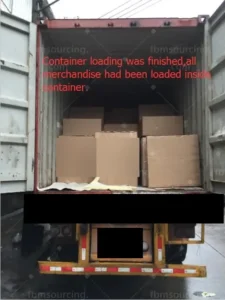
One inspection is carried out by FBM Sourcing’s own team at the factory once bulk production is finished, with photo and video records delivered before shipment, which is also what makes the product descriptions on the documents match what is actually in the container. Where a package spans several factories, they are consolidated into one shipment and one document set rather than each producing its own paperwork — see consolidating multiple factories into one container for how that works in practice.
Get a China Procurement Quote for Your Project
If you are pricing a hotel, apartment, school, office or retail package from China and need to understand the duty exposure before you commit, send us the BOQ or product schedule, the quantities, the destination port and the required-on-site dates. Our team will review the package, flag the lines that sit in AD/CVD-exposed categories or depend on a classification detail, and set out the quotation.
Use the quote button above or WhatsApp +86 135 6007 5057 to start the conversation.