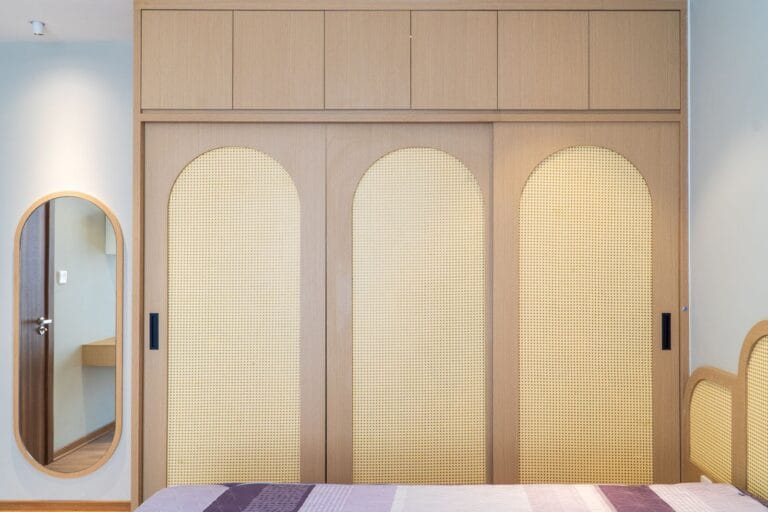
The antidumping duty order on wooden bedroom furniture from China, case number A-570-890, is written around what a piece of furniture is, not around who installs it. The published scope contains no exclusion for hotel, contract or hospitality furniture as a category, so guestroom beds, headboards, night tables, dressers, chests and wardrobe-type cabinets made substantially of wood products can fall inside it, while seating, dining furniture and free-standing office furniture are expressly excluded. A hotel guestroom package is therefore almost never wholly in or wholly out — it has to be read line by line against the scope text, as of 24 September 2026.
This is written for developers, general contractors, builders, commercial project owners, interior design and construction companies and FF&E solution providers pricing a China-supplied guestroom package for a United States project. It is a reading of the published Commerce Department record, not legal or customs advice.
Is the Order Still in Force as of 24 September 2026?
Yes. Commerce published the order on 4 January 2005, at 70 FR 329. After the third five-year sunset review it published a Continuation of Antidumping Duty Order at 87 FR 56397 on 14 September 2022, stating that it “hereby orders the continuation of the Order” and that Customs and Border Protection “will continue to collect AD cash deposits at the rates in effect at the time of entry for all imports of subject merchandise.”
That notice also sets the clock: Commerce intends to initiate the next five-year review “not later than 30 days prior to the fifth anniversary of the effective date of continuation,” which falls in September 2027.
Two things happened in 2026. Commerce published preliminary results for the calendar year 2024 administrative review on 13 April 2026 at 91 FR 18825, then final results on 12 August 2026 at 91 FR 52041, adopting the preliminary results unchanged because no party commented. On 11 August 2026, at 91 FR 51664, it rescinded the calendar year 2025 review for this case “based upon the timely withdrawal of all review requests.” A Federal Register search returns no further notice under A-570-890 through 24 September 2026.
What the Scope Text Actually Covers
The controlling description is reproduced in Appendix I of the 2024 review preliminary results at 91 FR 18825. It describes the merchandise as furniture that “is generally, but not exclusively, designed, manufactured, and offered for sale in coordinated groups, or bedrooms, in which all of the individual pieces are of approximately the same style and approximately the same material and/or finish.”
The materials language is broad. Subject merchandise is “made substantially of wood products, including both solid wood and also engineered wood products made from wood particles, fibers, or other wooden materials such as plywood, strand board, particle board, and fiberboard, with or without wood veneers, wood overlays, or laminates, with or without non-wood components or trim such as metal, marble, leather, glass, plastic, or other resins, and whether or not assembled, completed, or finished.” Three phrases there do real work: engineered panel construction is inside, a laminate or veneer face does not take a piece out, and flat-packed goods count the same as assembled ones.
The scope then lists seven groups of included items:
- Wooden beds, including loft beds and bunk beds.
- Wooden headboards, footboards, side rails and canopies for beds.
- Night tables, night stands, dressers, commodes, bureaus, lingerie chests, wardrobes, vanities and wardrobe-type cabinets.
- Dressers with framed glass mirrors that are attached to, incorporated in, sit on, or hang over the dresser.
- Chests-on-chests, highboys, lowboys, chests of drawers, door chests, chiffoniers, hutches and armoires.
- Desks, computer stands, filing cabinets or writing tables “that are attached to or incorporated in the subject merchandise.”
- Other bedroom furniture consistent with the above list.
The scope lists tariff subheadings, then adds the sentence that matters most: “The Order covers all wooden bedroom furniture meeting the above description, regardless of tariff classification … our written description of the scope of this Order is dispositive.”
What the Scope Text Expressly Excludes
Appendix I lists seventeen exclusions. Those a hospitality schedule meets most often:
- Seats, chairs, benches, couches, sofas, sofa beds, stools and other seating furniture.
- Mattresses, mattress supports including box springs, infant cribs, water beds and futon frames.
- Office furniture, such as desks, computer cabinets, filing cabinets, credenzas and bookcases.
- Dining room or kitchen furniture such as dining tables, sideboards, buffets and china cabinets.
- Other non-bedroom furniture, such as television cabinets, cocktail tables, end tables, wall systems and entertainment systems.
- Bedroom furniture made primarily of wicker, cane, osier, bamboo or rattan, and furniture in which bentwood parts predominate.
- Completely upholstered beds, defined as containing filling material and completely covered in sewn leather or fabric, with the entire bed upholstered except for feet no more than nine inches high.
- Mirrors that do not attach to, incorporate in, sit on or hang over a dresser, and are not marketed to be sold with a dresser as part of a dresser-mirror set.
- Cheval mirrors, jewelry armoires, certain metal parts, toyboxes, enclosable wall bed units, shoe cabinets and bed bases, each defined by dimensions or construction in the footnotes.
Read the carve-backs. The enclosable wall bed exclusion ends: “Wood panels of enclosable wall bed units, when imported separately, remain subject to the Order.” And the upholstered bed exclusion is a complete-coverage test, not a look.
Does a Hotel Guestroom Package Fall Inside the Scope?
The question cannot be settled at the level of the room. Nothing in the covered or excluded list refers to hotels, resorts, contract furniture, hospitality or channels of trade; we read the full Appendix I text at 91 FR 18825 and those words do not appear. The order does not switch off because the purchase order comes from a commercial project owner instead of a retailer.
A single guestroom can therefore straddle the line. A typical set contains items that read directly onto the covered list — the bed and its headboard, the night tables, the dresser or drawer chest, the wardrobe. It contains items that read onto the excluded list — the desk chair and lounge chair, the mattress, a television cabinet specified as a free-standing non-bedroom piece. And it contains items whose treatment depends on how they are built: a writing desk that is free-standing against one attached to or incorporated in a covered casegood, or a mirror that hangs over the dresser against one on the opposite wall.
That is why the scope question belongs in the specification stage, not the shipping stage. Once an FF&E schedule exists with item codes, materials and construction notes, each line can be flagged as clearly inside, clearly outside, or unresolved — and the unresolved lines taken to the project’s own customs counsel before an order is placed.
Which lines of your guestroom schedule raise a scope question?
Send us the FF&E schedule for your hotel project and we will read it against the published scope text item by item, and set up a landed cost assessment for the package before any order is placed.
How Does Commerce Decide a Scope Question?
The procedure sits in 19 CFR 351.225, which acknowledges that scope questions arise “given that the description of the merchandise subject to the scope is written in general terms.”
An interested party may file a scope ruling application, and Commerce may also self-initiate an inquiry. Decisively, 19 CFR 351.225(a) states: “A scope ruling that a product is covered by the scope of an order is a determination that the product has always been covered by the scope of that order.” That is not a rule change with a future effective date.
The analysis then runs in a fixed order. Under 351.225(k)(1) Commerce “will consider the language of the scope and may make its determination on this basis alone if the language of the scope, including the descriptions of merchandise expressly excluded from the scope, is dispositive.” Only if that is not dispositive does it move to the 351.225(k)(2) factors: physical characteristics, the expectations of the ultimate users, the ultimate use of the product, the channels of trade in which it is sold, and the manner in which it is advertised and displayed — with physical characteristics normally given greater weight.
Three Published Rulings That Show Where the Line Falls
Commerce publishes scope ruling outcomes in periodic Federal Register notices. Three show the tests at work.
In a ruling dated 22 November 2023, published at 89 FR 47896, case pieces submitted by Moe’s Home Collection Inc. were held covered “because they are physically consistent with certain types of wooden bedroom furniture, in some cases were suitable for storing clothes, and were advertised as bedroom furniture.”
In a ruling dated 28 June 2023, published at 88 FR 60434, wooden floor cabinets submitted by Teamson, U.S., Inc. were held not covered “because the products, as described by Teamson, were designed and manufactured as bathroom storage furniture, not bedroom furniture, and each cabinet is part of a coordinated group of non-bedroom furniture.”
In a ruling dated 11 January 2024, published at 89 FR 63407, seven models of beds submitted by Zinus, Inc. were held not covered “because they are not made substantially of wood products.”
Hospitality questions have reached Commerce too. A notice of scope ruling applications at 87 FR 2594, published 18 January 2022, records two applications filed by Walt Disney Parks & Resorts U.S., Inc. under A-570-890: beverage centers cabled to the wall of the hotel room, and closet systems described as “an open wooden box frame with shelving for use as storage in hotel rooms” with no drawers or doors. That notice states that the list “is not an identification of scope inquiries that have been initiated,” and we did not locate a published ruling on those two applications, so their outcome is not asserted here.
How Are Duty Rates Set, and Why Is a Published Rate Not a Landed Cost?
Rates are set exporter by exporter, through annual administrative reviews under section 751(a)(1)(B) of the Tariff Act of 1930 and 19 CFR 351.213. In the final results of the 2024 review at 91 FR 52041, published 12 August 2026, Commerce determined that eleven companies “did not establish their entitlement to a separate rate and are thus part of the People’s Republic of China (China)-wide entity and subject to the China-wide entity rate.” The same notice sets the cash deposit consequence: for Chinese exporters without a separate rate, “the cash deposit rate will be equal to the dumping margin assigned to the China-wide entity, which is 216.01 percent,” while an exporter that has a separate rate keeps its existing cash deposit rate.
Several things follow, and they are why a headline figure cannot be dropped into a project budget. A cash deposit is an estimate collected at entry; the duty finally assessed is determined later through the review process, after which Commerce instructs Customs and Border Protection on liquidation. Rates differ by exporter and change with each review, and a review can be rescinded, as the 2025 period review for this case was. The order sits alongside ordinary customs duty and any other measure on the same entry.
FBM Sourcing does not advise on entry treatment, classification or duty outcomes. The narrower practical point is that a published percentage is not a landed cost: the only number worth budgeting against is one built for the specific package, items and supply route, in a landed cost assessment done before the order is placed. Our companion article on US anti-dumping duties on China-made cabinets, quartz and flooring covers the other orders that recur on United States construction packages.
Where This Sits in a Real Procurement Package
On a hotel project the scope question is a specification question first. Carcass material, face material, whether a desk or mirror is integral to another piece, whether a bed is completely upholstered within the meaning of the scope — each determines how an item reads against the order, and each is usually still open when a factory is being briefed, which is why the trade-offs between HPL laminate and wood veneer on hotel casegoods belong in the same conversation. Capability for guestroom casegoods is also concentrated in particular regions; we have written separately about the hospitality casegoods manufacturing hubs in China and about hotel casegoods manufacturers serving guestroom projects.
What FBM Sourcing Does With This at Quotation Stage
As the client’s sourcing partner in China we do three things on a package like this. We read the FF&E schedule against the published scope text and mark each item as reading onto the covered list, onto the excluded list, or unresolved on the information available, so the unresolved lines go to the project’s own customs counsel rather than surface later. We raise those items at the specification stage, while carcass and face materials and the construction of desks, mirrors and beds are still being set. And we set up a landed cost assessment for the specific package before an order is placed. We do not give legal or customs advice, file anything on a client’s behalf, or offer a view on how an entry should be treated; those are matters for the importer of record and its advisers.
Which lines of your guestroom schedule raise a scope question?
Send us the FF&E schedule for your hotel project and we will read it against the published scope text item by item, and set up a landed cost assessment for the package before any order is placed.
Frequently Asked Questions
Does the order apply differently because the furniture is going into a hotel rather than a home?
No. The scope text published in Appendix I at 91 FR 18825 describes the merchandise by what it is and how it is made, and contains no exclusion for hotel, resort or hospitality furniture, so the analysis runs item by item, not channel by channel.
Is the order still in force in September 2026?
Yes. The order was published at 70 FR 329 on 4 January 2005 and continued after the third sunset review at 87 FR 56397 on 14 September 2022; as of 24 September 2026 the most recent Federal Register action is the 2024 administrative review final results at 91 FR 52041.
Are guestroom desks and mirrors inside or outside the scope?
It depends on construction rather than the room they sit in: the covered list includes desks and writing tables “that are attached to or incorporated in the subject merchandise” and dressers with framed glass mirrors “that are attached to, incorporated in, sit on, or hang over the dresser,” while the excluded list covers free-standing office furniture and mirrors not marketed as part of a dresser-mirror set.
Who decides whether a specific guestroom item is covered?
Commerce does, under 19 CFR 351.225, on an interested party’s scope ruling application or on its own initiative: first by reading the scope language and its express exclusions, then, only if that is not dispositive, by weighing physical characteristics, the expectations of the ultimate users, the ultimate use, the channels of trade and the way the product is advertised.
Does a published duty rate tell a project what it will pay at entry?
No. Published figures such as the China-wide entity rate stated at 91 FR 52041 are cash deposit rates applying to particular exporters, estimated at entry and settled later through review and liquidation, which is why a project needs a landed cost assessment built for its own items and supply route rather than a headline percentage.
About FBM Sourcing
FBM Sourcing manages the entire China procurement package for overseas construction projects. Since 2014 we have worked with developers, general contractors, builders, commercial project owners, interior design and construction companies and FF&E solution providers across more than 20 countries and over 1,000 containers, as their sourcing partner in China — from the schedule or BOQ through factory selection, sampling, inspection by our own team before shipment, consolidation and shipping. All quotations, invoices and shipping documents are issued by FBM Sourcing, and sea freight is quoted to you before shipment. If you have a hotel casegoods package to price, start at China building materials and FF&E procurement.