FF&E furniture from China for a building project — the beds, casegoods, seating, tables and loose furniture that fill a hotel, serviced apartment or student accommodation building — is bought as a package, not a shopping list: hundreds of SKUs grouped by room type, produced by different factories, and delivered in a sequence that matches the fit-out programme. OS&E procurement from China runs alongside it as a parallel workstream with its own factories and its own clock: linen, crockery, glassware and housekeeping equipment ordered later in the programme but planned from day one. Buyers who treat the two as one shopping list get inconsistent finishes and a building that cannot open; buyers who plan them as coordinated packages get a door-to-door schedule that lands on the opening date. This guide covers how a china sourcing agent and sourcing partner structures both.
Why Start with the Room-Type Matrix, Not the Product List?
Every workable FF&E package begins as a matrix: room types down one axis, furniture items across the other. A 180-key hotel might have five room types; a student accommodation tower might have three studio layouts plus shared amenity spaces. The matrix multiplies out to exact quantities per SKU — and it exposes the two numbers that drive everything downstream:
- Repetition count — an item repeated 400 times (a desk chair, a bedside table) justifies custom tooling, strict batch-consistency control and a dedicated factory. An item appearing six times (lobby accent chairs) should be sourced from stock or semi-custom lines.
- Attrition allowance — experienced operators order a small allowance of spare units on high-wear items, agreed at order stage. Adding spares to the original production run costs a fraction of reproducing a matched batch two years later — our guide to how much attic stock to order for hotel FF&E covers the maths by category.
Where Is the Line Between FF&E, OS&E and Fixed Joinery?
Three scopes get confused in almost every first-time project, and the confusion surfaces as budget gaps:
- FF&E — loose and semi-fixed furniture: beds, sofas, tables, wardrobes, desks, lighting fixtures. Custom casegoods go into production after sample approval, and the lead time is confirmed by the factory in writing for each order.
- OS&E — operating supplies and equipment: everything a hotel consumes or handles daily rather than installs. Different factories, shorter lead times, usually a separate budget line owned by the operator.
- Fixed joinery — built-in wardrobes, vanities, wall panelling. Often produced by the same Chinese casegoods factories, but it must be measured against site dimensions and installed by the main contractor, so its drawings, tolerances and delivery timing follow the construction programme, not the FF&E programme.
Deciding who buys what — developer, operator, contractor or FF&E company — before quotations start prevents both double-buying and scope holes. See our full FF&E vs OS&E breakdown for hotel procurement for a category-by-category comparison.
What Does OS&E Procurement from China Actually Cover?
OS&E procurement from China follows a completely different factory map than FF&E. A typical hotel OS&E package breaks into five groups, each from its own manufacturing base:
- Textiles — bed linen (250–300 thread count cotton or cotton-blend is the common hotel band), towels (hotel-grade terry commonly runs 500–600 GSM), bath mats, blankets, duvets and pillows, from dedicated textile mills.
- Tableware — crockery, glassware and cutlery from ceramics and glassware factories; banquet and all-day-dining quantities are calculated per cover, not per room.
- Guest room equipment — kettles, hairdryers, safes, minibar fridges, ironing sets; small electricals need destination-market compliance (CE, UKCA or UL-listed depending on market) confirmed at quotation, not at customs.
- Housekeeping and back-of-house — trolleys, bins, signage, laundry equipment and cleaning tools.
- F&B smallwares — kitchen pans, inserts, storage and service items; for multi-unit rollouts see our guide to restaurant kitchen equipment and OS&E sourcing from China.
A sourcing agent handling both scopes runs them as parallel workstreams: separate factory shortlists, separate sample rounds, and separate QC criteria — fabric GSM, shrinkage and colorfastness for textiles; chip and craze checks for tableware; electrical compliance for small appliances — consolidated into one container plan so OS&E arrives keyed to the opening date rather than as a disconnected delivery.
Sourcing this for a commercial project?
FBM Sourcing works with project owners, developers, main contractors and FF&E contractors on hotel, apartment, school, office and other commercial building projects. Send us your BOQ, drawings or product list — our team will review it and get back to you.
How Does OS&E Timing and Replenishment Work?
OS&E is ordered later in the programme than FF&E — housekeeping and F&B supplies do not need to arrive months ahead of furniture installation — but the quantities are set by par levels, not room counts. Hotel linen is conventionally stocked at 3 par: one set on the bed, one in the laundry, one on the shelf, so a 180-key property buys roughly three times its nominal linen requirement at opening. Towels often run higher because wash cycles are faster.
The second planning point is replenishment. OS&E is consumable: linen and tableware attrition is continuous, and a reorder from China rides the same manufacturing-plus-ocean clock as the opening order — with the lead time confirmed by the factory and the transit time by the carrier for each reorder. Well-run operators therefore place consolidated replenishment orders on a planned cycle rather than emergency top-ups, and keep opening-order specifications (fabric construction, dye references, ceramic shapes) on file so later batches match. Buyers who plan OS&E alongside the FF&E schedule avoid the classic gap: furniture arrives on time but the hotel cannot open because linen, amenities or kitchen smallwares are still weeks out.
Why Build a Mock-Up Room Before Mass Production?
For hotels and student housing, one physical mock-up room assembled before mass production is the highest-value approval step in the entire programme. It catches what drawings cannot: a wardrobe door that clashes with the bed base, a desk height wrong for the chair, a headboard fabric that reads differently under the actual room lighting. On guest room packages we source — see the guest room furniture category — the mock-up round typically generates 10–20 correction points, each of which would otherwise have been multiplied across every room in the building.
If your project needs the full engagement model rather than a single category, our guide to FF&E procurement China for hotels and apartment developments explains how FBM Sourcing runs a multi-category package from BOQ to shipment.
How Do You Sequence Production Against the Fit-Out Programme?
FF&E furniture from China works backward from the opening date. A realistic skeleton for a mid-size project:
- Drawings, samples and mock-up approval: roughly two months on FBM Sourcing projects
- Mass production: roughly two months, confirmed by each factory in writing
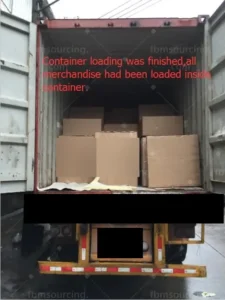
- Inspection and container loading: once production is finished, before shipment
- Ocean freight: transit time is confirmed by the carrier at booking, plus customs and inland delivery
That is around four months from deposit to shipment before the ocean leg even starts — which is why FF&E procurement that starts when the building is nearly finished ends in air freight bills or a delayed opening. Sequencing also applies across areas: floors that finish first receive furniture first, so container loading plans should group goods by building zone, not by factory convenience. Public areas usually ship last because hotel lobby furniture and amenity pieces are the most design-sensitive items with the longest approval loops.
Why Is Multi-Factory Coordination the Real Job?
A single FF&E furniture package routinely spans a casegoods factory, an upholstery workshop, a metal fabrication plant, a mattress producer and a lighting maker — and the OS&E workstream adds textile, ceramics and small-appliance factories on top. Each has its own lead time, packing standard and quality risks. The procurement function — whether in-house or through a sourcing agent — has to hold all of them to one specification system, one labelling scheme (building / floor / room type on every carton) and one consolidated loading plan, with QC before shipment run by the agent’s own team in each factory and recorded in photos and video. Our approach to this coordination is documented in the hotel FF&E procurement guide and in student accommodation furniture procurement.
Get a Quotation for Your FF&E and OS&E Package
Send FBM Sourcing your room-type matrix or FF&E schedule, drawings, reference images, destination port and target opening date. Our team will review it and get back to you.
FBM Furniture
If your package is mainly apartment and student accommodation furniture, see apartment and student accommodation furniture on fbmfurniture.com, the site of FBM Furniture, the furniture sourcing line of FBM Sourcing Limited.