Restaurant chains source kitchen equipment and OS&E from China for multi-unit rollouts by freezing a standardized store SKU list covering the cooking line, refrigeration, stainless fabrication and smallwares — qualifying a fixed factory panel against NSF/ETL or CE certification plus the destination country’s gas standard, then repeating consolidated per-store container shipments on a set cadence. One new store’s complete back-of-house package is usually planned as one 40ft container, with the fill set in the load plan, is quoted at equivalent specification against the frozen SKU list, and runs on a cycle from purchase order to store delivery that is set by the factories’ lead times and the carrier’s transit time. A china sourcing agent and sourcing partner holds the factory panel, the certification files and the multi-factory consolidation so store 12 receives exactly the same kit as store 2 — which is the entire point of a rollout.
This guide covers the back-of-house scope: commercial cooking equipment, refrigeration, stainless steel fabrication, and the OS&E layer of utensils, tableware and small appliances. The front-of-house side — seating, tables, lighting, wall and floor finishes — is covered separately in restaurant chain buildout FF&E sourcing from China; the two packages run in parallel on most chain programs but are bought from entirely different factory clusters. The furniture side of that rollout machine — spec books, brand consistency and batch container economics — is broken down in our guide to restaurant chain furniture procurement.
The core mechanics of a repeatable store kit:
- Standardized SKU list: 150–300 line items per store format, version-controlled, priced and certified once — then reordered, not re-sourced
- Certification set by destination: NSF/ANSI plus ETL or UL for North America, CE with EN 203 gas approval for Europe, AGA/WaterMark evidence for Australia, G-Mark for the Gulf
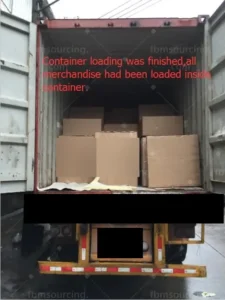
- Consolidation: equipment from 8–15 factories staged at one warehouse in Guangdong and loaded as one container per store, labeled by kitchen station
- Cycle time: production lead times confirmed by each factory in writing, then consolidation and loading, then ocean transit confirmed by the carrier at booking
- Landed cost driver: specification and certification, not unit price against local foodservice dealer pricing at the same written specification, larger on stainless fabrication and smallwares
What Goes into a Multi-Unit Kitchen and OS&E Package
A chain restaurant back-of-house package breaks into four groups, and each group is made by a different type of Chinese factory — there is no single “kitchen equipment factory” that credibly makes all of it:
- Cooking line: gas and induction ranges, griddles, charbroilers, fryers, salamanders, combi and convection ovens, wok stations, pizza decks. Export production concentrates in Guangdong (Foshan, Zhongshan, Jiangmen) with a second cluster in Zhejiang
- Refrigeration: reach-in and undercounter refrigerators and freezers, prep tables, blast chillers, display cases, walk-in panels and remote condensing units. Strong factories in Guangdong and Jiangsu; compressor brand (Embraco, Danfoss, Secop versus unbranded) is the single biggest quality lever
- Stainless fabrication: work tables, sinks, shelving, exhaust hoods, wall cladding, pass windows — made to your kitchen drawings, not from a catalog. This is where the drawings do the work: custom 304 stainless fabrication is quoted against your own kitchen drawings rather than a catalogue line
- OS&E smallwares: pots, pans, gastronorm pans, utensils, cutting boards, storage boxes, tableware, glassware, and counter-top small appliances like blenders and rice cookers. Individually cheap, collectively a meaningful share of the package value and a large number of SKUs of pure administrative load — exactly the layer chains most often under-manage
The budget shape of a quick-service or casual-dining store package: the cooking line, refrigeration and stainless fabrication each take a meaningful share of the ex-factory value, with OS&E a smaller share. A complete package for one store usually fits within one 40ft container, with the fill set in the load plan — which is why “one store, one 40ft container” is the standard planning unit, with the balance of the cube used for spare parts, attic stock smallwares or front-of-house items.
Which Certifications Does China-Made Kitchen Equipment Need in Your Market?
Certification is the first filter on the factory panel, because it cannot be fixed after the fact. A health inspector or utility connection engineer who rejects an uncertified fryer stops a store opening; the replacement unit then travels by air at ten times the freight cost. The requirements split cleanly by destination:
- United States and Canada: food-contact and hygiene design to NSF/ANSI standards (NSF/ANSI 2 for food equipment, NSF/ANSI 7 for refrigeration), electrical safety to UL 197 shown by a UL or ETL listing, and gas appliances certified to the applicable ANSI Z83 series with CSA evidence. “NSF-style stainless” on a datasheet is not a listing — the model number must be searchable in the certifier’s public database
- Europe and the UK: CE (UKCA for Britain) marking, with gas-fired appliances certified under the Gas Appliances Regulation via EN 203 series testing, and LVD/EMC files for electric units. Food-contact surfaces should carry LFGB or EU 1935/2004 test evidence
- Australia and New Zealand: gas equipment needs AGA or equivalent GTRC certification, electrical items need RCM marking, and anything plumbed needs WaterMark — the same certification family covered for sanitary products in our sanitary ware certification guide
- Gulf states: G-Mark for low-voltage equipment, SASO/SABER conformity for Saudi Arabia, and Dubai Municipality food-equipment approval on some categories
Gas is the detail that catches rollouts. The same charbroiler is built differently for a US store (natural gas at 7″ W.C. or propane at 11″ W.C., ANSI-pattern regulator) than for a European one (G20/G30/G31 categories under EN 203, different injector orifices and connection threads). The purchase order must state gas type, supply pressure and destination standard per line item — and when a chain operates across markets, the SKU list holds a per-market variant of every gas appliance. Factories handle this routinely when it is written down, and ship their domestic-market configuration when it is not.
Why the Master SKU List Is the Whole Strategy
Chains that treat each store as a new procurement project pay three times: re-quoting cost, specification drift, and schedule risk. The alternative is boring and effective — a master equipment list, built once, that specifies for every line item the model, capacity, dimensions, utilities (gas type, voltage, plug pattern, water connection), certification, packing spec and agreed unit price. From then on, opening a store is issuing a release order against the list, not running an RFQ.
Three practices make the list durable across a 10–30 store program. First, version control with change discipline: when the operations team swaps a 40L fryer for a 55L one, that becomes list revision 6, priced and certified before it enters any store order — not a verbal change absorbed mid-production. Second, price locks with review windows: fix pricing for a defined period or store count, with steel and freight indexation handled explicitly rather than through quiet unit-price creep. Third, spare parts on the list: burner valves, fryer thermostats, door gaskets, caster sets — a spares kit per store, shipped in the same container, is the difference between a quick fix and a fryer down for weeks waiting on an air parcel.
Sourcing this for a commercial project?
FBM Sourcing works with project owners, developers, main contractors and FF&E contractors on hotel, apartment, school, office and other commercial building projects. Send us your BOQ, drawings or product list — our team will review it and get back to you.
How Do You Consolidate Equipment from a Dozen Factories into One Container per Store?
A single store kit draws on 8–15 factories: the range factory does not make refrigeration, the refrigeration factory does not bend stainless, and no equipment factory wants to supply 200 smallwares SKUs. Shipping each factory’s output separately produces a dozen part-loads, a dozen sets of destination charges and a receiving nightmare at a site that has no storage. The workable model is consolidation: every factory delivers to one bonded or export warehouse — for kitchen equipment programs this is almost always in the Guangzhou–Foshan area, close to both the Guangdong equipment cluster and the Foshan building material market ecosystem where front-of-house finishes are bought — where the store kit is assembled, checked against the packing list, and loaded as one container.
The details that make consolidation work on restaurant programs specifically:
- Station-level labeling: every carton marked for its kitchen station (cook line, prep, dish, dry store, bar) so site unloading follows the kitchen drawing instead of a treasure hunt
- Arrival-window management: stainless fabrication and refrigeration finish on different lead times, each confirmed by its factory in writing; the consolidation schedule is built backwards from vessel cut-off so no factory’s delay silently strands the whole store
- Load engineering: heavy cooking equipment low and forward, walk-in panels flat-packed against the walls, smallwares cartons filling voids — a competently loaded store kit uses noticeably less cube than a factory-by-factory load
- One document set: a single consolidated commercial invoice and packing list per store, which keeps destination clearance to one event instead of twelve
Port and export handling mechanics for South China loads are covered in more depth in our guide to using a shipping agent in Guangzhou. For multi-country chains, the same consolidation warehouse serves every market — only the certification variant and the gas configuration on the SKU list change per destination.
Project QC: Testing Equipment the Way a Kitchen Will Use It
Kitchen equipment fails in specific, predictable ways, so the inspection plan targets those points rather than generic AQL cosmetics. On the cooking line: live burn test on every gas unit (ignition, flame pattern, thermostat cycling at set temperature), verification of the gas configuration plate against the destination spec, and a check that regulator and hose kits for the destination are actually in the carton. On refrigeration: a pull-down test — the cabinet must reach its rated temperature within the manufacturer’s stated time at loaded ambient — plus compressor brand verification against the purchase order, because a swapped compressor is the classic silent downgrade. On stainless fabrication: material verification with a spectrometer or at minimum a magnet-and-acid check (201 stainless passing as 304 is the most common fraud in the category), gauge measurement against drawings, and weld and edge finish inspection since kitchen staff work against these edges daily.
For a rollout, the store-1 kit matters more than any later pre-shipment check: it gets a full inspection at every factory before shipment, deviations are corrected and the corrected state is documented as the reference standard — then stores 2 through N are inspected on a sampling basis against that reference at a fraction of the cost.
Where the Cost Sits in a Store Kit
Cost is not distributed evenly across the package. Custom stainless fabrication is the largest single block, because it is labor-dense work quoted against your own drawings rather than taken from a catalogue. Smallwares and OS&E are bought factory-direct at store-kit volume, which is what removes the dealer tier from the chain. Cooking equipment and refrigeration must be compared at the same certification level — NSF/ETL or CE plus the destination country’s gas standard — not against premium US or European brand names, which occupy a different tier. Blended across a full store kit, chains reliably see 30–a materially different landed cost; on a 10-store rollout with a full back-of-house package per store, that difference funds one to two additional store openings.
The cost model should be built on landed numbers from day one: ex-factory value is usually the largest share of landed cost for this category, with the balance in packing, inland haulage, ocean freight, insurance, destination charges, duties and QC. We saw the same structure hold on the front-of-house side of a multi-site program in our South Africa restaurant and bar furniture project, where consolidated project buying — not item-by-item price hunting — produced the saving that survived to the final account.
Rollout Timeline: Store 1 Is a Project, Store 12 Is a Reorder
The first store carries all the one-time work: SKU list development and certification verification, factory panel qualification with samples of contested items (overlapping), then production on each factory’s written lead time, consolidation, and ocean transit confirmed by the carrier at booking.
Every subsequent store skips the front end entirely: release order against the master list, production, consolidation, sail — a steady, repeatable cycle. Chains opening monthly simply overlap the cycles, holding two to three store kits in the pipeline at any time; the sourcing agent’s job becomes pipeline management — tracking each store’s kit against its opening date and flagging any factory slippage while there is still schedule to spend. The operational rule that protects openings: release each store’s order the day its site is confirmed, not when construction reaches fit-out. The container is the item on the critical path that no local trade can accelerate later.
Get a China Procurement Quote for Your Project
FBM Sourcing manages complete back-of-house and OS&E packages for restaurant chains and multi-site food operators — SKU list development, certified factory panel, project QC and one-container-per-store consolidation — alongside full building materials and FF&E procurement from China for the rest of the buildout. Send us your kitchen drawings, equipment schedule or an existing store’s equipment list, and our team will review your requirements and get back to you.
Frequently Asked Questions
How many factories typically supply one restaurant’s kitchen and OS&E package?
A single store kit usually draws on 8-15 factories, since no one factory makes the full range – ranges, refrigeration, stainless fabrication and smallwares each come from different specialists.
What is a master SKU list, and why does it matter for chain rollouts?
A master equipment list built once, specifying model, capacity, utilities, certification, packing spec and agreed price for every line item, so opening a new store becomes issuing a release order against the list rather than running a fresh RFQ each time.
How long does the first store in a rollout take versus later stores?
Store 1 takes the longest because it carries the one-time work – SKU list development and factory panel qualification; for custom items, plan for about four months between deposit and shipment. Every subsequent store skips that front-end work and moves faster as a reorder against the approved list.