The FF&E items with the longest lead times on a hotel project are almost always custom Axminster carpet (typically 60–90 days production), custom decorative lighting (30–60 days) and custom casegoods (45–60 days) — which is why experienced procurement teams sequence orders backwards from the opening date, releasing the longest-lead categories first rather than ordering room by room. This guide gives typical production windows for every major FF&E category, a backward-scheduling method for order sequencing, and the sample-approval and multi-factory factors that quietly stretch the critical path — the same framework a China building materials and FF&E procurement partner applies on live hotel programs. FBM Sourcing operates as a sourcing agent and sourcing partner, not a trading company.
- Longest-lead categories: custom Axminster carpet 60–90 days, custom lighting 30–60 days, custom casegoods 45–60 days — typical production windows after sample sign-off.
- Mid-range: upholstered seating 35–50 days, stone countertops and vanity tops 30–45 days.
- Shortest: standard catalog items (mattresses, standard lighting, artwork frames, accessories) 15–30 days.
- Sample development and approval adds 2–6 weeks before production even starts on custom items — it must be planned as its own scheduled phase.
- Rule of thumb: release the longest-lead purchase orders first, so every category lands in the same installation window instead of the slowest item setting a late opening date.
Which FF&E Categories Take the Longest to Produce?
Lead time in FF&E is driven by customization depth, not by product size or price. A fully custom item needs shop drawings, material procurement, tooling or loom setup and sample approval before mass production; a catalog item skips almost all of that. Here are the typical production windows we see on hotel programs, counted from approved sample and deposit to goods ready at factory:
- Custom Axminster carpet: 60–90 days. Yarn dyeing to the approved colorway, loom scheduling and weaving make woven Axminster the single longest-lead FF&E category on most hotels. Machine-tufted custom carpet runs shorter, typically 30–45 days.
- Custom decorative lighting: 30–60 days. Chandeliers and feature pendants with custom finishes, glasswork or destination-specific electrical certification sit at the top of that range.
- Custom casegoods (wardrobes, headboards, desks, minibar units): 45–60 days. Veneer sourcing, finishing lines and hardware integration set the pace.
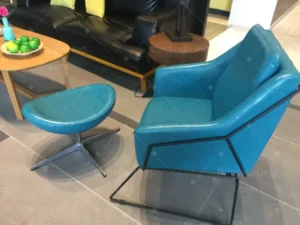
- Upholstered seating (lounge chairs, sofas, banquettes): 35–50 days. Frame build plus fabric lead time; COM fabric from a separate mill can add 2–4 weeks if not ordered early.
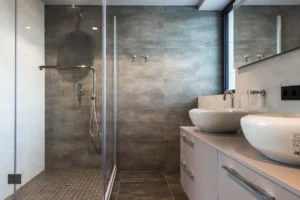
- Stone countertops and vanity tops: 30–45 days. Slab selection, cutting, edge profiling and crating.
- Standard catalog items (mattresses, standard fixtures, accessories, artwork in stock frames): 15–30 days.
The comparison worth memorizing: the spread between the fastest and slowest FF&E categories is roughly 60–75 days — two and a half months of schedule risk hiding inside a single furniture package if everything is ordered on the same day, or worse, in the wrong order. For how carpet construction choice itself changes the numbers, see Axminster vs tufted vs carpet tile for hotel projects.
Why Do Custom Carpet and Lighting Sit on the Critical Path?
Two structural reasons. First, both categories carry a serial production chain that cannot be parallelized: Axminster yarn must be dyed before weaving can start, and looms are booked in slots — miss your slot because a colorway approval slipped, and the next slot may be 1–2 weeks later. Custom lighting has the same property: metal finishing, glass components and electrical testing happen in sequence, and export markets add certification steps (UL/ETL documentation for the US, CE for Europe) that must be completed before shipment.
Second, both are installed late but ordered early — carpet goes down near the end of fit-out, feature lighting hangs after ceilings close. Teams instinctively schedule purchases in installation order, which is exactly backwards. On a typical hotel program, custom Axminster ordered at 75 days production plus 30 days shipping needs its purchase order released at least 15 weeks before the installation date — usually months before anyone is thinking about floor coverings on site.
Guestroom casegoods are the third permanent resident of the critical path, for a different reason: volume. Producing 200 rooms of wardrobes and headboards occupies a factory’s finishing line for weeks, so the production window only starts when a slot opens. Booking that slot early — even before final finish approval, with the slot held against an approved schedule — is a standard move a sourcing agent makes to protect the date; our guide to hotel casegoods and FF&E manufacturers in China shows what that production landscape looks like.
How Does Backward Scheduling from the Opening Date Work?
Order sequencing on a hotel project is a subtraction exercise. You fix the opening date, subtract the installation period, subtract shipping, subtract production, subtract sample approval — and what remains is the last responsible order date for each category. Because each category has different numbers, each gets a different order date, and the sequence writes itself.
Worked example for an opening on day 0, sea freight at 30 days, installation window closing 21 days before opening:
- Axminster carpet (90-day window + 30 shipping + 21 install buffer): release PO by day −141 — about 4.5–5 months out.
- Custom casegoods (60 + 30 + 21): release by day −111.
- Custom lighting (60 + 30 + 21): release by day −111, earlier if destination certification is needed.
- Upholstered seating (50 + 30 + 21): release by day −101.
- Stone tops (45 + 30 + 21): release by day −96.
- Standard items (30 + 30 + 21): release by day −81, comfortably last.
Add sample approval (next section) in front of every custom line and the true first commitment on carpet and casegoods lands 5–6 months before opening. This category-level sequence slots inside the full program arc — budgeting, tendering, contracts — covered in our phase-by-phase hotel FF&E procurement timeline from China; use that piece for the whole journey in months, this one for the order in which POs leave the door.
Sourcing this for a commercial project?
FBM Sourcing works with project owners, developers, main contractors and FF&E contractors on hotel, apartment, school, office and other commercial building projects. Send us your BOQ, drawings or product list — our team will review it and get back to you.
How Much Time Does Sample Approval Add Before Production Starts?
Every production window quoted above starts at approved sample — not at purchase order. The gap between the two is the most underestimated block of time in FF&E procurement. For a custom item the cycle runs: shop drawings (3–7 days), drawing approval by the design team, prototype or material sample production (7–21 days depending on category), sample review, and usually one revision round. In practice, sample development and approval consumes 2–6 weeks per custom category before mass production can begin — and a slow design-side review can double it.
Three planning rules keep this phase off the critical path. First, run all category samples in parallel, not sequentially — carpet strike-offs, casegoods finish panels, seating prototypes and stone samples can all be in development the same fortnight. Second, give the design team a contractual review window (5 working days is workable) so approvals do not drift. Third, for the longest-lead items, approve materials early even if final drawings are still moving — a signed-off yarn colorway lets the mill dye while details are finalized. The full mechanics, including what a strike-off and a finish panel actually are, is covered in how sample approval works when sourcing FF&E from China.
What Is the Critical Path When Multiple Factories Are Involved?
A full hotel FF&E package rarely comes from one factory. A typical program runs 6–12 specialized producers in parallel: a casegoods plant, a seating workshop, a carpet mill, a lighting factory, stone fabricators and several catalog vendors. That parallelism is the whole advantage of manufacturing in China’s furniture belt — but it turns the schedule into a coordination problem.
The critical path is simply the longest chain of dependent dates across all factories, and it shifts. Carpet usually owns it at program start; if a casegoods finish gets revised in week 6, casegoods can take it over. Managing this means tracking every factory weekly against the same master schedule and re-sequencing when reality moves. Two numbers matter for control: a weekly progress cadence across all factories, and inspection before shipment gates at 30%, 80% and 100% of production — all inspections carried out by FBM Sourcing’s own team at the factories, with photo and video records delivered before shipment, so slippage surfaces in days rather than at a missed shipment.
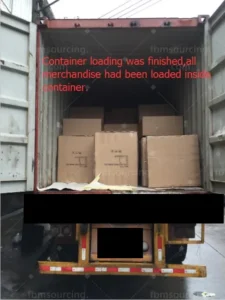
The second multi-factory decision is shipment structure: hold all factories to one consolidated shipping window, or ship the long-lead items ahead? Consolidation simplifies logistics and installation; split shipments protect the opening date when one category slips. Container mathematics drives the answer — a 150–200 room hotel typically ships 8–15 × 40ft containers, enough volume to structure waves by installation sequence; see our hotel FF&E container planning guide for the load logic.
Sequencing Orders with Shipping and Installation in Mind
The final discipline is remembering that goods-ready-at-factory is not the finish line. Sequencing should deliver categories to site in installation order: flooring and carpet first, casegoods and fixed furniture next, loose furniture and lighting after, accessories last. Since the categories that install first (carpet) are also the slowest to make, the backward schedule naturally produces the right arrival order — if it is actually followed.
Practical sequencing habits from live projects: build a 1–2 week buffer between planned arrival and installation start for every category; never let the fastest categories ship first just because they are ready — site storage is scarce and standard items can wait at origin; and appoint one party to own the arrival schedule end to end. On the receiving side, warehousing, delivery slots and floor-by-floor distribution have their own chain of responsibility, mapped out in who handles FF&E delivery, warehousing and installation on a hotel project.
This is the core of what a china sourcing agent contributes on a hotel program: not just factory pricing, but ownership of the sequence — releasing POs in lead-time order, policing sample approvals, walking factories weekly, and structuring shipments so the opening date is protected by design rather than rescued by airfreight. FBM Sourcing runs this as a complete service from Foshan on a transparent a 5% commission for suppliers you nominate (products we source for you are quoted at a direct price).
Frequently Asked Questions
Which FF&E item has the longest lead time on a hotel project?
Custom Axminster carpet, at a typical production window of 60–90 days after colorway approval, plus shipping. Custom decorative lighting and custom casegoods follow at 30–60 and 45–60 days respectively. These three categories should receive the first purchase orders on any hotel FF&E program.
How early should FF&E orders be placed before a hotel opening?
Working backwards from opening: the longest-lead items (custom carpet, casegoods) need purchase orders released roughly 4–5 months before opening, and 5–6 months once sample approval is included. Standard catalog items can be released as late as 2.5–3 months out.
Does sample approval happen before or during production lead time?
Before. Quoted production windows start from an approved sample, and the approval cycle — shop drawings, prototypes, strike-offs and revisions — typically takes 2–6 weeks per custom category. Running all category samples in parallel keeps this phase from extending the critical path.
Can long-lead FF&E items ship ahead of the rest of the package?
Yes, and on tight programs they should. Splitting shipments lets carpet and casegoods travel as soon as they pass final inspection while shorter-lead categories follow in a second wave, arriving in installation order. The trade-off is more logistics coordination, which the party managing procurement should own end to end.
Related reading: what lead-time buffer a construction schedule should allow for China procurement.
Get a China Procurement Quote for Your Project
If you are holding an FF&E schedule for a hotel, apartment or other commercial building project, send it to us — even in draft. FBM Sourcing will map every category to a realistic production window, build the backward order sequence against your opening date, and return a procurement plan with budget structure on a 5% commission for suppliers you nominate (products we source for you are quoted at a direct price). Use the quote button above or message WhatsApp +86 135 6007 5057 — our team will review your requirements and get back to you.