Freestanding wardrobes and built-in wardrobe cabinets are sourced from different types of factories in China, and choosing between them is a project-scope decision as much as a design one. Built-in cabinetry is installed as part of a joinery package coordinated with the general contractor, while freestanding wardrobes are furniture pieces that ship and install independently of the building fit-out schedule. Getting this distinction right at the specification stage avoids ordering the wrong category from the wrong factory later in the project. That is the role FBM Sourcing plays as a sourcing agent and sourcing partner on projects like this.
What Separates the Two Categories
Built-In Wardrobe Cabinets
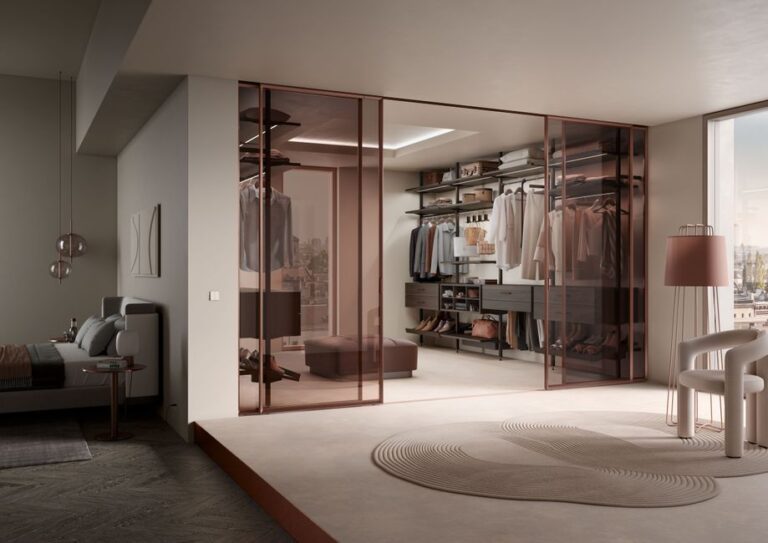
Built-in cabinetry is manufactured to fit a specific opening — dimensions are taken from as-built or architectural drawings, and the carcass, doors, and internal fittings are produced to match that exact space. This category is coordinated with the joinery or interior fit-out contractor, since installation typically happens during the fit-out phase alongside other built-in cabinetry such as kitchen units. Our separate guide to wardrobe cabinet sourcing covers this category in detail.
Freestanding Wardrobes and Closet Furniture
Freestanding wardrobes are standard furniture items — they do not require exact opening dimensions, ship as complete or flat-packed units, and can be installed by anyone without joinery-level coordination. This is the more common choice for furnished apartments, rental units, student accommodation, and any project where the interior fit-out does not include built-in bedroom cabinetry as part of the base building scope.
Which Category Fits Your Project?
- Choose built-in cabinetry when bedroom joinery is part of the base fit-out scope, floor plans are finalized with exact room dimensions, and the project has a joinery contractor coordinating installation with other built-in millwork.
- Choose freestanding wardrobes when units are being furnished rather than fitted out with joinery, when the project needs flexibility to adjust unit mix or layout without re-specifying cabinetry, or when furniture and building fit-out are on separate procurement tracks.
- Mixed approach: some developments use built-in cabinetry in standard units and freestanding wardrobes in show suites or furnished rental units within the same building — this is common and not a sourcing conflict, since the two categories are ordered and delivered independently.
Sourcing and Lead Time Differences
Built-in cabinetry generally requires as-built dimension confirmation before production can start, which adds a verification step that freestanding furniture does not need — a freestanding wardrobe is produced to a standard specification regardless of the exact room it will occupy. This means freestanding wardrobe orders can typically be placed and produced earlier in a project timeline, while built-in cabinetry often has to wait until the relevant wall dimensions are locked in on site or in final architectural drawings.
On the other hand, built-in cabinetry eliminates gaps and sizing mismatches that can occur when a freestanding wardrobe does not perfectly fit an intended alcove or wall run — a freestanding unit is a fixed size regardless of the room, so any mismatch between furniture dimensions and available space needs to be caught at the floor-plan design stage rather than corrected at the factory.
Sourcing this for a commercial project?
FBM Sourcing works with project owners, developers, main contractors and FF&E contractors on hotel, apartment, school, office and other commercial building projects. Send us your BOQ, drawings or product list — our team will review it and get back to you.
QC Differences Between the Two Categories
Built-in cabinetry inspection focuses heavily on dimensional accuracy against the confirmed opening, plumb and level of installed panels, and integration with adjoining millwork. Freestanding wardrobe inspection focuses on door alignment and soft-close or sliding function, internal shelf and rail load capacity, and flat-pack hardware completeness — since a freestanding piece needs to assemble correctly on site without a joinery installer verifying fit as work progresses. Both categories are inspected against AQL sampling standards, but the specific defect points an inspector checks for differ by category.
Cost Comparison Between the Two Categories
Freestanding wardrobes are usually the lower-cost option per unit at container scale, since they are produced to a standard specification across a full production run rather than customized per opening. Built-in cabinetry typically carries a cost premium tied to the dimensional verification, custom sizing, and closer coordination with the fit-out contractor, but it removes any risk of a furniture piece not fitting the intended space. For large multi-unit projects with repeated floor plans, this cost gap narrows because the same built-in cabinet dimension can be produced across every matching unit type — the customization cost is paid once per floor plan, not once per unit.
Common Mistakes When Choosing Between the Two
- Specifying built-in cabinetry before floor plans are finalized: this risks a dimension mismatch if room sizes shift during design development, since built-in units are cut to a fixed opening.
- Defaulting to freestanding furniture for standard units without checking joinery scope: if the base building contract already includes built-in bedroom cabinetry, ordering freestanding wardrobes on top duplicates the storage allowance and adds unnecessary cost.
- Assuming one factory can produce both categories to the same standard: built-in cabinetry and freestanding furniture come from different types of production lines, and a factory strong in one is not automatically strong in the other.
- Not confirming installation responsibility: built-in cabinetry typically requires a site installation team coordinated with the fit-out contractor, while freestanding wardrobes can usually be installed by the same team handling general furniture delivery — confirm this before the goods arrive on site.
Sourcing Both Categories on the Same Project
It is common for a single development to use built-in wardrobe cabinetry in standard unit types and freestanding wardrobes in furnished show suites, rental-managed units, or student accommodation blocks within the same project. As a furniture sourcing agent and building material sourcing agent, FBM Sourcing manages both categories in parallel when a project needs them — coordinating built-in cabinetry against the fit-out contractor’s installation schedule while tracking freestanding wardrobe production against the furniture delivery program, so neither category holds up the other.
FBM Furniture
If your package is mainly fixed furniture and joinery, see fixed furniture and joinery on fbmfurniture.com, the site of FBM Furniture, the furniture sourcing line of FBM Sourcing Limited.
Get a China Procurement Quote for Your Project
Whichever category fits your project, send us your furniture schedule or drawings, unit count and bedroom mix, and destination port and timeline, and we will confirm which sourcing route applies and return a procurement plan.
Submit your project requirements and our team will respond with a sourcing plan. See our freestanding wardrobe and closet furniture sourcing page or our built-in wardrobe cabinet sourcing page for full product specifications.
Related reading
- Specifying Fixed Glass and Curtain Wall Panels When Sourcing from China
- Sliding vs Casement Windows: Which Should Your Project Source from China?
- Fire-Rated vs Non-Fire-Rated Doors: Which Do You Need for Your Project?
Related reading
For repeated Australian apartments, the built-in wardrobe manufacturers guide adds a unit-type drawing matrix and product-evidence questions to the freestanding-versus-built-in decision.