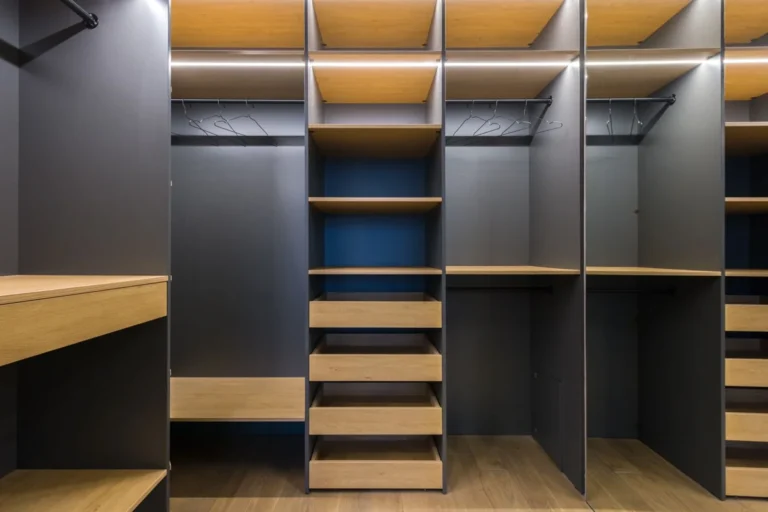
For Australian apartment projects, a useful China wardrobe shortlist starts with the ability to repeat a dimensioned cabinet module across unit types and control every drawing revision. Public filings identify Chinese listed groups with custom-wardrobe product lines, including Suofeiya Home Collection and Zbom Home Collection. Their listed status and category disclosure do not prove that a particular Australian project, model, plant or finish is approved; the project team still needs item-level evidence.
This guide is for developers, builders, general contractors and FF&E solution providers preparing apartment or build-to-rent packages. It separates disclosed listed-company capacity from manufacturer types that may be relevant but are not named without current primary evidence. It is a category shortlist and specification method, not a ranking by sales or a promise that one company is suitable for every building.
What belongs in an apartment wardrobe package?
A wardrobe schedule should identify each unit type and every room where a cabinet is required. Built-in wardrobes, walk-in closets, laundry cabinets and hallway storage can look related while having different substrates, clearances, hardware and installation boundaries. Treat each as a separate item or a clearly defined module variation. Use one stable item code in the drawing, quotation, sample register, carton label and site defects list.
Give the supplier architectural dimensions, plan and elevation, ceiling and wall conditions, door swing, internal shelf and hanging arrangement, skirting and service conflicts. If the drawing is incomplete, mark the unconfirmed detail as pending. Do not present a mood image as proof of a finished construction. The price should state its assumptions, especially where a supplier proposes its own board, edge, handle or hinge.
For a repeated apartment development, the count by unit type matters. A small difference between mirrored units can change handle orientation, scribe piece, door handing or shelving position. A sample apartment should therefore be used to confirm the module before bulk production, and the resulting drawing revision should govern every subsequent unit of that type.
Which listed Chinese companies have a disclosed wardrobe line?
Suofeiya Home Collection Co., Ltd. (Shenzhen Stock Exchange: 002572) reports custom wardrobes and related custom furniture as a named business in its 2025 annual report. The exchange’s 2026 half-year report also identifies the current company and ticker. That supports including it as a publicly disclosed wardrobe producer. It does not establish that a particular export entity or model has the documents needed for an Australian apartment scheme. Ask which legal entity and production plant would make the proposed wardrobes and which drawing and material evidence that entity will issue.
Zbom Home Collection Co., Ltd. (Shanghai Stock Exchange: 603801) identifies custom wardrobes alongside its kitchen-cabinet business in its filed material. A 2025 annual-report record discusses wardrobes as a core product category, and prior exchange disclosures describe project-channel work. Its inclusion here is for its disclosed custom-wardrobe role, not an endorsement of a specific building’s specification or a claim of Australian project history. Confirm the current listed entity, product line and actual factory arrangement before a name is used on a formal shortlist.
These are not ranked first and second. They are two named examples for which category-level public evidence exists. The relevant comparison for the project is the proposed wardrobe system, drawing management, sample response, board and hardware documentation, packing and site support. A large listed group and a smaller specialist can offer different production routes; their names alone do not settle that choice.
Which other manufacturer types should be considered?
| Manufacturer type | Best matched work | Evidence to request |
|---|---|---|
| Custom panel-joinery factory | Repeated built-in wardrobe modules | Cutting list, board and edge identity, drawing revision control |
| Sliding-door system specialist | Long runs or tight circulation | Track and roller specification, door weight and service method |
| Wardrobe hardware specialist | Pull-outs, rails and storage accessories | Exact hardware model, fit and replacement-part route |
| Mixed joinery-package maker | Wardrobes plus laundry or hallway cabinets | Product allocation and producing entity per cabinet type |
A type-based entry is not a hidden named factory. It tells the project team what production capability to look for and what item evidence must be supplied. A trading catalogue can show all four types without making the catalogue owner the producer of each. Keep the producing entity visible internally for each line of the quote.
How is an Australian apartment brief different from a generic wardrobe quote?
The destination is not a decorative title. Give the site location, building and room use, drawings issued by the Australian design team, consultant-specified material requirements, installer scope and apartment handover sequence. The project team must decide which local building and product requirements apply; a China supplier should not guess them from the word “Australia.” Ask for the relevant evidence on the exact board, finish and assembled cabinet where required.
Moisture exposure differs by room. A bedroom wardrobe, a laundry cabinet and a cabinet next to a wet area should not automatically use one unspecified board. The designer should identify the exposure and proposed construction for each location. Request edge treatment and base details, especially where cleaning water or a tiled floor can contact the cabinet. Do not infer that a marketed “moisture-resistant” label alone covers every installation condition.
Australia’s project team also needs installation information. A cabinet maker should supply component and fixing details, but the local installer must check the real wall substrate, services and clearances. The RFQ should state whether the factory price includes only ex-factory cabinets, packing, installation templates or additional work. Keep the commercial and physical scope clear without importing a generic installation promise.
Our built-in wardrobe manufacturer guide covers the wider multifamily product category. This article adds the Australian destination, unit-type schedule and local installation interface.
Planning wardrobes for an Australian apartment project?
Send the unit-type schedule and drawings so cabinet constructions and factory quotations can be compared on one basis.
What should the drawing set show?
At minimum, include a plan, elevation and section for each distinct module. Show overall width, height and depth; openings; shelves; hanging rails; drawers; access panels; handles; sliding or hinged door travel; edge and scribe conditions; wall and ceiling interface; and any lighting or electrical component. A cabinet that changes at a pipe chase or bulkhead should have a separate detail. The shop drawing should identify the source architectural drawing and revision used.
Ask the factory to return marked-up queries rather than fill gaps silently. Every proposed change should show the original requirement, the proposed alternative and its effect on visible appearance, installation or maintenance. A revised drawing is not approved merely because a price arrived with it. The project team needs to accept the drawing and sample in the approval register.
For repeated units, create a unit-type matrix: which wardrobe model belongs in which plan, which finish applies, and how many of each go to each floor or building. This becomes the production and carton-label reference. It reduces the chance that two cabinets of nearly identical size are installed in the wrong mirrored unit.
What material and hardware evidence is useful?
Request a material schedule identifying the board, face, edge banding, finish and hardware proposed for each item. The evidence should be tied to those components. A general factory brochure or old test report for a different panel does not establish the proposed cabinet’s material identity. If the project specification names a test method, compare the report’s date, material, tested entity and scope with the proposed item. Leave an unresolved gap as pending rather than replacing the project’s requirement with a supplier’s marketing phrase.
Wardrobe operation matters to the user: hinges, runners, handles, tracks, soft-close components and hanging rails all need actual product references. Confirm door opening without collision, drawer access when a bedroom door is partly open, and the ability to replace hardware later. A sample may show colour while failing to demonstrate the full opening or service access. Decide which features need a complete mock-up.
Our laminate-versus-veneer guide discusses a different finish-selection axis. Use it to frame questions, then let the approved Australian project specification decide the exact material.
How should samples and mock-ups be used?
A small finish chip can approve visible colour and surface. A panel sample can support review of the face, edge and backing combination. A complete wardrobe or room mock-up is useful where the project needs to confirm fit, operation and installation against a real wall. These approval levels should not be conflated. Record the item code and revision on each sample, the date of comments and who accepted it.
After the mock-up, amend the production drawing and issue an approved-for-production reference. If a hardware model changes, identify whether the replacement alters drilling or future spares. If a finish changes, check all affected unit types. Do not send one corrected drawing for a single apartment while the production schedule still points to an earlier detail for the rest of the building.
The broader process is explained in our flat-packed versus assembled FF&E guide. For wardrobes, that decision also affects site installation and damage exposure at edges and doors.
How should quotations and packing be compared?
Issue the same item schedule and drawings to each candidate. Ask each to identify included panels, doors, hardware, accessories, finish and packing, then list exclusions and alternatives. A quoted “wardrobe set” is not comparable if one proposal omits internal drawers or the other assumes a different board. Keep quantities by item code visible and insist that the quote cite the drawing revision.
Packing should match the site sequence. Components can be marked by cabinet, room, unit type and floor. Ask for protection of exposed corners and finished faces, hardware bags linked to their cabinet and instructions that the local installer can follow. A flat pack may reduce one handling constraint and create another; compare the actual carton set rather than an estimated container yield. Our furniture export-packing guide covers the wider shipment questions.
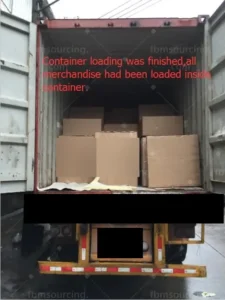
Sometimes, on a large project, the wardrobes alone fill full containers; sometimes the wardrobes share containers with the other product categories of the same project; and sometimes, in one batch, we combine a dozen or more product categories from several projects of the same client into a few containers — always full containers, and for us this is routine, well-practised work. The actual loading arrangement follows the approved packing list and load plan.
Where does the furniture-focused site help?
If the package is mainly built-in wardrobes, see fixed furniture and joinery on fbmfurniture.com, the site of FBM Furniture, the furniture sourcing line of FBM Sourcing Limited. Its product framing can help organise the item schedule; the Australian project drawings remain the controlling reference.
FBM Sourcing can act as the China sourcing partner for a company-led apartment package, coordinating factory quotations and one inspection by our own team at the factory once bulk production is finished, before shipment, with photo and video records. Your own project team is welcome to attend the inspection with us. The project team should send its current drawings and quantities before any product-specific conclusion is made.
Issuer evidence: Suofeiya 2025 annual report and Zbom 2025 annual report disclose wardrobe product lines at group level. They do not identify the plant or model for a future quotation.
\n
Use the current drawings, schedule and destination requirements as the basis for any supplier comparison. Record open decisions before accepting a revised quotation.
Frequently Asked Questions
Does a listed-company wardrobe line prove suitability for our Australian apartment project?
No. It establishes a publicly disclosed product category. The actual plant, model, drawings, materials and destination evidence must match the project.
Can one wardrobe drawing cover mirrored apartment units?
Only if door handing, services, clearances and visible finishes have been checked for each unit type and the drawing matrix records the result.
Should bedroom and laundry cabinets use the same board automatically?
No. The designer should identify exposure and required construction by location; suppliers should quote against those item-level requirements.
What should the sample apartment approve?
It should confirm fit, opening, interfaces, appearance and installation against the intended room, with comments captured in the production drawing revision.
What makes two wardrobe quotations comparable?
The same item codes, drawing revision, construction, hardware scope, quantity, finish and packing basis, with alternatives clearly separated.
About FBM Sourcing
FBM Sourcing manages the entire China procurement package for overseas construction projects. Since 2014 we have worked with developers, general contractors, builders, commercial project owners, interior design and construction companies and FF&E solution providers across more than 20 countries and over 1,000 containers, as their sourcing partner in China — from the schedule or BOQ through factory selection, sampling, one inspection by our own team at the factory once bulk production is finished, before shipment, with photo and video records, consolidation and shipping. All quotations, invoices and shipping documents are issued by FBM Sourcing, and sea freight is quoted to you before shipment. If you have an apartment wardrobe package to price, start at China building materials and FF&E procurement.