FIRA is not a law and “FIRA tested” is not a specification — FIRA International is a UK furniture testing and certification body whose laboratories are UKAS-accredited, and what it actually tests to is the BS EN series: BS EN 16139 for non-domestic seating, BS EN 15372 for tables, BS EN 16121 for storage and BS EN 1335 for office chairs, with the test level stated wherever the standard sets one. A Chinese factory passes by building the sample to the same bill of materials as the production run, having it tested at an accredited laboratory against the right standard and level, and then keeping production identical to what was tested. This guide sets out which standards a UK contract specification should call up, what the levels mean, where BS 5852 and the fire rules fit, what FIRA Gold is worth, and how UK developers and contractors source building materials from China without the testing turning into a programme risk. FBM Sourcing acts as your sourcing partner from specification through to shipment.
What Is FIRA, and Is “FIRA Tested” a Legal Requirement?
FIRA International is the Furniture Industry Research Association’s testing arm, based in Stevenage and part of the Element Materials Technology group since 2018. It runs furniture laboratories accredited by UKAS to ISO/IEC 17025 and it publishes guidance the UK trade treats as authoritative. What it is not is a regulator.
- No statute names FIRA: UK furniture law sits in the Furniture and Furnishings (Fire) (Safety) Regulations 1988 and in general product safety law. Neither requires testing by any named organisation.
- What a specification can require: a named standard, a named severity level, and a report from a laboratory accredited for that standard. That wording is enforceable; “FIRA tested” on its own is not, because it does not say to what.
- Why specifiers still write it: in UK contract work FIRA reports are the familiar format, and a project team can read one quickly. Accepting an equivalent accredited report keeps more factories in the tender.
- Accreditation is scope-specific: a laboratory accredited for BS EN 1728 seating tests is not automatically accredited for BS EN 16121 storage or for BS 5852 fire tests. Check the schedule of accreditation, not the logo.
Which BS EN Standards Actually Apply to UK Contract Furniture?
UK contract furniture is covered by a family of European standards adopted as BS EN, each pairing a requirements standard with a test-method standard. Quote both numbers plus the level, and the ambiguity disappears.
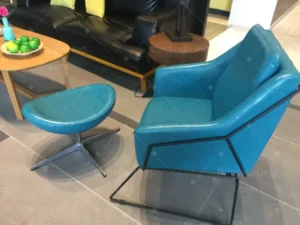
- Non-domestic seating: BS EN 16139:2025, which replaced BS EN 16139:2013 (many existing reports are still to the 2013 edition, with test methods in BS EN 1728:2012 and stability in BS EN 1022:2018, which was withdrawn in December 2023 and replaced by BS EN 1022:2023).
- Non-domestic tables: BS EN 15372:2023, test methods BS EN 1730.
- Non-domestic storage furniture: BS EN 16121:2023, test methods BS EN 16122 — this is the standard behind wardrobe, credenza and locker tipping and loading requirements.
- Office work chairs: BS EN 1335-1 (dimensions, types A, B and C) and BS EN 1335-2:2018 (safety, strength and durability requirements; the former Part 3 test-method standard was withdrawn in 2018).
- Educational furniture: BS EN 1729-1 (dimensions, size marks 0 to 7) and -2 (safety).
- Outdoor furniture: BS EN 581-1 (general safety), -2 (seating) and -3 (tables), with use categories including contract use.
- Beds and mattresses: BS EN 1957 for functional characteristics and BS EN 747-1/-2 for bunk and high beds. BS EN 1725 was revised in 2023 (BS EN 1725:2023, Furniture. Beds. Requirements for safety, strength and durability), so a specification still citing the withdrawn 1998 edition needs updating before it goes out to tender.
- The British legacy standard: BS 4875 (strength and stability of furniture) is still written into UK contract specifications, using severity levels 1 to 5. If your spec says “BS 4875 Level 5”, say whether the BS EN route is accepted as an alternative, or factories will quote against two different test regimes.
What Do the Test Levels Mean, and Which Should You Specify?
EN 16139 and its sister standards do not have a single pass mark. They define levels of use, and the same chair can pass at one level and fail at the next. Getting the level right is the single most valuable line in a furniture specification, because it drives frame section, joint type, foam grade and price.
- Two test levels in BS EN 16139:2013: test level 1 and test level 2, with test level 2 the heavier-duty level. The standard’s introduction states that its test level 2 reflects test level 3 of the withdrawn BS EN 15373, and its test level 1 reflects test level 2 of BS EN 15373 — so a “Level 2” report means a different severity depending on which of the two standards it cites.
- BS EN 16139:2025: the information on test severity in relation to applications sits in informative Annex F. Choose the test level for each area with reference to that annex and write the standard, edition and test level into the specification.
- General use and heavier-duty use: hotel guest rooms, offices, meeting rooms and restaurants are ordinary contract use; airport gate lounges, student accommodation common rooms, hospital waiting areas and 24-hour operations see heavy, continuous or careless use and are where the higher test level earns its cost. Bars and canteens deserve a line-by-line decision against the annex rather than an assumption.
- What the tests actually do: BS EN 1728 runs seat and back static loads, seat and back durability cycling, arm and leg static and fatigue loads, front-edge loading, impact and drop tests; BS EN 1022 checks forward, rearward and sideways stability. The forces and cycle counts for each test are set in the standard for each test level, so read them in the report body rather than from a summary sheet.
- Write the level, not the newton figure: requirements are revised between editions of the standard — BS EN 16139:2025 added, among other changes, leg rest requirements and a backward fall test. The standard, its edition and the test level written together are unambiguous; “tested to 1,600 N” is not, because a single force says nothing about the rest of the test programme.
- Marketing weight limits mean nothing: a “150 kg capacity” claim has no standing unless the EN 1728 report shows the static and fatigue results behind it.
The level also has to be consistent with the rest of the specification — there is no point buying a frame tested at the higher level and dressing it in a domestic-grade cover, a trade-off covered in our guide to which FF&E durability standards actually matter.
Which Fire Requirements Apply to Furniture on a UK Project?
The UK has the strictest furniture flammability regime in Europe, and it is a separate exercise from strength testing. Two documents matter, and they cover different things.
- The Furniture and Furnishings (Fire) (Safety) Regulations 1988 (amended 1989, 1993 and 2010) apply to upholstered furniture supplied for domestic use in the UK. Fillings and composites face cigarette and match ignition tests derived from BS 5852, and compliant items carry a permanent label; the separate display label requirement was removed from 30 October 2025.
- BS 7176 is the standard used for upholstered seating in non-domestic premises. It sorts furniture into low, medium, high and very high hazard, and each level maps to BS 5852 ignition sources: low uses sources 0 and 1, medium adds source 5 (the wooden crib known as crib 5), high adds source 7.
- Crib 5 is the normal contract requirement: hotels, student accommodation, offices and restaurants are usually specified as medium hazard, so seating is tested to BS 7176 medium hazard using BS 5852 crib 5.
- BS 7177 does the same job for mattresses, divans and bed bases, with the same hazard bands.
- The test is on a combination, not a fabric: a crib 5 result belongs to a specific cover, filling and, where used, interliner. Change the fabric and the certificate no longer applies — the reason a fabric schedule and a fire schedule have to be issued together, as our note on choosing contract-grade upholstery fabric explains.
Sourcing this for a commercial project?
FBM Sourcing works with project owners, developers, main contractors and FF&E contractors on hotel, apartment, school, office and other commercial building projects. Send us your BOQ, drawings or product list — our team will review it and get back to you.
What Is FIRA Gold, and When Is It Worth Asking For?
FIRA Gold is a private certification scheme, not a test standard. A product certificate requires a pass against the relevant BS EN standard at the stated level and adds an assessment of the manufacturing operation plus periodic re-assessment, so it speaks to consistency rather than one sample on one day.
- It is product-specific: a certificate covers a named model in a named specification, so FIRA Gold on one chair says nothing about the other eleven lines in your package.
- Certificates expire: the scheme runs on periodic re-assessment, so ask for the current certificate number and validity date, not a brochure scan.
- Where it helps: public sector and framework tenders where the evaluator wants a scheme name.
- Where it narrows your field: most Chinese factories are not in the scheme, so a mandatory “FIRA Gold certified” clause on a bespoke hotel package can cut the tender list to almost nothing. “FIRA Gold, or reports to the same standard and level from a laboratory accredited for it” keeps the field open and gets the same evidence.
- Related schemes: FIRA also runs ergonomics and manufacturing assessments, which are separate certificates — read which one you have been sent before treating it as strength evidence.
Do UK Projects Need UKCA or CE Marking on Furniture?
Mostly no, and specifications go wrong in both directions here. There is no general UKCA or CE marking regime for a chair, a table or a wardrobe — but certain items inside a furniture package are another matter.
- Not marked: ordinary seating, tables, casegoods and storage. Asking for “the CE certificate for the bedside table” produces a worthless document.
- Marked: anything electrical — lit mirrors, headboards with sockets, powered desks, integrated luminaires — falls under the UK electrical safety and electromagnetic compatibility regulations and needs the mark plus a declaration of conformity.
- Marked: items within the scope of the Construction Products Regulation, such as fixed metalwork and balustrades arriving with an FF&E package.
- Northern Ireland differs: CE and UKNI marking apply there, so a UK-wide rollout needs the position confirmed for both jurisdictions.
- Check the current position: recognition of CE marking in Great Britain has been extended for several regulatory areas — the detail is in our comparison of UKCA and CE marking for UK projects.
How Do Chinese Factories Actually Pass These Tests?
Chinese contract furniture factories pass BS EN tests routinely, and those that fail usually fail on identity and consistency rather than engineering. What you control is the tested sample and what happens after the certificate.
- Test the production build, not a show sample: the sample must carry the production frame timber and section, joint method, foam density and cover. A prototype that passes proves nothing about the container.
- Get the identity fields right: the report must name the model number, dimensions, frame material, joint construction, foam type and density, cover reference and the standard, edition and level. A report describing a different leg section is not your line.
- Use a laboratory accredited for the standard: several laboratories in China hold CNAS accreditation covering BS EN 1728 and related methods, and a UK project team may accept those reports or insist on a UKAS-accredited one. Settle that in the specification.
- Fire testing goes to a specialist: crib 5 work under BS 5852 and BS 7176 is a separate booking on the actual cover and filling combination; a mill’s fabric certificate does not cover the finished chair.
- Lock the bill of materials: a passed test freezes the specification, so any later change of foam grade, webbing, frame timber or fixings is a re-test trigger, not a running change.
- Retain a signed golden sample: the approved sample stays at the factory as the production reference — the difference between a certificate and a container that matches it.
Whether a UK design team accepts a submittal at all often turns on the difference between a factory’s bench data and an accredited report, which we set out in factory test reports vs accredited lab testing. Projects also buying for the US run the same lines through ANSI/BIFMA testing, a different regime with different levels.
For office work specifically, our list of office furniture manufacturers in China for UK and European projects maps these BS EN standards onto chairs, desks and storage, and names the listed makers whose filings can be checked.
How FBM Sourcing Manages UK Furniture Testing on a Project Package
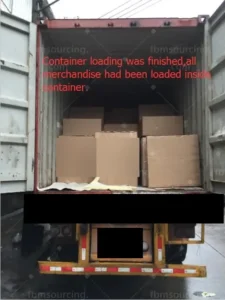
FBM Sourcing manages the entire China procurement package for overseas construction projects. On a UK hotel, student accommodation, office or restaurant package we turn the FF&E schedule into a testing matrix: every line gets its standard, severity level and fire requirement, and loose furniture, casegoods, upholstery and beds each go to a factory already holding accredited reports for that class of product. Where a report exists we check it against the model, materials and level ordered; where it does not, sample testing is booked early and the bill of materials frozen against the tested sample. Before shipment our own FBM Sourcing QC team inspects the goods at the factory against the approved sample — frame construction, joints and fixings, foam grade, fabric reference, labelling and packing — with photo and video records before shipment, and the test reports and the fire safety certificate pack are compiled with the shipping documents so the fire risk assessment and O&M manual can be closed out. All quotations, invoices and shipping documents are issued by FBM Sourcing — you deal with us, and we carry the responsibility. For suppliers you nominate, we charge a 5% commission; for products we source for you, we quote a direct price. We ship by full container: sometimes the seating alone fills full containers; sometimes it is consolidated with the other product categories of the same project into a few containers — always full containers.
If you are specifying contract furniture for a UK project, send us the FF&E schedule with levels, fabric references, quantities, the destination port and the required-on-site dates. Our team will review it line by line and quote — use the button above or WhatsApp +86 135 6007 5057.
FBM Furniture
If you are an FF&E contractor, see furniture sourcing in China for FF&E contractors on fbmfurniture.com, the site of FBM Furniture, the furniture sourcing line of FBM Sourcing Limited.