EN 16139 is the European standard that sets the strength, durability, stability and safety requirements for non-domestic seating — the chairs, lounge chairs, benches and sofas that go into hotels, offices, restaurants, schools and transport buildings. It works as a pair with EN 1728, which describes how the loads and cycles are applied, and EN 1022, which checks stability, and it sets its strength and durability requirements at test levels chosen according to the severity of use — the 2013 edition has two, test level 1 and test level 2. Specifying “EN 16139 compliant” without the edition and the test level is the single commonest mistake in European FF&E documents, because a chair that passes test level 1 can fail test level 2 on the same test rig. This guide explains what the standard covers, how to choose the level, which neighbouring standards apply to tables, storage and outdoor furniture, how the flammability rules differ across Europe, and how a China furniture sourcing agent and sourcing partner keeps the tested sample and the shipped container the same thing.
What Is EN 16139 and What Does It Cover?
EN 16139:2025, Furniture — Safety, strength and durability — Requirements and test methods for non-domestic seating, which replaced EN 16139:2013, applies to seating intended for use in public and commercial buildings. Seating strength and durability test methods are set out in EN 1728:2012, and stability in EN 1022, whose current edition is EN 1022:2023. It also carries safety requirements that have nothing to do with load — shear and squeeze points, edges and corners, and openings that could trap fingers.
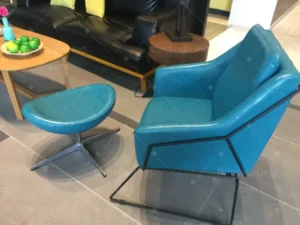
- What is in scope: side chairs, armchairs, lounge chairs, sofas, stools, benches and banquette seating for non-domestic use, whether upholstered or not.
- What is out of scope: office work chairs, which are covered by EN 1335; educational furniture, covered by EN 1729; non-domestic outdoor furniture, covered by EN 581; and domestic seating, covered by EN 12520.
- The test battery in EN 1728: seat and back static load, arm static load, leg forward and sideways static load, seat and back durability cycling, arm and foot-rest durability, front-edge loading, vertical impact on the seat, impact on the back and arms, and a drop test.
- Stability under EN 1022: forward, rearward and sideways overturning, which is what catches four-star lounge chairs with a deep seat and a shallow base.
- It is not a quality mark: EN 16139 is a performance floor. Passing at a stated test level says the chair survived the test programme for that level; it says nothing about finish, comfort or how the fabric wears.
What Do the EN 16139 Test Levels Mean on a Real Project?
The level is the commercial decision inside the standard. It drives frame section, joint type, fixing method, foam grade and, inevitably, the price, so it belongs in the schedule next to the fabric reference and the finish code.
- Two test levels in the 2013 edition: EN 16139:2013 has test level 1 and test level 2, and test level 2 is the heavier-duty level. Its introduction states that test level 2 reflects test level 3 of the older EN 15373, while test level 1 reflects test level 2 of EN 15373 and the former EN 13761 for office visitors chairs.
- The 2025 edition: EN 16139:2025 carries its information on the level of test severity in relation to applications in informative Annex F. Select the test level for each area with reference to that annex and write the standard, the edition and the test level into the schedule.
- General-use areas: hotel guest rooms, meeting rooms, private offices and restaurants with table service are ordinary contract use, and the lower test level is the natural starting point there.
- Heavier-duty areas: airport gate lounges, station concourses, student common rooms, hospital waiting areas and any 24-hour operation see heavy, continuous or careless use, which is where the higher test level earns its cost. Bars, canteens and all-day dining deserve a line-by-line decision against the annex rather than a blanket assumption either way.
- Quote the level, not a figure: the forces and cycle counts for each test are set in the standard, and requirements are revised between editions — EN 16139:2025 added, among other changes, side-to-side durability for single column seating, leg rest requirements and a backward fall test. Quote the standard, edition and test level rather than a newton or cycle figure.
- Mixed areas need mixed levels: a hotel package can carry the lower test level in the bedrooms and the higher one only in the areas that justify it. Writing the higher level across the whole schedule adds cost to 300 bedroom chairs that will never see it.
- Stacking and handling are separate questions: a banqueting chair stacked ten high and dragged daily needs its stacking arrangement and glide detail specified, because the standard does not test how your operations team will treat it.
Level choice is really the contract-versus-domestic decision in numeric form, which we cover from the buying side in commercial-grade vs residential furniture, and it applies with most force to the pieces that take the hardest use, such as the contract-grade lounge chairs in a hotel lobby.
How Does EN 16139 Relate to the Older EN 15373?
EN 15373:2007 was the previous European requirements standard for non-domestic seating, and EN 16139:2013 replaced it; EN 16139 was revised again in 2025. The changeover still causes trouble more than a decade later, because old reports circulate and old specifications get copied forward.
- The level numbers did not carry over: when EN 16139:2013 replaced EN 15373, the test levels were renumbered — test level 2 of EN 16139:2013 reflects test level 3 of EN 15373, and test level 1 reflects test level 2 of EN 15373. A report that says “Level 2” therefore means a different severity depending on which standard it cites, so read the standard number before the level number.
- The reference is not interchangeable: a report issued to EN 15373 is a report to a superseded standard. Some European design teams accept it with a written justification; many will not, and public tenders usually will not.
- Check the report date and the standard’s edition: a test certificate from before 2013 cannot be to EN 16139. If a factory presents one, ask which standard and edition it was tested to, and whether the model has changed since.
- Specifications still cite the old number: if your consultant’s template says EN 15373, correct it before tender rather than in evaluation, otherwise quotations arrive against two different reference documents and are not comparable.
- Practical position for 2026: ask for EN 16139:2025 at a stated level, and treat reports to the 2013 edition (tested to EN 1728:2012 with stability to EN 1022:2018, since replaced by EN 1022:2023) or anything older as evidence to be discussed with the specifier, not as automatic compliance.
Which Other European Furniture Standards Sit Alongside EN 16139?
A furniture package is never only seating, and each category has its own requirements standard and its own test-method standard. Listing them in the specification prevents a factory from testing a chair and calling the whole order compliant.
- Tables: EN 15372 for non-domestic tables, with test methods in EN 1730 and its own informative annex on test severity in relation to application.
- Storage furniture: EN 16121:2023 for non-domestic storage, with test methods in EN 16122 — the standard behind loading, tipping and stability requirements for wardrobes, credenzas and lockers.
- Office work chairs: EN 1335-1 for dimensions with types A, B and C, and EN 1335-2:2018 for safety, strength and durability requirements (EN 1335-3, the former test-method part, was withdrawn in 2018).
- Educational furniture: EN 1729-1 for dimensions, including the size marks 0 to 7 that must match the age group, and EN 1729-2 for safety.
- Outdoor furniture: EN 581-1 for general safety, EN 581-2 for seating and EN 581-3 for tables, with a contract use category for terraces and pool decks.
- Beds: EN 1957 for the functional characteristics of beds and mattresses and EN 747-1/-2 for bunk and high beds.
- Structural metalwork in the package: loose furniture standards stop where the building begins — balustrades, frames and fixed steelwork fall under EN 1090 CE marking for structural steel and metalwork, a completely different conformity route.
Sourcing this for a commercial project?
FBM Sourcing works with project owners, developers, main contractors and FF&E contractors on hotel, apartment, school, office and other commercial building projects. Send us your BOQ, drawings or product list — our team will review it and get back to you.
What Are the European Flammability Requirements for Upholstered Seating?
EN 16139 is a mechanical standard; flammability is tested separately. This is where Europe stops being one market, because several member states layer their own rules on top of a modest EU baseline.
- The EU baseline: EN 1021-1 (smouldering cigarette) and EN 1021-2 (match flame equivalent) test the ignitability of an upholstered composite. Most European contract specifications call up both parts.
- The UK is far stricter: BS 5852 crib 5, applied through BS 7176 medium hazard, uses a wooden crib ignition source in a different league from a match flame, and an EN 1021-2 pass does not satisfy it.
- National rules for public buildings: France applies NF D 60-013 to seating in establishments receiving the public, Italy classifies upholstered items under UNI 9175 (class 1IM being the usual public-building requirement), and Germany uses DIN 66084 categories for upholstery ignition behaviour. Confirm the destination country’s rule before the fabric is approved.
- The result belongs to a combination: ignitability is a property of the cover, filling and any interliner tested together, so changing the fabric on a signed-off chair voids the certificate. A fabric roll certificate covers the fabric; the chair needs its own composite test with that fabric on that foam.
What Should the Specification and the Test Report Say?
Compliance disputes are almost always identity disputes: the report is real, the chair is real, and they are not the same chair. Write the specification so a report either matches or obviously does not.
- Specification line: “Non-domestic seating to EN 16139:2025, test level as stated against each line of the schedule, selected with reference to Annex F; upholstery composite to EN 1021-1 and EN 1021-2; reports from a laboratory accredited for those methods.”
- Identity fields the report must carry: model number, overall dimensions, frame material and section, joint construction and fixings, foam type and density, webbing or suspension, cover reference, and the standard, edition and level tested.
- Load and cycle evidence: require the report body, not the one-page summary, so the actual cycle counts and applied forces can be read against the level claimed.
- Acceptance clause: state that goods must be identical to the tested sample and that any change of frame timber, foam grade, webbing, fixings or cover requires re-testing before production.
- Sampling for the order: require a pre-production sample built from production materials, signed by both sides and retained at the factory.
- Sustainability documents: EPDs and low-VOC evidence are a separate exercise, set out in our guide to LEED and WELL documentation from Chinese factories, and worth asking for only where a credit depends on them.
How Do You Keep Production Consistent With the Tested Sample?
A test report describes one chair on one day. On a 900-piece order the question is whether chair number 900 is the same object — a specification and contract problem, not a laboratory one.
- Freeze the bill of materials: name the frame species and moisture content, section sizes, joint type, foam density in kilograms per cubic metre, webbing, glides and fixings. Anything not named will be substituted eventually.
- Treat component changes as re-test triggers: a change of foam grade or a switch from dowelled to stapled joints is a new product, not a running improvement.
- Retain a signed golden sample: one approved chair stays at the factory as the physical reference and one stays with the project team.
- Watch the two components that drift: foam density and frame timber, because they carry the largest cost swing.
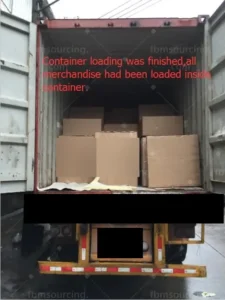
- Inspect before the container is closed: our own FBM Sourcing QC team inspects the goods at the factory before shipment — frame construction, joints and fixings, foam and cover references, dimensions, labelling and packing — against the approved sample, with photo and video records before shipment.
- Keep the paperwork with the goods: reports, fire certificates and the signed sample record belong in the handover pack.
Projects buying for both Europe and North America need two sets of evidence: EN 16139 for the European lines and ANSI/BIFMA testing for the US ones, with the position on UKCA and CE marking confirmed for any electrical or fixed items.
Strength and durability are only one part of an EU contract furniture specification. Furniture placed on the EU market after 6 August 2026 must also stay within a formaldehyde release limit of 0.062 mg/m³ as a finished article; our guide to the EU formaldehyde limit for furniture from 2026 explains the rule and the test evidence to request from the factory.
EN 16139 has a new 2025 edition and does not cover office work chairs. Our guide to EN 1335 vs EN 16139 for office seating maps each chair type to its standard and lists the 2025 changes.
How FBM Sourcing Handles EN 16139 Compliance on a European Package
FBM Sourcing manages the entire China procurement package for overseas construction projects. On a European hotel, office, student accommodation or restaurant package the FF&E schedule becomes a compliance matrix before anyone quotes: each seating line carries its standard, use level and flammability requirement, tables and storage carry EN 15372 and EN 16121, and each line goes to a factory already holding accredited reports for that class of product at that level. Existing reports are read against the model, materials and level ordered rather than accepted on the cover page; where none exists, sample testing is booked early so the submittal is not what holds the programme. The bill of materials is frozen against the tested sample, a signed golden sample is retained, and before shipment our own FBM Sourcing QC team inspects the goods at the factory against that sample, with photo and video records before shipment. All quotations, invoices and shipping documents are issued by FBM Sourcing — you deal with us, and we carry the responsibility. For suppliers you nominate, we charge a 5% commission; for products we source for you, we quote a direct price. We ship by full container: sometimes the seating alone fills full containers; sometimes it is consolidated with the other product categories of the same project into a few containers — always full containers.
If you are specifying contract furniture for a European project, send us the FF&E schedule with use levels, fabric references, quantities, the destination port and the required-on-site dates. Our team will review it line by line and set out a quotation — use the button above or WhatsApp +86 135 6007 5057.
FBM Furniture
If you are an FF&E contractor, see furniture sourcing in China for FF&E contractors on fbmfurniture.com, the site of FBM Furniture, the furniture sourcing line of FBM Sourcing Limited.