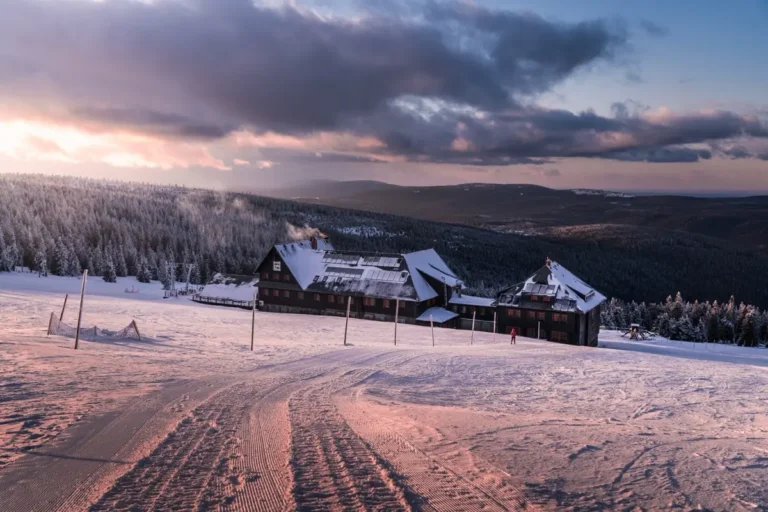
Sourcing FF&E and building materials from China for a ski resort or mountain lodge differs from any other hospitality project in three specific ways: the interior runs far drier in winter than a factory’s default moisture specification assumes, the delivery window is a short summer season rather than a continuous programme, and the site is usually at the end of a road that a forty-foot container cannot use. Every other difference — snow load, freeze-thaw, de-icing salt, altitude UV — is a specification problem with a known answer. Those three are programme and logistics problems, and they are what actually decide whether a mountain project lands on time.
This guide is written for developers, general contractors, builders, commercial project owners, interior design and construction companies and FF&E solution providers delivering ski hotels, mountain lodges, base-area buildings and alpine resort residences. It sets out what changes in the specification, how the calendar works backwards from a season opening, and where the China route makes sense against a closer supplier.
Why Does Mountain Timber Specification Differ from Everywhere Else?
A heated mountain interior in winter is one of the driest environments a piece of furniture will ever live in. Outside air at well below freezing holds very little moisture, and once it is heated to a comfortable room temperature the relative humidity indoors can fall into the teens and stay there for months. Solid timber that left a South China factory in equilibrium with a humid coastal climate will lose moisture, shrink across the grain, and open joints, gap flooring and split panels.
The specification answer is straightforward but has to be written into the brief, because no factory will volunteer it:
- Set a moisture-content target at the low end. Furniture and joinery for a heated mountain interior should be specified and kiln-conditioned toward the dry end of the furniture range rather than to the factory’s default, and the target belongs in the purchase order with a measurement method attached.
- Prefer engineered construction where movement matters. Engineered board and engineered timber flooring move far less than wide solid boards. Solid wide-plank flooring over underfloor heating in an alpine building is a known failure pattern, not a risk.
- Design the joint for movement rather than against it. Frame-and-panel construction, floating panels and slotted fixings accommodate shrinkage; rigid glued-up wide panels do not.
- Control the conditioning period on site. Goods delivered into an unheated shell in autumn and then heated rapidly will move fastest. A conditioning period in the finished environment before installation is worth the programme time.
- Protect against the opposite problem in transit. The container journey is warm and humid, and the risk there is mould rather than shrinkage — a different failure with a different answer, covered in furniture moisture and mould protection in sea containers.
What Changes in the Building Materials Specification at Altitude?
- Glazing and thermal performance. The governing number is the U-value the local code or the design requires, and meeting it usually means a high-performance double or a triple-glazed unit in a thermally broken frame. Chinese factories can build to these specifications, but the unit that gets quoted by default is not one of them. Air tightness and the condensation risk at the frame edge matter as much as the centre-of-glass number in a building with a fifty-degree temperature difference across the wall.
- Snow and wind load. Canopies, porte-cochères, pergolas, balcony structures and glass balustrades all carry snow load in addition to wind. The load case has to be given to the factory as a number from the project engineer, not described as “for a snowy area”, and the fabricator’s calculations should be checked by the project’s own engineer.
- De-icing salt and freeze-thaw. Handrails, balustrades, door hardware, light fittings and any metalwork within reach of salted paths corrode quickly. The specification answer is a higher stainless grade in salt-exposed positions, a coating specification with a salt-spray figure rather than a colour, and drainage detailing that keeps salty meltwater off fixings. External stone and tile must also be rated for freeze-thaw cycling, which is a different property from strength.
- Slip resistance where ski boots meet wet floors. Base lodges, boot rooms, lift-ticket halls and entrance sequences take snow indoors on hard boot soles all day. This is one of the highest slip-risk environments in hospitality and needs a slip classification at the demanding end, specified with the test method named. The way slip ratings are expressed differs by market, as set out in AS 4586 slip ratings and how they differ from R ratings.
- Altitude UV. Ultraviolet intensity rises with altitude and is amplified by snow reflection. Exterior timber, fabrics, powder coating and any coloured plastic will fade and degrade faster than the same product at sea level. Specify UV stabilisation and solution-dyed fabrics for exterior and sun-exposed interior positions, as compared in aluminium vs teak vs rope outdoor furniture.
- Boot rooms and drying rooms. These are a specialised sub-package: heated boot and glove dryers, ventilated lockers, drainage in the floor, and finishes that tolerate constant wet. They are frequently forgotten at BOQ stage and then bought late and badly.
Planning a ski resort or mountain lodge package?
FBM Sourcing works with developers, general contractors, builders, commercial project owners, interior design and construction companies and FF&E solution providers on resort and hospitality projects. Send the BOQ, room schedule or drawings and we will return it priced by production line, with the moisture, thermal, snow-load and slip specifications written in and a delivery plan built around your site access.
How Does the Calendar Work Backwards from a Season Opening?
A ski resort opens on a date set by the snow and by the season’s bookings, and a mountain construction site is usually only workable from late spring to early autumn. Those two facts compress the whole programme into a window that has no slack in it, and they interact with the Chinese production calendar in a way that catches out buyers used to year-round sites.
Working backwards from a December opening for a northern-hemisphere resort, a workable sequence looks like this:
- Design and BOQ fixed the previous autumn. Late changes have nowhere to go.
- Factory selection and sampling over the winter. Samples take three to six weeks per round and there is usually more than one round, particularly where timber species and finish have to be matched across several factories.
- Sample approval before the Chinese New Year shutdown. This is the hard checkpoint. The shutdown stops production for several weeks and slows it either side, so an approval that slips past it typically costs six to eight weeks, not one.
- Production in spring, shipping in early summer. Sea freight from South China runs roughly three to five weeks to North American west-coast ports and longer to Europe and the US east coast, with inland transport on top.
- Delivery into the summer access window. Goods should land while the mountain road is open and the site can receive them, not at the point where the first snow closes the approach.
- Installation and conditioning before heating season. Timber items benefit from time in the conditioned building before the first hard winter.
What Does Mountain Site Access Do to a Container Plan?
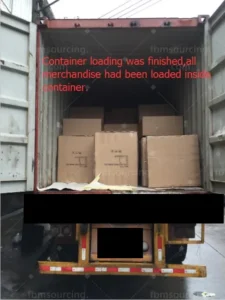
This is the part most often underestimated. A forty-foot high-cube container on a standard chassis needs turning room, gradient tolerance and overhead clearance that many mountain access roads do not have, and some resort roads have seasonal weight limits or are simply closed to articulated vehicles.
The practical consequences belong in the procurement plan, not in the delivery week:
- Establish the largest vehicle that can reach the site before the packing list is finalised. If the answer is a rigid truck or a smaller trailer, the container has to be devanned at a transload facility in the valley, which adds handling, cost and damage risk.
- Pack in installation sequence, not in factory sequence. When goods have to be moved twice and stored in a constrained place, opening the wrong crate first is expensive. Crate labelling by room and by floor earns its cost here more than on any other project type.
- Size the crates to the final lifting method. A crate that fits a container but not a service lift, a stair or a narrow lodge corridor has to be broken down outdoors, possibly in weather.
- Plan storage explicitly. Mountain sites rarely have covered storage, and furniture stored under tarpaulins through a wet autumn will arrive at installation damaged. Either the building is weathertight and heated first, or dry storage is rented in the valley.
- Build the packing specification around double handling. Standard export packing assumes one journey; a mountain project’s goods are handled several extra times. The baseline is set out in export packing standards for furniture by sea freight, and mountain projects should sit above it.
Which Lines Are Worth Sourcing from China, and Which Are Not?
| Package line | China route | Why |
|---|---|---|
| Guest-room casegoods and joinery | Strong fit | High repetition, made to drawings, and the dry-interior specification is a briefing matter rather than a capability limit |
| Upholstered lounge and lobby seating | Strong fit | Large volumes, commercial-grade fabrics available, fire evidence obtainable on the exact build |
| Lighting and decorative fittings | Strong fit, with certification care | Wide capability, but the electrical certification route for the destination must be settled before ordering |
| Windows, doors and thermally broken systems | Case by case | Capability exists, but performance testing to the destination’s standard, and the warranty and service route, decide it |
| Heavy timber and structural glulam | Usually not | Weight, engineering liability and the value of a local engineered-timber supplier usually outweigh unit price |
| Snow-load structures, canopies and balustrades | Case by case | Only where the project engineer will check the fabricator’s calculations against local load cases |
| Boot dryers, lift systems and specialist mountain equipment | Usually not | Small quantities, specialist service requirements and a short parts chain matter more than price |
Where FBM Sourcing Fits
FBM Sourcing is the China sourcing partner in this picture, not a manufacturer and not a showroom. We work for developers, general contractors, builders, commercial project owners, interior design and construction companies and FF&E solution providers, and we do not sell to individual homeowners. On a mountain project we shortlist the factory that runs each production line, write the moisture-content, thermal, snow-load, corrosion and slip requirements into the brief before sampling rather than after, run the sample rounds against the Chinese New Year checkpoint, inspect the bulk order at each factory with photo and video records before it is packed, and build the packing and container plan around the largest vehicle that can actually reach the site. Related resort package guidance is at sourcing FF&E and building materials for resort and beach club projects and how FF&E procurement works for spa and wellness centre projects, and the full package scope is described in what a whole-hotel FF&E and building materials package covers.
Planning a ski resort or mountain lodge package?
FBM Sourcing works with developers, general contractors, builders, commercial project owners, interior design and construction companies and FF&E solution providers on resort and hospitality projects. Send the BOQ, room schedule or drawings and we will return it priced by production line, with the moisture, thermal, snow-load and slip specifications written in and a delivery plan built around your site access.
Frequently Asked Questions
What moisture content should furniture be specified at for a mountain lodge?
A heated alpine interior in winter can sit at very low relative humidity for months, so furniture and joinery should be kiln-conditioned toward the dry end of the furniture range rather than to a factory’s default for a humid coastal market, and the target should appear in the purchase order with a measurement method. Where movement matters most, such as flooring over underfloor heating or wide panels, engineered construction should be specified instead of wide solid boards.
Can Chinese factories meet alpine thermal performance requirements for windows?
Yes, the capability exists for high-performance double and triple glazing in thermally broken frames, but it is not what gets quoted by default. The decision should turn on test evidence to the destination market’s standard for the exact configuration, on air tightness and frame-edge condensation as well as the centre-of-glass U-value, and on how a warranty claim would actually be serviced from the mountain. On some projects a closer supplier wins on the service question alone.
How does mountain site access change a container plan?
Many resort roads cannot take a forty-foot container on a standard chassis, and some have seasonal weight limits or closures. The largest vehicle that can reach the site has to be established before the packing list is finalised, because the answer often means devanning at a transload facility in the valley. Goods should then be packed in installation sequence rather than factory sequence, crates sized to the final lifting route rather than only to the container, and dry storage planned rather than assumed.
When should a ski resort project place its China order?
Working back from a December opening, design and BOQ should be fixed the previous autumn, factory selection and sampling run over the winter, and sample approval completed before the Chinese New Year shutdown, which stops production for several weeks and slows it either side. Production then runs in spring for shipping in early summer, so goods land while the mountain access road is open rather than after the first snow.
Which parts of a mountain project are not worth sourcing from China?
Heavy structural timber and glulam usually are not, because weight, engineering liability and the value of a local engineered-timber supplier outweigh unit price. Specialist mountain equipment such as boot dryers and lift systems usually are not either, because quantities are small and the parts and service chain matters more than the purchase price. Snow-load structures sit in between and are only worth it where the project’s own engineer will check the fabricator’s calculations.
About FBM Sourcing
FBM Sourcing manages the entire China procurement package for overseas construction projects. Sourcing since 2014, we work with developers, general contractors, builders, commercial project owners, interior design and construction companies and FF&E solution providers as their sourcing partner in China — from the BOQ or room schedule through factory selection, sampling, inspection by our own team, consolidation and shipping, with every quotation and shipping document issued in our own name. If you have a ski resort or mountain lodge package to price, start at https://fbmsourcing.com/china-building-materials-ffe-procurement/.