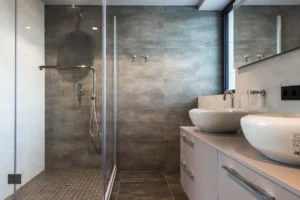
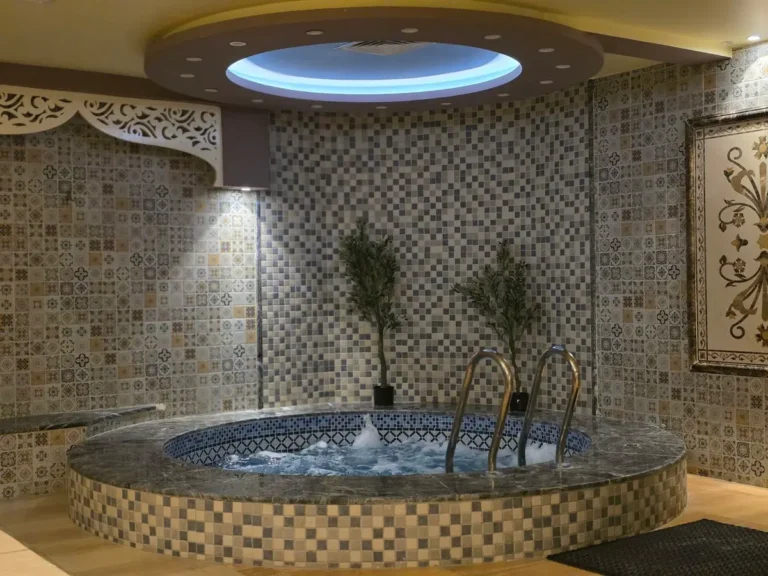
FF&E procurement for a spa and wellness center project runs on a wet-area rule that dry commercial interiors don’t have to solve: almost every finish and fixture in the space sits in a room built around water, heat and humidity, so the specification has to be checked against moisture and slip performance before it is checked against design intent. FBM Sourcing manages the entire China procurement package for overseas construction projects, and on a spa project that means treatment furniture, wet-area finishes, sauna and steam room materials and reception FF&E sourced, verified and shipped as one coordinated package by a single sourcing partner rather than four separate vendor relationships.
What Does a Spa FF&E Package Actually Cover?
Most spa and wellness projects resolve into five procurement scopes, and each one has a different lead time and moisture tolerance.
- Treatment room furniture — treatment tables and beds (fixed or hydraulic), stools, trolleys, storage cabinetry and privacy screens.
- Wet-area finishes — floor and wall tile with a wet-rated slip finish, waterproofing membrane detailing, shower and steam enclosure glazing.
- Sauna and steam room materials — heat-tolerant timber (typically abachi, cedar or hemlock) for sauna interiors, and moisture-sealed tile or engineered stone for steam rooms.
- Pool and hydrotherapy fixtures — plunge pool or hydrotherapy tub shells, jets and fittings, deck furniture rated for chlorinated or saline environments.
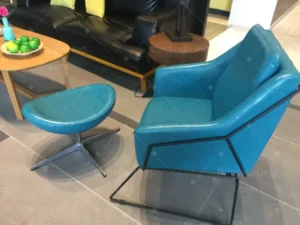
- Reception, retail and relaxation lounge FF&E — the one dry-area scope in the package, sourced to the same design standard as the rest of the hotel or facility.
Sauna and steam room materials are the long pole. They combine a narrow approved-species timber list, a wet-area glazing or moisture-sealing detail, and — in a hotel or resort spa — an interior finish that has to read as premium even though it lives in a 70–90°C or fully saturated environment.
How Does Wet-Area Material Selection Work for a Spa?
Three checks apply to almost every wet-area material on the spec.
Slip resistance
Wet-area floor tile should carry a documented slip rating for the specific wet condition — DCOF to ANSI A137.1 for US projects or an R-rating to DIN 51130 for European-style specs — tested for the actual finish, not assumed from a dry-area sample of the same product line.
Water and vapor sealing
Steam rooms in particular need a continuous vapor barrier behind the finish, and any tile, stone or timber selected for a steam environment should be confirmed as suitable for continuous saturation, not just splash exposure — a distinction that trips up specs written by a designer without wet-area project experience.
Corrosion resistance on fittings
Hardware, jets, drains and fixings in pool, hydrotherapy and steam areas should be specified in 316-grade stainless steel or an equivalent corrosion-resistant alloy; standard 304-grade or mild steel hardware will corrode within a season in a chlorinated or high-humidity environment.
Sourcing this for a commercial project?
FBM Sourcing works with project owners, developers, main contractors and FF&E contractors on hotel, apartment, school, office and other commercial building projects. Send us your BOQ, drawings or product list — our team will review it and get back to you.
How Should a Spa Package Be Sequenced Against the Build Program?
Sauna and steam room construction is the scope most likely to hold up a spa opening, because it depends on the room’s waterproofing and structural work being complete before the interior timber or stone can be installed — installing sauna timber into a space that hasn’t finished curing invites warping and finish failure. The practical sequence is: wet-area waterproofing and MEP rough-in first, then tile and stone finishes, then sauna and steam room interior fit-out, then treatment furniture and reception FF&E last, since those items are the least tolerant of a dusty, wet construction site.
Lead times differ sharply across the package. Treatment tables and cabinetry typically run 6–9 weeks from sample approval; wet-area tile and stone follow the same 25–35 day production timeline as any commercial tile order; sauna timber paneling is usually a faster 4–6 week production item once the species and profile are approved, but its installation is the last, most schedule-sensitive step. Related programme logic for a hospitality amenity space is covered in our guide to sourcing FF&E and building materials for resort and beach club projects.
What Certifications Matter for Spa Equipment and Materials?
Electrical equipment in wet areas — sauna heaters, steam generators, pool pumps and lighting — should carry IP ratings appropriate to the zone (commonly IP44 or higher for fixed wet-area fixtures, higher again for anything within direct splash range) alongside the relevant electrical safety certification for your destination market (UL/ETL for the US, CE for Europe, SAA for Australia). Composite wood used in cabinetry and paneling should meet CARB Phase 2 or EPA TSCA Title VI formaldehyde-emission limits where the destination market requires it, covered in more detail in our note on LEED and WELL documentation from Chinese factories.
How FBM Sourcing Runs a Spa & Wellness FF&E Package
FBM Sourcing manages the entire China procurement package for overseas construction projects. On a spa project that means matching each of the five scopes above — treatment furniture, wet-area finishes, sauna and steam materials, pool fixtures and reception FF&E — to the right specialist factories, sequencing production against the wet-area construction schedule so materials arrive when the space is actually ready to receive them, and consolidating everything into a shared shipping plan.
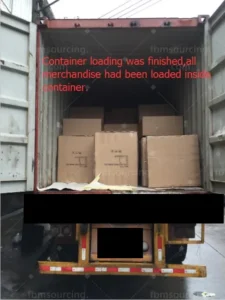
Inspection is carried out by our own team on the factory floor, with a full inspection before shipment recorded in photographs and video. All quotations, invoices and shipping documents are issued by FBM Sourcing — you deal with us, and we carry the responsibility. For suppliers you nominate, we charge a 5% commission; for products we source for you, we quote a direct price.
Frequently Asked Questions
How does FF&E procurement work for a spa and wellness center project?
A spa FF&E package resolves into five scopes with different lead times: treatment room furniture, wet-area finishes, sauna and steam room materials, pool and hydrotherapy fixtures, and reception/lounge FF&E. Wet-area finishes and sauna materials need to be checked against slip resistance, water sealing and corrosion resistance before design intent, and sauna and steam room fit-out is usually the last, most schedule-sensitive step because it depends on the room’s waterproofing being fully cured first.
What slip rating should spa wet-area flooring meet?
Wet-area floor tile should carry a documented slip rating tested for the actual wet condition, not a dry-area equivalent — DCOF to ANSI A137.1 for US projects, commonly 0.42 wet or higher, or an R-rating to DIN 51130 for European-style specifications. The rating should be requested per production batch of the specific finish, not assumed from a catalog listing.
What timber is used for sauna interiors?
Sauna interiors are typically finished in heat-tolerant softwoods such as abachi, cedar or hemlock, selected for low resin content and dimensional stability under repeated heating and cooling cycles. The species and profile should be locked in early because sauna timber production, while relatively fast at 4–6 weeks, is one of the last installation steps and any late change resets the finish schedule.
Do I buy spa FF&E and materials directly from factories or through a sourcing agent?
A spa package spans furniture, tile, timber, glazing and wet-area hardware from multiple specialist factories, none of which will manage the cross-scope sequencing a wet-area build requires. A building material sourcing agent, typically for a 5% commission for suppliers you nominate (products we source for you are quoted at a direct price), consolidates the five scopes into one production schedule, verifies wet-area materials at the factory against slip and sealing requirements, and sequences delivery against the construction program.
Get a China Procurement Quote for Your Project
If your spa or wellness center project has a schedule, a materials list or preliminary drawings ready, FBM Sourcing will match the treatment furniture, wet-area finishes, sauna materials and reception FF&E to the right factories and sequence delivery against your construction program. Submit your drawings or BOQ, quantities, destination port and timeline via our China building materials and FF&E procurement page, and our team will review your requirements and get back to you.