Doors, windows and tile are the three categories a property developer is most likely to buy from China first. They are high in quantity, repeat across every unit, are dominated by a small number of Chinese production clusters, and — unlike furniture — they are specified by schedule and drawing rather than by taste. They are also the three categories where a specification error is the most expensive to correct, because by the time it is visible the building is closed in.
This page sets out the procurement route for a developer or main contractor buying those three packages: what to send, what comes back, what has to be specified before a factory can quote, what evidence to require against each category, and the sequence the three packages have to be bought in relative to the construction programme.
What to send for a doors, windows and tile package
- Door schedule — opening reference, leaf size, handing, leaf construction, fire rating, acoustic rating, finish, frame type, hardware set reference
- Window and glazing schedule — opening reference, overall size, configuration (fixed, awning, casement, sliding, tilt-and-turn), glass make-up, frame system, colour
- Drawings — elevations, sections and details in DWG, DXF or PDF; head, jamb and sill details for glazing; wall type build-ups for door and window openings
- Tile setout and finishes schedule — room-by-room tile reference, size, finish, joint width, laying pattern and setout drawings where they exist
- Performance basis — the standard the destination market applies, the design wind pressure for the site, thermal and acoustic targets, and the slip rating required per area
- Quantities — by level, by building or by unit type; or the drawings on their own, from which we can produce the schedule
- Programme — the dates the building is due to be closed in, and the dates wet trades start
Where the schedules do not yet exist, they can be produced from the drawings. Our window and door takeoff service converts a drawing set into a schedule that a factory can quote line by line, and the BOQ and drawing takeoff service covers the same work for a full bill of quantities.
Pricing a doors, windows or tile package?
FBM Sourcing works with developers, general contractors, builders and commercial project owners on openings and finishes packages for multi-unit residential, hotel and commercial buildings. Send the schedules or the drawings — our team will review them and come back to you.
What comes back
- A priced schedule that returns against your own opening references and room references, not a re-numbered list
- The system or model each line is quoted against, with material, profile, glass make-up, hardware and finish stated
- The test evidence position for each line: which standard the factory holds reports against, which model the report covers, and which lines have no evidence yet
- A queries list of the lines that cannot be quoted as written, with the reason
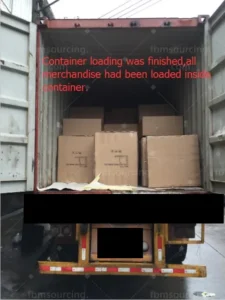
- Container volume per package and a loading plan by phase
01 Doors
What is in the package. Apartment and room entry door sets, fire-rated door sets where the code calls for them, internal swing doors, sliding and cavity sliding doors, timber and steel frames, architraves and thresholds, acoustic and smoke seals, door hardware sets, locksets and cylinders, closers and hold-opens, and electronic access hardware where used.
What has to be specified before a factory can quote. Leaf construction and core material; overall leaf and frame dimensions with the wall build-up they sit in; fire rating and the test standard it is claimed against; acoustic rating; finish system, whether painted, veneered, laminate or foil-wrapped; handing per opening; and the hardware set against each door type.
What to require as evidence. For rated doors, a test report or certificate that names the exact configuration being supplied — leaf construction, frame, glazing, hardware and seals as a set. A door set is certified as an assembly, not as a leaf, and a report covering a different hardware set does not carry over. Our guides to UL 10C and NFPA 80 fire doors and AS 1905 fire door sets set out what the certificate has to say.
Where it goes wrong. Handing recorded at the wrong end of the schedule; wall thickness assumed rather than measured, so frames do not suit; hardware specified by brand in a market where the equivalent is not available; finish approved on a sample cut from a different batch. See also door finishes compared and what a door hardware schedule needs to contain.
02 Windows and glazing
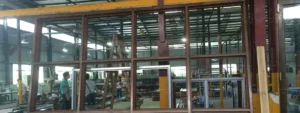
What is in the package. Aluminium windows and sliding doors, thermally broken systems where the market requires them, uPVC systems, curtain wall and window wall where the facade is part of the scope, glazing units, balcony balustrades, louvres, shading and privacy screens, insect screens, and the associated flashings, brackets and fixings.
What has to be specified before a factory can quote. The performance standard of the destination market and the design wind pressure at the site; the configuration and opening type per reference; glass make-up including thickness, toughened or laminated build-up, coating and cavity; frame system and thermal break; finish and colour with a powder coat or anodising reference; hardware; and the interface detail at head, jamb and sill.
What to require as evidence. Test reports issued against the system being supplied, at the size being supplied or larger, to the standard the destination market names — AS 2047 in Australia, NZS 4211 in New Zealand, the NAFS family in North America with NFRC ratings for thermal performance, and EN standards with CE or UKCA documentation for Europe and the UK. A report against a smaller test specimen does not automatically cover a larger unit. Our certification comparison by market covers which document each market actually asks for, and AS 2047 windows from China covers the Australian case in detail.
Where it goes wrong. Wind pressure taken from a neighbouring project rather than from this site; glass make-up changed by the factory for availability without the report being re-checked; a system tested in one configuration supplied in another; the thermal performance figure quoted for the glass rather than for the assembled window. See also aluminium against steel windows and curtain wall against window wall.
03 Tile and stone
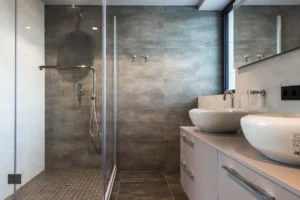
What is in the package. Porcelain and ceramic wall and floor tile, large-format panels, natural stone and engineered stone for thresholds, benchtops, stairs and wet areas, external and pool-surround tile, skirtings, trims and movement joint profiles.
What has to be specified before a factory can quote. Size, thickness and rectified or non-rectified edge; surface finish; slip rating against the standard the destination market uses; water absorption class; frost resistance where the climate requires it; shade variation grade; laying pattern and joint width, because both change the quantity; and the wastage allowance the quantity is based on.
What to require as evidence. Test data for slip resistance to the method the destination market names, water absorption and breaking strength, plus a shade and calibre statement for the production batch. Our slip resistance ratings guide sets out which method applies where, and wastage allowance covers the quantity question.
Where it goes wrong. Ordering to net area with no wastage allowance and then needing a top-up from a different batch; a second delivery from a different calibre or shade; a slip rating quoted against a method the destination authority does not recognise; large-format panels specified without checking that the site can handle and cut them. See also where tile is made in China and porcelain tile producers for project work.
The sequence, against the construction programme
- Fix the schedules. Door and window schedules are the two documents that unlock everything; tile follows the finishes schedule.
- Fix the performance basis per market before quoting, not after. Certification drives which factories can even bid.
- Split into factory-level enquiries — doors, windows, tile go to three different cluster bases, and hardware is often a fourth.
- Benchmark across several factories per package and return pricing against your own references.
- Check the evidence before selection, not after. A factory that cannot produce a report against the supplied system is a different decision at quotation stage than at production stage.
- Approve samples — door leaf and finish, window corner sample and colour chip, tile shade and calibre — against the schedule.
- Hold the batch. Tile calibre and shade, powder coat batch and veneer flitch are recorded against the order so that later deliveries match.
- Sequence against close-in. Windows are needed before the building can be closed in; door sets follow the wet trades; tile follows the screed. Buying them on one date and shipping them on one date puts two of the three in storage.
- Inspect before shipment with our own team, against the approved samples and the schedule.
How the commercial side of this works — who holds the contract, who carries the risk, and what changes if the buyer is a developer rather than a contractor — is covered in developer against contractor procurement paths and on our China procurement for property developers page. The question of buying direct from a factory against buying through an intermediary is covered in how developers buy doors, windows and tiles direct from China factories.
Frequently Asked Questions
Can a developer buy doors, windows and tile direct from Chinese factories?
Yes, at project volumes. The constraint is rarely whether a factory will sell direct; it is whether the buyer can carry the work that a direct purchase transfers to them – producing schedules a factory can quote, checking that test evidence covers the system actually being supplied, approving samples, controlling batch, and sequencing three packages against a construction programme.
Do the three packages come from the same factory?
Almost never. Doors, windows and tile are made by different factories in different Chinese clusters, and door hardware is frequently a fourth source. They are quoted separately and then consolidated into containers by phase.
What certification do windows from China need?
Whatever the destination market names: AS 2047 in Australia, NZS 4211 in New Zealand, the NAFS family with NFRC ratings in North America, and EN standards with CE or UKCA documentation in Europe and the UK. What matters more than the mark is whether the report covers the system, size and configuration actually being supplied.
How much tile should be ordered above the measured area?
Enough to cover cutting waste for the laying pattern plus attic stock for later repairs, ordered on the original run so that it matches. The exact allowance depends on tile size, pattern and the amount of cutting the setout creates, which is why it belongs in the schedule rather than in a rule of thumb.
When should the windows be ordered relative to the programme?
Windows drive close-in, so they are normally the first of the three packages to be placed and the first to ship. Door sets follow the wet trades and tile follows the screed, which is why the three are sequenced separately rather than bought as one delivery.
Working with FBM Sourcing on an openings and finishes package
FBM Sourcing has been sourcing building materials and FF&E from China since 2014, and has shipped more than 1,000 containers for project buyers in over 20 countries. Doors, windows and tile are core categories for us: we convert drawings into schedules, put those schedules to factories that hold evidence against the standard your market names, benchmark the pricing, approve samples against the schedule, control batch, inspect before shipment with our own team, and load by phase.
We work for the buyer. For suppliers you nominate we charge a 5% commission; for products we source for you, we quote a direct price. We do not sell to individual homeowners; this work is for developers, general contractors, builders, commercial project owners, interior design and construction companies, and FF&E solution providers.
Send the door schedule, the window schedule, the finishes schedule or the drawing set through our project procurement enquiry page and we will review it and come back to you.