This page sets out how an apartment, build-to-rent or multi-unit residential development is procured from China as a package: what a developer or main contractor sends us to start, what comes back, which trades sit inside the package, and the order in which a repetition project has to be bought.
It is written for developers, main contractors, builders and the interior design and construction companies delivering the fit-out. An apartment project is not a hotel project with different wallpaper. The unit type repeats dozens or hundreds of times, the handover is staged by level or by building rather than as one date, and the bulk of the spend sits in eight or nine categories that are made by different factories in different clusters.
What to send to start
Any one of the following is enough to open a package. We work from what the project already has rather than asking for a document set to be produced for us.
- Bill of quantities — Excel or PDF, priced or unpriced, at any level of completeness
- Architectural drawings and shop drawings — DWG, DXF, RVT exports or PDF sets
- Schedules — door schedule, window schedule, finishes schedule, sanitaryware and tapware schedule, lighting schedule, joinery schedule
- Unit type matrix — how many of each apartment type, and which types share a kitchen layout, a bathroom layout or a wardrobe run
- Finish references — material boards, RAL or NCS codes, tile and stone references, timber or veneer species, fabric references, or photographs of an approved sample
- Compliance basis — the building code or standard the destination market applies, and any performance requirement already fixed by the consultant (glazing performance, fire rating, slip rating, acoustic rating)
- Logistics basis — destination port or site, and the construction programme dates by building, level or stage
If all that exists at this point is a unit-type set and a total unit count, that is a workable starting point. Our BOQ and drawing takeoff service exists for the case where quantities have to be read off the drawings before anything can be quoted.
Have an apartment or build-to-rent package to price?
FBM Sourcing works with developers, main contractors, builders and interior design and construction companies on multi-unit residential and mixed-use projects. Send the BOQ, the drawings or just the unit-type set — our team will review it and come back to you.
What comes back
- A priced schedule mapped back to your line numbers. Each line returns against the BOQ or schedule reference it came from, so the pricing can be read next to the original document rather than re-keyed into it.
- Specification against each line — material, finish, dimensions, thickness or gauge, hardware, packing method and cubic volume.
- The package split — which lines are quoted by a cabinet factory, a door factory, a window factory, a tile producer, a sanitaryware plant, a lighting factory, a furniture maker.
- A queries list — the lines that cannot be quoted as written, with the reason: dimension missing, finish not specified, a standard named that the factory cannot certify to, or a quantity that sits under a factory minimum for that finish variant.
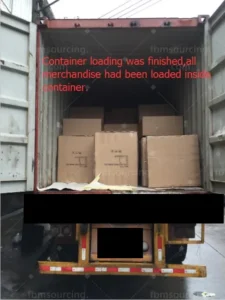
- A container plan by phase — what fits in which container, and which trades travel together. Orders ship as full containers; see mixed-container consolidation for apartment projects for how mixed trades are loaded.
The packages, trade by trade
These are the eight blocks an apartment package usually splits into. Each block is a different factory base, and in most cases a different Chinese cluster.
01 Kitchens, wardrobes and joinery
Kitchen carcasses and doors, benchtops in engineered stone, sintered stone or compact laminate, splashbacks, sinks and waste kits, wardrobe systems and internal fittings, laundry cabinetry and tubs, linen and storage joinery, vanity units, reception and amenity joinery. Specify carcass board type and thickness, edge banding, hinge and runner brand and cycle rating, and whether units arrive flat-packed or assembled. Related: Chinese kitchen cabinets buyer guide, wardrobe and closet sourcing.
02 Doors and openings
Apartment entry door sets including fire-rated sets where the code calls for them, internal swing doors, sliding and cavity sliding doors, frames and architraves, thresholds and seals, door hardware, locksets, closers, hinges, and electronic entry hardware where used. Specify leaf construction and core, finish system, fire rating and the test standard it is certified against, acoustic rating, and handing per opening. Related: wooden door sourcing, door hardware sourcing.
03 Windows, glazing and balustrades
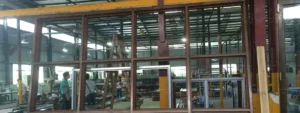
Aluminium windows and sliding doors, thermally broken systems where the market requires them, glazing units, balcony balustrades in glass or aluminium, louvres, privacy screens and shading. Specify the performance standard and the wind and water test basis for the destination market, glass make-up, hardware, and whether the factory holds test reports against the actual system being supplied rather than a similar one. Related: window and door certification by market.
04 Tile, stone and flooring
Porcelain and ceramic wall and floor tile, large-format panels, natural and engineered stone for benchtops, thresholds and wet areas, SPC and laminate flooring, skirting and trims, movement joints and profiles. Specify size, thickness, rectified or non-rectified, surface finish, slip rating to the destination standard, and the wastage allowance the estimate is based on. Related: slip resistance ratings, wastage allowance.
05 Sanitaryware, tapware and bathrooms
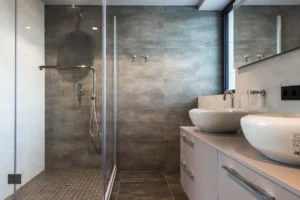
Pans and cisterns, basins and basin tops, baths, shower screens and enclosures, mixers and shower sets, wastes, traps and floor drains, towel rails and accessory sets, mirrors and mirror cabinets, or complete prefabricated bathroom pods where the project uses them. Specify the water and drainage standard of the destination market, rough-in dimensions, flush volume, and finish. Related: sanitaryware for hotel and apartment projects, prefabricated bathroom pods.
06 Lighting and electrical accessories
Downlights, surface and track lighting, vanity and mirror lighting, pendants and decorative fittings, balcony and external lighting, emergency and exit fittings, switch plates and socket outlets, ceiling fans. Specify the voltage and frequency of the destination market, the plug and terminal standard, the certification mark the market requires, colour temperature, CRI and dimming protocol. Related: indoor lighting sourcing.
07 Loose furniture and FF&E, where units are delivered furnished
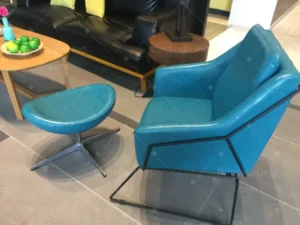
Build-to-rent, serviced and furnished apartment schemes carry a furniture package on top of the building package: beds and bases, mattresses, casegoods, dining sets, lounge seating, desks and chairs, occasional furniture, mirrors, window treatments, rugs and soft goods. Specify fabric grade and rub count, foam density, frame material, and whether the market applies a furniture flammability standard. Related: living room furniture, dining sets for apartment and rental projects.
08 Common areas and amenity
Lobby seating and tables, reception and concierge counters, mail and parcel lockers, corridor and lift lobby finishes, gym and pool furniture, roof terrace and landscape furniture, signage substrates, planters and bins. The quantities here are small relative to the unit packages, which is exactly why they are the lines most often left to the end and then rushed.
The order a repetition project is bought in
- Fix the unit type matrix. Everything downstream is a multiple of it. A change of one wardrobe run across 180 units is a different order, not a variation.
- Split the document set into factory-level RFQs. One BOQ becomes eight to fifteen enquiries, each addressed to factories that actually make that product.
- Benchmark each RFQ across several factories in the same cluster and return the pricing mapped to the original line numbers.
- Approve a sample or a mock-up unit against the finish schedule before bulk production is released. On a repetition project this is the single control that matters most, because an error repeats at unit count.
- Lock finish and batch. Tile batch, dye lot, veneer flitch, stone slab bundle and paint batch are recorded against the order so that later stages match earlier ones.
- Sequence production against the construction programme rather than against the order date, so that the tower that tops out first is the tower that gets glazed and fitted out first.
- Consolidate mixed trades into containers by phase.
- Inspect before shipment against the approved sample and the schedule, using our own team.
- Label and ship with cartons marked by unit type, level and room so that the site can distribute without opening everything.
Steps 4, 5 and 9 are the ones that separate a repetition project from a one-off. Our guide to how apartment development procurement works covers the commercial mechanics behind the same sequence, and room-by-room labelling covers step 9 in detail.
What actually moves the price on an apartment package
- Repetition per finish variant, not total unit count. Six hundred units in one finish and six hundred units across nine finishes are different orders at the factory, because the run length per variant is what sets the tooling and changeover cost.
- How many factory minimums the package has to clear. Every additional variant creates its own minimum.
- Whether the cabinetry ships flat-packed or assembled. This is a container volume decision before it is a labour decision.
- Whether certification is held against the supplied system. A factory that must test a system for your project carries that cost and that programme time.
- How many phases the delivery is split into. Phasing is usually worth its cost on a staged handover, but it is a cost.
We publish a worked structure for this in what it costs to furnish a 50-unit apartment building from China.
Where an apartment package differs from a hotel package
A hotel package is specified once, in a brand standard or a spec book, and delivered against one opening date. An apartment package is specified per unit type and delivered against a staged programme, often with sales or leasing running while later stages are still in production. Three practical differences follow.
- The display or sales unit sets the standard. Whatever is built for inspection becomes the reference that later units are measured against, which makes it a procurement document whether or not anyone calls it one.
- Replacement supply matters for longer. Defect liability periods, warranty claims and leasing turnover all require matching items long after the last container has landed, so attic stock and batch records are ordered with the run rather than sourced afterwards.
- The building package and the furniture package are on different clocks. Doors, windows and tile are needed before the building is closed in; furniture is needed after. They should not be forced into the same shipment schedule.
Frequently Asked Questions
What is the minimum size of apartment project worth sourcing from China?
The practical floor is the point at which the package fills containers on its own, because project orders ship as full containers rather than as part loads. Multi-unit residential projects clear that threshold in the building categories long before they clear it in any single category, which is why the package is bought as a package rather than trade by trade.
Do we need a complete BOQ before you can quote?
No. A unit-type set, a schedule, or drawings with quantities readable off them are enough to start. Where quantities have to be read off the drawings first, that takeoff is a separate piece of work we do before anything is priced.
Can one order cover kitchens, doors, tile and sanitaryware together?
Yes, and on a multi-unit project it normally should. Those categories come from different factories in different clusters, so they are quoted separately and then consolidated into containers by phase rather than shipped by trade.
How are staged handovers handled?
Production is sequenced against the construction programme rather than against the order date, and shipments are grouped by the stage they serve. Finish batch and dye lot are recorded against the original run so that a later stage matches an earlier one.
Who checks the goods before they leave China?
Our own team inspects before shipment, against the approved sample and the schedule. Inspection is not subcontracted to an outside inspection company.
Bathroom vanities are one of the packages where the destination country changes the whole brief. For a property in the United States, the duty scope, the formaldehyde labelling and the performance standard the specification references all have to be settled before a purchase order, which is why we cover them separately in bathroom vanity manufacturers in China for US multifamily projects.
Working with FBM Sourcing on an apartment package
FBM Sourcing has been sourcing building materials and FF&E from China since 2014, and has shipped more than 1,000 containers for project buyers in over 20 countries. We work for the buyer: for suppliers you nominate we charge a 5% commission, and for products we source for you we quote a direct price.
We do not sell to individual homeowners. Our apartment work is with developers, general contractors, builders, commercial project owners, interior design and construction companies, and FF&E solution providers.
To start, send the BOQ, the drawings or the unit-type set through our project procurement enquiry page and we will review it and come back to you.