There is no publicly listed Chinese company whose core disclosed business is manufacturing hotel furniture, and none whose disclosures show a track record of delivering resort FF&E to the Caribbean. The listed furniture companies on Chinese exchanges are residential retail brands, office seating makers and mattress groups; the hotel casegoods, contract seating and outdoor furniture that a resort project actually buys come from a large private tier of plants in Guangdong, Zhejiang and Jiangsu that no overseas buyer can verify from public records. This guide therefore names no factories. It sets out the supplier types honestly, the evidence to request from each, and the things that change when the destination is a Caribbean island — humidity and salt, termites, the hurricane season, port handling limits, mixed voltages and the fire standards that US-flag hotel brands carry with them.
Why we have not published a list of named hotel furniture factories here
A “Top 10” of hotel furniture makers would have to be built from one of two sources: public disclosure, or our own claims about private companies. The first source does not exist for this category — hotel furniture in China is made by private, mostly mid-sized plants whose capacity, ownership and customer list cannot be checked from outside. The second source is exactly what a project buyer should distrust, because a ranking of private factories is unverifiable by definition, and most such lists online are either paid placements or the author’s own supply chain in disguise. We would rather tell you what to ask for than publish a list we could not defend.
What does “hotel furniture manufacturer” cover in China?
A resort FF&E package is not one product and is rarely one factory. The phrase covers at least six different businesses:
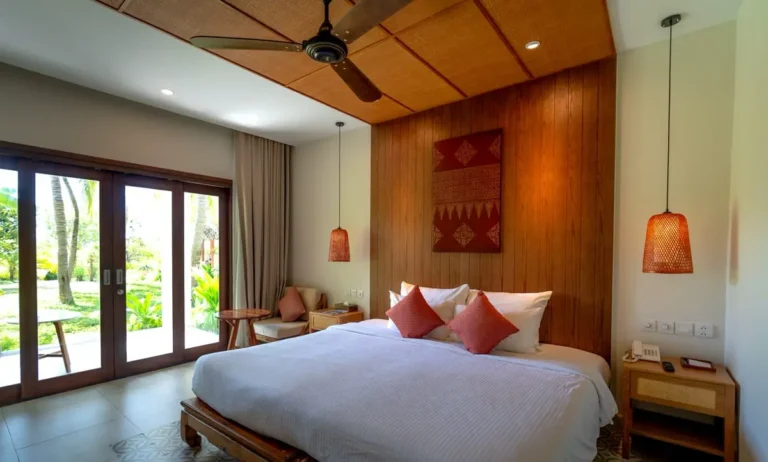
- Casegoods plants. Guest-room headboards, wardrobes, desks, nightstands, minibar units and vanity surrounds, built from plywood, MDF or particleboard with veneer, HPL or lacquer faces. This is the largest single line on most resort orders.
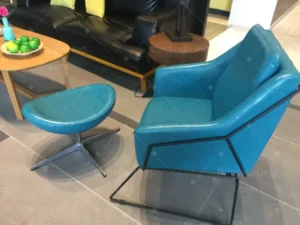
- Contract seating and upholstery plants. Lounge chairs, sofas, dining chairs, banquettes and bar stools, where the frame, the foam and the fabric can each come from a different supplier.
- Outdoor furniture plants. Powder-coated aluminium, teak, synthetic rope and HDPE wicker for pool decks, terraces and beach fronts — a separate industry from indoor casegoods, concentrated in different cities.
- Mattress and bedding makers. A category with its own fire and flammability regime, covered in top hotel mattress and bedding manufacturers in China.
- Fixed joinery and millwork shops. Reception desks, bar counters, wall panelling and built-in wardrobes, which are site-measured, project-specific and shipped as knocked-down assemblies.
- Trading intermediaries. Companies that broker between the buyer and several of the above without owning production, often presenting a mixed catalogue as one factory.
Mixing these up is the most common reason a resort furniture quotation looks 30% cheaper than the field: a casegoods plant quoting guest rooms only is not quoting the same package as a supplier who has priced seating, outdoor and millwork as well. The wider decision framework for island projects — what to buy from China at all, what to buy regionally and what to leave to local trades — is set out in sourcing FF&E and building materials from China for Caribbean hotel and resort projects.
The supplier types and the evidence to request from each
- Export-oriented casegoods plants. Output is mostly project work for overseas hotel brands, with in-house veneer pressing, edge-banding and finishing lines. Evidence to request: the board grade and the mill that supplied it, the finishing system and its humidity test results, a completed tropical or coastal hotel reference with a handover date, and whether the plant will build a full guest-room mock-up before bulk.
- Domestic-market casegoods plants. Large and capable, tooled for Chinese hotel chains, and usually working to a standard carcass construction that has never faced 80% relative humidity all year. Evidence to request: proof of at least one delivered project in a humid coastal climate, not a promise to adapt.
- Contract seating and upholstery plants. Where fire performance and fabric durability actually originate. Evidence to request: frame timber species and kiln-drying certificate, foam specification and flammability test reports to the standard your brand requires, and the fabric mill’s abrasion and lightfastness data — the fabric question is set out in contract-grade upholstery fabric for hotel furniture.
- Outdoor furniture plants. A different supply chain from indoor casegoods. Evidence to request: alloy and wall thickness for aluminium frames, the powder-coat system and its salt-spray test hours, the rope or wicker’s UV rating, and stainless grade for fixings. The material trade-offs are set out in aluminium vs teak vs rope outdoor furniture for resort projects.
- Millwork and fixed joinery shops. Evidence to request: shop drawings produced from your site survey, the sequence and packaging plan for knocked-down assemblies, and who is responsible for site fit.
- Trading intermediaries. Evidence to request: which factory will produce each category, whether the intermediary will place its own name on the documents, and who carries responsibility when a veneer delaminates in month eight.
Sourcing this for a commercial project?
FBM Sourcing works with project owners, developers, main contractors and FF&E contractors on hotel, apartment, school, office and other commercial building projects. Send us your BOQ, drawings or product list — our team will review it and get back to you.
Which supplier route fits which Caribbean project?
| Project scenario | Shortlist from this list | Why it fits | What would change the answer |
|---|---|---|---|
| Branded resort, 150–300 keys, US-flag brand standards | Export casegoods plant plus a separate contract seating plant, both able to build to the brand’s standards | Brand standards fix the fire, fabric and mattress evidence in advance; the supplier has to prove it, not interpret it | A brand-nominated supplier list that already names approved factories |
| Independent boutique hotel, 30–80 keys | One export casegoods plant that also handles seating, or a single contract covering both | At this scale the coordination cost of several factories outweighs the unit-price gain | A design-led scheme where each room type is different, which pushes the work toward millwork |
| Beach-front and pool-deck furniture only | Outdoor specialist plant | Salt, UV and hurricane-season storage are the whole problem; an indoor casegoods plant cannot solve them | A resort that stores outdoor furniture indoors from June to November, which relaxes the wind-loading question |
| Phased refit of an operating resort, wing by wing | Export plant with a written capacity commitment across phases | Colour and veneer-batch continuity across phases matters more than the first phase’s price | Phase 2 being tendered separately, which breaks the continuity case |
| Small island with limited port equipment | Any of the above, packed for the port the goods will actually enter | The packing plan, container size and transhipment route decide whether the furniture arrives intact | A mainland port with full container handling, which removes the constraint |
What changes when the destination is the Caribbean?
This is where a China furniture purchase for an island resort most often goes wrong, because the factory’s standard construction was developed for a temperate or air-conditioned market. The following are the questions a Caribbean project team should settle before the order:
- Humidity and salt. Year-round relative humidity in the 70–85% range and salt-laden air attack particleboard swelling, veneer adhesion and plated hardware. Specify moisture-resistant board or plywood for carcasses, balanced veneer construction on both faces, sealed edges, and 304 or 316 stainless or a tested coating system for exposed hardware. Ask for the humidity cycling test on the finished product, not the raw board.
- Termites and timber. Drywood termites are endemic across the region. Avoid untreated softwood in frames and blocking, ask for kiln-drying and treatment certificates for solid timber components, and confirm that timber packaging carries the ISPM 15 heat-treatment mark, without which the shipment can be held or fumigated at the port.
- Hurricane season and wind loading. The Atlantic season runs from June to November. Outdoor furniture needs a weight or anchoring specification and a storage plan, and the shipping programme should avoid an arrival that coincides with a closed port. The wider building envelope question is covered in hurricane impact standards for Caribbean projects.
- Brand fire standards. US-flag hotel brands generally carry their North American standards to the islands: mattresses to 16 CFR 1633 and 1632, upholstered seating to California TB 117-2013, and drapery to NFPA 701. Ask for the test reports in the name of the actual producer and the actual foam and fabric used, not a generic certificate.
- Voltage and plugs. Islands vary between 110 V / 60 Hz and 220–230 V / 50 Hz, and some resorts run both. Any furniture with integrated lighting, USB charging or minibar housings has to be specified for the site’s supply; the detail is set out in voltage and electrical standards for lighting and appliances from China.
- Port handling and transhipment. Cargo for most islands transships at a regional hub, and some smaller island ports handle 20-foot units more readily than 40-foot high-cubes. Confirm with the receiving port before the packing plan is fixed, because a container that cannot be lifted at destination is a very expensive problem. The route options are set out in shipping project cargo from China to the Caribbean.
- Duty concessions. Many islands offer duty relief on FF&E for approved hotel developments, and the paperwork — approval letters, item lists, certificates of origin — has to match the packing list line by line. Settle the concession before the goods ship, not after.
How does hotel furniture ship to a Caribbean site?
Hotel furniture is a volume cargo: a container of assembled casegoods reaches its cubic limit long before it reaches its payload limit, and the packing method is the difference between a clean handover and a damage claim. Casegoods ship assembled and carton-packed with corner protection, seating ships assembled in cartons or bagged in racks, and millwork ships knocked-down and labelled by location. Moisture inside the container on a four-to-six-week voyage through the tropics is a separate risk from site humidity, and the protection methods are set out in moisture and mould protection for furniture in sea containers.
Sometimes, on a large project, the hotel furniture alone fill full containers; sometimes the hotel furniture share containers with the other product categories of the same project; and sometimes, in one batch, we combine a dozen or more product categories from several projects of the same client into a few containers — always full containers, and for us this is routine, well-practised work.
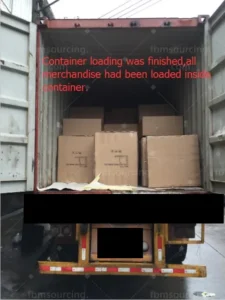
Three points decide whether the delivery works: the loading sequence has to follow the installation sequence by wing and floor, every carton has to carry the room number and item code from the FF&E schedule, and the loading has to be documented before the doors close. Attic stock for replacements should travel in the same shipment, because a single replacement headboard cannot sensibly be sent to an island later; how much to carry is discussed in how much attic stock a hotel FF&E order should include.
Why this list has no scores, ratings or supplier links
We publish no score column, no outbound links and, in this category, no company names. A score would imply we had audited every company against the same criteria in the same period, which we have not, and a named list of private factories would imply a verification that no outside party can perform. What we do instead is describe the supplier types honestly and set out the evidence to request — the judgement stays with the project team, its interior designer and the brand’s technical services. That is also why a resort project team often uses a China sourcing partner or sourcing agent for this category: not to be handed a ranked list, but to have the evidence above collected, checked on the factory floor before shipment and tied to one set of documents.
We also publish no prices for hotel furniture. Unit price moves with board grade, veneer species, finish system, fabric, foam, hardware, quantity and phasing, and a number published today would mislead a reader next year.
About FBM Sourcing
FBM Sourcing manages the entire China procurement package for overseas construction projects. Sourcing since 2014, we have shipped 1,000+ containers to project sites in 20+ countries, working with project owners, developers, main contractors and FF&E contractors on hotels, apartment buildings, schools, offices and other commercial buildings. All quotations, invoices and shipping documents are issued by FBM Sourcing — you deal with us, and we carry the responsibility. For suppliers you nominate, we charge a 5% commission; for products we source for you, we quote a direct price.
If you have a furniture package for a Caribbean hotel or resort, send us the FF&E schedule, the room-type drawings and the island the project sits on at https://fbmsourcing.com/china-building-materials-ffe-procurement/.
Frequently asked questions
Are there listed Chinese companies making hotel furniture?
No listed Chinese company discloses hotel furniture as its core business. The listed furniture groups on Chinese exchanges are residential retail brands, office seating makers and mattress producers. Hotel casegoods, contract seating and outdoor furniture come from private plants without public disclosure, which is why this guide describes supplier types rather than naming factories.
What construction should guest-room furniture have for a Caribbean resort?
Moisture-resistant board or plywood carcasses, balanced veneer on both faces, sealed edges, kiln-dried and treated solid timber, and 304 or 316 stainless or a tested coating on exposed hardware. Ask for a humidity cycling test on the finished product and a completed coastal or tropical hotel reference, not a standard temperate-climate construction.
Which fire standards apply to hotel furniture in the Caribbean?
Local codes vary by island, but US-flag hotel brands generally carry their North American standards with them: mattresses to 16 CFR 1633 and 1632, upholstered seating to California TB 117-2013, and drapery to NFPA 701. The brand’s technical standards document is the authority, and test reports should be in the name of the actual producer and the actual materials used.
When should hotel furniture for the Caribbean ship?
The Atlantic hurricane season runs from June to November. Programme the shipment so that arrival and installation do not coincide with a closed port or a storm window, and confirm the transhipment hub and the receiving port’s container-handling limits before the packing plan is fixed.
What is the minimum order for hotel furniture from China?
We do not handle loose freight. The practical minimum is a full container load consolidated for one client, and hotel furniture can share containers with the other product categories of the same project.