China’s prefab bathroom pod capacity sits in two camps. Integrated bathroom (PBU) manufacturers — Cooya, Seagull Housing, JOMOO, ARROW and HUIDA — mould and assemble a complete bathroom as a product line. Modular construction groups — CIMC Modular Building Systems, China Construction Science & Technology, Broad Homes and Gold Mantis — produce pods inside a volumetric or industrialised fit-out contract. Which camp a hotel or apartment project buys from is decided by the pod construction type your structural engineer will accept, the MEP interface your services consultant has drawn, and whether a finished pod can be containerised and craned into position on site — not by unit price. A sourcing partner who understands both camps can help you make that call.
- Three mainstream pod types: SMC composite (glass-fibre sheet moulding compound), steel frame with a lightweight concrete floor tray, and steel frame with ceramic tile finishes.
- Typical hotel pod size: roughly 1.5 m x 2.1 m to 1.9 m x 2.5 m internal, at 2.2–2.4 m finished height.
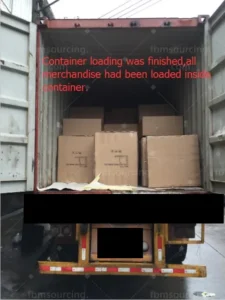
- Container limit: a 40HQ gives about 12.0 m x 2.35 m of usable floor and 67–68 m³ of practical loading volume, so finished pods load roughly six to eight per container.
- Site interface: pods arrive first-fixed to one connection zone — hot, cold, drainage, vent and an electrical whip.
- Programme driver: lead time is driven by mould and first-article approval, then repeat production.
2026 Project Figures for a Bathroom Pod Package
The numbers below are the ones that decide whether a pod route works on a given building, and they should be settled before a manufacturer is shortlisted.
- Pod footprint: hotel key bathrooms typically fall between 2.2 and 4.5 m²; apartment and student accommodation pods are usually at the lower end of that band.
- Shipping envelope: a 40HQ has internal dimensions of about 12.03 × 2.35 × 2.69 m, so a fully assembled pod must clear 2.35 m in its shipping orientation — this, not weight, is what caps pods per container.
- Structural interface: the slab opening and setting-out tolerance has to be agreed in writing with the pod producer before the prototype is built; pods do not absorb site tolerance the way a site-built bathroom does.
- Approval sequence: prototype pod approved on site or at the factory first, series release only after sign-off — a pod programme has one approval gate, not a rolling one.
- Pre-dispatch testing: each pod is flood-tested and function-tested at the factory, because a leak found after installation is a demolition job rather than a repair.
What Is a Prefab Bathroom Pod?
A prefab bathroom pod — also called a prefabricated bathroom unit (PBU), integrated bathroom or unit bathroom — is a complete bathroom built and finished in a factory and delivered as one sealed box. Walls, floor tray, ceiling, waterproofing, finishes, sanitary ware, tapware, lighting, extract fan and first-fix pipework are installed and water-tested before dispatch. On site the pod is craned or rolled into position and connected at a single interface point.
The format was industrialised in Japan for hotel construction ahead of the 1964 Tokyo Olympics, because wet trades were the slowest and most defect-prone part of a guest room programme. Chinese manufacturers entered through OEM work for Japanese and Korean housing groups, which is why the strongest clusters today are the Yangtze River Delta around Suzhou and the Pearl River Delta around Guangzhou and Foshan.
The decisive technical difference from a site-built bathroom is the floor: a pod uses a one-piece moulded or pressed tray with no site-formed joint between floor and upstand, so the waterproofing layer carries no seam at the most vulnerable point in the room.
Why Do Hotel and Apartment Developers Use Bathroom Pods?
The case is programme, not material cost. A conventional guest bathroom passes through eight to twelve wet trades in sequence on a live floor plate — screed, tanking, tiling, plumbing second-fix, electrical, glazing, sealing, snagging. A pod collapses that into one factory operation and one site connection, which is why pods appear first where the room count is high and the room type repeats.
The second driver is defect risk. Water ingress is a recurring source of post-handover claims on multi-storey buildings, and every conventional bathroom is a bespoke waterproofing job done by a different crew on a different day. A pod moves that into a controlled line where each unit is water-tested at the factory and inspected before shipment, with photo and video records held against the unit number.
The third is consistency at scale: across 180 apartment bathrooms or 240 hotel keys, what matters is that key 7 on level 2 matches key 7 on level 14. That is a manufacturing problem. The same logic drives how teams buy commercial toilets and sanitaryware for hotel and apartment projects as one packaged order rather than a trade purchase.
The trade-offs are real: pods lock the bathroom design early, demand structural coordination before the frame is poured, need crane time and a clear installation route, and are unforgiving of dimensional drift in the builder’s opening.
Prefab Bathroom Pod Manufacturers in China: Integrated Bathroom Specialists
This group builds bathrooms as a product line — own moulds, own assembly lines, sold by model and size rather than by construction contract.
1. Cooya (Suzhou Cooya Housing Equipment)
Cooya is the closest thing China has to a pure-play integrated bathroom manufacturer, based in Suzhou at the centre of the Yangtze River Delta prefabrication cluster. Its core product is the SMC composite bathroom unit, pressed from steel moulds rather than assembled from flat panels.
Moulded shells are light, dimensionally repeatable and quick to install. The trade-off is aesthetic range: SMC reads as a moulded surface, which suits dormitories, student housing and midscale hotels far better than a five-star suite.
- Location: Suzhou, Jiangsu
- Focus: SMC composite integrated bathroom units, volume production
- Typical products: Moulded shells, one-piece trays, complete fitted units in standard module sizes
- Project fit: High-repetition PBSA, dormitory and midscale hotel programmes
Verdict: A solid fit for high-key-count programmes where installation speed and repeatability outrank a bespoke finish palette.
2. Seagull Housing (Guangzhou Seagull Kitchen and Bath)
Seagull is a Guangzhou kitchen and bath group with a long OEM history for overseas brands and an integrated bathroom division grown out of that export base. The plant is used to working to another party’s drawings, finish schedule and destination-market requirements rather than selling from its own catalogue.
Its Pearl River Delta location also sits inside the same supply radius as the tile, stone, glass and sanitary ware factories feeding a pod’s finish package, which shortens the loop when a designer wants a specific tile format or basin.
- Location: Guangzhou, Guangdong
- Focus: Kitchen and bath group with an integrated bathroom line, OEM/ODM orientation
- Typical products: Integrated bathroom units, sanitary ware, bathroom furniture and vanity assemblies
- Project fit: Export hotel and apartment projects following a designer’s finish schedule
Verdict: A good fit where the pod must follow a design schedule rather than a factory catalogue, and the vanity package is bought alongside it.
3. JOMOO
JOMOO is one of China’s largest sanitary ware and tapware groups, based in Nan’an, Fujian, carrying an integrated bathroom line alongside its core products. The attraction is component depth: toilet, basin, mixer, shower set, floor drain and accessories from one group, with one warranty position and one spare-parts channel.
That matters more than it sounds. On a sealed pod, a failed cartridge or flush valve in year two is not a plumbing call-out but a warranty conversation, and single-brand wet components simplify it.
- Location: Nan’an, Fujian
- Focus: Sanitary ware and tapware group with an integrated bathroom offer
- Typical products: Complete bathroom systems, toilets, basins, mixers, shower systems, floor drains
- Project fit: Hotel and serviced apartment operators wanting wet components under one brand
Verdict: Worth shortlisting when the operator’s maintenance team, not the contractor, is the party living with the bathroom for ten years.
4. ARROW Home Group
ARROW is a Foshan sanitary ware and home products group with an integrated bathroom family sitting alongside its ceramics, tapware and bathroom cabinetry. Foshan is the densest building-materials cluster in China, and a pod supplier inside it can absorb late finish changes — tile format, slab colour, cabinet carcass — without leaving the province.
Its positioning skews domestic, so an export specification needs front-end work: destination plumbing certification, S-trap versus P-trap outlets, tapware inlet standards and electrical fitments fixed before the first article is cut.
- Location: Foshan, Guangdong
- Focus: Sanitary ware and home products group with integrated bathroom systems
- Typical products: Integrated bathroom units, ceramics, tapware, bathroom cabinets and mirrors
- Project fit: Mid-to-upper apartment and hotel projects where finish variety is a priority
Verdict: Strong on finish options and cluster support, provided destination compliance is treated as a design-stage task, not a shipping-stage discovery.
5. HUIDA Sanitary Ware
HUIDA sits in Tangshan, Hebei, in northern China’s ceramics belt, and is an established sanitary ware manufacturer with an integrated bathroom line and its own tile production. Northern location is a real variable for an overseas buyer: it changes load port, inland haul and the winter production calendar versus a Guangdong or Jiangsu plant.
Where it gets interesting is ceramic-finish pods. If the specification calls for genuinely tiled walls rather than a moulded panel, buying from a group that also fires its own tile removes an interface and a blame boundary.
- Location: Tangshan, Hebei
- Focus: Sanitary ware and ceramics manufacturer with integrated bathroom products
- Typical products: Integrated bathrooms, toilets, basins, bathroom furniture, wall and floor tile
- Project fit: Projects specifying genuine tiled pod finishes rather than moulded surfaces
Verdict: A sensible route when the architect will not accept a moulded surface and the pod must read as a conventionally tiled bathroom.
Specifying bathroom pods for a hotel or apartment project?
FBM Sourcing works with developers, main contractors and FF&E contractors on hotel and apartment projects. Send us your bathroom pod schedule, unit count, finish specification and target port — our team will review it and come back with the sourcing route. See how we run sanitaryware sourcing as a project package.
Modular Construction Groups in China That Produce Bathroom Pods
This group does not sell pods from a catalogue. They engineer them into a construction package, so you are buying an engineered element with interface responsibility attached.
6. CIMC Modular Building Systems
CIMC MBS is the modular construction arm of the CIMC group, whose industrial background is container and specialised vehicle manufacturing. That matters: a business built on producing steel boxes to ISO dimensional tolerances is well suited to volumetric building modules, and its plants are already laid out for steel fabrication, coating and line fit-out.
It works at the level of the complete volumetric module for hotels and apartment buildings, with the bathroom pod produced as one element inside the module rather than as a standalone unit.
- Location: Shenzhen headquarters, modular plants in eastern and southern China
- Focus: Volumetric modular buildings, steel-framed modules including bathroom pods
- Typical products: Steel volumetric modules, modular hotel and apartment room units
- Project fit: Full modular hotel and apartment buildings, not standalone pod purchases
Verdict: The right conversation only if the whole building is going modular; over-engineered if you simply need pods dropped into a concrete frame.
7. China Construction Science & Technology (CSCEC Hailong)
Part of the China State Construction group, this is the state-owned end of the market and one of the most active producers of modular integrated construction (MiC) in southern China and Hong Kong, where MiC has become a mainstream delivery route for residential and institutional buildings. Bathroom pods sit inside that output.
The distinguishing factor is contractual weight, not product novelty: a group at this scale carries structural design responsibility, factory production control documentation and site installation as one scope.
- Location: Shenzhen and the Greater Bay Area
- Focus: Modular integrated construction, industrialised building delivery
- Typical products: Concrete and steel MiC modules, integrated bathroom pods, prefabricated components
- Project fit: Institutional, public sector and large residential MiC schemes
Verdict: Best where the client needs one accountable party across structure, module and installation, not for a straightforward pod supply order.
8. Broad Homes Industrial Group
Based in Changsha, Hunan, Broad Homes is one of China’s larger precast concrete and prefabricated construction groups, running production bases and licensed plants nationally. Core output is PC structural components, with prefabricated bathroom and kitchen elements forming part of its industrialised interior offer.
The practical significance of a precast-led supplier is weight and structure: concrete-tray pods handle acoustic separation and floor loading differently from an SMC unit, and they pull your structural engineer in much earlier.
- Location: Changsha, Hunan, with plants across China
- Focus: Precast concrete prefabrication and industrialised building systems
- Typical products: PC structural components, prefabricated interior systems, bathroom and kitchen elements
- Project fit: Concrete-frame residential towers where acoustics and floor loading govern
Verdict: Relevant where acoustic performance and structural integration outrank installation speed, typically residential rather than hotel work.
9. Gold Mantis
Suzhou-based Gold Mantis is one of China’s largest interior fit-out contractors, with a substantial hospitality portfolio and an industrialised interior division producing bathroom modules alongside prefabricated wall, ceiling and joinery systems. Its centre of gravity is fit-out rather than manufacturing.
A contractor-led supplier earns its place where the pod is one part of a complete room package — wardrobe, wall panelling, entry joinery, bathroom — and the developer wants one party responsible for the interfaces instead of four vendors pointing at each other.
- Location: Suzhou, Jiangsu
- Focus: Interior fit-out contracting with an industrialised prefabricated interior division
- Typical products: Prefabricated bathroom modules, wall and ceiling systems, hospitality interior packages
- Project fit: Hotel and high-end residential fit-out where the pod is part of a room package
Verdict: The route to consider when the bathroom is bought as one line inside a complete guest room fit-out, not as an isolated product.
How Do You Specify and Order Bathroom Pods from China?
Pods fail on interfaces, not on manufacturing. Six items decide whether a container installs cleanly or sits in a laydown area, and all six belong in the enquiry package before anyone quotes.
Builder’s opening and tolerance. A pod is a rigid object dropped into a concrete world. The structural opening or slab recess must be coordinated with the pod’s external envelope, with a deliberate perimeter gap — commonly 20–50 mm — that is packed and made good afterwards. Too tight and the pod will not go in; too generous and you inherit a fire-stopping and acoustic problem on every floor.
MEP interface drawing. Pods arrive first-fixed to a single connection zone. Riser positions, drainage stack side, trap configuration and connection heights must be fixed before the mould is cut. Outlet configuration is market-specific, which is why sanitary ware certifications such as cUPC, WaterMark, WRAS and CE and the S-trap versus P-trap question belong at design stage.
Accessibility variants. Accessible pods are a separate model, not an option box. In the US, ADA 2010 Standards §608 governs shower compartment size, controls and seat position; in Australia, AS 1428.1 sets the equivalent requirements. Fix the accessible key count early, because those pods usually need their own mould or jig.
Fire and acoustics. Interior finish classification — ASTM E84 Class A in North America, EN 13501-1 classes in Europe — applies to the pod’s lining materials, and every service penetration through the floor slab needs a fire-stopping detail that has been drawn, not improvised on site.
Moulds and first-article approval. This is the commercial pivot of the category: lead time is driven by mould or jig preparation and first-article approval, then repeat production at line speed. Approve late and every subsequent date moves with it. Tooling ownership should be agreed in writing — see our guide on who pays for samples, moulds and tooling.
Shipping and craneage. A 40HQ gives about 12.0 m x 2.35 m of usable floor and 67–68 m³ of practical loading volume, putting finished pods at roughly six to eight per container after bracing and corner protection. Height is the constraint people miss: usable internal height in a standard 40-foot box is about 2.39 m, so a taller finished pod ships knocked-down as panels, or on flat rack or open top, changing both freight cost and site assembly scope. Where pods travel with furniture and materials, fold them into the wider hotel FF&E container planning exercise.
Which Pod Route Fits Your Project?
The table below is a routing tool, not a ranking. There is no best pod manufacturer in the abstract — only the construction type your project can accept and the commercial structure you want behind it.
| Manufacturer | Location | Pod Type | Best Project Fit |
|---|---|---|---|
| Cooya | Suzhou, Jiangsu | SMC composite, moulded shell | PBSA, dormitory, midscale hotel |
| Seagull Housing | Guangzhou, Guangdong | Integrated bathroom, OEM finish-led | Export projects with a designer finish schedule |
| JOMOO | Nan’an, Fujian | Integrated bathroom, single-brand wet components | Operator-driven hotel and serviced apartment |
| ARROW Home Group | Foshan, Guangdong | Integrated bathroom, wide finish range | Mid-to-upper apartment and hotel |
| HUIDA | Tangshan, Hebei | Integrated bathroom, in-house ceramic tile | Genuinely tiled pod finishes |
| CIMC Modular Building Systems | Shenzhen, eastern China | Pod inside a steel volumetric module | Full modular hotel and apartment buildings |
| China Construction Science & Technology | Shenzhen, Greater Bay Area | Pod inside concrete or steel MiC module | Institutional and large MiC residential |
| Broad Homes Industrial Group | Changsha, Hunan | Precast-led, concrete tray | Concrete-frame residential towers |
| Gold Mantis | Suzhou, Jiangsu | Contractor-produced prefabricated module | Guest room packages bought as a whole |
Is the whole building going modular? If yes, buy the pod inside the module and stop shopping for pods separately. If no, and you have a conventional concrete or steel frame, an integrated bathroom manufacturer is the shorter path.
Will the architect accept a moulded surface? If yes, SMC is the lightest and most forgiving option and suits student housing, staff accommodation and budget-to-midscale hotels. If no, you are in tiled-pod territory, the pod gets heavier, and the structural conversation starts earlier.
Is the bathroom the whole scope, or one line in a room package? A standalone pod order suits a developer with a strong contractor appointed. A room-package approach suits owners buying the guest room as a unit, alongside the bathroom vanity package, joinery and loose furniture.
A building material sourcing agent earns its place between those answers. Pods are a low-frequency, high-consequence purchase: most developers buy them once, Chinese manufacturers rarely sell direct to a first-time overseas client, and the failure modes are coordination failures rather than product failures. A sourcing agent on this scope matches pod type to what your engineer will sign off, translates the consultant’s MEP drawing into something a factory engineering team can quote against, drives first-article approval so the mould stage does not silently eat the programme, and inspects units before shipment with photo and video records against unit numbers. All inspection is carried out by FBM Sourcing’s own team at the factory.
Evidence to Request Before You Shortlist
Bathroom pods are bought on performance data, not on catalogue photographs, because a pod is an assembly of waterproofing, drainage, ventilation and finishes that has to be signed off as one unit. Ask each candidate for these before shortlisting.
- Watertightness and drainage test records — flood test method and duration for the tray and upstands, and the fall achieved to the waste, evidenced per pod type rather than per range.
- Structural and handling data — pod self-weight, lifting point design, permitted crane and slide-in tolerances, and the racking limits during transport, since most pod damage happens in handling rather than in manufacture.
- Fire and acoustic evidence for the assembly — the fire resistance and sound reduction test reports must relate to the pod construction as built, including penetrations, not to the individual panel materials.
- Services interface drawings — exact positions and tolerances for hot, cold, waste, ventilation and electrical connections, so the site-side coordination can be resolved on paper rather than at installation.
- Panel and sealant certification — substrate emissions certification for the destination market, and the sealant and adhesive specification with their service life.
- A physical prototype pod and a written sign-off procedure — the prototype should be inspected complete, connected and flooded, and the approved state recorded as the control for the production run.
- Project references with pod counts and delivery years — installed pods at a comparable volume in a comparable market, with the transport method used.
On packages FBM Sourcing manages, these documents are collected and cross-checked against the actual production batch before an order is placed, and all inspection is carried out by our own team on the factory floor with a full inspection before shipment recorded in photographs and video. FBM Sourcing manages the entire China procurement package for overseas construction projects. All quotations, invoices and shipping documents are issued by FBM Sourcing — you deal with us, and we carry the responsibility. For suppliers you nominate, we charge a 5% commission; for products we source for you, we quote a direct price.
2026 Dimensional and Compliance Benchmarks for Bathroom Pods
Pod procurement is unusually unforgiving because the product has to fit a structural opening that is already built. These are the figures that decide whether a pod programme works.
- Container fit governs pod size: a 40ft high cube has an internal length of about 12.03 m, an internal width of about 2.35 m and an internal height of about 2.69 m. Pod external dimensions plus protection have to sit inside that, and the door opening is narrower than the box.
- Setting-out tolerance: pod openings are normally specified to a tolerance in the order of ±3–5 mm on the structural opening; a slab poured outside that tolerance is a site problem no factory can absorb.
- Pod types: GRP/SMC moulded, steel-framed with tiled finish, and precast concrete — each with a different weight per pod, which drives crane selection and floor loading on the receiving site.
- Waterproofing evidence: ask for a water tightness test record for the pod as an assembly, not just a membrane certificate for the material.
- Fire and acoustic evidence: the pod is a system, so reaction-to-fire classification to EN 13501-1 and any acoustic rating must be evidenced for the assembly as supplied, not for its components.
- Programme: pods are ordered against the structure, not against the fit-out, so the approval sequence — prototype pod, first-off inspection, production release — has to sit ahead of the slab programme.
Benchmarks reviewed for the 2026 procurement season.
Bathroom fixtures for a hotel or apartment project draw on three separate manufacturing categories, not one supplier — see China sanitary ware market and export data 2026 for where ceramics, faucets and shower products are each actually made.
Get a China Procurement Quote for Prefab Bathroom Pods
FBM Sourcing is a building material and furniture china sourcing agent in Foshan and Guangzhou, working with project owners, developers, main contractors and FF&E contractors on hotel, apartment, student accommodation, school, hospital, office and mixed-use projects across the USA, Australia, the UK and Europe, the Caribbean and the Middle East. We are not a manufacturer — we source, coordinate, inspect before shipment and consolidate, on a transparent agency fee of 5%. For bathroom pods, send us your room type drawings, the MEP interface drawing, pod quantities by type including accessible units, destination port and target installation window, and our team will review it and get back to you. Full scope is on our project procurement page.
Still weighing the approach itself? Read our comparison of prefab bathroom pods vs site-built bathrooms for hotel and apartment programmes, or see how pod delivery coordinates with the wider build in How Does FF&E Sourcing Work for Modular & Prefab Construction Projects?
For UK schemes specifically, where Approved Document E acoustics and water fittings approval decide eligibility and a September handover fixes the programme, see prefab bathroom pod manufacturers in China for UK PBSA and hotel projects.