
FF&E sourcing for modular and prefab construction projects works on two production schedules running in parallel instead of the usual sequence where a building shell is finished first and FF&E follows — the module factory and the furniture and finishes factories are producing at the same time, on different sites, and their dimensions have to match before either one starts. That parallel timeline is what makes modular FF&E coordination different from a conventional build, and it’s where the more expensive mistakes happen when it isn’t managed early.
What Gets Installed at the Factory vs. On Site?
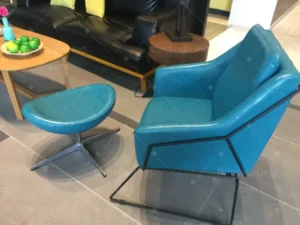
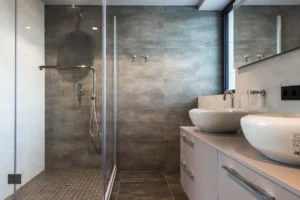
Fixed items are commonly built into the module before it ships: built-in wardrobes and casegoods, fitted kitchen cabinetry, and increasingly, fully prefabricated bathroom pods that are craned into the module shell and connected to plumbing stub-outs at the factory. Loose furniture, soft furnishings, and anything more vulnerable to transit vibration or damage are generally shipped separately as a standard FF&E container and installed on site once the modules are set and weather-tight, following the same sequence as a conventional project’s final fit-out.
Why Parallel Production Schedules Change the Coordination Task
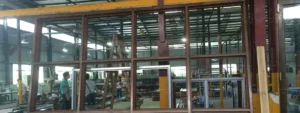
On a conventional build, the shell goes up first and FF&E orders are placed against a known set of finished room dimensions. On a modular project, the module factory and the FF&E factories are often producing in the same window, sometimes before either party has seen the other’s as-built dimensions confirmed. That means rough-opening sizes, casegood footprints and MEP rough-in points inside the module need to be locked against the FF&E supplier’s actual product dimensions before either factory starts production — because a dimensional mismatch discovered after the module shell is built, or after modules are already in transit, is far more disruptive and costly to correct than the equivalent mistake on a site-built wall.
Do Bathroom Pods and FF&E Come from the Same Factory as the Modules?
Structural modular units and prefabricated bathroom pods are usually built by different specialist factories, even on the same project. This means the pod’s plumbing stub-out positions and the module’s rough-in points need to be verified against each other rather than assumed compatible just because both are described as “modular.” The same applies to built-in casegoods supplied by a furniture factory for installation inside a module built by a separate structural factory — footprint, height clearance and fixing points all need cross-checking before production starts on either side.
Sourcing this for a commercial project?
FBM Sourcing works with project owners, developers, main contractors and FF&E contractors on hotel, apartment, school, office and other commercial building projects. Send us your BOQ, drawings or product list — our team will review it and get back to you.
How Does Container Planning Work Alongside a Modular Build Program?
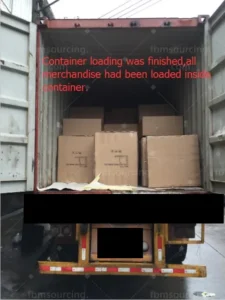
Sometimes, on a large project, the loose FF&E items and finishing materials alone fill full containers; sometimes the loose FF&E items and finishing materials share containers with the other product categories of the same project; and sometimes, in one batch, we combine a dozen or more product categories from several projects of the same client into a few containers — always full containers, and for us this is routine, well-practised work. Coordinating that schedule across factories and provinces is the kind of work a sourcing agent and sourcing partner handles day to day, rather than a project team managing it factory by factory on their own.
Loose FF&E shipments typically run on their own container schedule timed to the modules’ installation sequence, rather than travelling inside the same shipment as the structural modules themselves.
Frequently Asked Questions
Is FF&E installed into modular units before or after they ship?
It depends on the item — fixed casegoods, built-in wardrobes and bathroom pods are commonly installed into the module at the factory before shipping, while loose furniture, soft furnishings and items sensitive to transit damage are typically shipped separately and installed on site after the modules are set.
Why does modular construction need tighter FF&E coordination than a conventional build?
Because the module factory’s production schedule and the FF&E factories’ production schedules run in parallel rather than in the usual sequence of shell-first-then-fit-out, a delay or dimensional mismatch on either side surfaces much later — often after modules are already in transit — so tolerances and delivery dates need to be locked and cross-checked earlier than on a conventional build.
Can bathroom pods and FF&E come from the same factory as the modular units?
Rarely — structural modular units and prefabricated bathroom pods are usually built by different specialist factories even when supplied through the same project, so their dimensions and installation interfaces need to be verified against each other rather than assumed to match automatically.
What tolerances matter most when coordinating FF&E with modular units?
Door and window rough-opening dimensions, fixed casegood footprints, and MEP (electrical and plumbing) rough-in points inside the module need to match the FF&E supplier’s product dimensions before either factory starts production, since correcting a mismatch after the module shell is built is far more disruptive than on a conventional site-built wall.
Related reading: Top Prefab Bathroom Pod Manufacturers in China, How Are Site Dimensions Verified Before Custom Joinery Goes into Production? and our full FF&E and OS&E sourcing guide. Coordinating two parallel factory schedules against one installation date is the kind of cross-checking a sourcing agent and sourcing partner is built to manage.
Planning a project that needs this sourced from China? Send us your BOQ and destination port and our team will review it.