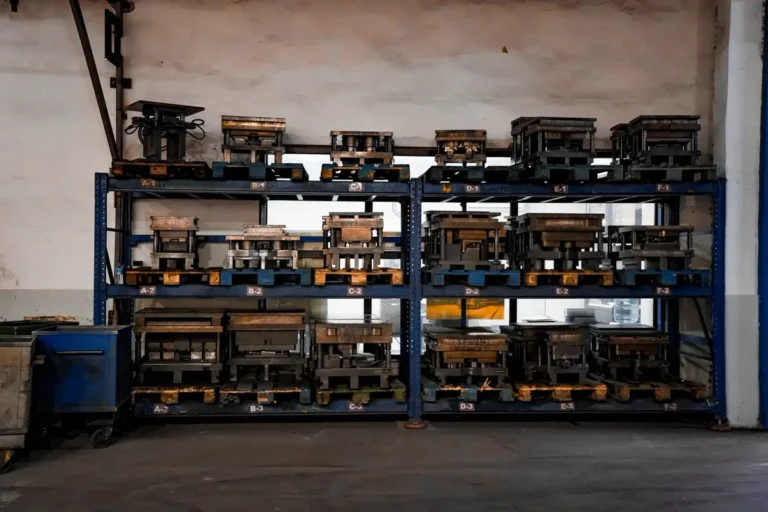
In China sourcing, the buyer usually pays for custom samples and dedicated tooling up front, but both are structured to come back: custom sample fees are commonly credited against the bulk order once it is placed, and mold or tooling costs are either invoiced as a one-time charge with ownership assigned to the buyer, or amortised into the unit price across an agreed quantity. Standard catalogue samples are often supplied free with the buyer covering courier freight. The rules are commercial convention, not law — which is why sample-fee credit, tooling ownership and retention time belong in writing before any money moves. This kind of coordination is what a sourcing partner like FBM Sourcing is for.
The standard cost conventions:
- Catalogue samples: frequently free of charge; buyer pays courier freight (freight collect is the default).
- Custom samples: charged, because they consume real production time; the fee is typically credited back or waived once the bulk order is confirmed.
- Sample lead time: 7–15 days for modified catalogue items, 15–30 days for fully custom items.
- Molds and tooling: paid by the buyer as a line item, or amortised into unit price over an agreed volume; ownership and retention period must be stated in the order.
- Retention: factories typically store buyer tooling 1–2 years after the last run unless a longer period is agreed.
What Are the Three Cost Categories — and Why Factories Charge Them
It helps to separate three things that often get lumped together in quotes. Samples are one-off pieces produced to prove a specification before bulk production — the gatekeeping step covered in our guide to the sample approval process for China sourcing. Molds are dedicated physical tools that exist only for your product: casting molds for hardware, extrusion dies for aluminium profiles, press molds for sanitary ware, sofa frame jigs. Tooling and setup is the broader category of jigs, fixtures, CNC programming and line configuration a factory builds to run your specification efficiently.
Factories charge for custom samples for a simple reason: a one-off custom piece interrupts production and can cost the factory more labour per unit than a hundred production pieces. The charge also filters serious buyers — a project buyer with drawings and a real quantity behind the request has no difficulty accepting a creditable sample fee, and factories read that signal accordingly.
Are Sample Fees Refundable Against a Production Order?
By convention, yes — the most common arrangement in furniture and building materials is sample fee credited on bulk order confirmation, meaning the fee is deducted from the deposit invoice or final balance once you proceed. Some factories waive the fee outright for orders above their normal MOQ; others credit it only if the order lands within a stated window, commonly 3–6 months of sample delivery. If you walk away, the fee is not returned — that is the factory’s compensation for interrupted production.
Three practical rules keep this clean on project procurement. Ask for the credit term in the quotation itself, not in chat messages. Keep the sample invoice — on multi-factory projects with dozens of samples in play, credits get lost in reconciliation without paperwork. And treat a factory that refuses any credit arrangement on a substantial project enquiry as a data point: export-oriented factories serving commercial projects almost universally credit sample fees, so a refusal usually signals a trading company layer or a factory that does not want custom work. How the numbers appear on the quotation follows the structure in our guide to reading a Chinese factory quotation.
Sourcing this for a commercial project?
FBM Sourcing works with project owners, developers, main contractors and FF&E contractors on hotel, apartment, school, office and other commercial building projects. Send us your BOQ, drawings or product list — our team will review it and get back to you.
Who Owns the Mold — and What Happens to It Later?
Ownership follows payment, but only if the paperwork says so. When a buyer pays a mold cost as a separate line item, commercial convention is that the buyer owns the mold and the factory holds it in custody for that buyer’s exclusive use. In practice, three failure modes appear on projects that skipped the paperwork: the factory treats a buyer-funded mold as its own asset and runs it for other customers; the factory scraps tooling after a storage period the buyer never knew existed; or the buyer wants to move production and discovers the mold “cannot be released”.
The protective clause set is short and standard. State in the purchase order: the mold is the buyer’s property; it is to be used only for the buyer’s orders; it will be stored and maintained for a defined period (match this to your project pipeline — 1–2 years is the default, longer by agreement); and it will be released to the buyer or a nominated party on request. Factories serving export project work accept these clauses routinely. For amortised tooling — where the cost is spread into the unit price over, say, the first agreed production quantity — ownership before full amortisation is shared in practice, so the release clause matters even more.
When Does Tooling Amortisation Beat a One-Time Charge?
Amortisation — folding the tooling cost into the unit price across an agreed quantity — suits buyers who are confident in volume: a chain rollout, a multi-phase development, a hotel brand with a pipeline. It preserves cash at order one and aligns the factory’s incentive with repeat production. The one-time charge suits one-off projects better: the total cost is visible, comparison across factories is clean, and ownership is unambiguous from day one. Two cautions apply to amortisation. First, confirm what happens if actual volume falls short of the amortisation quantity — a shortfall clause (buyer tops up the unamortised balance) is fair and standard. Second, when you negotiate MOQs with Chinese factories, remember that amortised tooling quietly raises the effective MOQ — the factory needs the volume to recover its tool cost.
How Does a Sourcing Agent Keep Sample and Tooling Costs Under Control?
On a commercial building project, sample and tooling decisions repeat across every custom line item — joinery packages alone can involve dozens of samples, as our article on custom millwork and joinery packages from China shows. A building material and furniture sourcing agent consolidates this into one discipline: sample fees negotiated to creditable terms before sampling starts, one sample log across all factories so every credit is claimed at order placement, tooling ownership clauses written into every PO as standard, and sealed control samples held in custody independent of the factories. The result is not just cost recovery — it is that eighteen months later, your phase 2 order still has live tooling and a physical quality reference to produce against.
Which Sample Types Will You Actually Encounter?
“Sample” covers four different objects on a project, and the cost conventions attach differently to each. A counter sample is the factory’s first attempt at your specification — this is the one the sample fee usually covers, and one revision round is normally included. A materials-and-finish set (board cuts, lacquer chips, fabric swatches, metal finishes) is typically supplied free alongside it. A pre-production sample is produced after order confirmation from production tooling and materials — it is part of the order, not a separate charge, and it is the last checkpoint before bulk production. And the sealed control sample is the approved reference held for inspection and future reorders — standard practice is duplicate sets, one at the factory and one in independent custody.
The budgeting consequence: on a multi-factory project, sample spend concentrates in the counter-sample stage, is largely recoverable through order credits, and buys down the most expensive risk on the project — bulk-producing an unproven specification. Mock-up rooms on hotel and apartment projects are the same logic at room scale: one physical unit approved before hundreds are produced.
Get a China Procurement Quote for Your Custom Products
FBM Sourcing manages custom furniture, joinery and building material production for hotel, apartment, office, school and other commercial projects — including sample programmes, tooling terms and pre-shipment inspection by our own team with photo and video records. Working on a 5% commission for suppliers you nominate (products we source for you are quoted at a direct price), we make sure sample and tooling money is structured to come back to the project. Send your drawings, quantities and destination port through our project procurement page and our team will review your custom scope.