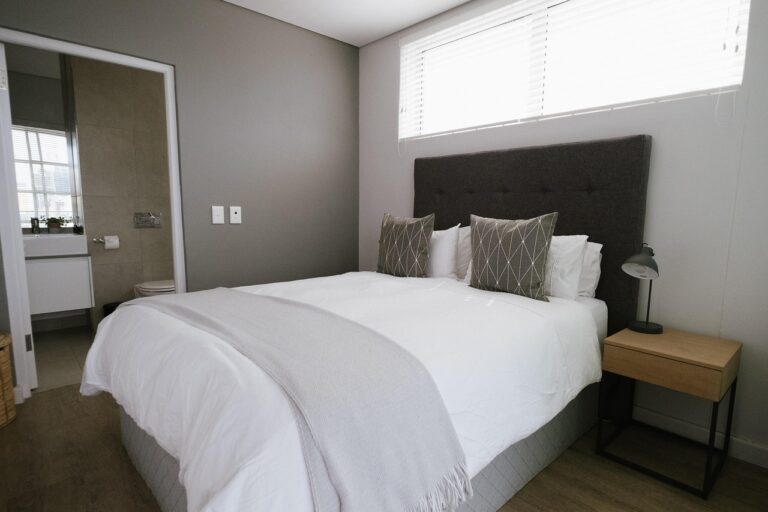
FF&E means furniture, fixtures and equipment. In a hotel project, the term usually covers the movable or semi-fixed assets that furnish the property and support the guest experience, but are not treated as permanent parts of the building. Beds, bedside tables, sofas, desks, decorative lighting, mirrors, televisions and gym equipment are common examples. FF&E is different from OS&E—operating supplies and equipment—which includes the smaller items required to run the hotel, such as bed linen, tableware, cookware, housekeeping tools and guestroom accessories.
That is the short answer. The practical answer is more important: an item belongs in the package defined by the project’s responsibility matrix, specifications and operator standards. A decorative pendant may be FF&E on one project and part of the electrical contract on another. The label matters less than making sure the item has one owner, one budget and one delivery date.
This guide explains the FF&E meaning for hotel developers, contractors, designers and procurement managers, then turns it into a working scope, budget and purchasing checklist.
Table of Contents
- What does FF&E stand for?
- What is included in hotel FF&E?
- FF&E vs OS&E: what is the difference?
- FF&E examples by hotel area
- What is not normally included in FF&E?
- How to build an FF&E budget
- The hotel FF&E procurement process
- Common FF&E procurement mistakes
- Hotel FF&E procurement checklist
- Frequently asked questions
What Does FF&E Stand For?
FF&E stands for furniture, fixtures and equipment:
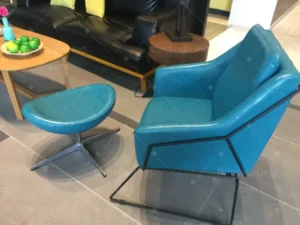
- Furniture includes movable pieces used for sitting, sleeping, working, dining or storage. Hotel beds, lounge chairs, restaurant tables, desks and loose wardrobes are straightforward examples.
- Fixtures in an FF&E schedule are generally decorative or functional items that may be attached for use but can be removed without becoming part of the core building structure. Mirrors, window treatments and some decorative light fittings may fall into this group.
- Equipment includes durable assets that perform a specific function, such as televisions, fitness machines, conference-room screens or back-of-house appliances when these are assigned to the FF&E package.
FF&E is commonly treated as a capital project package because the items have a useful life beyond day-to-day consumables. However, accounting treatment, depreciation rules and asset thresholds vary by country, owner and company policy. The project’s accountant or cost consultant should determine the financial classification; the procurement team should not infer it from the acronym alone.
For design and purchasing teams, the term is mainly a way to organize scope. A useful FF&E schedule connects every item to a room or area, controlled specification, quantity, budget owner, approval status, required-on-site date and installation responsibility. Missing fields signal that the package is not ready for purchasing.
What Is Included in Hotel FF&E?
A hotel FF&E package can cover guestrooms, suites, corridors, lobby areas, restaurants, bars, meeting rooms, business centers, spa and fitness spaces, pool areas, staff spaces and administrative offices. Its exact boundary depends on the contract strategy.
The same FF&E logic carries over to commercial workplaces — workstations, task seating, partitions and joinery follow an identical specification-and-inspection route, covered in our guide to office building fit-out procurement from China.
Typical categories include guestroom casegoods; upholstered and public-area furniture; restaurant, bar and outdoor furniture; mirrors, artwork, rugs and window treatments; decorative lighting; televisions, displays and selected fitness or operational equipment.
The word fixtures causes the most confusion. A wall-mounted mirror may be listed under FF&E, while a built-in stone vanity is normally part of the construction or joinery package. A decorative bedside wall lamp may sit in FF&E, while emergency lighting stays in the electrical works. There is no universal list that overrides the project’s tender documents.
The best control is an FF&E/OS&E/construction responsibility matrix. It should name the party responsible for design, supply, approvals, electrical or plumbing interfaces, delivery, installation, testing and final handover. This prevents an item from being bought twice—or not bought at all.
FF&E vs OS&E: What Is the Difference?
OS&E stands for operating supplies and equipment. These are the items the hotel team uses to operate the property and serve guests after handover. Some are consumable, while others are durable but small, portable or closely tied to a hotel department’s daily operation.
The clearest way to separate the two is to ask whether the item primarily furnishes the physical space for long-term use or equips the operating team for daily service.
| Question | FF&E | OS&E |
|---|---|---|
| Primary purpose | Furnishes and equips the built space | Enables daily hotel operations and guest service |
| Typical item scale | Furniture, decorative fixtures and larger equipment | Smaller equipment, utensils, linen, tools and supplies |
| Typical examples | Beds, sofas, tables, lamps, TVs, gym equipment | Bed linen, towels, glassware, cookware, housekeeping tools, hangers |
| Installation | May require assembly, fixing or specialist placement | Usually requires little or no building installation |
| Design coordination | Closely coordinated with layouts, finishes and room dimensions | Closely coordinated with operator standards and departmental counts |
| Procurement timing | Often starts earlier because of customization, samples and production | Often ordered closer to opening, but long-lead equipment still needs early action |
| Quantity basis | Room-type matrix, area schedule and design drawings | Keys, covers, seats, operating par levels and department requirements |
| Handover focus | Finish quality, dimensions, function, placement and asset records | Completeness, operating readiness, hygiene, storage and replenishment |
Items That Can Sit on Either Side
The boundary is not always obvious. Guestroom safes, minibars, coffee machines, hair dryers, housekeeping carts and some kitchen equipment may be classified differently by different owners or operators. The answer should come from the project’s scope documents—not from a generic definition found online.
For every grey-area item, confirm who specifies it, who installs and connects it, and who owns the budget and warranty. Any need for power, water, drainage, ventilation, data or structural support must also be coordinated. Set the classification before RFQ; moving items after bid comparison can invalidate the budget.
FF&E Examples by Hotel Area
The following table is a practical starting point, not a universal contract definition.
| Hotel area | Typical FF&E examples | Typical OS&E examples | Important coordination points |
|---|---|---|---|
| Guestroom | Bed base, headboard, bedside tables, desk, chair, lounge seating, TV unit, loose wardrobe, lamps, curtains, mirror, artwork | Linen, pillows, duvet, towels, hangers, waste bins, tray, kettle, cups, iron and ironing board | Room dimensions, sockets, switches, TV/data points, fabric performance, luggage clearance |
| Suite living area | Sofa, armchairs, coffee table, side tables, dining set, rugs, lamps | Glassware, table accessories, cushions where operator-controlled | Furniture scale, circulation, floor outlets, upholstery and finish consistency |
| Lobby and reception | Lounge seating, occasional tables, consoles, rugs, decorative lamps, loose reception furniture | Queue accessories, desk organizers, portable service equipment | Traffic flow, accessibility, fire egress, power/data, floor protection |
| Restaurant and bar | Dining tables, chairs, banquettes, bar stools, loose host stand, decorative screens | Crockery, cutlery, glassware, trays, buffet utensils, small service equipment | Seating capacity, cleanability, table stability, upholstery performance, clearances |
| Meeting and ballroom | Stackable chairs, meeting tables, lecterns, portable stages or screens where specified | Linen, portable service items, presentation accessories | Storage density, stacking method, AV/data interfaces, flexible layouts |
| Spa and fitness | Treatment beds, lounge furniture, lockers where loose, gym machines, side tables | Towels, robes, baskets, treatment accessories, cleaning tools | Equipment power loads, floor loading, moisture resistance, service access |
| Pool and terrace | Loungers, outdoor tables, chairs, umbrellas and cabanas where loose | Towels, portable bins, service trays and pool accessories | UV, corrosion, wind, drainage, storage and local safety requirements |
| Guest corridors | Consoles, mirrors, artwork, occasional seating and decorative lighting where scheduled | Service trays or small housekeeping accessories | Egress width, wall fixing, impact risk, maintenance access |
| Back of house | Office desks, task chairs, shelving or staff-room furniture when in package | Housekeeping carts, laundry trolleys, cleaning equipment, kitchen utensils | Department workflow, durable finishes, storage, lift and door clearances |
Guestroom FF&E Deserves Special Attention
Guestroom items repeat, so a bedside table that blocks a socket or a headboard that conflicts with a thermostat can multiply one error across the property. Give each room type its own item list and dimensional checks, then review the mock-up with design, operations, procurement, MEP and installation teams for appearance, access, cleaning and maintenance.
For a deeper view of China-based supplier coordination, sampling and quality control, read FBM’s guide to hotel FF&E procurement from China.
What Is Not Normally Included in FF&E?
FF&E is generally separate from the permanent building fabric and core construction systems. Items normally excluded include:
- Structural walls, floors, ceilings and roofing
- Permanent mechanical, electrical and plumbing systems
- Fire alarm, sprinkler and life-safety systems
- Elevators and escalators
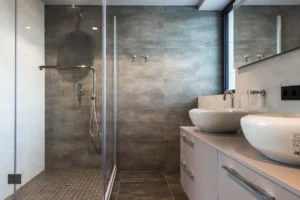
- Fixed sanitary plumbing fixtures when included in the construction contract
- Hard floor and wall finishes
- Permanently built architectural joinery, depending on the scope split
- Consumable guest amenities and replenishable operating supplies
Again, normally matters. Fixed wardrobes, vanities, millwork, bathroom accessories and decorative lighting are frequent border items. Check which drawings show the item, whether it needs a building-service connection, who fixes it, and who owns testing and warranty. Record the decision once in the responsibility matrix.
Sourcing this for a commercial project?
FBM Sourcing works with project owners, developers, main contractors and FF&E contractors on hotel, apartment, school, office and other commercial building projects. Send us your BOQ, drawings or product list — our team will review it and get back to you.
How to Build an FF&E Budget
An FF&E budget is not simply the number of rooms multiplied by a furniture allowance. It should be built from the approved scope and should show both product cost and the full cost of getting each item ready for use on site.
1. Start With the Area and Room-Type Matrix
List every sellable room type, public area and back-of-house space. For guestrooms, record the number of each room type and the FF&E quantity per room. For public areas, measure quantities from coordinated layouts. Keep design alternatives separate until they are approved.
A basic budget row needs the item code, area or room type, description, specification, net quantity, approved spares, quoted unit cost and Incoterm, extended cost, logistics allowances and current procurement status. Use the same item code on drawings, samples, purchase orders and cartons.
2. Compare Like With Like
A low unit price is meaningless if suppliers have quoted different materials, dimensions, hardware, packaging or delivery terms. Normalize quotations before comparing them. Record exclusions, sample charges, tooling, minimum order quantities, payment terms, lead times, warranty terms and included spare parts.
For imported FF&E, keep the Incoterm visible. An EXW factory price cannot be compared directly with a FOB or delivered price. The budget should show which party pays for collection, export handling, freight, insurance, customs, duties, local transport and site unloading.
3. Calculate Landed and Installed Cost
A useful project formula is:
Landed and installed FF&E cost = product cost + sampling and development + export packing + inland logistics + international freight and insurance + customs/duty/tax treatment + destination handling + storage + site delivery + installation + approved spares + contingency
Not every line applies to every contract, but every line should be considered. Taxes that can be reclaimed should be shown according to the project’s accounting rules. Freight should be updated as the shipping plan develops rather than left as an early assumption.
4. Add Costs That Unit Prices Hide
Common omissions include prototypes, material couriers, testing, inspections, tooling, export packing, consolidation, storage, restricted-access delivery, installation, packaging removal, spares and touch-up materials. There is no responsible universal allowance: set contingency according to design maturity, specification certainty, logistics exposure and schedule risk.
5. Control Changes Against the Baseline
Freeze a baseline budget when the scope and design reach an agreed stage. Every later substitution or design change should show the product-cost impact, logistics impact and schedule impact. A cheaper item that restarts sampling or misses a consolidation window may increase total project cost.
Project examples are useful for understanding package complexity without treating another project’s quantities as your benchmark. See FBM’s luxury hotel FF&E procurement project in Florida and its custom furniture project for an apartment development in Melbourne. Your budget should still be built from your own drawings, quantities, specifications and destination requirements.
The Hotel FF&E Procurement Process
- Freeze the scope boundary. Assign FF&E, OS&E, construction, MEP, specialist and operator-supply responsibilities before enquiries.
- Build the schedule and program. Convert drawings and room data into item quantities, then work backward from required-on-site dates through approvals, production, shipping and installation. Prioritize custom and compliance-sensitive items.
- Write quotation-ready specifications. Define dimensions, construction, materials, finish, hardware, performance, testing, packaging, labels, quantity and application. Reference images alone do not create comparable bids.
- Prequalify suppliers and issue the RFQ. Assess category capability, capacity, project experience, quality systems, export readiness and inspection acceptance. Give every bidder the same controlled pack.
- Normalize bids. Expose substitutions, exclusions and assumptions; compare lead time, samples, payment terms, packing, warranty and corrective-action terms as well as price.
- Sample and mock up. Approve coded physical materials and prototype repeat guestrooms before mass production. Keep dated approval records.
- Contract and track production. Reference final specifications, approvals, milestones, inspection rights and defect procedures in the purchase order. Check critical materials and first production pieces early.
- Inspect before shipment. Verify quantity, dimensions, construction, finish, function, accessories, labels and packing. Correct and recheck nonconformities before release.
- Plan consolidation and delivery. Use schedule item codes on cartons and load around site sequence. Confirm protection, container use and documentation.
- Install and close out. Reconcile deliveries, log snags by room and item code, then collect warranties, care instructions, spares, touch-up materials and final asset records.
Common FF&E Procurement Mistakes
| Mistake | Better control |
|---|---|
| Treating FF&E as isolated shopping | Manage one package by room type, area and installation phase. |
| Leaving FF&E/OS&E boundaries undefined | Maintain a signed responsibility matrix. |
| Comparing unlike specifications | Normalize materials, construction, hardware, packing and terms first. |
| Approving appearance only | Verify cleaning, humidity, UV, durability and other performance needs. |
| Skipping the mock-up | Test clearances, services, storage, cleaning and maintenance before repetition. |
| Ordering before interface coordination | Check furniture against sockets, curtains, access panels and door swings. |
| Budgeting only factory price | Track landed and installed cost. |
| Inspecting only at completion | Use samples, first-piece checks and production milestones. |
| Allowing inconsistent carton labels | Enforce one item-code and location system. |
| Ignoring closeout | Plan spares, defects, warranties and touch-up materials before final payment. |
Hotel FF&E Procurement Checklist
The checklist below is formatted so project teams can copy it into a document, spreadsheet or project-management system.
A. Scope and Responsibility
- ☐ Confirm the project’s definition of FF&E and OS&E.
- ☐ Create a responsibility matrix covering design, supply, installation and warranty.
- ☐ Identify construction, MEP, joinery, kitchen, laundry and operator-supply interfaces.
- ☐ Assign a budget owner and approver to every item.
- ☐ Record all grey-area decisions in the controlled scope documents.
B. Schedule and Specification
- ☐ Create a unique code for every FF&E item.
- ☐ Complete the room-type and area matrix.
- ☐ Verify net quantities and approve spares or wastage separately.
- ☐ Coordinate dimensions with architectural, interior and MEP drawings.
- ☐ Define materials, construction, finishes, hardware and performance.
- ☐ Identify testing, certification and local compliance requirements.
- ☐ Define packaging, labels, accessories and documentation.
C. Budget and RFQ
- ☐ Establish the product-cost baseline by item and area.
- ☐ Include samples, development, testing and inspection allowances.
- ☐ State the Incoterm for every quotation.
- ☐ Include freight, customs, delivery, storage and installation as applicable.
- ☐ Record exclusions, assumptions, MOQ, lead time and payment terms.
- ☐ Normalize supplier bids before comparison.
- ☐ Approve contingency based on project-specific risks.
D. Supplier and Approval
- ☐ Check category-specific manufacturing capability.
- ☐ Review production capacity and the proposed program.
- ☐ Confirm export packing and documentation capability.
- ☐ Approve coded material and finish samples.
- ☐ Produce prototypes or a guestroom sample set where needed.
- ☐ Complete a multidisciplinary mock-up review.
- ☐ Freeze an approval record before mass production.
E. Production and Quality Control
- ☐ Issue final controlled drawings and specifications with the purchase order.
- ☐ Track key materials and production milestones.
- ☐ Check first production pieces for critical custom items.
- ☐ Inspect quantity, dimensions, construction, finish and function.
- ☐ Verify accessories, spares, labels and packaging.
- ☐ Document corrective actions and release status.
- ☐ Confirm the final packing list before loading.
F. Logistics, Installation and Closeout
- ☐ Plan consolidation and loading around site sequence.
- ☐ Confirm shipping documents and destination requirements.
- ☐ Prepare unloading, storage and internal distribution plans.
- ☐ Reconcile delivered cartons with the packing list.
- ☐ Track damage, shortages and installation snags by item code.
- ☐ Collect warranties, care manuals and certificates.
- ☐ Handover spares, touch-up materials and replacement parts.
- ☐ Update the final asset register and closeout status.
Frequently Asked Questions
Is FF&E the Same as Furniture?
No. Furniture is one part of FF&E. The full package can also include decorative fixtures and durable equipment such as lamps, mirrors, televisions, display screens or gym machines, depending on the project scope.
Is Bedding FF&E or OS&E?
The bed frame, headboard and bedside furniture are normally FF&E. Bed linen, duvet inserts, pillows and protectors are normally OS&E. The mattress may be assigned differently depending on the owner, operator and procurement structure, so it should be named explicitly in the schedule.
Are Light Fixtures Included in FF&E?
Decorative lamps and selected decorative fixtures may be included. Architectural, emergency and core building lighting are usually part of the electrical or construction package. Check who supplies, installs, connects, tests and warrants each fixture.
Are Built-In Cabinets FF&E?
Sometimes, but not automatically. Loose cabinets are usually FF&E. Permanently built-in wardrobes, vanities and millwork are often treated as joinery or construction scope even when they visually match the loose furniture. The contract documents should decide.
Is FF&E a Capital Expense?
FF&E is often budgeted as a capital project package, but the accounting classification and depreciation treatment depend on local rules and the owner’s policies. Seek project-specific accounting advice rather than using a procurement definition as a tax conclusion.
How Do You Estimate an FF&E Budget?
Build it item by item from the room-type and area schedules. Multiply approved purchasing quantities by normalized unit costs, then add applicable sampling, testing, packing, logistics, customs, storage, delivery, installation, spares and contingency. Maintain both product-cost and landed-and-installed views.
When Should Hotel FF&E Procurement Start?
Start early enough to complete scope coordination, RFQ, supplier evaluation, sampling, mock-up approval, production, inspection, freight, customs and installation before the required-on-site date. The correct duration depends on customization, category, destination, compliance requirements and approval speed; one generic lead time is not reliable.
What Information Does a Supplier Need to Quote FF&E?
Provide the item schedule, room and area quantities, drawings, dimensions, materials, finish references, performance requirements, packaging and labeling expectations, destination, Incoterm and required delivery dates. State which substitutions are allowed and require suppliers to list exclusions.
Related reading: fixed vs loose FF&E on hotel projects.
Turn the Definition Into a Procurement Plan
Understanding what FF&E means is the easy part. Successful hotel procurement depends on converting that definition into a coordinated schedule, responsibility matrix, realistic landed budget, approved sample standard and delivery plan.
If you are sourcing a hotel FF&E package from China, send FBM Sourcing your room-type matrix or FF&E schedule, drawings, quantities, finish references, destination port and required-on-site dates. The team can review the scope, identify quotation gaps and propose a supplier, sampling, quality-control and shipping plan for your project. Start with the hotel FF&E procurement guide or contact FBM Sourcing with your project documents for a package review.
FBM Sourcing works as a furniture sourcing agent for developers and contractors — one team handling specifications, factory pricing, QC and shipping from China.
Related: china building materials and FF&E procurement service · what a hotel FF&E package from China includes
Written by Spring Dan · Founder, FBM Sourcing
Sourcing building materials and FF&E in China for commercial construction projects since 2008. About Spring · LinkedIn