WPC (wood-plastic composite) wall panels have become the default feature-wall and corridor finish for mid-market hotels and apartment projects: fluted and slatted profiles that install dry over any levelled wall, co-extruded skins that shrug off scuffs, wood visuals without wood maintenance, and China ex-factory pricing of roughly a third of Western distributor levels. This guide covers the grades, profiles and checks a project buyer needs before ordering panels by the container. As your China sourcing partner, FBM Sourcing manages this end-to-end.
What Is a WPC Wall Panel — and What Is Co-Extrusion?
WPC panels extrude wood fibre and PVC (or PE) into hollow profiles — fluted, slatted or flat. The critical grade distinction is co-extrusion: premium panels bond a dense protective polymer skin over the core during extrusion, giving colour-fast, scratch-resistant surfaces. Cheaper panels are the bare composite or a laminated foil that peels at cut edges under cleaning chemicals. On corridors, headboard walls and reception features — anywhere trolleys, luggage and cleaning crews live — specify co-extruded.
Specification Checklist for Project Buyers
- Profile: fluted 150–200 mm widths; slat-on-felt acoustic hybrids for meeting areas
- Lengths: 2.7 m / 3 m standard — order cut to your floor-to-ceiling height to kill site waste
- Fire rating: B1 / Class B fire-retardant formulations available — match the certificate to the batch, not the brochure
- Substrate system: clips, adhesive or battens; order matching corners, end caps and J-trims with the panels
- Colour control: approve a physical sample and require batch production from one extrusion run per area
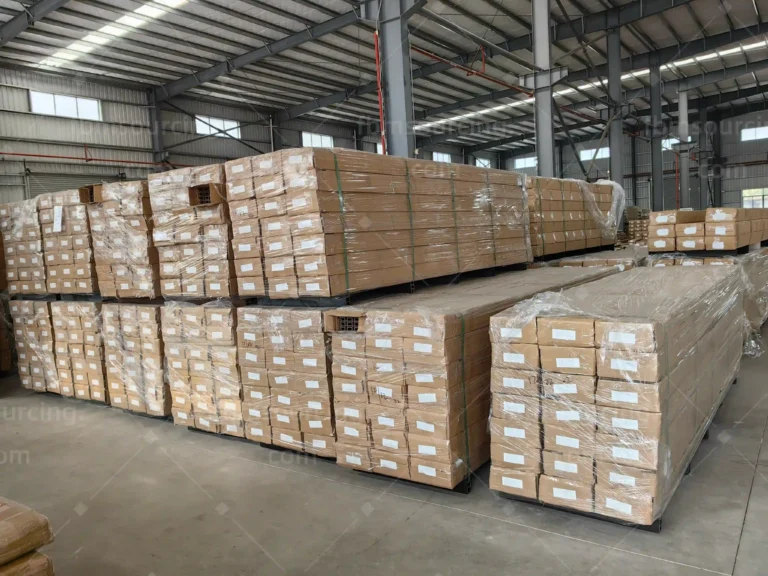
- Container maths: a 40HQ carries roughly 2,500–3,500 m² depending on profile
Sourcing this for a commercial project?
FBM Sourcing works with project owners, developers, main contractors and FF&E contractors on hotel, apartment, school, office and other commercial building projects. Send us your BOQ, drawings or product list — our team will review it and get back to you.
Where WPC Beats Alternatives — and Where It Doesn’t
Against paint and wallpaper, WPC wins on impact resistance and lifecycle in high-traffic zones. Against real timber slats, it wins on cost, fire treatability and maintenance, and loses on premium feel up close — five-star lobbies still specify veneer or timber. Against PET acoustic panels, WPC is harder-wearing but PET absorbs sound better; corridors get WPC, meeting rooms get PET or slat-on-felt hybrids. For wet areas, use waterproof SPC/PE cladding sheets instead — the full category range is on our wall panel sourcing page, and flooring pairings in SPC vs laminate flooring for projects.
What to Check Before the Container Ships
WPC panel orders fail on batch drift, not on headline quality: colour that shifts between extrusion runs, profiles that vary enough to telegraph at joints, and skins that delaminate at cut edges. Pre-shipment inspection should check colour against the signed sample under daylight, profile dimensions with calipers across the batch, skin adhesion tests at cut ends, and fire certificates reconciled to the production run — the documentation logic in our building material certification guide. Trims and clips get counted per the room schedule; a container of panels with the wrong corner trims installs nothing. As a building material sourcing agent we run these checks at the factory and consolidate panels with matching trims and other categories into shared containers.
Specifying for a US project? Our guide to Class A flame spread and NFPA 286 for wall panels from China sets out the IBC class by location and how to verify a factory’s ASTM E84 report.
Get a China Procurement Quote for Your Project
Send your elevation drawings, area schedule and design references through our China building materials & FF&E procurement page — our team will review your requirements and get back to you.