Hotel furniture is the set of casegoods, seating, tables, counters and outdoor pieces that makes a hotel operational — in procurement terms, the hotel furniture, fixtures and equipment list (FF&E list). A full package normally covers guest rooms, the lobby and reception, restaurants and bars, conference or ballroom spaces, outdoor and pool areas, and back-of-house rooms. The exact list follows the room matrix, operator standards, drawings, local regulations and intended use. This is the kind of scope a sourcing partner such as FBM Sourcing takes on.
Never order by product name alone. A “nightstand” may require a left- or right-hand configuration, fixing, stone top, cable opening, power module and finish code. Connect every item to a code, location, quantity, approved drawing, material specification and quality criterion.
This guide gives developers, designers, contractors and purchasing managers a practical area-by-area FF&E list, plus the specifications, materials and sourcing risks that determine performance after installation.
Table of Contents
- What Is Included in Hotel Furniture and FF&E?
- Hotel Furniture List at a Glance
- Guest Room Furniture
- Lobby and Reception Furniture
- Restaurant and Bar Furniture
- Conference and Ballroom Furniture
- Outdoor and Pool Furniture
- Back-of-House Furniture
- Room-Type and Area Checklist
- Hotel Furniture Material Comparison
- Mock-Up, Sampling, QC and Container Loading
- Common Procurement Risks
- Frequently Asked Questions
What Is Included in Hotel Furniture and FF&E?
FF&E means furniture, fixtures and equipment. Its boundaries with millwork, MEP equipment and OS&E can overlap. A freestanding minibar cabinet is usually FF&E; an integrated minibar wall may be joinery. A dining table is FF&E; tableware is OS&E.
Define boundaries before tendering. The responsibility matrix should state who supplies, connects, installs, makes good and approves each interface. This prevents a piece arriving without a way to connect, anchor or deliver it.
For a wider view of supplier selection, shop drawings, compliance and logistics, see FBM Sourcing’s China hotel furniture procurement guide for developers and contractors.
Hotel Furniture List at a Glance
| Hotel area | Main furniture types | Critical procurement check |
|---|---|---|
| Guest rooms | Bed bases, headboards, nightstands, wardrobes, desks, luggage benches, lounge chairs, sofas, minibar and TV units | Room matrix, MEP positions, anti-tip fixing, finish consistency and route-to-room dimensions |
| Lobby/reception | Reception counters, lounge seating, coffee and side tables, communal tables, consoles, screens and luggage-area pieces | Accessibility, high-traffic durability, power/data interfaces and field dimensions |
| Restaurant/bar | Dining tables and chairs, banquettes, bar stools, host stands, buffet and service stations, bar fronts | Stable table bases, cleanable finishes, seat comfort, floor plan clearances and fire requirements |
| Conference/ballroom | Banquet chairs, folding or nesting tables, boardroom tables, credenzas, lecterns, stages and mobile bars | Stacking and trolley system, locking hardware, storage volume, cable management and changeover speed |
| Outdoor/pool | Loungers, daybeds, cabanas, dining sets, side tables, umbrellas and towel stations | UV, rain, salt, chlorine, wind, drainage and safe surface temperatures |
| Back-of-house | Office desks and chairs, lockers, shelving, worktables, staff dining furniture and housekeeping storage | Load rating, cleanability, corrosion resistance, aisle clearance and operational layout |
1. Guest Room Furniture
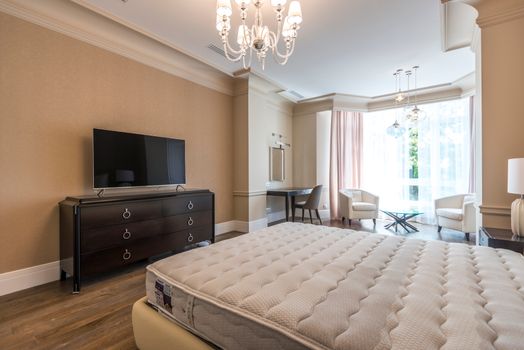
Guest room furniture is usually the most repeated package. A small prototype error can become a project-wide defect. Start with the room matrix and create a set for each king, twin, suite, connecting, accessible, corner, mirrored or different-MEP variant.
Main guest room furniture types
- Bed base and headboard: upholstered, timber, metal or mixed; floor-standing, wall-mounted or integrated with lights and nightstands.
- Nightstands: single or paired, with drawers, shelves, cable access and optional certified power modules.
- Wardrobe: freestanding or built-in, with rails, shelves, drawers, safe, luggage space and ventilation.
- Desk, vanity and chair: allow knee space, correct mirror position and power access.
- Luggage bench: hard or upholstered; confirm load and suitcase-abrasion resistance.
- TV console and minibar cabinet: coordinate appliance size, ventilation, door swing and cables.
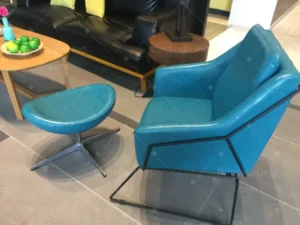
- Lounge chair, ottoman and side table: check comfort, footprint, cleanability and housekeeping access.
- Sofa, sofa bed and suite tables: test sofa-bed mechanisms separately for operation and durability.
- Entry console, mirror and shelves: coordinate with walls, switches and lights.
Key guest room specifications
Do not assume bed sizes are universal. Confirm mattress dimensions and thickness. The base must support it, align with the headboard and allow housekeeping access. Headboard drawings should show anchors, wall build-up, lights, switches, outlets and tolerances.
For casegoods, specify core, face material, edges, finish, hardware performance, wall fixing and color range. For upholstery, define fabric, seams, foam, cleanability and destination-specific flammability. Composite wood, electrical parts and coatings must meet project-market regulations, not only factory domestic standards.
Measure the delivery route. Elevator doors, corridor turns and room entrances determine whether a wardrobe or sofa must be modular. Accessible rooms need a dedicated dimensional review; removing a nightstand is not a compliance strategy.
The detailed decision process is covered in FBM Sourcing’s hotel guest room furniture procurement guide.
Common guest room sourcing risks
Key risks include missed room variants, mismatched veneer, unstable stone, weak runners, wrong power modules, poor minibar ventilation and missing fixings. Test use as well as appearance: drawers can hit curtains, wardrobe doors can hit sprinklers and chair arms may not fit beneath desks. Find these conflicts in the mock-up.
2. Lobby and Reception Furniture
Lobby furniture must make a strong first impression while surviving luggage, movement and intensive cleaning. Pieces are often custom, oversize and coordinated with architectural finishes.
Main lobby and reception furniture types
- Reception, concierge and bell desks
- Lounge sofas, modular seating, armchairs and ottomans
- Coffee, cocktail, side and console tables
- Communal worktables with integrated charging
- Decorative shelving, screens and planter surrounds
- Luggage-area benches, podiums and bell-station storage
- Business-center desks, chairs and printer cabinets
Key lobby specifications, materials and risks
Reception counters need field dimensions and coordinated drawings for accessible service positions, equipment, ventilation, cables, lights and material interfaces. Power openings require a services drawing showing exact devices and maintenance access.
For lobby seating, check seat dimensions, foam, frame joints, replaceable glides, seams and cleaning access. Entrance upholstery may need higher lightfastness. Test metal at luggage height for scratching and protect delicate stone projections.
For oversize pieces, confirm crate size, door clearance, lifting points, assembly joints and installation sequence before production. Read FBM Sourcing’s hotel lobby furniture procurement guide for a focused checklist.
3. Restaurant and Bar Furniture
Restaurant furniture affects covers, circulation, cleaning and revenue. Tables must fit the operating layout, chairs must remain comfortable, and finishes must tolerate expected cleaning and food exposure.
Main restaurant and bar furniture types
- Two-top, four-top, communal and private-dining tables
- Dining chairs, armchairs and high chairs
- Fixed or modular banquettes and booth seating
- Bar counters, bar fronts, foot rails and back-bar joinery
- Bar stools and counter stools
- Host stands, cashier counters and menu displays
- Buffet counters, live-station counters and service stations
- Mobile bars, waiter stations and tray stands
- Café, terrace and outdoor dining sets
Key restaurant specifications, materials and risks
Dining tables are typically around 740–760 mm high, but chairs, aprons and accessibility rules determine the relationship. Sample stools against the actual counter. Specify top thickness, edge, base position, leveling glides and acceptable wobble on the intended floor.
Coordinate banquettes with walls, skirtings, access panels, outlets and life-safety devices. Removable seats need secure, repeatable fixing. For stone tops, confirm substrate, reinforcement, cutouts, crating and replacements.
Review dining-chair comfort and structural performance for contract use. Check hand-contact finishes, upholstery cleaning, stacking and replacement glides. For tender and inspection steps, use FBM Sourcing’s hotel restaurant furniture procurement guide.
4. Conference and Ballroom Furniture
Conference furniture must change layouts quickly, store efficiently and survive repeated handling. Operations and storage teams should review the package.
Main conference and ballroom furniture types
- Stackable banquet chairs with linking or ganging options
- Folding, flip-top or nesting banquet tables
- Boardroom and conference tables
- Training tables and mobile tables
- Conference chairs and task chairs
- Credenzas, refreshment stations and mobile bars
- Lecterns, registration desks and coat-check counters
- Portable stages, dance floors, risers and related transport carts
Key conference specifications, materials and risks
For banquet chairs, verify strength, stack quantity, protection, trolley fit, glides and how links affect row spacing. For mobile tables, inspect locks, hinges, edges and finger traps. Calculate storage from actual nested dimensions including trolleys.
Boardroom tables need coordinated power/data boxes, cables, access panels and assembly joints. Confirm the delivery route and electrical-component replacement. Fabrics, foams and layouts must meet applicable fire, egress and accessibility rules confirmed by the project consultant and authority.
Sourcing this for a commercial project?
FBM Sourcing works with project owners, developers, main contractors and FF&E contractors on hotel, apartment, school, office and other commercial building projects. Send us your BOQ, drawings or product list — our team will review it and get back to you.
5. Outdoor and Pool Furniture
Sun, rain, humidity, salt, chlorine, sunscreen, wind and temperature changes attack different parts of outdoor furniture. “Outdoor grade” is not a complete specification.
Main outdoor and pool furniture types
- Sun loungers and adjustable chaise lounges
- Daybeds, cabanas and modular sofas
- Outdoor dining tables, chairs and bar stools
- Side tables and drink tables
- Benches and lounge chairs
- Umbrellas, parasols and weighted bases
- Planters, privacy screens and towel stations
- Poolside service counters and storage units
Key outdoor specifications, materials and risks
Properly pretreated powder-coated aluminum is light and corrosion resistant. Select stainless grade and finish for the environment; coastal exposure may justify 316, but fabrication and maintenance still matter. Teak changes color unless maintained. Exterior-rated compact laminate, HPL systems, synthetic wicker and solution-dyed textiles can also work.
Specify drainage, quick-drying cushions, UV resistance, replaceable covers and corrosion-resistant fasteners. Test dark surfaces for heat. Near pools, avoid sharp edges, trapped water and unstable footing. Umbrellas and cabanas require a local wind plan; weight alone is not engineering.
Protect finishes without sealing damp cushions into non-breathable packaging. Store items dry and ventilated on arrival.
6. Back-of-House Furniture
Back-of-house furniture supports operations and should be designed around workflow, cleaning, maintenance and staff safety.
Main back-of-house furniture types
- Administrative desks, task chairs, meeting tables and filing cabinets
- Staff lockers, benches and changing-room furniture
- Staff dining tables and chairs
- Housekeeping desks, shelving and linen-storage units
- Housekeeping carts and cart-storage fixtures
- Laundry sorting tables, shelving and mobile racks
- Engineering workbenches and tool-storage cabinets
- Luggage-room shelving and lockable storage
- Banquet storage racks and furniture trolleys
- Stainless-steel worktables or service counters where required
Key back-of-house specifications, materials and risks
Specify load ratings for shelves, worktops, carts and racks. Confirm aisles, turning space, doors and trolley routes with operations. Wet rooms need corrosion resistance and cleanable joints. Food-service items may need sanitation approvals identified by the consultant.
Do not mix BOH equipment into decorative-furniture orders without clear responsibility. A stainless worktable may require utilities, hygienic detailing or certification. A clear schedule prevents gaps and duplication.
Room-Type and Area Checklist
The following matrix is a planning template, not a universal quantity schedule. Final quantities must come from approved architectural and interior drawings.
| Room type or area | Typical furniture set | Quantity basis and special checks |
|---|---|---|
| Standard king room | Bed/headboard, 1–2 nightstands, wardrobe, desk, chair, luggage bench, TV/minibar unit and lounge set | Confirm mattress, bedside MEP and mirrored variants |
| Twin room | Two beds/headboards, nightstands, wardrobe, desk, chair, luggage bench and TV/minibar unit | Check bed spacing and wall-condition variants |
| Suite | Bedroom set plus sofa, tables, dining/work area, consoles and storage | Code each zone separately; verify sofa route |
| Accessible room | Bed, storage, desk, seating and casegoods for the approved layout | Verify reach, knee clearance, circulation and hardware |
| Lobby/reception | Reception desk, lounge groups, communal table, consoles and bell-area pieces | Field measure; coordinate services and accessible counter |
| Restaurant/bar | Tables, chairs, banquettes, stools, host stand, buffet and service stations | Confirm combinations, clearances and cleaning |
| Conference/ballroom | Banquet sets, boardroom sets, credenzas, lecterns, mobile bars, stages and carts | Verify storage, changeover, locks and power/data |
| Outdoor/pool | Loungers, daybeds, dining sets, side tables, umbrellas and storage | Map wind, sun, salt/chlorine and drainage |
| Back-of-house | Desks, lockers, shelving, worktables, staff dining furniture and carts | Confirm loads, aisles, hygiene and trolley routes |
The live BOQ should record item code, floor/room, room type, orientation, drawing revision, finish, supplier, quantity, spares, packages and installation status. Update this source of truth whenever drawings or the room matrix change.
Hotel Furniture Material Comparison
| Material | Best uses | Advantages | Main cautions and specification points |
|---|---|---|---|
| Veneered plywood | Premium casegoods and curved panels | Strong for its weight; natural look | Define grade, veneer cut/grain, backing, edges and coating |
| Veneered MDF/HDF | Headboards, fronts and routed panels | Smooth surface for paint or veneer | Heavy; seal edges; define emissions and moisture grade |
| Particleboard | Value-engineered laminated casegoods | Economical and consistent | Define density, edge sealing, fasteners and emissions |
| Solid wood | Chair frames, legs and edges | Tactile and repairable | Control species, moisture, joints, movement and color range |
| HPL/compact laminate | Desks, worktops and BOH surfaces | Cleanable and abrasion resistant | Detail substrate and edges; verify exterior grade outdoors |
| Coated or plated metal | Bases, frames, screens and accents | Slim structure; many finishes | Control welds, pretreatment, coating and scratches |
| Stone/sintered stone | Counters, tables and vanity tops | Premium, hard surface | Plan weight, reinforcement, cutouts, crating and replacement |
| Upholstery/leather | Chairs, sofas, headboards and banquettes | Comfort and brand expression | Define abrasion, cleaning, seams, foam, flame performance and dye lot |
| Exterior systems | Pool, terrace and garden furniture | Designed systems tolerate exposure | Specify UV, corrosion, drainage, fasteners, covers and maintenance |
Material names do not establish quality. “Plywood,” “stainless steel” and “performance fabric” cover many grades. Specify the complete assembly and required evidence.
Mock-Up, Sampling, QC and Container Loading
Hotel furniture should move through controlled approval gates. Starting mass production after approving only a rendering or a loose material swatch creates avoidable risk.
1. Freeze the room matrix and item schedule
Reconcile keys, room types and public/operational areas. Give every piece a code and location. Separate mirrored, accessible and suite variants; identify mock-up pieces and spares.
2. Issue a complete RFQ package
Issue the BOQ, drawings, specifications, finishes, performance and compliance requirements, packaging, terms and program. Require bidders to list every deviation.
3. Approve materials and shop drawings
Create a signed approval register for every visible material, hardware and glide. Shop drawings must show dimensions, construction, joints, fixings, interfaces, electrical parts and packaging splits, with revision status.
4. Build prototypes and the mock-up room
A sample proves color; a prototype proves one item; a mock-up proves trades work together. Install representative furniture with the mattress, lights, outlets, appliances, curtains and finishes. Review appearance, comfort, operation, cleaning, MEP and maintenance.
Close comments in a log. The corrected, signed prototype becomes the golden sample. Begin mass production only after critical comments are closed or accepted.
5. Control production quality
Before production, verify the BOM, drawings, finishes and packaging. Follow up agreed production milestones with the factory.
Pre-shipment inspection covers quantity, dimensions, construction, function, stability, finish, upholstery, labels, packaging and documents. Use an agreed sampling plan, with stricter checks for safety features, electrical parts, interfaces and critical dimensions. AQL does not replace compliance review.
6. Pack and load by installation sequence
Protect corners, stone, glass, hardware and finished faces. Mark each package with hotel, item code, room/area, quantity, package number and handling instructions. Label hardware kits and include installation instructions.
Plan containers by package size, weight, unloading and installation sequence. Verify a dry container, count, weight placement, bracing, moisture protection, photos and seal. Record any room set split across containers; room-based packing simplifies site control.
For an example of how procurement, coordination and delivery come together on a real project, see FBM Sourcing’s luxury hotel FF&E procurement case in Florida.
Common Hotel Furniture Procurement Risks
| Risk | What it causes | Practical control |
|---|---|---|
| Incomplete room matrix | Missing/excess items and wrong variants | Reconcile rooms, types and orientation before PO and shipment |
| Design-to-MEP mismatch | Blocked outlets or overheating | Coordinate shop drawings with final services/equipment schedules |
| Unapproved substitution | Finish, durability or compliance failure | Lock BOM/samples; approve deviations in writing |
| Prototype not repeated | Project-wide defects | Sign a golden-sample report; inspect the finished goods against it |
| Mixed finish batches | Visible color differences | Approve ranges, control batches and plan spares |
| Oversize items | Delivery-route failure | Survey route and design modular joints |
| Weak packaging | Chipping, scratches, breakage or moisture | Review protection, crates and loading |
| Poor sequencing | Damage, lost hardware and delay | Pack by room/area and track packages |
| Assumed compliance | Rejection, rework or safety exposure | Maintain a destination compliance register |
The best time to reduce these risks is before the PO. Price comparisons become meaningful only when every bidder prices the same construction, finish, testing, packaging and scope.
FBM Furniture
If your package is mainly hotel guestroom furniture, see hotel guestroom furniture on fbmfurniture.com, the site of FBM Furniture, the furniture sourcing line of FBM Sourcing Limited.
Frequently Asked Questions
What are the main types of hotel furniture?
The main types are guest room casegoods and seating, lobby and reception furniture, restaurant and bar furniture, conference and ballroom furniture, outdoor and pool furniture, and back-of-house operational furniture. Each group needs its own specifications and QC criteria.
What furniture is normally included in a hotel guest room?
A typical room includes a bed base, headboard, nightstand or nightstands, wardrobe, desk or vanity, chair, luggage bench, TV/minibar unit, lounge seating and small tables. Suites and accessible rooms require separate schedules rather than simple quantity adjustments.
What is the difference between FF&E and OS&E?
FF&E generally includes furniture, fixtures and equipment such as beds, desks, sofas and counters. OS&E includes operating supplies and equipment such as linens, tableware, utensils and many small operational items. The exact division should be defined in the project responsibility matrix.
Should hotel furniture be custom-made or standard?
Most projects use a mix. Custom furniture supports the design concept and fits unusual spaces, while standard or semi-custom products can reduce development time and make replacements easier. Repeated custom guest room items deserve the strongest prototype and production controls because any error is multiplied.
Which material is best for hotel casegoods?
There is no single best material. Veneered plywood, MDF/HDF, particleboard, solid wood, laminate, metal and stone can all be appropriate when engineered for the use, climate, budget and destination requirements. Judge the complete construction—not just the face material.
Why is a hotel mock-up room necessary?
It tests the combined result of furniture, architecture, MEP, lighting, equipment and finishes at full scale. It exposes collisions, uncomfortable dimensions, cleaning problems and visual inconsistencies before mass production and installation.
What should be checked during hotel furniture QC?
Check approved materials, dimensions, internal construction, joints, stability, hardware operation, finish, upholstery, comfort, labels, packaging and quantity. Also verify safety-critical fixings, specified electrical components and project-specific interfaces against approved drawings and the golden sample.
How should hotel furniture be packed for international shipping?
Use product-specific corner, face and moisture protection; crates for fragile or heavy tops; labeled hardware kits; and package marks tied to the BOQ and room schedule. Load according to weight, unloading limitations and installation sequence, with a count, photo record and container seal.
Build a Hotel Furniture Package That Works on Site
A complete hotel furniture list is only the starting point. Successful delivery depends on turning that list into coordinated item codes, specifications, approved samples, shop drawings, production controls and room-based logistics.
FBM Sourcing can support developers, design firms, general contractors and purchasing teams with supplier coordination, samples and mock-up development, production follow-up, quality inspection, consolidation and shipment planning in China. Contact FBM Sourcing and send your room matrix, BOQ, drawings, finish schedule and target program to begin a project-specific review.
As a furniture sourcing agent working with commercial project buyers, FBM Sourcing manages factory selection, in-factory quality inspection and container shipping under one accountable scope.
For a step-by-step look at this specific topic, see our guide: what to specify when ordering modern Chinese furniture.