Tracking a container from China is not one lookup. Depending on where the box is in its journey, the authoritative source changes — the booking party knows things the carrier’s website does not, the carrier knows things the terminal does not, and the terminal knows the only thing that actually matters at the end: whether the container can be collected today.
This guide sets out which reference number to use at each stage, what the standard status events actually mean, which ones are worth acting on, and the five things that stop a container being collected even when tracking says it has arrived. It is written for project buyers moving furniture, FF&E and building materials, where a container held for four days is a real cost rather than an inconvenience.
Which Number Do You Track With?
- Booking number — issued by the carrier when space is reserved, before any container is assigned. Useful for confirming the vessel and the cut-off dates, and the only reference that exists in the earliest stage.
- Container number — four letters and seven digits, e.g. MSCU1234567. Tracks a specific box. Useful once loading has happened, and the right number to give a haulier.
- Bill of lading number — tracks the whole consignment including all containers on it, and is the reference that connects the cargo to the release. This is the one to use for most enquiries after sailing.
- Vessel and voyage — tells you where the ship is, which is not the same as where your container is. A container can be discharged at a transhipment port while the original vessel sails on.
Track on the carrier’s own system rather than a third-party aggregator wherever possible. Aggregators re-publish carrier data with a delay, and on the two days when the delay matters, it matters.
What the Standard Status Events Mean
- Empty container released / gate out empty — the empty box has been collected for loading. Production is finished; stuffing is about to happen or has just happened.
- Gate in full / received at terminal — the loaded container is at the origin terminal. It has made the cut-off, which is the first genuinely reassuring event in the sequence.
- Loaded on vessel — physically on board. Note that this is when the shipped-on-board bill of lading can be issued, which is the trigger for the payment and release chain.
- Vessel departure / ATD — actual departure. From here the estimated arrival date starts moving, and it will move.
- Transhipment: discharged / loaded — your container came off one vessel and went onto another at an intermediate port. This is where most unexplained delay originates, because a missed connection means waiting for the next service.
- Vessel arrival / ATA — the ship has arrived. The container is still on it.
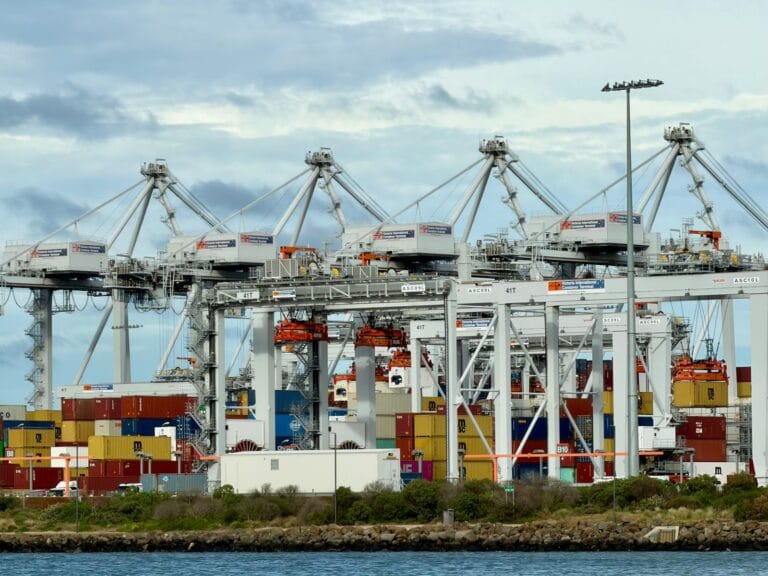
- Discharged from vessel — the box is on the ground at the destination terminal. This is the event that starts the free-time clock, not the arrival event.
- Available for delivery / customs released — the terminal will hand it over, subject to the release and the charges being settled.
- Gate out full — collected. Detention on the container now runs until it is returned empty.
- Empty returned — the transaction is closed and the detention clock stops.
Moving a project shipment from China?
FBM Sourcing works with project owners, developers, main contractors and FF&E contractors on commercial building projects, including planning the consolidation and holding the document chain together. Tell us what you are moving and we will set out the shipment plan.
Which Events Should You Actually Act On?
Most of the sequence is information. Four events are decision points:
- Gate in full. Confirms the cut-off was met. If this has not appeared by cut-off day, the shipment is rolling to the next vessel and the delivery programme needs re-planning now, not on arrival.
- Loaded on vessel. Start the document chain immediately — balance payment, bill of lading, release. Waiting until arrival to begin this is the most common self-inflicted delay on a project shipment. See deposit and balance payment terms.
- Transhipment discharge. If the container is discharged at a transhipment port and does not load onto the connecting vessel within a few days, it has missed the connection. This is the point to ask the carrier for a revised routing rather than to keep refreshing the page.
- Discharged from vessel. Free time is now running. Everything needed for collection — release, customs entry, charges paid, haulier booked — should already be in place before this event, not started after it.
Why the ETA Keeps Changing
An estimated arrival date is a schedule, and schedules on the China trades absorb weather routing, port congestion, berth waiting, transhipment connection times, blank sailings where a carrier cancels a scheduled departure entirely, and the reality that a vessel can make up time at sea but not at a congested berth.
The practical response is to treat the ETA as a planning figure with a tolerance rather than a delivery date, and to keep the installation programme’s dependency on it explicit. See shipping timelines by project type and building a lead-time buffer into the construction schedule. Around the Chinese New Year shutdown the whole picture shifts — see the Chinese New Year shutdown.
Five Reasons a Container Is Not Collected Even Though Tracking Says It Arrived
- The release has not been issued. Tracking shows cargo movement, not title. If the balance is unpaid or the telex release has not been processed, the terminal will not hand the box over regardless of what the status says. See telex release vs original bill of lading.
- Customs entry has not been filed or has been queried. The clearing agent needs the document set in advance. A missing certificate of origin, an incorrect classification or a fumigation certificate for wooden packing will each hold a container that is otherwise ready.
- Charges are outstanding. Terminal handling, documentation and local charges have to be settled before release. See port and local charges on a China shipment.
- No haulier is booked, or the site cannot receive. Collection slots at busy terminals are booked in advance, and a container that arrives on site with nowhere to unload becomes a detention problem instead of a demurrage one.
- The container was selected for examination. Nothing to be done except plan for it: build the possibility into the buffer rather than into the excuses.
Demurrage and Detention: Two Different Clocks
These are confused constantly and they bill separately.
- Demurrage accrues while the full container sits at the terminal beyond its free time. It starts at discharge.
- Detention accrues while the container is out of the terminal and in your possession, until the empty is returned. It starts at gate out.
Both allowances are set at booking, both are negotiable at booking and almost never afterwards, and neither pauses because a document is late. Ask for the free-time allowance in writing when the freight is booked, and diary the expiry date rather than discovering it on an invoice.
What Should a Project Buyer Set Up?
- Ask for the booking confirmation, the container numbers and the bill of lading number as they are issued, not on request.
- Track on the carrier’s own system, using the bill of lading number after sailing.
- Diary the four decision events above rather than checking daily.
- Start the payment and release chain at loaded-on-vessel.
- Instruct the clearing agent and confirm free time before arrival.
- Book collection against the discharge event, not against the vessel ETA.
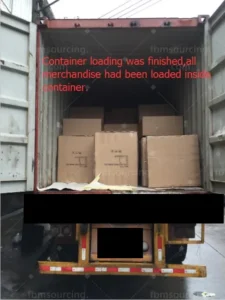
Where several factories feed one shipment, the tracking picture is only as good as the consolidation plan behind it — see consolidating multiple factories into one container and the container loading report on a commercial project. Who is responsible for arranging carriage in the first place depends on the Incoterm — see FOB, CIF and DDP compared and 3PL vs freight forwarder vs sourcing agent.
About FBM Sourcing
FBM Sourcing manages the entire China procurement package for commercial building projects — furniture, FF&E and building materials — for project owners, developers, main contractors and FF&E contractors. That includes planning the consolidation, holding the document chain together and giving you the shipment status you can act on rather than a tracking page. To discuss a project shipment, go to https://fbmsourcing.com/china-building-materials-ffe-procurement/.