The deepest difference between a China sourcing agent and a one-stop supplier is not price, range or showroom size — it is whose interests the person managing your order is paid to serve. A buyer-side sourcing agent works only for the client and stocks nothing of its own. In practice that makes the agent the client’s eyes and representative in China — at the factory gate, in the negotiation, during inspection and in any dispute. Price differences between the two models are real, but they are a consequence of this difference in position, not the essence of it.
What Does “Buyer-Side” Actually Mean?
FBM Sourcing is built on the buyer-side model: we are a sourcing agent and sourcing partner, not a factory and not a stock-holding trading company. We choose the factory for your project against your drawings, and if the factory falls short it is our job to make it right.
Five Things a Buyer-Side Agent Does That a Seller Structurally Cannot
- 1. Run a genuine cross-factory tender. For each category on your BOQ we quote several competing specialized factories against each other — quality, price and compliance compared like for like against your drawings. A seller can only compare options within its own range.
- 2. Inspect as your representative, and hand you the record. Our own team carries out one full inspection at the factory once production is finished, before shipment, against the approved sample and specification — and the complete photo- and video-documented inspection record goes to you. When the party inspecting the goods is the party selling them, the buyer is asked to accept the seller’s own homework.
- 3. Verify claims against official records. A common situation in showrooms: a factory with one production line presents the other categories on display as coming from “factories our boss invested in”. Ownership claims like that can be checked against China’s official company registration records — and when we run that verification for clients, in most cases the claimed connection is not there. That check is part of what a buyer’s representative in China is for.
- 4. Keep the quotation line-mapped. Every quotation line mapped to your BOQ, issued in FBM Sourcing’s name, with sea freight quoted to you before shipment.
- 5. Sit on your side when something goes wrong. If a batch fails inspection or a factory falls behind, a buyer-side agent’s job is to enforce your contract against the factory — rework, replacement, renegotiation. A seller handling a complaint about its own goods is negotiating with itself.
Need eyes on the ground in China for your project?
FBM Sourcing represents project owners, developers, main contractors and FF&E contractors on hotel, apartment, school, office and other commercial building projects — factory selection, negotiation, QC and container consolidation, all on the buyer’s side of the table. Send us your BOQ or drawings to start.
What Do “Eyes and Representative” Look Like Day to Day?
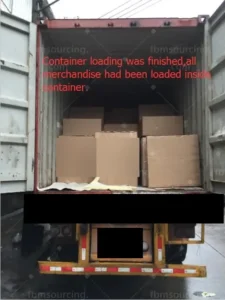
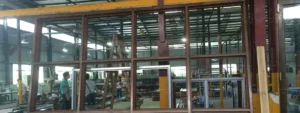
Concretely: walking the actual production factories with you — or for you — before any order is placed; reviewing CAD files, shop drawings and the BOQ so that what the factory quotes is what the architect drew; sitting in the negotiation on your side of the table, in Chinese, with the factory’s real cost structure in view; inspecting the finished goods at the factory before shipment rather than discovering problems at the port; supervising loading so that what was inspected is what ships; and documenting each step so the project team overseas can verify rather than trust. FBM Sourcing manages the entire China procurement package for overseas construction projects on exactly these terms — the single-contract version of the role is described in who manages the entire FF&E procurement package.
Why Does the Incentive Structure Matter More Than Any Price List?
Because a commercial project buys hundreds of decisions, not one product. Which factory. Which board grade. Which certificate. Whether a sample passes. Whether a delay is acceptable. On every one of those decisions, a buyer-side agent and a seller face different directions — and no price list, however attractive, changes the direction a business faces. The practical comparison between the two models, including the situations where a seller-side package genuinely serves a buyer better, is in sourcing agent vs one-stop supplier.
If that is the kind of representation your project needs, send the BOQ, drawings or product list — and judge the model by the first quotation you get back.