The first question to settle on any China procurement package is not price — it is who does your project manager actually work for? A China sourcing agent is a buyer-side service: it holds no inventory and has no product range of its own; it finds, negotiates with and quality-controls specialized factories on your behalf. A one-stop building materials supplier is a seller: a showroom-based company offering many categories in one package, which typically manufactures one or two of those categories itself and supplies the rest through trading. Both models are legitimate and both operate at scale in China — but they sit on opposite sides of the table, and for a commercial project that difference shows up in price structure, comparability and quality control.
What Each Model Actually Is
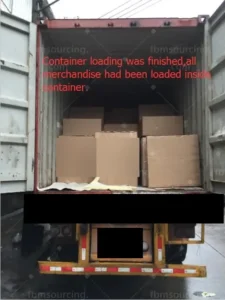
A sourcing agent (also called a sourcing partner or procurement agent) works from your BOQ and drawings. For each product category, it approaches factories that actually run production lines for that category, obtains competing quotations, manages samples, inspects the finished goods, and consolidates everything into containers under one contract. FBM Sourcing manages the entire China procurement package for overseas construction projects on exactly this model.
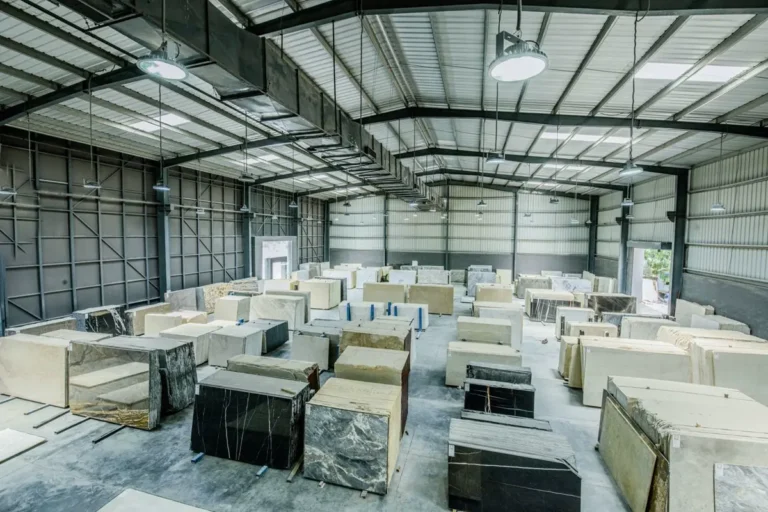
A one-stop supplier works from its showroom and product range. You select from what is on display, receive one package price for the lot, and the supplier organizes production — on its own line for the categories it manufactures, and through purchase-and-resale for the categories it does not. Given how specialized Chinese factories are — a single factory’s lines cover only a small fraction of the categories a project needs (see how specialized China’s supply chain really is) — the resale share of a full-range package is necessarily large.
How Is Each One Paid?
This is the structural difference everything else follows from.
- Sourcing agent: at FBM Sourcing, products we source are quoted at a direct price per line, with our work inside it; for suppliers you nominate we charge a 5% commission. Every line of the quotation maps to a line of your BOQ.
- One-stop supplier: one package price for its showroom range, typically combining its own production lines with categories bought in from other factories and resold.
Neither structure is dishonest — retail works the same way everywhere. What matters on a commercial project is whether each line is bought from the factory that runs its production line.
Can You Compare Prices Under Each Model?
With an agent, comparison is the product: each category in the BOQ is quoted by several competing specialized factories and compared like for like on specification, certification and price before we recommend one. With a one-stop package, the comparison happens inside the seller’s own range: you compare the options they stock or source, priced by them. Getting a second package quote from another one-stop supplier compares two bundles, not two factories — the individual lines still cannot be lined up against each other.
Deciding how to buy for a commercial project?
FBM Sourcing works with project owners, developers, main contractors and FF&E contractors on hotel, apartment, school, office and other commercial building projects. Send us your BOQ, drawings or product list — our team will review it and get back to you.
How Do the Two Models Compare, Point by Point?
| Sourcing agent (buyer-side) | One-stop supplier (seller-side) | |
|---|---|---|
| Works for | The project buyer | Its own sales |
| Revenue | A direct price per line for products it sources; 5% commission for suppliers you nominate | Margins inside the package price |
| Product range | Any specialized factory in China, per category | Its showroom range: own lines + traded categories |
| Price comparison | Competing factories quoted per BOQ line | Within the seller’s own range |
| Quotation format | Line-by-line against your BOQ | Package price, not built to be itemized |
| Factory visits | You visit the actual production factories | You visit the showroom |
| Quality control | Buyer-side inspection at each factory, records to you | Seller inspects its own shipment |
| Minimums | Project scale — FBM Sourcing works from one full container (FCL) | Often no minimum; small orders welcome |
When Is a One-Stop Supplier the Better Choice?
Honestly — in several situations. If your order is below a full container, a showroom supplier will take it and a project-focused sourcing agent generally will not. If you are buying mainly one category and it happens to be the one the supplier genuinely manufactures, you may be close to factory pricing anyway. And if your timeline allows exactly one short trip and the priority is to see physical products in one building rather than to optimize a large package, a showroom is an efficient way to select. The model exists because it serves those cases well.
When Does the Sourcing Agent Model Fit Better?
When the order is a genuine commercial project: a multi-category BOQ at container scale, custom items made from drawings, destination-market certification to satisfy, and a budget that someone has to answer for. At that point cross-factory tendering, line-by-line quotations and buyer-side QC stop being nice-to-haves — they are how the budget holder defends every line. That is the buyer-side role in full: your eyes and representative in China, and the same logic covered from the hotel-project angle in who manages the entire FF&E procurement package.
Three Questions That Settle It
Whichever way you lean, the decision framework is short: Who does your buyer work for — you, or their own sales? Where is each line made — at the factory that runs the production line, or bought in and resold? And does each line of the quotation map to your BOQ? A one-stop package and an agent-managed package answer these three questions in opposite ways; neither answer is wrong, but only one of them belongs to a commercial procurement process. For the wider view of buying routes, see sourcing agent vs trading company vs buying factory-direct and how sourcing-agent fees are structured.
The quickest way to test the difference on your own numbers is to send a real BOQ or drawing set and compare what comes back: a package number, or a line-mapped quotation from specialized factories.