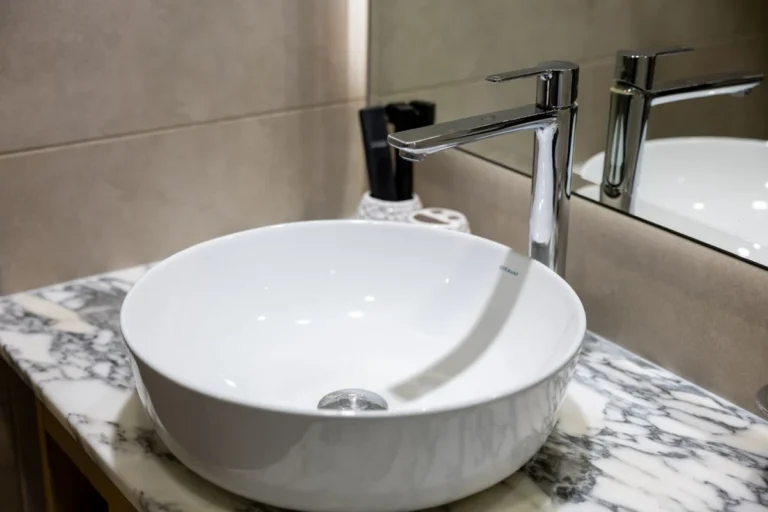
A hotel sanitaryware brief is ready to quote when it states five things per fixture: the room type and key count it serves, the rough-in dimensions the building has already committed to, the flush volume or flow rate the market requires, the certification mark the destination country enforces, and the finish family every visible item has to match. Sanitaryware is where a specification looks simple and behaves like plumbing engineering — a WC with the wrong trap distance is a demolition item, not a substitution item.
The sections below are the brief structure our team works from before a hotel bathroom package goes out for pricing. It assumes a project with repeating room types, which is where the economics of buying from China actually work.
Start With the Room Type Matrix, Not the Fixture List
A hotel does not buy 300 basins. It buys a king room set × 180, a twin set × 90, an accessible set × 12 and a suite set × 18, and each set is a fixed bill of fixtures. Building the brief as a room type matrix rather than a flat fixture list does three things: it makes quantities auditable against the key count, it makes value engineering possible one room type at a time, and it makes the eventual container loading sequence match the way the rooms will be fitted out.
- Room types and counts — reconciled to total keys, with accessible rooms counted separately because their fixtures differ
- Fixtures per set — WC, cistern or concealed frame, seat, basin, vanity top interface, mixer, shower valve, shower set, bath or tray, screen, floor waste, accessories, mirror
- Public area fixtures — lobby and F&B washrooms, back-of-house, pool and gym change rooms, listed as their own types
- Spares — a small allowance on ceramics and on cartridges, seats and flush mechanisms, agreed at order stage, shipped in the same container
Rough-In Dimensions: The Field That Cannot Be Resolved Later
Sanitaryware has to match the building, not the other way round. The brief must state whether the WC is S-trap (floor outlet) or P-trap (wall outlet), and the trap distance — commonly 300 mm or 400 mm set-out for S-trap, and around 180 mm centre height for P-trap. If the slab penetrations are already cast, this is fixed and the fixture selection has to follow it.
The same applies to concealed cisterns and in-wall frames, where the brief needs the frame depth available, the flush plate opening, and whether the wall build-up can carry a wall-hung pan load. For basins, state whether the unit is countertop, under-counter, semi-recessed or wall-hung, and give the vanity top cut-out template requirement — the top and the basin have to be dimensioned against each other before either is manufactured.
Which Certification Does the Destination Market Actually Enforce?
This is the field that most often turns a competitive quotation into an unusable one. Water-carrying fixtures are regulated per market, and the certificate has to cover the exact model, not a family or a similar variant:
- United States and Canada — cUPC listing, with fixtures also meeting ASME A112.19.2 / CSA B45.1 for vitreous china. WaterSense sets 1.28 gpf (4.8 L) as the maximum for a high-efficiency WC and 1.5 gpm for lavatory faucets in many jurisdictions
- Australia — WaterMark certification is mandatory for plumbing products, and the product must also carry a WELS water efficiency registration and star rating; a 4-star WC is typically 4.5/3 L dual flush
- United Kingdom — WRAS approval or a recognised regulator’s equivalent, with EN 997 applying to WC pans and EN 14688 to washbasins
- Middle East — SASO / SABER for Saudi Arabia and ESMA for the UAE, applied per shipment as well as per product
Two questions are worth asking about every certificate a factory sends: does the model number on the schedule appear on the certificate, and are the dimensions on the certificate within the range being supplied? A certificate for a related model is not a certificate for yours. Our sanitary ware certification guide sets out how to read them.
Sourcing this for a commercial project?
FBM Sourcing works with project owners, developers, main contractors and FF&E contractors on hotel, apartment, school, office and other commercial building projects. Send us your BOQ, drawings or product list — our team will review it and get back to you.
Brassware: Flow Rate, Cartridge and Finish Family
Brassware is where the finish consistency problem lives. If the basin mixer, shower mixer, shower rose, waste, towel rail and robe hook come from more than one factory, a brushed brass on one is not the brushed brass on another. The brief should either name a single finish family across all visible items and require all of them from one source, or explicitly accept a stated tolerance in writing.
- Flow rate — state the required litres per minute or gallons per minute at a stated pressure, and whether aerators are to be fitted or supplied loose
- Cartridge — ceramic disc, with the cycle rating stated; 500,000 cycles is a normal commercial specification, and the cartridge brand should be named or approved
- Thermostatic control — where required, state the standard: ASSE 1070 for point-of-use temperature limiting in North America, or EN 1111 for thermostatic mixing valves in European-standard markets
- Operating pressure — give the design pressure range for the building; a mixer specified for 3 bar behaves differently on a gravity system at 0.5 bar
- Finish — PVD, electroplated chrome or powder coat, stated per item, with PVD normally specified for coloured finishes in wet areas because of its wear resistance
Accessible Rooms Need Their Own Section
Accessible bathroom fixtures are not standard fixtures with a grab rail added. Pan height, grab rail positions, lever type, mirror height and basin clearance are all dimensioned by code — ADA and ICC/ANSI A117.1 in the United States, AS 1428.1 in Australia, and Approved Document M in England. Give the accessible rooms their own fixture set in the brief with the governing standard named, and require the factory to confirm dimensional compliance against it rather than against a generic “disabled” product listing. Our guides to ADA compliance in hotel bathrooms and AS 1428 accessible fixtures cover both routes.
What to Include So the Quotation Is Comparable
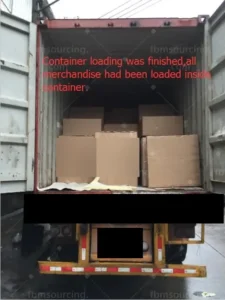
Alongside the fixture data, three commercial fields belong in the brief. First, the destination port and country, because certification, packing and freight all follow from it. First-tier hotel packages usually consolidate into full containers, and FBM Sourcing quotes on a full-container basis rather than as loose consignments. Second, whether samples are required before bulk release — on hotel bathrooms, a full mock-up room with the actual ceramics, brassware and vanity top is the standard control, and it is worth the time it adds. Third, the required delivery window expressed as the site milestone it feeds, so production can be scheduled against the building rather than against a date with no context.
What should not be in the brief is a target price. A brief that carries a target invites a factory to build down to it by substituting cartridge, glaze thickness or wall thickness in ways the schedule never surfaces. Specify the product properly and let the prices tell you what it costs.
How FBM Sourcing Runs a Hotel Sanitaryware Package
Our team reconciles the fixture matrix against the key count and the bathroom drawings before anything goes to a factory, and returns the gaps as questions. Ceramics, brassware and vanity units are then priced from the factories that genuinely produce each, because the factory that makes excellent vitreous china is rarely the same one that makes the brassware.
As your sourcing partner, FBM Sourcing issues all quotations, invoices and shipping documents on our own documents, and inspection is carried out by our own team at the factory, as one full inspection once bulk production is finished, with photo and video records before shipment. For suppliers you nominate, we charge a 5% commission; for products we source for you, we quote a direct price.
Sourcing this for a commercial project?
FBM Sourcing works with project owners, developers, main contractors and FF&E contractors on hotel, apartment, school, office and other commercial building projects. Send us your BOQ, drawings or product list — our team will review it and get back to you.
Frequently Asked Questions
What is the most common sanitaryware specification error on hotel projects?
Trap type and set-out. A WC specified as S-trap 300 mm when the slab is set out for 400 mm, or a P-trap fixture on a floor-outlet building, cannot be corrected on site without breaking work that is already complete. Confirm the rough-in before selecting the fixture.
Does a WaterMark certificate cover a whole product range?
No. Check that the specific model number on your schedule appears on the certificate and that the dimensions supplied fall within the certified range. A certificate for a related or higher-specification model does not cover the model you are buying.
Should all brassware come from one factory?
Where finish is visible and has to match across mixer, shower set, waste and accessories, yes — or the brief must state an accepted tolerance in writing. Brushed and coloured PVD finishes vary measurably between factories even when the finish name is identical.
How many spares should a hotel sanitaryware order include?
A small allowance, agreed at order stage, on ceramics and on wearing parts such as cartridges, seats and flush mechanisms, shipped in the same container. Replacing a single ceramic item after handover costs far more in freight than it did in the original order.