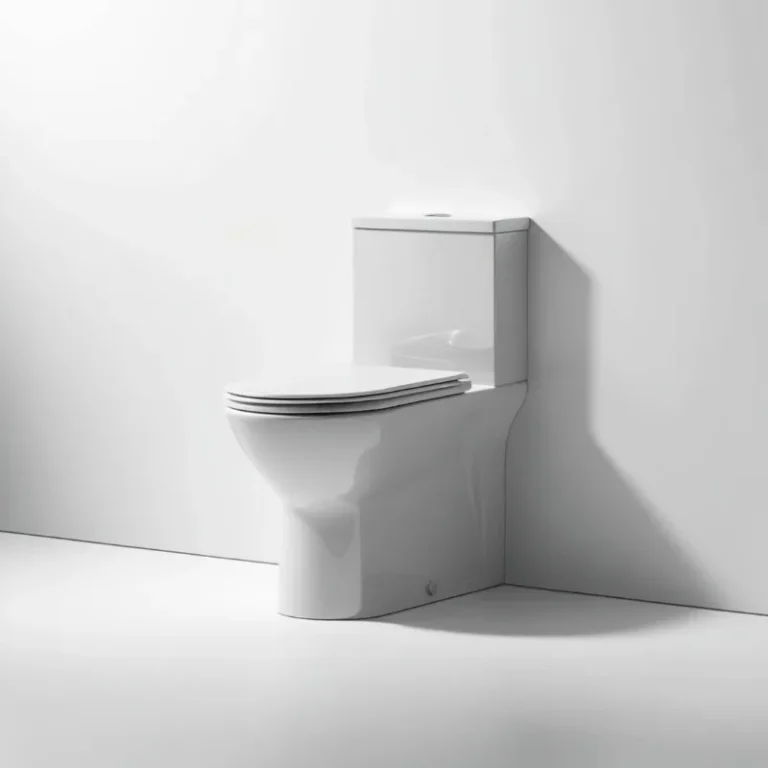
S-trap or P-trap — the outlet configuration decides whether a toilet can even be installed in your bathroom layout, and getting it wrong after tiles and rough-in plumbing are finished is an expensive rework. Here is what actually differs between the two, and how to specify the correct one for a commercial or multi-unit project sourced from China. FBM Sourcing is your sourcing partner in China: it holds no inventory and has no product range of its own.
| Feature | S-Trap (Bottom Outlet) | P-Trap (Rear/Wall Outlet) |
|---|---|---|
| Waste outlet location | Vertically through the floor | Horizontally through the wall |
| Rough-in dependency | Requires floor drain rough-in at a set distance from the wall | Requires wall drain rough-in at a set height |
| Common in | Ground-floor units, buildings with floor-mounted waste systems | Multi-story buildings, buildings with in-wall or below-slab horizontal waste runs |
| Renovation flexibility | Harder to relocate once floor plumbing is set | Often easier to adjust within a stud wall before finishing |
| Regional convention | More common in parts of Asia, Australia, some of Europe | More common in North America, though this varies by building code and project |
Why This Matters More on Commercial and Multi-Unit Projects
On a single villa, getting the trap type wrong means reworking one bathroom. On a 200-room hotel or an apartment tower, the same mistake means reworking the plumbing rough-in across every affected floor plan — and if the toilets have already been manufactured or shipped in the wrong configuration, replacing them mid-project is far more expensive than the toilets themselves. The rough-in plumbing plan should be locked and confirmed against the architectural drawings before any toilet order is placed with a factory.
How to Get This Right When Sourcing from China
- Confirm the outlet type against your actual rough-in plan, floor by floor if unit types vary within the same building — do not assume every unit uses the same configuration.
- Specify the rough-in distance/height precisely (commonly 300mm/305mm or 400mm from the finished wall for floor outlets — but this must match your architect’s plumbing drawings, not a generic factory default).
- Request a dimensioned drawing from the factory before mass production to confirm the outlet position matches your rough-in, not just the trap type label.
- Order a small pilot batch for the first unit type on large multi-unit projects before committing the full order, if the schedule allows.
Sourcing commercial toilets for a commercial project?
FBM Sourcing works with project owners, developers, main contractors and FF&E contractors on hotel, apartment, school, office and other commercial building projects. Send us your BOQ, drawings or product list — our team will review it and get back to you.
See our broader guide on sourcing commercial toilets from China and our ranking of Chinese sanitary ware brands for manufacturer options.
Get a China Procurement Quote for Your Bathroom Package
Send us your fixture schedule with outlet type and rough-in dimensions confirmed, and our team will review your requirements and get back to you. Start at our building materials & FF&E procurement page.
If you would rather not manage factories directly, FBM Sourcing acts as your china sourcing agent: sourcing, quality checks at the factory and consolidated shipping in one engagement.
Related reading
The trap decision usually arrives with the mounting decision: wall-hung vs floor-mounted toilets for commercial bathrooms.