
Roller shutters, sectional overhead doors and high-speed doors solve three different problems, and the most common specification error on industrial and gas station projects is choosing on opening width when the governing factor is cycle count, wind load or sealing. A roller shutter is a security and space-saving closure; a sectional door is an insulated, weather-sealing closure; a high-speed door is a traffic-flow device that is not a security closure at all. This guide sets out how the three compare on the criteria that decide service life, which standards a specification should reference, and what evidence to request from a Chinese manufacturer.
What are the three door types actually designed to do?
- Roller shutter (rolling steel or aluminium). A curtain of interlocking slats that coils into a barrel above the opening. Requires almost no headroom into the building and no ceiling track, which is why it dominates retail frontages, small workshops, gas station service bays and any opening where interior space is scarce. Insulation and air sealing are weak points; single-skin slat shutters are essentially a security barrier, not a thermal envelope.
- Sectional overhead door. Horizontal insulated panels hinged together, running on tracks up under the ceiling. Best sealing and thermal performance of the three, with the panel itself carrying an insulation value. The trade-off is that it consumes ceiling space along the track run and needs headroom above the opening.
- High-speed door. Usually a flexible fabric or PVC curtain, opening and closing many times faster than either of the above. Its purpose is throughput and separation — keeping temperature, dust or air pressure zones apart while forklifts pass — not security. Most are specified as an inner door behind a roller shutter or sectional door that closes at night.
Very often the correct answer for a warehouse or distribution opening is two doors: a sectional or roller door for the closed building envelope, and a high-speed door inside it for daytime traffic. Trying to make one door do both jobs is what wears out door systems prematurely.
How do the three compare on the criteria that matter?
- Cycle life and speed. High-speed doors are built for very high daily cycle counts and are the only one of the three designed for continuous forklift traffic. Sectional doors are mid-range. Roller shutters have the lowest cycle rating in comparable grades, and a shutter installed on a high-traffic opening will fail on the motor and the curtain long before its nominal life.
- Thermal and air sealing. Sectional doors lead, with insulated panels and perimeter seals. High-speed doors seal well enough while closed to hold a temperature or pressure difference but are not insulated closures. Single-skin roller shutters seal poorly by design.
- Wind resistance. This is the criterion most often left out of a specification and the most common cause of failure in coastal and cyclone-exposed locations. Doors are classified for wind load, and a high-speed fabric door needs specific reinforcement or a wind-resistant design to hold a large opening.
- Security when closed. Roller shutters and sectional doors are physical closures; fabric high-speed doors are not. Where a high-speed door is the only closure, the building has no secure line.
- Headroom and side room. Roller shutters need the least; sectional doors need headroom plus a track run; high-speed doors sit between the two depending on the roll-up design.
- Repairability. A damaged fabric curtain on a high-speed door is a fast, cheap replacement. A struck sectional panel is a single-panel replacement. A struck roller curtain frequently means replacing the whole curtain.
Sourcing this for a commercial project?
FBM Sourcing works with project owners, developers, main contractors and FF&E contractors on hotel, apartment, school, office and other commercial building projects. Send us your BOQ, drawings or product list — our team will review it and get back to you.
What is different about gas station and forecourt projects?
Gas station projects bring three constraints that warehouses do not:
- Exposure. Forecourt service bays and car wash openings are fully exposed, often coastal, and cycle constantly. Coating specification is not cosmetic here: hot-dip galvanised or a properly specified coating system on every steel component, including the guides, barrel and fixings, is the difference between a five-year and a fifteen-year door.
- Hazardous area classification near dispensers. Where a door or its motor sits within a classified zone around fuel dispensers or vents, the electrical equipment has to be suitable for that zone. This is a design question for the project’s electrical engineer, and it has to be settled before the door is ordered, because it changes the motor and control package entirely.
- Brand and roll-out standardisation. Fuel retail chains build to a repeat design across many sites. That makes the door a repeat-order item where standardising the hardware, motor and control across all sites is worth more than a small unit saving on any one site — it collapses the spares inventory and the maintenance training.
Car wash bays deserve a separate note: constant humidity and detergent make stainless or heavily protected components worth specifying, and high-speed doors are often preferred there because they clear the opening quickly and tolerate the environment better than a coiled steel curtain.
Which standards should the specification reference?
- EN 13241 — the product standard for industrial, commercial and garage doors, covering the performance characteristics that have to be declared.
- EN 12604 and EN 12453 — mechanical aspects and safety in use of power-operated doors, including the force limitation and safety-device requirements that protect people at the opening.
- EN 12424 — resistance to wind load, reported as a class. Ask for the class and the door size it was tested at, because a class achieved on a small opening does not carry to a large one.
- EN 12426 and EN 12428 — air permeability and thermal transmittance, relevant wherever the door is part of the building envelope.
- UL 325 — the North American safety standard for powered door operators, where the project is in that market.
- EN 16034 — where the opening requires a fire-rated or smoke-control door. A fire shutter is a different product from an ordinary shutter and cannot be substituted; see our guides to fire-rated versus non-fire-rated doors and fire rating standards for building materials. For North American projects, UL 10C and NFPA 80 requirements apply instead.
A specification that names the standard and the required class gets a comparable quotation. One that names an opening size and a colour does not, and the price differences between the resulting quotes will be unexplainable.
What evidence should you request from a Chinese door manufacturer?
- Test reports for the specific door construction quoted, showing the wind load class and the tested door size.
- Motor and control brand and model, with the safety devices listed — photocells, safety edge, and the force-limitation arrangement.
- Coating specification for every steel component including guides, barrel, brackets and fixings, with a salt-spray result if the site is coastal.
- Cycle rating for the motor and for the curtain or panel, stated separately.
- Where a hazardous area is involved, the certification of the electrical equipment for the classified zone.
- A spare parts list with part numbers, agreed at order stage rather than at the first breakdown.
We ask suppliers for evidence rather than asserting what any of them holds. Our window hardware specification guide covers the same evidence logic on the adjacent hardware category.
How do industrial doors ship?
Roller shutters ship as a coiled curtain, barrel, guides and a control package, and are the most compact of the three. Sectional doors ship as panel stacks with track sets and are volume-heavy. High-speed doors ship as a frame with a rolled curtain and a control cabinet. On a multi-site fuel retail roll-out, doors for several sites are usually consolidated together with the other site packages.
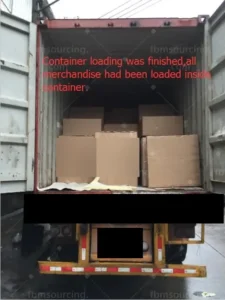
Sometimes, on a large project, the industrial doors alone fill full containers; sometimes the industrial doors share containers with the other product categories of the same project; and sometimes, in one batch, we combine a dozen or more product categories from several projects of the same client into a few containers — always full containers, and for us this is routine, well-practised work.
Sourcing this for a commercial project?
FBM Sourcing works with project owners, developers, main contractors and FF&E contractors on hotel, apartment, school, office and other commercial building projects. Send us your BOQ, drawings or product list — our team will review it and get back to you.
About FBM Sourcing
Related guide: our notes on sourcing routes for roller shutters and sectional doors.
FBM Sourcing manages the entire China procurement package for overseas construction projects. Sourcing since 2014, we have shipped 1,000+ containers to project sites in 20+ countries, working with project owners, developers, main contractors and FF&E contractors on hotels, apartment buildings, schools, offices, fuel retail chains and other commercial buildings. All quotations, invoices and shipping documents are issued by FBM Sourcing — you deal with us, and we carry the responsibility. For suppliers you nominate, we charge a 5% commission; for products we source for you, we quote a direct price.
If you have an industrial door schedule or a fuel retail roll-out to price, send us the door schedule and the elevations at https://fbmsourcing.com/china-building-materials-ffe-procurement/.
Self-storage unit doors follow their own product standard, separate from loading-bay doors; for the full package split, door standards by market and container planning, see self storage building materials from China.
Frequently asked questions
Should a warehouse use a roller shutter or a sectional door?
If the opening is part of the thermal envelope, or the building is heated or temperature-controlled, a sectional door seals and insulates far better. If interior headroom and ceiling space are scarce and sealing is not critical, a roller shutter is the space-efficient choice. Many buildings use both, on different openings.
Can a high-speed door replace a roller shutter?
Not as the building’s secure closure. A fabric high-speed door is a traffic and separation device, not a security barrier. The usual arrangement is a high-speed door for daytime traffic behind a roller shutter or sectional door that closes the building at night.
What is the most commonly omitted requirement on an industrial door specification?
Wind load class. Doors are classified for wind resistance under EN 12424, and a class achieved on a small test opening does not carry over to a wide one. Always ask for the class and the tested door size.
What changes for doors on a gas station forecourt?
Exposure and hazardous area classification. Every steel component including guides and fixings needs a properly specified coating system, and any electrical equipment inside a classified zone around dispensers or vents must be suitable for that zone — which changes the motor and control package.
What is the minimum order for industrial doors from China?
We do not handle loose freight. The practical minimum is a full container load consolidated for one client, and doors can share containers with the other product categories of the same project — which is how multi-site fuel retail roll-outs are usually shipped.