
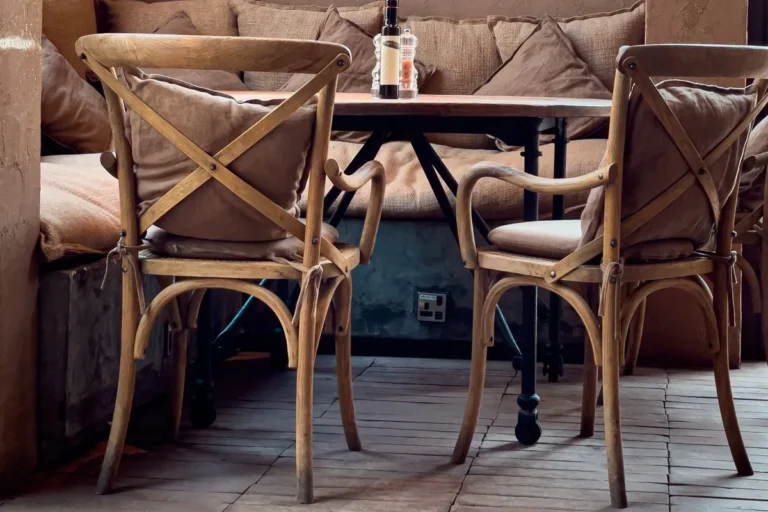
Restaurant table and table base manufacturers in China split into top makers, base and frame makers, and full restaurant furniture factories, and a chain buying many sites often needs more than one of them. A table is two parts with different materials and different failure points: the top, which guests touch and clean, and the base, which carries the load and sits on the floor.
This guide sorts the supply side into five sourcing routes and explains what to specify and what to ask. It is not a ranking. No factory is named or scored here, and no claim is made about any product’s strength or durability. The specification must define those requirements, and each maker must show evidence for the model it offers.
What should a restaurant table brief state?
- Top material and thickness: solid timber, laminate on board, high-pressure laminate, stone, sintered stone or solid surface, and the thickness the designer has set. Our guide to natural stone slabs and the comparison of sintered stone, quartz and granite help with stone and mineral tops.
- Edge profile: square, rounded, bevelled or edge-banded, with a sample. Edges are where tops chip and where cleaning staff meet the material.
- Base type: cast, fabricated steel, aluminium, timber, single column, cross base or four-leg frame, and the base finish.
- Fixing: how the top is attached to the base and whether the table is fixed to the floor, free-standing or wall-mounted.
- Levelling: adjustable feet or glides, and the floor type they must suit.
- Sizes and layouts: a schedule of table sizes by venue, with seat count per table and any extension or joining requirement.
- Use environment: indoor, covered outdoor or open outdoor, because finish and material choice change.
- Packing form: top and base shipped separately, which is normal, and how stone or glass tops are protected.
Five sourcing routes for restaurant tables and bases
1. Timber and laminate table-top makers
These makers cut, edge-band, laminate and finish tops in volume. Ask how the board is protected against moisture at the edges, how edge banding is applied, and how colour and grain are matched between batches. Request a sample showing both the face and the edge.
2. Stone, sintered and solid-surface fabricators
Stone and mineral tops are cut and polished by fabricators who also supply counters and vanities. Ask for a sample of the exact finish and edge, how thickness and flatness are controlled, and how heavy tops are packed. Because tops are heavy, discuss container loading early. Our natural stone project guide covers the buyer side of stone.
3. Cast and fabricated table-base producers
Bases are made from cast iron or aluminium, fabricated steel, or timber. Ask about the coating or plating system, how the base is protected during transport, and what levelling feet are fitted. A base that wobbles on a real floor is a daily complaint in a restaurant, so test a sample on a flat surface.
4. Metal furniture factories that make complete tables
Some factories produce frames and tops together, especially for cafés and outdoor dining. This route gives one point of contact. Ask the factory to confirm the top material, fixing method and finish, and to show a complete sample table rather than a base alone.
5. Full restaurant furniture factories
These makers supply chairs, booths, bar seating and tables in one finish family. Coordination is better, but ask for evidence of table-making capability, not only upholstery. See our guides to booth and banquette seating and commercial dining chairs for the rest of the package.
Chain rollouts: control the repeat
For a restaurant chain, the aim is that table 400 looks like table 4. Approve one complete table (top, edge, base, finish), record who approved it, and have the order refer to it. Ask each maker how it controls dimensions and colour across batches and which person is responsible for checking them. Our guide to restaurant chain furniture rollouts sets out how to stage orders across sites.
Sourcing this for a commercial project?
FBM Sourcing manages the entire China procurement package for overseas construction projects. We work with Developers · General Contractors · Builders · Commercial Project Owners · Interior Design & Construction Companies · FF&E Solution Providers. Send your BOQ, drawings or product schedule for review.
How to compare table quotations
- What is included: top, base, fixing hardware, levelling feet, packing and delivery, in separate columns.
- Top specification: material, thickness, edge and finish stated in writing.
- Base specification: material, coating and weight if stated.
- Sample: a complete table approved by the project, referenced in the order.
- Packing: how tops and bases are packed, and any protection for stone or glass.
- Spare allowance: spare tops or bases, stated separately.
- Exclusions and substitutions: any change to board, finish or base that the maker proposes.
What evidence should you ask each route to provide?
- Timber and laminate top makers: a sample showing the face, the edge and the underside, the board and laminate used, and how the edge is sealed.
- Stone, sintered and solid-surface fabricators: a sample of the exact finish and edge, the stated thickness, and how the top is packed and supported for transport.
- Base producers: the base material, the coating or plating system, the levelling feet fitted and a photograph of the underside where the top attaches.
- Metal furniture factories: a complete sample table, with the top fixed to the base the way production will fix it.
- Full restaurant furniture factories: table samples, not only upholstered pieces, and the finish family across tables, chairs and booths.
Matching tables to chairs and the floor plan
Give each maker the floor plan or the table schedule by site, with seat count per table, so sizes can be checked against how the room is used. List how tables are moved and combined: a restaurant that joins tables for groups needs matching heights, flush edges and a joining detail that the designer has approved. List the chair type that will sit at each table, so the apron height, leg position and knee space can be checked with the chair’s dimensions. Our guide to commercial dining chairs covers the chair side.
Cleaning, edges and wear: what to ask
The top is the part guests and staff touch most. Ask each maker which cleaning products and methods the finish is intended for, and tell the maker which ones the venue will use. Ask how the edge is protected where it meets the top, because a chipped or lifting edge is the most visible failure in a busy restaurant. Ask what repair or refinishing the maker suggests for each top material, so the operator knows what maintenance to plan for.
Specification gaps that lead to re-quotes
- Top material named, but thickness and edge profile left out.
- Base named by style only, with no material, coating or levelling feet.
- Fixing between top and base not described, so the quotation omits hardware.
- Table sizes given without seat counts or layouts.
- Outdoor or covered use not stated, so finish and material assumptions differ.
- Packing form for heavy tops not discussed until after quotation.
Next steps for a restaurant table package
Send each maker the same brief: drawings, schedule by table size and site, top and base specification, use environment, and your sample approval process. For the conference end of the same product, see our guide to conference and boardroom tables. FBM Sourcing also runs FBM Furniture’s public area and restaurant furniture pages for furniture-only packages.
Questions buyers ask about restaurant tables from China
Should the top and the base come from the same maker?
Not necessarily. Tops and bases use different processes, and some projects buy them from specialists. If they come from different makers, agree who checks that the fixing points line up.
Which table top material suits a busy restaurant?
It depends on the venue, cleaning method and budget. The designer should name the material and edge, and each maker should show a sample of that exact finish.
How do we keep tables identical across many sites?
Approve one complete table, record the approval and refer to it in the order. Ask the maker how it controls dimensions and colour between batches.
Are heavy stone tops a problem for container loading?
They can be, because weight limits and packing affect how a container is filled. Raise the top material at the quotation stage so loading is planned early.
How does FBM Sourcing support a restaurant furniture package?
We review the brief, collect comparable quotations and manage the package for the project. For suppliers you nominate, we charge a 5% commission; for products we source for you, we quote a direct price. Our own team performs one inspection after bulk production is complete and before shipment, and the client’s project team is welcome to attend.
FBM Sourcing manages the entire China procurement package for overseas construction projects. We work with Developers · General Contractors · Builders · Commercial Project Owners · Interior Design & Construction Companies · FF&E Solution Providers.





