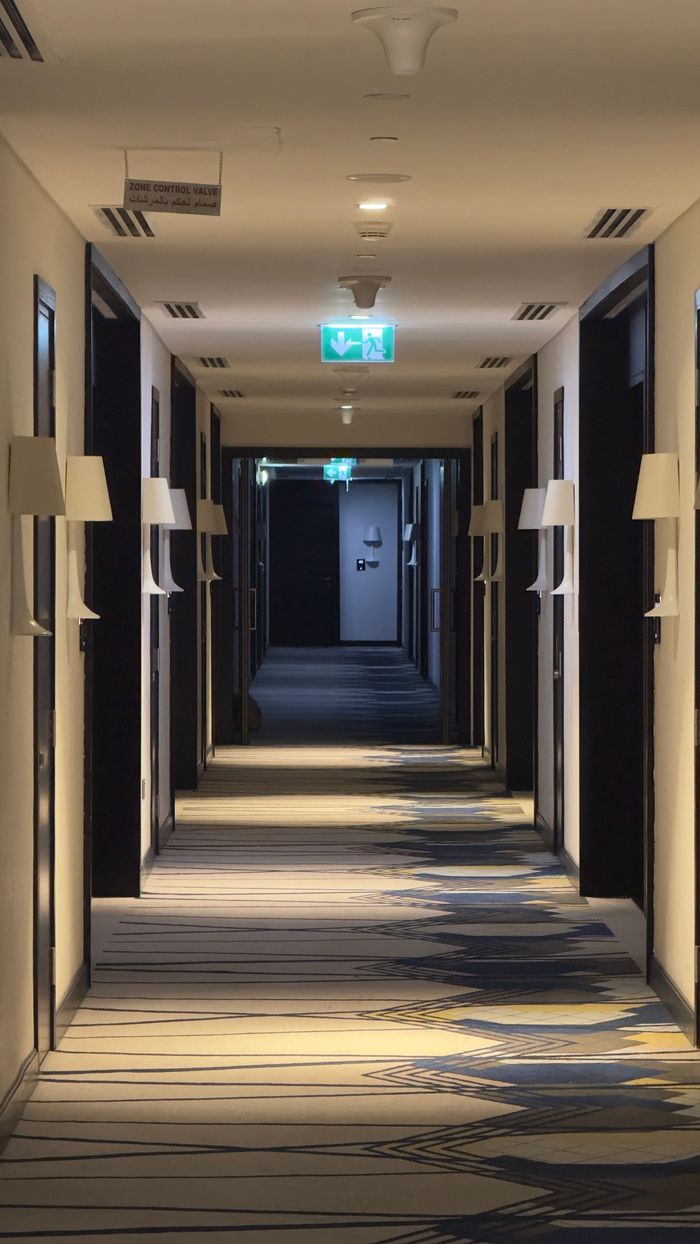
Hotel FF&E procurement from China typically takes five to eight months from an approved FF&E schedule to goods delivered on site — and can compress to around four and a half months when the model room is approved quickly and product categories run in parallel. The timeline breaks into six phases: requirement package and BOQ alignment (2–3 weeks), factory matching and quotation (2–3 weeks), samples and model-room approval (4–8 weeks), bulk production with quality control before shipment (8–11 weeks), consolidation and container loading (1–2 weeks), and ocean transit plus customs (3–8 weeks depending on destination). A china sourcing agent and sourcing partner runs these phases concurrently across multiple factories so the longest-lead category, not the sum of all categories, sets the completion date.
This guide walks through each phase the way it actually runs on a live hotel or apartment project — what happens, how long it takes, and which decisions on the buyer’s side move the date. It is written for project owners, developers, main contractors and FF&E contractors planning a new-build or fit-out, not for single-item buyers.
Hotel FF&E Procurement Timeline at a Glance
| Phase | Typical Duration | What Gates the Next Phase |
|---|---|---|
| 1. Requirement package & BOQ alignment | 2–3 weeks | Signed-off FF&E schedule with specs and quantities |
| 2. Factory matching & quotation | 2–3 weeks | Approved category-by-category budget |
| 3. Samples & model room | 4–8 weeks | Written model-room sign-off |
| 4. Bulk production + QC before shipment | 8–11 weeks | Pre-shipment inspection report accepted |
| 5. Consolidation & loading | 1–2 weeks | Containers sealed, documents issued |
| 6. Ocean transit & customs | 3–8 weeks | Arrival window matched to site readiness |
Total: roughly 20–34 weeks. The two variables that stretch real projects are almost always phase 3 (slow sample decisions on the buyer side) and phase 6 (destination port congestion) — not factory production itself.
Phase 1 — The Requirement Package: Splitting Loose FF&E from Fixed Joinery
Everything starts with the FF&E schedule. For a 100–150 room hotel this usually runs to 200–400 line items once guest rooms, corridors, lobby, restaurant and outdoor areas are counted. Before any factory sees a drawing, a furniture sourcing agent restructures that schedule into two distinct packages, because they follow different production logic and different lead times:
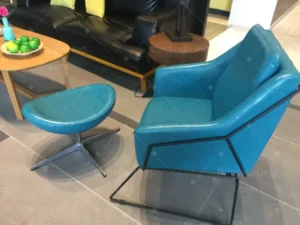
- Loose FF&E — beds, headboards, casegoods, seating, tables, lighting, mattresses and soft goods. Produced against approved samples, packed semi-knockdown or assembled, installed by furniture crews.
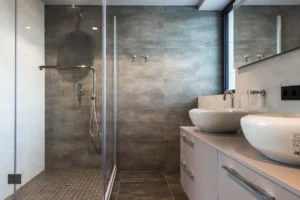
- Fixed joinery and millwork — built-in wardrobes, vanity units, reception desks, wall panelling. Produced against shop drawings with site dimensions, installed by joinery trades, and typically the longest-lead package at 60–90 days production.
Splitting the packages early matters for the schedule: fixed joinery must be ordered first because it both takes longest to produce and installs earliest on site. Projects that treat the whole schedule as one furniture order routinely lose four to six weeks discovering this in the middle of production. During this phase the agent also flags compliance requirements per destination — for example upholstery and bedding standards covered in our guide to fire safety certificates for hotel FF&E sourced from China — so certification is specified into the order, not discovered at customs.
Phase 2 — Factory Matching Across Categories
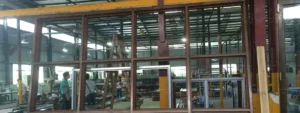
No single factory in China produces a full hotel package well. A realistic 100-room project draws on five to ten specialised factories: casegoods from hospitality furniture plants in Guangdong, seating from dedicated chair and sofa workshops, mattresses from hospitality bedding lines, stone and joinery from separate specialists. The china sourcing agent’s job in this two-to-three-week window is to match each category to a factory that already produces to hospitality contract grade in that category, collect comparable quotations against the same specification, and return a category-by-category budget the project team can approve in one pass. All factory communication, technical clarification and price negotiation happens on the China side in Chinese — which is the practical reason overseas project teams engage a hotel furniture sourcing agent rather than managing eight factories across time zones themselves.
Phase 3 — Why Samples and the Model Room Decide Your Opening Date
The sample phase is where hotel projects win or lose the most time. The sequence is: material and finish samples first (fabric, laminate, stone, metal finishes, usually 7–14 days per round), then full prototype pieces for key items, then — on larger projects — a complete model room built and reviewed before bulk production is released.
A model room is worth its four-to-eight-week cost on any project above roughly 80 rooms. Approving one physical guest room catches dimension clashes, finish mismatches and comfort issues once, instead of 100 times after delivery. The discipline that keeps this phase on schedule is decision speed on the buyer side: every sample revision cycle costs 7–14 days, so two rounds of revisions across three categories can quietly add a month. The practical rule we run on projects: consolidate all design comments into one revision instruction per round, in writing, rather than drip-feeding changes.
Phase 4 — Production Scheduling: Longest Lead Time First
Bulk production runs 45–90 days depending on category, and the categories run in parallel:
- Fixed joinery and built-in millwork: 60–90 days
- Custom casegoods (beds, wardrobes, desks, TV units): 60–75 days
- Upholstered seating and sofas: 45–60 days
- Mattresses, bedding and soft goods: 30–45 days
- Standard lighting and accessories: 30–45 days
For a category-by-category breakdown of FF&E lead times and the backward order-sequencing method from the opening date, see our dedicated guide.
The scheduling logic is simple but frequently ignored: release the longest-lead packages into production first, and time the short-lead categories to finish in the same window so everything arrives at the consolidation warehouse together. On a Melbourne apartment project we managed, a full custom furniture package shipped in 12 x 40HQ containers precisely because production across seating, casegoods and sofas was sequenced to converge on a single loading window rather than trickling out factory by factory.
Sourcing this for a commercial project?
FBM Sourcing works with project owners, developers, main contractors and FF&E contractors on hotel, apartment, school, office and other commercial building projects. Send us your BOQ, drawings or product list — our team will review it and get back to you.
How Is Quality Controlled Before Shipment?
On FBM Sourcing projects, inspection is carried out by our own team on the factory floor, with a full inspection before shipment: finished goods checked against the approved sample and specification, and packing checked for ocean freight. Photo and video records are delivered to the client before shipment.
Alongside the QC record, factories supply their laboratory certification and type-test reports for regulated items — flammability certificates to BS 7176 for upholstery and BS 7177 for bedding, or CAL 117, tempered-glass and other material test reports where the destination requires them — packaged with the shipping documents so the contractor can hand them straight to the certifier or building inspector.
Phase 5 — Consolidation, Container Maths and Shipping
A 40-foot high-cube container holds about 76 m³ nominal, roughly 65–68 m³ in practical loading. A guest room’s loose FF&E package — bed, headboard, casegoods, desk, chair, soft seating — typically packs into 4.5–6 m³ semi-knockdown, so one 40HQ carries the furniture for roughly 11–15 guest rooms. A 100-room property usually ships in 7–10 high-cube containers once public areas, mattresses and outdoor items are included; a luxury hotel new-build in Florida we supplied ran to 14+ product categories in 7 containers covering both FF&E and building materials.
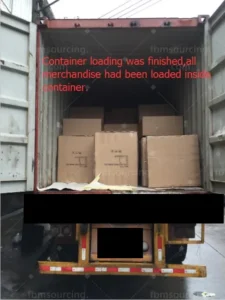
Consolidation is where a sourcing agent converts eight factories’ output into one controlled shipment: goods from all factories arrive at one warehouse, are checked against the packing list, and are loaded in reverse installation order — so what installs first comes off the container first. Typical ocean transit from South China: 15–20 days to the US West Coast, 30–40 days to the US East Coast, 12–18 days to Australian east coast ports, 30–35 days to Northern Europe, 25–40 days to Caribbean ports. Add one to two weeks for customs clearance and inland delivery to site.
Phase 6 — Delivery Sequencing on Site
On projects above a few containers, delivery is phased to match site handover rather than arriving as one wall of boxes. Fixed joinery lands first, ahead of the furniture crews; loose FF&E follows floor by floor as rooms are handed over; soft goods and OS&E arrive last, closest to opening. Two planning habits prevent the most common late-stage problems: order 2–3% spare quantity on high-wear items such as dining chairs and upholstery so a damaged carton never holds up an opening date, and fix the site’s earliest possible receiving date before booking sailings — storage at destination ports is expensive, and a container arriving four weeks before the building can receive it is a cost, not a win. An 804-bed student accommodation project we furnished in Melbourne ran exactly this way: staged deliveries matched to the building’s floor-by-floor completion rather than a single bulk arrival.
Where a Sourcing Agent Fits — and What It Costs
Across all six phases, the sourcing agent is the single point of responsibility on the China side: building the sourcing plan from your FF&E schedule, matching factories, running the sample and model-room process, holding the production schedule across parallel factories, inspecting with its own team and running a full inspection before shipment, consolidating, and managing shipping documents through to your port. FBM Sourcing charges a 5% commission for suppliers you nominate (products we source for you are quoted at a direct price) for this scope. For a fuller picture of how the service works across furniture and building material packages, see our China furniture sourcing agent and FF&E procurement service, and for what the numbers look like on a typical property, our breakdown of the cost to furnish a 100-room hotel from China.
Get a China Procurement Quote for Your Hotel Project
If you are planning a hotel, apartment or other commercial building project and want a realistic procurement timeline against your opening date, send us your FF&E schedule, drawings or BOQ together with quantities, destination port and target dates. our team will review your requirements and get back to you.
Related guide: see our walkthrough of boutique hotel FF&E procurement for how this applies at project level.
Who runs each phase depends on how the procurement is structured — see FF&E procurement companies for hotel projects for the five types of company involved, how each is paid and where the handover between a home-market advisor and a China-side sourcing partner sits.
Frequently Asked Questions
How long does it take to furnish a 100-room hotel from China?
Typically five to eight months from approved FF&E schedule to goods on site: 4–6 weeks for factory matching and quotation, 4–8 weeks for samples and model-room approval, 8–11 weeks of parallel production, then 4–10 weeks for consolidation, ocean transit and customs depending on destination.
Can hotel FF&E from China be delivered in phases?
Yes, and on larger projects it should be. Fixed joinery ships first for early installation, loose furniture follows floor by floor as rooms are handed over, and soft goods arrive closest to opening. Sailings are booked against the site’s receiving schedule, not just factory completion dates.
Who inspects hotel furniture in China before it ships?
On FBM Sourcing projects, inspection is carried out by our own team on the factory floor, with a full inspection before shipment. Photo and video records are delivered to the client before shipment.
How many hotel guest rooms fit in one 40HQ container?
Roughly 11–15 rooms of loose furniture. A guest room package packs into about 4.5–6 m³ semi-knockdown, against a practical loading capacity of 65–68 m³ per 40-foot high-cube. A 100-room hotel usually ships in 7–10 containers including public areas.
What does a sourcing agent charge for hotel FF&E procurement?
FBM Sourcing charges an a 5% commission for suppliers you nominate (products we source for you are quoted at a direct price), covering factory matching, sampling and model-room management, production scheduling, quality control before shipment by our own team, consolidation and shipping coordination through to the destination port.
Do Chinese factories provide fire-safety certification for hotel FF&E?
Established hospitality factories hold laboratory type-test reports for regulated products — for example BS 7176 (upholstery) or BS 7177 (bedding) flammability certification, or CAL 117. These certificates are specified into the purchase order at the start and delivered with the shipping documents so the project can clear certification without delay.
Related reading: Who handles FF&E delivery, warehousing and installation