
FF&E procurement companies for hotel projects fall into five working types: owner-side fiduciary purchasing agents based in the US or UK, procurement departments inside interior design practices, brand-affiliated purchasing programmes, supplier-side “procurement” arms of dealers and manufacturers, and China-side execution partners that carry the package from factory to container. Most hotel projects that buy from China use two of them at the same time — an advisor in the owner’s home market who holds the budget and the specification, and a China sourcing partner who holds the factories, the inspection and the shipping. Choosing “one company” is usually the wrong question; the right question is which combination fits the project and where the handover between them sits.
This guide sets out what each type actually does, how it is paid, where its responsibility stops, and what evidence a developer, general contractor or FF&E solution provider should ask each type for before signing. It is written for companies delivering hotel projects, not for private individuals, and it does not rank anyone.
Why We Have Not Published a Ranked List of Named Companies Here
Almost every FF&E purchasing firm serving the hotel industry is privately held. There is no annual report, exchange filing or audited project count against which a claim of “hundreds of hotels completed” can be checked from outside, and we have not contracted with these firms ourselves. A numbered Top 10 would therefore be our opinion dressed up as a finding, and it would also be an odd thing for a China sourcing agent to publish about companies it sometimes works alongside. We would rather explain the five types, say plainly which one we are, and give you the questions that separate a real capability from a website claim. That is more useful to a project buyer than a list, and it is a list we could actually stand behind.
The Five Types of FF&E Procurement Company on a Hotel Project
1. Owner-side fiduciary purchasing agents (US and UK based)
- What they do: act for the hotel owner or developer as a purchasing agent, typically from the design development stage. They build and hold the FF&E budget, issue bid packages against the designer’s specification, place purchase orders in the owner’s name, track deposits and balances, coordinate freight and warehousing, and manage the installation schedule. They do not manufacture anything and, in most cases, do not have their own staff inside Chinese factories.
- How they are paid: a disclosed fee from the owner, usually expressed as a percentage of the FF&E budget or as a project fee, with no compensation from suppliers.
- Best fit: full-service and upper-upscale hotels with a large loose-furniture budget, an interior designer producing a detailed specification, and an owner who wants a single accountable party in their own time zone and legal jurisdiction.
- Evidence to request: whose name appears on the purchase orders; whether the fee agreement excludes any supplier-side compensation; how China-made items are actually sourced — through the firm’s own people, through trading companies, or through a China-side partner — and who inspects the goods before they ship. A detailed comparison of this type against a China-based agent is in owner’s rep fiduciary FF&E purchasing agent vs China sourcing agent.
2. Procurement departments inside interior design practices
- What they do: a hospitality design practice that also offers to buy what it specifies. The design intent, the finish schedule and the purchasing sit in one office, which removes the usual argument between “what was drawn” and “what was bought”.
- How they are paid: either a procurement fee on top of the design fee, or a margin built into the product price. The two are very different for the buyer and the contract should say which it is.
- Best fit: boutique and lifestyle hotels where the design identity is the product and the owner is prepared to pay for the practice to protect it through to installation.
- Evidence to request: whether procurement is fee-based or margin-based; whether the practice will specify products it does not supply; and what happens to the budget when the design-led specification comes in above the cost plan — who decides on substitutions and how. See who is responsible for FF&E on a hotel project for how the roles are normally divided.
3. Brand-affiliated purchasing programmes
- What they do: the franchisor or management company operates, or endorses, a purchasing programme with negotiated pricing on approved products — case goods, seating, mattresses, lighting, signage — that already meet the brand standard. The programme is often used for conversions and property improvement plans where speed and brand compliance matter more than customisation.
- How they are paid: the programme is typically funded by the participating suppliers rather than by a fee from the owner; the owner pays the negotiated product price.
- Best fit: franchised select-service and midscale hotels renewing to a current brand scheme, where the approved kit exists and the owner’s priority is a clean brand inspection.
- Evidence to request: which items are mandatory under the brand standard and which are merely “approved”; whether a factory-direct alternative that meets the standard can be submitted for approval; and the lead time and minimum quantities behind the programme pricing.
Structuring FF&E procurement for a hotel project?
FBM Sourcing works with project owners, developers, main contractors and FF&E contractors on hotel and apartment projects as the China-side sourcing partner — alongside your home-market advisor or directly with your project team. Send the room schedule or BOQ and we will return it priced by production line, with the consolidation plan.
4. Supplier-side procurement arms (dealers, manufacturers and one-stop exporters)
- What they do: a contract furniture dealer, a manufacturer’s project division or a China-based one-stop exporter that offers to “procure” the whole hotel. In practice they sell what they make, stock or resell, and the procurement service is the sales process. This is not a criticism — a single-category package from a manufacturer that actually runs the production line is often the cleanest purchase on the project — but it is a different type of company from the four above and should be judged as a seller, not as an agent.
- How they are paid: margin inside the product price. There is no separate fee because the company is the counterparty on the goods.
- Best fit: single-category packages (guest-room case goods, seating, mattresses) where the supplier manufactures the line itself, and projects where the owner has its own capacity to manage the rest.
- Evidence to request: which lines in the quotation are made on the company’s own production line and which are bought in; where title passes; and who is responsible when a bought-in item fails at destination. The distinction between a manufacturer, a trading company and an agent is set out in manufacturer, trading company or sourcing agent.
5. China-side execution partners (sourcing agents and sourcing partners)
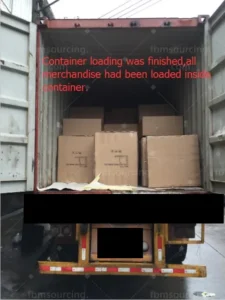
- What they do: take the approved specification, the BOQ or the room schedule and run the China end of the package: shortlisting the factory that actually manufactures each product line, pricing, sampling and finish approvals, production follow-up, inspection at the factory by the partner’s own team with photo and video records before shipment, consolidation of several factories into planned container loads, export documents and shipping to the destination port. A sourcing partner in this role works only for the buyer and has no factory of its own.
- How they are paid: by the client. At FBM Sourcing the position is fixed: all quotations, invoices and shipping documents are issued by FBM Sourcing — you deal with us, and we carry the responsibility. For suppliers you nominate, we charge a 5% commission; for products we source for you, we quote a direct price.
- Best fit: hotel and serviced-apartment projects with multi-category packages — furniture plus doors, sanitaryware, tiles, lighting and joinery — where the buyer wants factory-line pricing across every category without managing a dozen factories from another continent. Volumes are full-container: a China sourcing agent working at project scale ships FCL, not LCL groupage.
- Evidence to request: whose name the quotations and shipping documents are issued in; whether the partner inspects with its own staff or relies on the factory’s report; how many factories a typical package is consolidated from; and references from companies in your market. For what the role covers in detail see what an FF&E procurement company does.
US Advisor and China-Side Partner: Where Does the Handover Actually Sit?
On a project using both an owner-side advisor and a China sourcing partner, the work divides along a fairly stable line. The advisor owns everything that requires the owner’s authority; the partner owns everything that requires being physically in the factory.
| Stage | Owner-side advisor (US/UK) | China-side sourcing partner |
|---|---|---|
| Specification and finish schedule | Holds it, with the designer | Works to it; flags what a factory cannot make as drawn |
| Budget authority and substitutions | Decides | Prices the options; never substitutes without written approval |
| Factory shortlisting | Rarely on the ground | Selects the factory that runs the production line for that product |
| Quotation and purchase order | Approves the price, places or authorises the PO | Issues the quotation in its own name and carries the order |
| Samples and finish approvals | Signs off | Manages sample rounds at the factory and ships approved samples |
| Production inspection | Reviews the record | Own team in the factory; photo and video record before shipment |
| Consolidation and shipping | Coordinates destination logistics and warehousing | Plans container loads across factories, issues export documents |
| Installation | Coordinates on site | Supplies packing lists and installation drawings from the factory |
Three facts about this handover are worth holding onto. First, a mixed hotel package in China is never one factory: a guest-room case-goods line, a seating line, a mattress line, a door line and a sanitaryware line are five different companies in at least three different production clusters, which is why consolidation is a real task and not a courtesy. Second, on a four-star hotel project in Florida that FBM Sourcing handled, the combined building materials and FF&E package ran to ten 40ft high-cube containers — the shipping plan is part of the procurement, not an afterthought. Third, the phase-by-phase duration of a hotel package is governed by sample approvals and the Chinese New Year shutdown far more than by production time; see the hotel FF&E procurement timeline from China.
Which Model Fits Which Hotel Project?
| Project scenario | Which model fits | Why | What would change the answer |
|---|---|---|---|
| 250-key full-service hotel, custom design, owner with no procurement staff | Owner-side fiduciary agent + China-side sourcing partner | The budget and specification need a home-market authority; the multi-category package needs factory-line pricing and in-factory inspection | If the owner’s development team already runs procurement, the advisor layer can be dropped and the partner works directly with the owner |
| Franchised select-service conversion to a current brand scheme | Brand-affiliated programme | The approved kit exists, brand compliance is the priority and speed matters more than customisation | If the owner wants a factory-direct alternative submitted to the brand for approval, a sourcing partner can price it |
| Boutique hotel where the design identity is the product | Design practice with procurement | Design intent survives to installation when the same office buys what it drew | If the practice buys on margin rather than fee, a fiduciary agent or a sourcing partner restores price visibility |
| Guest-room case goods only, from one manufacturer that runs the line | Supplier-side (manufacturer’s project division) | Single category, single factory, no consolidation needed | As soon as seating, lighting or bathrooms are added, the “one supplier” becomes a trading package |
| Serviced apartments or extended-stay: furniture plus doors, kitchens, tiles and sanitaryware | China-side sourcing partner, directly with the developer or general contractor | Building materials and FF&E come from different factories; one execution partner across both avoids two supply chains | If the developer has a lender requiring a home-market fiduciary on the FF&E budget, add the advisor |
| Phase 2 order matching finishes from Phase 1 | Whoever holds the original factory record | Matching depends on the original production file, not on the model | If the original supplier was a trading company, the factory record may not exist |
Where FBM Sourcing Fits
FBM Sourcing is the fifth type. We are a China sourcing partner for developers, general contractors, builders, commercial project owners, interior design and construction companies and FF&E solution providers, and we work either alongside the owner’s home-market advisor or directly with the project company. We do not sell to individual homeowners, and we do not run a showroom or a trading inventory: each product line is bought from the factory that runs that production line, inspected by our own team before it ships, and consolidated into full-container loads. For hotel and apartment developments specifically, the service is described at FF&E procurement China, and the practical question of who should be used on a hotel FF&E package is answered in China sourcing agent for hotel FF&E procurement.
Structuring FF&E procurement for a hotel project?
FBM Sourcing works with project owners, developers, main contractors and FF&E contractors on hotel and apartment projects as the China-side sourcing partner — alongside your home-market advisor or directly with your project team. Send the room schedule or BOQ and we will return it priced by production line, with the consolidation plan.
Frequently Asked Questions
What is an FF&E procurement company?
An FF&E procurement company buys the furniture, fixtures and equipment for a hotel or similar project on behalf of the owner. The term covers five different business types: owner-side fiduciary purchasing agents, procurement departments within design practices, brand-affiliated purchasing programmes, supplier-side project divisions, and China-side sourcing partners that execute the package at the factory end. They are paid differently, hold different responsibilities and are often used in combination.
Does a hotel project need both a US advisor and a China sourcing partner?
Not always, but large custom projects usually benefit from both. The advisor holds the budget, the specification and the owner’s authority in the owner’s own jurisdiction; the China-side partner holds the factory shortlisting, sampling, in-factory inspection, consolidation and export documents. Where the owner’s development team already runs procurement, the advisor layer can be omitted and the sourcing partner works directly with the project company.
How are FF&E procurement companies paid?
Fiduciary purchasing agents charge the owner a disclosed fee. Design practices charge either a procurement fee or a margin in the product price. Brand programmes are generally funded by participating suppliers. Supplier-side divisions earn margin inside the goods. A China sourcing partner is paid by the client: FBM Sourcing charges a 5% commission for suppliers the client nominates and quotes a direct price on products it sources for the client, with all quotations, invoices and shipping documents issued in its own name.
Can a China sourcing partner work directly with a hotel owner without a home-market advisor?
Yes, and on serviced-apartment and extended-stay projects it is common, because the package mixes building materials and FF&E from different factories and the developer or general contractor already holds the budget. The partner then reports to the project company directly, works to the approved specification and never substitutes products without written approval.
About FBM Sourcing
FBM Sourcing manages the entire China procurement package for overseas construction projects. We work with developers, general contractors, builders, commercial project owners, interior design and construction companies and FF&E solution providers as their sourcing partner in China — from the BOQ or room schedule through factory selection, sampling, inspection by our own team, consolidation and shipping, with every document issued in our own name. If you have a hotel or apartment package to price, start at https://fbmsourcing.com/china-building-materials-ffe-procurement/.