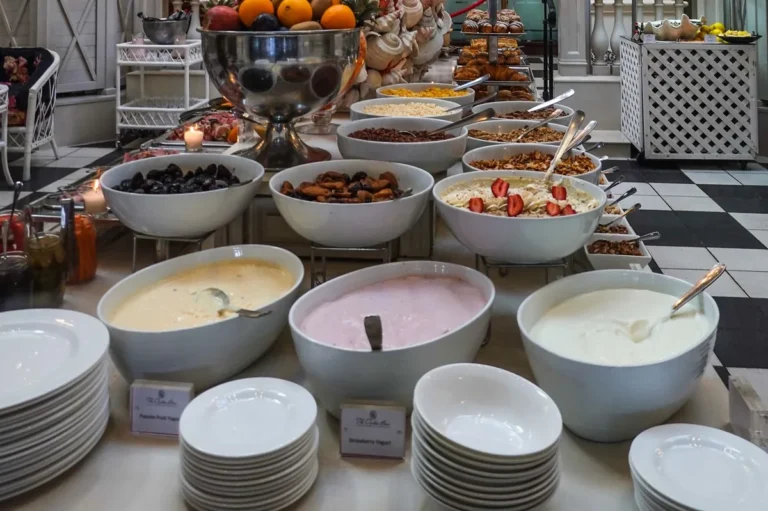
Hotel buffet and breakfast station furniture is built around a service flow: guests queue, take a plate, reach the food, add toppings and move on, while staff refill from behind. A buffet counter specified as “custom, stainless steel and timber” leaves the flow, the equipment it must hold and the surfaces that touch food unwritten, and those are the details that decide whether the station works on the first morning.
This guide is for procurement teams buying buffet counters, food guards, display units and serving tables from China for hotel restaurants and breakfast rooms. It does not state food-safety rules or accessibility dimensions, because those are set by the destination’s regulations and the hotel brand. What it does is turn the design into written questions that a maker must answer for the exact units it quotes. For the equipment side of food service, see our guides to commercial kitchen equipment manufacturers and restaurant kitchen equipment and OS&E sourcing.
Draw the service flow first
Before any product is specified, the designer should draw the station on the plan: where guests enter, where plates start, the order of food items, where the queue forms and where staff stand and refill. Send the plan to the makers, because a counter quoted from a catalogue picture cannot be checked against a flow it was never shown.
- Guest path: direction of travel, queue space and the point where guests leave the station.
- Staff path: where staff enter, refill and clear, and whether they cross the guest path.
- Station contents: the list of items the station holds, such as hot food, cold food, drinks, bread, eggs and toppings, each with the equipment it needs.
- Peak demand: how many guests the hotel expects at once, as the operator states it.
- Adjacent areas: the kitchen, the dining room and the route for trolleys and waste.
Counters: what the maker needs to know
A buffet counter is a joinery and metalwork product with equipment built into it. Ask for shop drawings that show the counter in plan and section, the equipment openings and the services that reach them. The equipment itself is usually bought separately, so the counter drawing has to match the supplier’s equipment drawing.
- Equipment schedule: each item that sits in or on the counter, with the maker’s model and its cut-out and clearance drawing.
- Services: where power, water and drainage reach the counter, and who provides them.
- Top surface: the material for the guest-facing top and the food contact surfaces, and the edge and corner detail.
- Body: core board or metal frame, the facing material and the base detail at the floor.
- Cleaning: how the counter is cleaned, which surfaces are cleaned daily and which joints are sealed.
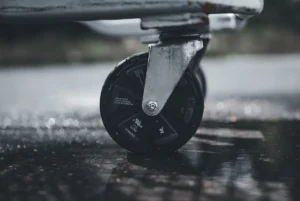
- Mobility: fixed to the floor, on castors or demountable, and how the counter is moved for cleaning.
- Finish: finish codes, approved samples and the cleaning products the finish tolerates.
Food guards: glass, frames and fixing
Food guards, often called sneeze guards, are transparent screens above food. They are a combination of glass or plastic, a frame and a fixing to the counter, and they must be specified with the counter, not added afterwards. Ask the maker to state the material of the screen, how it is fixed, how it is removed for cleaning and what edge protection it has. The destination’s food-safety rules and the hotel brand decide the height and extent of the guard, so name the document that sets them.
If the screen is glass, see our guide to glass safety standards for how glass standards are named, and ask the maker to state the glass type and thickness for each screen. Do not accept a general statement such as “tempered glass” without the type, size and edge finish written against the item code.
Surfaces that touch food and surfaces that guests touch
A buffet station has two kinds of surface. Food contact surfaces, such as the base of a pan well or a carving board, are chosen with food safety in mind. Guest-facing surfaces, such as the counter top, rails and tray slides, are chosen for appearance and wear. Ask the maker to separate the two in the quotation and to describe the material of each, so that a decorative material is not used where food contact is intended.
- Food contact: the material, the finish and how it is cleaned, stated for each item.
- Guest-facing top: the material, thickness and edge, and how it resists heat, stains and impact as the designer requires.
- Trim and fixings: the material of rails, brackets and screws, so no mismatched metal appears after approval.
- Sealants and joints: where sealant is used, which sealant, and how it is renewed.
Sourcing this for a commercial project?
FBM Sourcing manages the entire China procurement package for overseas construction projects. We work with Developers · General Contractors · Builders · Commercial Project Owners · Interior Design & Construction Companies · FF&E Solution Providers. Send your BOQ, drawings or product schedule for review.
Heated and chilled equipment: who supplies what
Heated wells, chilled wells and display units are equipment, not furniture. Decide early who buys them and who builds the counter around them. If the hotel buys equipment separately, send the maker the equipment drawing before it draws the counter. If the maker supplies the equipment, ask for the equipment model, its supply requirements and the documents the project requires for the destination.
The electrical and food-service rules differ by country, so the destination decides what applies. State the destination in the brief and ask each maker what evidence it can provide for the exact model offered. FBM Sourcing does not state which rules apply to any project.
Samples, mock-up and acceptance
Ask for a mock-up of the critical detail, such as a corner of the counter with its top, edge, guard fixing and finish, and approve it in writing against the item code. For a large station, ask for a full-scale drawing or a template at the hotel, so the operator can check the reach and the queue space before bulk production starts.
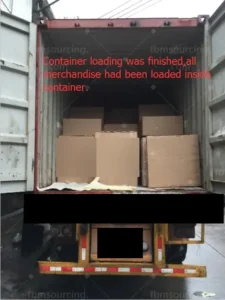
On delivery, check the cartons against the packing list: counter sections, tops, guards, brackets and fixings. Note any difference in writing the same day and send photographs, so the maker can respond while the evidence is fresh.
What to request from the maker
- Shop drawings for each counter and guard, with the equipment cut-outs matched to the equipment drawing.
- A material list separating food contact, guest-facing and structural parts.
- A description of the guard material, fixing and removal for cleaning.
- A finished sample of the top, edge and finish, and a corner mock-up where the design needs one.
- The documents the project requires for any equipment the maker supplies.
- A packing and marking description by station and item code, and a statement of any proposed substitution for approval before production.
Hotel projects: where problems appear
Buffet stations go wrong in a few predictable places: a counter that does not match the equipment bought for it, a guard that blocks reach or cannot be removed for cleaning, and a flow that creates a queue across the dining room. Each can be found on drawings before production, which is why the plan, the equipment drawing and the shop drawings should be reviewed together by the designer and the operator.
FBM Sourcing manages the quotation, sample and approval steps for the project; our own team performs one inspection after bulk production is complete and before shipment, and the client’s project team is welcome to attend. For related restaurant and food-service guides, see food hall and food court FF&E procurement.
Questions buyers ask about hotel buffet station furniture
What should we send a maker to quote a buffet counter?
The plan showing the service flow, the equipment schedule with the equipment drawings, the services that reach the counter, and the finish and material requirements. A picture alone does not allow a comparable quotation.
Who decides the height and extent of food guards?
The destination’s food-safety rules and the hotel brand. Name the document in the specification and ask the maker to state how its guard meets it.
Should the maker supply the heated and chilled equipment?
It depends on the project. If the hotel buys equipment separately, send the equipment drawing before the counter is drawn. If the maker supplies it, ask for the model, the supply requirements and the project’s documents.
How do we avoid a counter that does not match the equipment?
Review the plan, the equipment drawing and the shop drawings together before production, and approve a mock-up of the critical detail.
How does FBM Sourcing support a buffet station order?
We review the brief, collect comparable quotations and manage the package for the project. For suppliers you nominate, we charge a 5% commission; for products we source for you, we quote a direct price. Our own team performs one inspection after bulk production is complete and before shipment, and the client’s project team is welcome to attend.
FBM Sourcing manages the entire China procurement package for overseas construction projects. We work with Developers · General Contractors · Builders · Commercial Project Owners · Interior Design & Construction Companies · FF&E Solution Providers.