
The scope is ordinary hospitality furniture used around the resort: lobby sofas, dining tables, bedroom cabinets, reception desks and terrace seating. Gaming tables, slot machines, gaming terminals, casino surveillance equipment and regulated gaming systems are excluded. A furniture sourcing agent or China sourcing partner should keep those specialist packages separately identifiable so that a furniture quotation is not mistaken for a proposal covering the venue’s gaming operations.
Start with a furniture schedule, not the casino label
A casino resort can contain restaurants, guestrooms, meeting spaces and outdoor areas alongside gaming operations. Describe the actual furniture use in each space rather than placing every item under one casino furniture heading. Record the item code, location, quantity, dimensions, materials and drawing revision. A lounge chair at a reception waiting area should not automatically inherit the specification of a dining chair or a specialised gaming seat because their finishes happen to match.
The casino and gaming resort procurement guide covers the wider project package. This article stays with the non-gaming furniture constructions that determine which supply route is relevant. Keep operator requirements and local design decisions beside the furniture schedule. Where a responsibility remains unresolved, mark it explicitly instead of allowing a catalogue description to decide what the project needs.
Organise the scope by product construction as well as by room. One restaurant may need upholstery, tables and fitted counters from different production routes. One casegoods route may cover cabinets in several room types, provided the proposed constructions are actually identified. The five groups below are an editorial way to explain those differences; they are not evidence that any particular company offers every listed capability, has export experience or holds a venue-wide approval.
1. Contract lounge upholstery suppliers
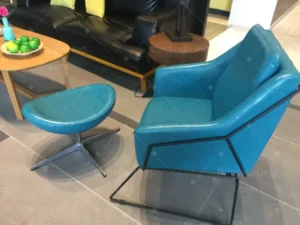
Use this route for lobby sofas, lounge chairs and ordinary visitor seating. Describe frame joints, suspension, cushion construction, cover reference and seams in the item specification. A quotation should identify what is proposed for the actual product code, including unresolved details, rather than relying on a general catalogue collection. The production route is relevant only when its proposed construction addresses the furniture item being ordered.
Seat geometry should be reviewed with the operator’s intended activities. A deep lounge chair, an upright visitor chair and a sofa intended for group seating can require different arrangements even when the same fabric is used. Record arm positions, removable components and the way the upholstery meets the base. A rendered image is useful for discussing appearance, but it does not identify the concealed structure or demonstrate comfort in the intended setting.
Where furniture is near circulation routes, the design team should resolve the layout separately from the chair specification. Keep tables, chairs and nearby doors visible on the plan. Do not describe a product as suitable for every public area or as approved for a casino merely because it has a hospitality appearance.
Keep material references beside the drawing revision. Where a proposed component differs from the brief, identify the difference before treating two offers as comparable. Sample observations should be recorded as observations, with the accepted construction identified; they are not a substitute for laboratory evidence or project approvals. Our contract upholstery fabric guide discusses the related product questions in more detail.
2. Restaurant and bar furniture suppliers
Use this route for dining chairs, restaurant tables, banquettes and ordinary bar seating. Describe tabletop construction, base geometry, chair frame, foot supports and glides in the item specification. A quotation should identify what is proposed for the actual product code, including unresolved details, rather than relying on a general catalogue collection. The production route is relevant only when its proposed construction addresses the furniture item being ordered.
Compare the tabletop and base as one assembly. An appealing top does not explain the support underneath, and the nominal top size does not show whether legs interfere with seating positions. The operator should review the arrangement using the proposed chair and table together. For bar seating, identify the intended counter relationship rather than assuming that every stool described as bar height will suit the project.
Banquettes deserve their own drawings showing seat, back, base and wall interfaces. Separate loose dining furniture from fixed seating and confirm the local installation boundary. Where power or lighting appears beside a banquette, identify whether it is part of another package. Do not let a furniture elevation silently include unspecified electrical equipment.
Keep material references beside the drawing revision. Where a proposed component differs from the brief, identify the difference before treating two offers as comparable. Sample observations should be recorded as observations, with the accepted construction identified; they are not a substitute for laboratory evidence or project approvals. Our modern project furniture specification guide discusses the related product questions in more detail.
3. Guestroom casegoods suppliers
Use this route for bedside cabinets, desks, wardrobes and ordinary guestroom storage. Describe board by component, edge construction, drawer operation, hinges and fixing details in the item specification. A quotation should identify what is proposed for the actual product code, including unresolved details, rather than relying on a general catalogue collection. The production route is relevant only when its proposed construction addresses the furniture item being ordered.
A room set should show the dimensions and construction of each cabinet, not just an overall style name. Distinguish carcass, back panel, shelves, doors and exposed ends. Mirrored rooms can require different door handing or edge conditions. Keep those variants identifiable in the schedule so the buying company can compare the quoted scope against the room drawings rather than a single catalogue photograph.
Clarify whether headboards are supported by the wall or the bed and identify which fixing details remain with the local contractor. A bed base, mattress and wall-mounted headboard should not merge into an undefined bedroom set. Treat finishes across different substrates as a coordination question: the same colour name does not establish the same texture, edge appearance or construction.
Keep material references beside the drawing revision. Where a proposed component differs from the brief, identify the difference before treating two offers as comparable. Sample observations should be recorded as observations, with the accepted construction identified; they are not a substitute for laboratory evidence or project approvals. Our casegoods panel construction guide discusses the related product questions in more detail.
Sourcing this for a commercial project?
FBM Sourcing works with Developers · General Contractors · Builders · Commercial Project Owners · Interior Design & Construction Companies · FF&E Solution Providers. Send us your BOQ, drawings or product list — our team will review it and get back to you.
4. Fitted reception and public-area joinery suppliers
Use this route for reception counters, concierge desks, fitted storage and decorative furniture assemblies. Describe plans, elevations, sections, support details and site interfaces in the item specification. A quotation should identify what is proposed for the actual product code, including unresolved details, rather than relying on a general catalogue collection. The production route is relevant only when its proposed construction addresses the furniture item being ordered.
Fitted furniture needs the actual interfaces with walls, floors and adjacent finishes. Show service openings, removable panels and access points without assuming that services belong in the furniture scope. A reception desk should identify the work surface and public face separately. Where an accessible portion is required, the design team should define the geometry and approach arrangement for the installed location.
Clarify the finish return at ends and corners and identify handed versions of repeated assemblies. A countertop shown floating in an image still needs a defined support arrangement in the construction drawings. Keep the local substrate and fixing design visible as project inputs. Do not turn a supplier’s generic mounting illustration into a statement that the assembly is suitable for the actual building.
Keep material references beside the drawing revision. Where a proposed component differs from the brief, identify the difference before treating two offers as comparable. Sample observations should be recorded as observations, with the accepted construction identified; they are not a substitute for laboratory evidence or project approvals. Our headboard fixing comparison discusses the related product questions in more detail.
5. Outdoor hospitality furniture suppliers
Use this route for terrace chairs, external lounge seating and outdoor dining tables. Describe frame material, finish, tabletop, hardware, cushion cover and storage arrangements in the item specification. A quotation should identify what is proposed for the actual product code, including unresolved details, rather than relying on a general catalogue collection. The production route is relevant only when its proposed construction addresses the furniture item being ordered.
State whether each location is sheltered or exposed and describe the planned cleaning and storage arrangements. Outdoor is a use description, not a complete material specification. Separate the frame, fasteners, tabletop and cushion components. The proposed construction should be reviewed against the actual environment; a resort photograph does not establish suitability for coastal exposure, wind or the local maintenance routine.
Where furniture will be moved or stored, define the intended handling method and the space available. If stacking is proposed, review the actual model and arrangement rather than assuming a safe height from a catalogue word. Identify replaceable covers or components if the operator requires them. Keep those supply requirements explicit and avoid inventing a universal outdoor performance threshold.
Keep material references beside the drawing revision. Where a proposed component differs from the brief, identify the difference before treating two offers as comparable. Sample observations should be recorded as observations, with the accepted construction identified; they are not a substitute for laboratory evidence or project approvals. Our outdoor rattan material comparison discusses the related product questions in more detail.
Compare product details without inventing an overall ranking
| Product route | Typical non-gaming scope | Construction to identify |
|---|---|---|
| Lounge upholstery | Sofas and lounge chairs | Frame, filling and upholstery |
| Restaurant and bar | Tables, chairs and banquettes | Base, seating geometry and interfaces |
| Guestroom casegoods | Storage, desks and wardrobes | Panels, edges and hardware |
| Fitted joinery | Reception counters and fitted storage | Sections, supports and site conditions |
| Outdoor hospitality | Terrace seating and dining | Component materials and intended exposure |
Use the product code to connect drawings, quotations and accepted material references. A single offer may contain several product routes, but a report or sample for one construction should not silently cover the others. Leave missing fields visible. This comparison is about the furniture in the order, rather than a formal score for the supplying company or a claim that the broadest catalogue is the best choice.
Keep destination requirements tied to their actual scope
For US-bound upholstered furniture within its scope, CPSC guidance on 16 CFR part 1640 addresses indoor upholstered seating, smouldering resistance and permanent labelling. Identify the ordered upholstery construction when considering the evidence. This is not an automatic approval of every fire requirement for the resort, and it should not be extended to unrelated products such as mattresses or outdoor furniture.
For covered US composite wood products, EPA guidance on TSCA Title VI identifies hardwood plywood, medium-density fibreboard and particleboard, as well as finished goods containing regulated panels. Keep the specified panel and finished product information identifiable. A generic low-emission description is insufficient to establish that the ordered materials address the applicable requirements. Other destinations require their own assessment; a US reference should not become a worldwide furniture approval.
Where accessible dining or work surfaces are required in a US project, the US Access Board’s ADA Standards address approach and knee and toe clearance as well as the surface arrangement. Let the project team define the applicable dimensions and layout. Avoid describing every item as ADA certified, because an installed arrangement includes surrounding space and relationships that a furniture photograph does not show.
Review coordinated samples and replacement requirements
Use sample review to resolve colour, texture, opening action, visible edges and the relationship between adjacent pieces. A loose board sample cannot represent the complete cabinet, and a fabric swatch cannot demonstrate the upholstered chair’s structure. State what each sample represents and keep any unresolved features in writing. The operator’s cleaning instructions should be considered alongside the proposed finish, without asserting a chemical resistance rating that has not been established.
If the project requires replacements, specify the component references and intended availability requirements in the procurement brief. Do not assume that a matching cover, hinge or handle will remain available indefinitely. Record changes to material references when they are proposed, even if the overall appearance remains similar. The buying company should be able to see what construction it is considering rather than discovering that two visually matching items were offered with different components.
Discuss the complete China procurement package
FBM Sourcing manages the entire China procurement package for overseas construction projects. We are based in Guangzhou, one hour from Foshan. Our main markets are North America and Australia. For the non-gaming furniture package, send the buying company’s details, destination, room drawings, product schedule and quantities. Identify the specialist gaming scope separately so that it does not become an assumed part of an ordinary furniture proposal.
All quotations, invoices and shipping documents are issued by FBM Sourcing — you deal with us, and we carry the responsibility. For suppliers you nominate, we charge a 5% commission; for products we source for you, we quote a direct price.
Sometimes, on a large project, the furniture alone fill full containers; sometimes the furniture share containers with the other product categories of the same project; and sometimes, in one batch, we combine a dozen or more product categories from several projects of the same client into a few containers — always full containers, and for us this is routine, well-practised work. Sea freight is quoted to you before shipment.
Our QC is one inspection by our own team at the factory once bulk production is finished, before shipment, with photo and video records. Your own project team is welcome to attend the inspection with us. Product compliance evidence and site approvals remain distinct from observations made during that inspection. Explore our commercial furniture sourcing website and send the coordinated package for review.
Sourcing this for a commercial project?
FBM Sourcing works with Developers · General Contractors · Builders · Commercial Project Owners · Interior Design & Construction Companies · FF&E Solution Providers. Send us your BOQ, drawings or product list — our team will review it and get back to you.
Frequently asked questions
Does this supplier comparison include gaming equipment?
No. It covers ordinary non-gaming hospitality furniture such as lounge seating, restaurant furniture, guestroom casegoods, reception joinery and outdoor furniture. Gaming equipment and regulated gaming systems need their own specialist scope.
Why separate non-gaming furniture into five supply routes?
The routes identify different product constructions and site interfaces. They help organise the furniture package without asserting a ranking, approval or export capability for any named company.
Does a US upholstered seating label approve the whole resort?
No. In-scope indoor upholstered seating requirements address the product within their scope. Other fire and project requirements must be considered separately for the destination and installed arrangement.
Can one material description cover a whole guestroom set?
Identify the panel, edge, finish and hardware by component and product code. A general wooden furniture description does not explain every cabinet construction or fixing arrangement.
What should a company send to FBM Sourcing?
Send the destination, room drawings, furniture schedule, quantities, material requirements and unresolved product details. Keep specialist gaming equipment separately identified.