
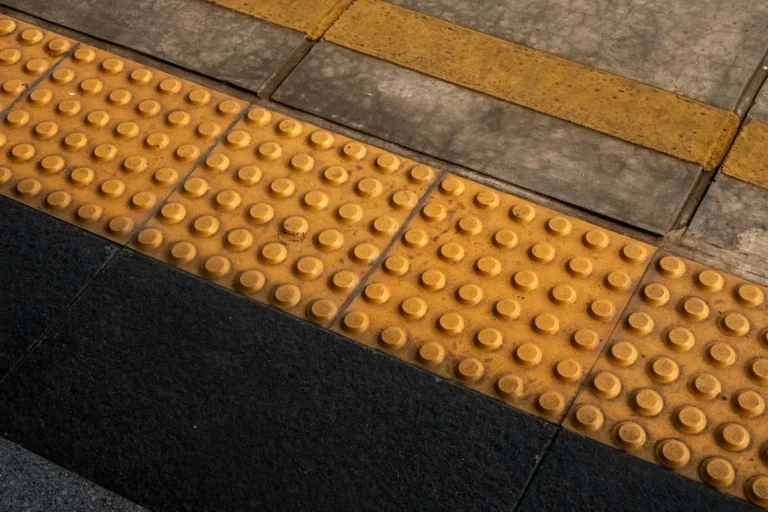
Tactile paving manufacturers in China include precast concrete unit makers, natural stone and porcelain tactile unit producers, stainless steel and metal stud indicator fabricators, polymer and rubber surface indicator makers, and accessibility contractors that supply units with installation. Tactile paving is a textured surface used to guide and warn people with visual impairment, and each route supplies a different material, pattern library and fixing method under the same name.
This guide sorts the supply side into five sourcing routes so a procurement team can send one brief to the right makers and compare the answers fairly. It is not a ranking. No factory is named or scored here, and no claim is made that any unit meets an accessibility code. The designer, the project specification and the local authority define the pattern, the size and the colour contrast the project needs, and each maker must show evidence for the exact unit it offers. For related products, see our guides to street furniture manufacturers, porcelain pavers versus natural stone and balustrade systems.
What should a tactile paving brief state?
A brief that says only “tactile paving, yellow, 200 square metres” produces quotations that cannot be compared, because pattern, size and fixing are left open. State at least the following, copied from the accessibility drawings and the specification.
- Drawing reference and areas: each location with its pattern type (warning, guidance or other as the code names it) and the area or length per type.
- Pattern and dimensions: the stud or bar layout, height and spacing as the project’s accessibility code states them, with the code and edition named by the project.
- Unit size and thickness: the unit dimensions and thickness the drawing shows, and the cut units needed at edges.
- Material and colour: the material the specification names, the colour reference and the contrast the project requires.
- Fixing method: bedded, adhesive-fixed, screwed or surface-applied, and who supplies adhesives, fixings and sealants.
- Substrate and use: concrete, asphalt, stone or existing surface, with pedestrian or vehicle exposure as the project states it.
- Slip and surface requirements: the surface requirement the project names, with the test and edition, as set by the designer and the authority.
- Packing: how units are packed, protected and marked by pattern type and location.
- Documents: the data sheets, test reports and installation instructions the project requires.
Five sourcing routes for tactile paving
1. Precast concrete unit makers
Concrete tactile units are cast in moulds with the pattern formed in the surface, in several colours and sizes. Ask for the mould pattern drawing with stud or bar dimensions, the unit thickness, the colour method and a sample unit, and confirm in writing that the pattern matches the dimensions your code names. These makers suit large paved areas where the project accepts a catalogue unit.
2. Natural stone and porcelain tactile unit producers
Stone and porcelain tactile units are cut, formed or pressed with the pattern in the surface for architectural and high-quality paving. Ask for the material name, the pattern drawing, the thickness and the finish, and request a laid sample with the adjacent paving. Approve colour contrast on the sample.
3. Stainless steel and metal indicator fabricators
Metal studs, bars and plates are made in stainless steel and other metals for interiors, stairs and thresholds. Ask for the material grade the specification names, the stud and bar dimensions, the fixing method and a sample, and confirm how the unit is fixed to the substrate. See our guide to stainless steel fabrication.
4. Polymer and rubber surface indicator makers
Polymer and rubber indicators are supplied as tiles, strips and adhesive-fixed units for retrofit and interior use. Ask for the material description, the adhesive system the maker supports, the pattern drawing and a sample fixed to a substrate similar to the project’s, and confirm the use the maker states for the unit.
5. Accessibility contractors supplying units with installation
Some companies supply tactile units together with layout design, installation and maintenance. This puts one party in charge of the interface between units and surface, but ask the contractor to price the units and the installation on separate lines and to name the maker of each unit so that evidence can be checked.
Sourcing this for a commercial project?
FBM Sourcing manages the entire China procurement package for overseas construction projects. We work with Developers · General Contractors · Builders · Commercial Project Owners · Interior Design & Construction Companies · FF&E Solution Providers. Send your BOQ, drawings or product schedule for review.
How to compare tactile paving quotations
- Pattern and dimensions: the pattern drawing and the stud or bar dimensions on every line, so a cheaper line is read against what it contains.
- Material and thickness: the material name, unit thickness and colour method named on each line.
- Units of measure: price per square metre, per piece or per metre, and the coverage assumed.
- Cut and special units: edge, corner and transition pieces listed with quantities.
- Fixing: whether adhesives, fixings and sealants are in the price.
- Evidence: which test reports are offered for the exact unit, with the date and the body that issued them.
- Exclusions and substitutions: any change of pattern, material or colour the maker proposes.
A quotation that is cheaper on one line may be thinner on another. Read the descriptions side by side before reading the totals.
Samples, approval and acceptance on delivery
Approve a sample of each pattern type, fixed to a substrate like the project’s, before bulk production, and record the approval in writing against the drawing reference. Have the designer measure the pattern against the code the project names and check the colour contrast with the adjacent surface. Keep the approved sample as the reference for the bulk order.
On delivery, check a sample of packs against the order: pattern type, size, colour, cut units and quantity. Note any difference in writing on the day with photographs, so the maker can respond while the evidence is fresh.
What evidence to ask each route for
Evidence should be requested for the exact unit, not for a product family. Ask for the following in writing and keep the answers with the quotation.
- Concrete makers: mould pattern drawing with dimensions, unit thickness and a sample unit.
- Stone and porcelain producers: material name, pattern drawing and a laid sample.
- Metal fabricators: material grade, stud and bar dimensions and a fixed sample.
- Polymer makers: material description, adhesive system and a sample on a similar substrate.
- Contractors: the name of each unit maker, separate price lines and an installation method statement.
Specification gaps to close before quotation
A quotation cannot answer the questions below for itself. Check that the brief answers these questions before it goes out.
- Which pattern types are needed, in which locations, and under which code and edition?
- Which unit size, thickness and material does the specification name?
- What colour contrast does the project require, and on which sample is it approved?
- How are units fixed, and who supplies adhesives and fixings?
- What surface or slip requirement does the project name, and with which test?
- How are packs marked by pattern type and location?
Next steps for a tactile paving package
Send each maker the same brief and ask for answers in writing, line by line, with samples or documents before bulk production. FBM Sourcing manages China procurement packages for overseas projects; furniture-only packages are also run through FBM Furniture.
Questions buyers ask about tactile paving from China
Who decides the pattern a tactile unit must have?
The accessibility code the project names and the local authority decide. Name the code and its edition in the brief, give the stud or bar dimensions it states and ask each maker to quote that pattern.
Can a maker confirm that a unit meets our accessibility code?
A maker can state the dimensions of its unit and provide test reports for the exact model. Whether the unit satisfies the code for your project is for the designer and the authority to confirm.
Do units need to be sampled on the real substrate?
Yes where possible. Approve a sample fixed to a substrate like the project’s, because fixing and surface finish affect the result.
Should cut and transition units be quoted with the main units?
Quote edge, corner and transition pieces on separate lines with quantities so that missing pieces appear before the order and not on site.
How does FBM Sourcing support this kind of package?
We review the brief, collect comparable quotations and manage the package for the project. For suppliers you nominate, we charge a 5% commission; for products we source for you, we quote a direct price. Our own team performs one inspection after bulk production is complete and before shipment, and the client’s project team is welcome to attend.
FBM Sourcing manages the entire China procurement package for overseas construction projects. We work with Developers · General Contractors · Builders · Commercial Project Owners · Interior Design & Construction Companies · FF&E Solution Providers.





