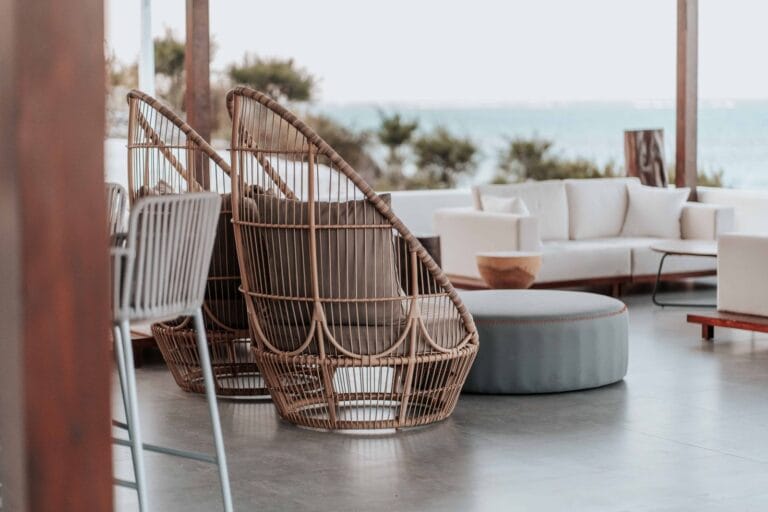
The top outdoor furniture manufacturers in China for Australian commercial and hospitality projects are three Shenzhen-listed groups, Yotrio (002489) and Zhengte (001238) in Linhai, Zhejiang, and Higold (001221) in Shunde, Foshan, plus private factories grouped by material: aluminium frames, synthetic weave and rope, natural cane and rattan, teak and hardwood, parasols and shade, and stacking hospitality seating. For an Australian site the deciding factor is rarely the catalogue: it is whether each piece clears the biosecurity import conditions for its materials, whether any timber meets Australia’s illegal logging law, and whether the coating, fabric and fibre evidence matches the site’s UV and coastal exposure.
This shortlist is written for developers, general contractors, builders, commercial project owners, interior design and construction companies and FF&E solution providers delivering hotels, resorts, clubs, build-to-rent amenity decks, food-and-beverage terraces and public-realm areas in Australia. It is the Australian companion to our general shortlist of top outdoor furniture manufacturers in China for hotel and resort projects.
Why This Shortlist Names Only Three Companies
Most outdoor furniture in China is made by privately held factories whose project lists cannot be checked against any public filing. Zhengte’s own 2025 annual report describes the Chinese industry as a major global manufacturing base with low concentration, where companies are generally small and many still work on a workshop scale. Yotrio, Zhengte and Higold are the makers whose Shenzhen Stock Exchange listings and annual-report product lines we have checked, so this page names those three, describes everyone else by manufacturer type, and does not rank or score anyone.
What Changes When Outdoor Furniture Is Going to an Australian Site?
- Biosecurity by material. The Department of Agriculture, Fisheries and Forestry (DAFF) sets import conditions in its BICON system by material, and outdoor furniture often combines several.
- Timber legality. Wooden-framed seats and wooden furniture are regulated timber products under Australia’s illegal logging legislation.
- Ultraviolet exposure. The Australian Radiation Protection and Nuclear Safety Agency (ARPANSA) states that, because of its location and proximity to the equator, Australia experiences some of the highest levels of solar ultraviolet radiation in the world.
- Coastal corrosion. AS 4312:2019 provides guidelines for classifying atmospheric corrosivity zones in Australia and their effect on steel and other metals, a reference point before any coating system is chosen.
Material behaviour in salt air and sun is compared in aluminum vs teak vs rope outdoor furniture for resort projects; the Gulf version of this shortlist is top outdoor furniture manufacturers in China for Middle East and high-heat projects.
Which Biosecurity Import Conditions Apply to Outdoor Furniture Materials?
DAFF’s guidance on timber, bamboo and related products points each material to its own BICON case:
- Cane and rattan furniture falls under “Cane and rattan articles”. DAFF notes that these articles often contain bamboo components, which must also meet the “Bamboo products” case, and that insects can be found in the stems.
- Bamboo articles fall under “Bamboo products”; bamboo must be dried and not capable of propagation.
- Willow wicker furniture falls under “Dried willow articles”, and any wood, rattan, cane or bamboo in the piece must also meet its own conditions.
- Finished wooden furniture, including solid wood combined with metal, glass or plastic, is referred to “Timber and timber products”; furniture featuring bark has a separate case.
- Reconstituted wood or wood-plastic composite products with no solid timber are listed in DAFF’s Table of Wooden Products as posing minimal biosecurity risk.
The rule that catches outdoor furniture is DAFF’s statement that composite products must meet the import conditions relevant to all components. The material list in the approved drawing decides which cases apply, so every material should be declared before sampling and checked in BICON for the date of import.
Packaging is the second exposure. DAFF states that packaging made from solid timber or bamboo must be treated, either in accordance with ISPM 15 or offshore under BICON conditions, and declared on the packing declaration that the packer of a container must complete. Untreated solid-timber packaging can require mandatory treatment on arrival, or export or disposal at the importer’s expense.
How Does Australia’s Illegal Logging Law Apply to Timber Outdoor Furniture?
The Illegal Logging Prohibition Act 2012 and the Illegal Logging Prohibition Rules 2024 set the requirements; DAFF states the reformed laws took effect on 3 March 2025. Section 5 of the Rules lists the regulated timber products by tariff classification. Those most relevant here are 9401.61.00 and 9401.69.00 (seats with wooden frames), 9403.60.00 (other wooden furniture) and 9403.91.00 (wooden furniture parts).
For regulated products, DAFF states that the importer is required by law to assess and mitigate the risk of illegally logged timber before importing, and to keep records; a further requirement to notify the department on import is not yet in effect. For a teak or hardwood order, species, country of harvest and supply-chain documents should therefore be requested at quotation stage, while there is still time to change timber or supplier.
The Coastal and UV Evidence an Australian Outdoor Specification Should Name
- Site corrosivity. Reference the site’s corrosivity under AS 4312:2019 so the coating system is chosen for that exposure, not for a generic “outdoor” label.
- Powder coating. The QUALICOAT specification (2021 edition) approves powders in classes 1, 1.5, 2 and 3 and defines a standard pretreatment with a total etching degree of at least 1.0 g/m² and an enhanced pretreatment for the SEASIDE endorsement of at least 2.0 g/m². SEASIDE is endorsed on the applicator’s licence, so ask whether the coater holds it.
- Salt-spray hours. ASTM B117 (current edition B117-26) states that it does not prescribe exposure periods for a specific product or how results are interpreted, so the specification must set the hours and pass criterion.
- Fabric and fibre. Ask for colour fastness to light to ISO 105-B02:2014 on the exact fabric colour, and for synthetic weave or rope an exposure report to ISO 4892-2:2013 (xenon-arc) stating the hours.
- Chair strength and stability. AS/NZS 4688.2:2000 covers strength and durability and AS/NZS 4688.3:2000 the stability of fixed-height chairs; neither is a weathering test. For outdoor seating and tables, EN 581-1:2017 sets general safety requirements, with EN 581-2 (seating) and EN 581-3 (tables) covering mechanical safety.
- Certified timber. Where FSC timber is specified, FSC-STD-40-004 requires certified sellers to show the FSC claim and their certificate code on sales documents; ask for both on the invoice.
Pricing an outdoor furniture package for an Australian project?
Send us the schedule or BOQ. We match each line to the right manufacturer type and write the material, coating and timber requirements into the factory brief before sampling.
The Three Listed Manufacturers
1. Yotrio Group (Linhai, Zhejiang)
Who they are: Zhejiang Yotrio Group (Shenzhen Stock Exchange 002489), listed in October 2010. Its 2025 annual report describes its main business as outdoor leisure furniture and sunshade products, together about 98% of revenue by product, built mainly on metal frames with PE weave and all-aluminium designs. Australia appears among its reported sales regions, and the report lists a subsidiary, Yotrio Australia Pty Ltd.
Role for Australian projects: its main offline channels are large retail chains and brand owners, so it suits large repeat programmes on a locked specification rather than small bespoke orders.
Evidence to request: coating class and pretreatment of the exact finish, salt-spray hours, fabric and fibre reports, and the material list of each model for BICON.
2. Zhengte (Linhai, Zhejiang)
Who they are: Zhejiang Zhengte (Shenzhen Stock Exchange 001238), listed in September 2022. Its 2025 annual report describes two series, sunshade products (shade structures, awnings and parasols) and outdoor leisure furniture, used in settings including restaurants, bars, beaches, parks and hotels, and sold mainly in European and American markets.
Role for Australian projects: most relevant where parasols and shade are a large share of the package, such as beach clubs and pool decks.
Evidence to request: canopy lightfastness report, frame coating system, wind guidance for each parasol and the base detail.
3. Higold Group (Shunde, Foshan)
Who they are: Higold Group (Shenzhen Stock Exchange 001221), listed in July 2025. Its 2025 annual report lists four product series, storage, basic, and kitchen and bath hardware plus outdoor furniture, and states that its overseas business is currently mainly outdoor furniture, sold in more than 110 countries and regions.
Role for Australian projects: relevant where a residential or build-to-rent developer is also buying cabinet and wardrobe hardware from South China.
Evidence to request: the same coating, fabric and fibre documents, and which items are made in its own plant.
Private Manufacturer Types for an Australian Outdoor Package
4. Aluminium-frame contract makers
Who they are: factories that weld aluminium frames and coat them on their own line, building loungers, daybeds and dining sets to a project drawing. The core type for coastal pool decks and rooftops.
Evidence to request: alloy and wall thickness, QUALICOAT class and SEASIDE endorsement, salt-spray hours and pass criterion, stainless fastener grade.
5. Synthetic weave, rope and sling specialists
Who they are: workshops that weave synthetic fibre or wrap rope over aluminium frames and sew sling fabric. The fibre is the part most exposed to Australian UV, so the fibre supplier’s data matters more than the workshop’s.
Evidence to request: fibre polymer, UV-stabiliser confirmation, an ISO 4892-2 report, and a declaration that no cane, rattan or bamboo is in the piece.
6. Natural cane, rattan and bamboo workshops
Who they are: makers of furniture woven from cane, rattan, willow or bamboo. Each material has its own BICON case, and DAFF notes that cane and rattan products are often made in rural cottage industries with limited biosecurity controls. Better suited to covered verandas than exposed decks.
Evidence to request: botanical material of every component, treatment records, and confirmation that no bark or green material remains.
7. Teak and hardwood makers
Who they are: solid-timber specialists making deck chairs, dining sets, benches and planters, where legality documents and timber crates both come into play.
Evidence to request: species and country of harvest with supply-chain documents, FSC claim and certificate code where specified, moisture content at packing, and the finish specification.
8. Parasol, cabana and shade makers
Who they are: factories producing commercial parasols, cabanas and shade sails; fixed pergolas and louvred roofs come from a different kind of factory. Canopy fading and wind on open coastal decks are the issues to specify, including the conditions in which each parasol must be closed.
Evidence to request: canopy lightfastness report, frame coating, wind guidance, base weight and fixing detail.
9. Hospitality stacking seating producers
Who they are: metal-furniture factories making stacking chairs, cafe tables and bar stools in powder-coated aluminium or steel for terraces, clubs and retail streets. If the indoor dining furniture is also coming from China, see top commercial furniture manufacturers in China for Australian commercial projects.
Evidence to request: tube gauge, stacking test, the full coating system under the powder coat, salt-spray report, and AS/NZS 4688.2 or EN 581 reports on the model supplied.
Comparison: Which Manufacturer Type for Which Australian Project?
| Manufacturer type | Australian issue to resolve first | Key evidence | Best fit |
|---|---|---|---|
| Listed outdoor leisure groups (Yotrio, Zhengte) | Model material lists; coastal coating | Coating class, salt spray, lightfastness, parasol wind guidance | Large repeat programmes, phased amenity decks |
| Listed hardware group (Higold) | Own-plant items | Same documents | Developers also buying hardware |
| Aluminium-frame contract makers | Site corrosivity | QUALICOAT class, SEASIDE, salt spray | Pool decks, rooftops, beach clubs |
| Synthetic weave and rope specialists | UV durability of fibre | Polymer, ISO 4892-2 report | Resort and club lounges |
| Cane, rattan and bamboo workshops | BICON case for every component | Botanical materials, treatment records | Covered verandas |
| Teak and hardwood makers | Illegal logging law; crates | Species, harvest country, FSC claim | Shaded terraces, restaurants |
| Parasol and shade makers | UV fading and wind | Canopy lightfastness, wind guidance | Pool decks, beach clubs |
| Stacking seating producers | Coastal corrosion on steel | Coating system, AS/NZS 4688.2 or EN 581 | Terraces, clubs, retail streets |
How Should the Schedule Work for an Australian Summer Opening?
Outdoor areas in Australia are busiest over the southern summer, which overlaps the period when most Chinese factories close for Chinese New Year and workers return gradually. A terrace or pool deck due for a summer opening needs specification sign-off, BICON material checks, timber documents and sample approval finished well before the holiday; see Chinese New Year factory shutdown, production and shipping.
Sometimes, on a large project, the outdoor furniture items alone fill full containers; sometimes the outdoor furniture items share containers with the other product categories of the same project; and sometimes, in one batch, we combine a dozen or more product categories from several projects of the same client into a few containers — always full containers, and for us this is routine, well-practised work. The Australian-side steps are set out in how Australian commercial builders source FF&E and building materials from China.
Where FBM Sourcing Fits
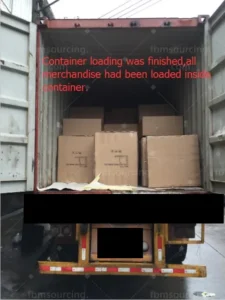
FBM Sourcing is the China sourcing partner in this picture, not a manufacturer. We match each outdoor line in the schedule or BOQ to the manufacturer type that makes it, write the material list, coating, fabric, fibre and timber requirements into the factory brief before sampling, and collect the reports and timber documents the specification names. We carry out one inspection by our own team at the factory after bulk production is finished, before shipment, with photo and video records, and an inspection report goes to the client before the balance is paid. We then load full containers for the Australian port the project uses.
Pricing an outdoor furniture package for an Australian project?
Send us the schedule or BOQ. We match each line to the right manufacturer type and write the material, coating and timber requirements into the factory brief before sampling.
Frequently Asked Questions
Which Chinese outdoor furniture manufacturers are listed on a stock exchange?
We have checked three Shenzhen Stock Exchange listings: Zhejiang Yotrio Group (002489) and Zhejiang Zhengte (001238) in Linhai, Zhejiang, and Higold Group (001221) in Shunde, Foshan, whose 2025 annual report lists outdoor furniture as one of four product series.
Does rattan outdoor furniture from China need to meet Australian biosecurity conditions?
Yes. DAFF refers cane and rattan furniture to the BICON case “Cane and rattan articles”, bamboo components to “Bamboo products” and willow wicker to “Dried willow articles”, and composite products must meet the conditions for all components.
Is teak outdoor furniture covered by Australia’s illegal logging law?
Wooden-framed seats (9401.61.00 and 9401.69.00), other wooden furniture (9403.60.00) and wooden parts (9403.91.00) are regulated timber products under the Illegal Logging Prohibition Rules 2024, so the importer must assess the risk of illegally logged timber before import and keep records.
What coating should be specified for outdoor furniture on a coastal Australian site?
Reference the site’s corrosivity under AS 4312:2019, name a QUALICOAT class, ask whether the coater holds the SEASIDE endorsement, and state salt-spray hours and pass criterion, because ASTM B117 does not set them.
Which standards apply to outdoor chairs made in China for Australia?
AS/NZS 4688.2:2000 and AS/NZS 4688.3:2000 cover strength, durability and stability of fixed-height chairs, and specifications may also call for the EN 581 series on outdoor seating and tables; the report should name the exact model supplied.
About FBM Sourcing
FBM Sourcing manages the entire China procurement package for overseas construction projects. Since 2014 we have worked with developers, general contractors, builders, commercial project owners, interior design and construction companies and FF&E solution providers across more than 20 countries and over 1,000 containers, as their sourcing partner in China — from the schedule or BOQ through factory selection, sampling, inspection by our own team before shipment, consolidation and shipping. All quotations, invoices and shipping documents are issued by FBM Sourcing, and sea freight is quoted to you before shipment. If you have an Australian outdoor furniture package to price, start at China building materials and FF&E procurement.