The sanitary ware manufacturers in China that matter for Australian projects fall into five types, not one ranked list: listed bathroom groups in Tangshan and Foshan, listed tapware makers in Guangzhou and Xiamen, vitreous china plants in Chaozhou and Tangshan, brass tapware factories in Kaiping and Nan’an, and bathroom-package plants in Foshan. What decides a shortlist is not size but whether the supplier can show an active WaterMark certificate, on the public WaterMark Product Database, for the exact model being ordered. For tapware in contact with drinking water there is a second test, because from 1 May 2026 manufacturers may only produce Lead Free WaterMark certified products where that requirement applies.
This guide is written for developers, general contractors, builders, commercial project owners, interior design and construction companies and FF&E solution providers delivering apartments, hotels, student accommodation and commercial buildings in Australia. It sets out what WaterMark requires of each bathroom product, which manufacturer types make each line, and the product evidence to request from each of them.
Why This Shortlist Is Built Around the WaterMark Licence
WaterMark is a mandatory national certification scheme for specified plumbing and drainage products. It is administered by the Australian Building Codes Board (ABCB) on behalf of the state and territory plumbing regulators and given effect through Volume Three of the National Construction Code, the Plumbing Code of Australia. Three features of the scheme decide how a Chinese supplier should be read:
- Certification is recorded by model. A certificate on the WaterMark Product Database shows the licence holder, the specification, the product type, the brand names and the individual model IDs, with a status of active, suspended, cancelled or expired. The models listed are certified; the rest of a factory’s catalogue is not.
- The licence holder is not always the maker. Licences are granted by WaterMark Conformity Assessment Bodies, not by the ABCB, and a licensee can be a manufacturer, assembler, distributor, retailer or importer. A pan made in Chaozhou may sit under an Australian brand’s licence, so the brand name and model ID on the order must match the certificate, whatever the factory is called.
- The plant is part of the evidence. A certified product must be tested by an accredited testing laboratory, comply with an applicable specification, be manufactured under an approved quality management system and clearly state its intended scope of use. The scheme manual defines a family of products as sharing the same design, materials, components, manufacturing location, manufacturing and testing processes and specification.
Certified products are marked with the WaterMark trademark, the WaterMark licence number and the applicable specification, and the database can be searched by the six-digit licence number, model ID, model name, brand name, product type or licensee name.
Which Bathroom Products Need WaterMark, and Against Which Specification?
The WaterMark Schedule of Products (version 2026-2, published June 2026) lists products predetermined to require certification; the Schedule of Excluded Products lists products predetermined not to require it. Anything on neither list needs a risk assessment. For a typical apartment or hotel bathroom:
| Product | WaterMark position | Specification | Lead Free applies |
|---|---|---|---|
| Water closet pans | Schedule of Products | AS 1172.1 | No |
| Flushing cisterns, cistern inlet and outlet valves | Schedule of Products | AS 1172.2 | No |
| Flushing urinals | Schedule of Products | AS 1172.6 | No |
| Waterless and limited flush urinals | Schedule of Products | AS 1172.7 | No |
| Tapware: mixers, pillar, sensor and self-closing taps | Schedule of Products | AS 3718 | Yes, except listed items such as bidet tapware, shower mixers and floor-standing bath fillers |
| Showers | Schedule of Products | AS/NZS 3662 | No |
| Basins | Schedule of Excluded Products; waste outlets require certification | AS 1172.4 as evidence of suitability | Not applicable |
| Baths | Schedule of Excluded Products; waste outlets require certification | AS 1172.5 as evidence of suitability | Not applicable |
Any material or product intended for use in contact with drinking water must also comply with AS/NZS 4020 under Part A of the Plumbing Code of Australia. Two points follow for procurement. The basin is excluded but its waste outlet is not, so the waste needs its own certificate. And a wall-hung toilet is at least two certified products, the pan and the cistern with its valves, which can come from two different factories in China. The ABCB updates the schedule during the year, so the current version should be checked whenever a fixture schedule goes out for pricing.
What Does the Lead Free WaterMark Change for Australian Projects?
Plumbing products that contain copper alloy and are intended for use in contact with drinking water must now have a weighted average lead content of not more than 0.25%. The dates published by the ABCB are:
- 1 May 2026: manufacturers can only produce Lead Free WaterMark certified products where the requirement applies.
- 30 April 2028: end of the installation transition, which the ABCB extended in December 2025; existing WaterMark products can be installed until this date.
- 1 May 2028: only products marked with the Lead Free WaterMark will be authorised for use in plumbing installations used to convey drinking water.
- States and territories: their legislation governs how the NCC applies to plumbing installation, and they may vary the transition arrangements, including the dates.
In a Chinese supply chain the change lands on brass: mixers, pillar taps, stops and tap bodies from Kaiping, Nan’an and the listed tapware makers. Ceramic pans and cisterns are not flagged for lead free on the schedule, and shower heads and shower mixers are listed exceptions. A project ordering tapware now for installation after April 2028 should write Lead Free WaterMark into the tapware specification from the start, because the Lead Free WaterMark trademark is what plumbing practitioners are told to look for.
WELS and AS 1428 Sit Alongside WaterMark
WaterMark says nothing about water use. Taps, toilets, urinals, showers and flow controllers for a reticulated water supply must be WaterMark certified before they can be registered under the separate Water Efficiency Labelling and Standards (WELS) scheme; how that star rating is read on Chinese products is covered in WELS ratings on tapware and toilets from China for Australian projects, and the comparison of WaterMark with cUPC and WRAS is in sanitary ware certifications explained.
In accessible rooms, the NCC requires the closet pan, washbasin and other fixtures and fittings of an accessible unisex sanitary compartment to comply with AS 1428.1 — see AS 1428 accessible fixtures sourced from China. For the other building materials on the same project, see NCC and BCA compliance for building materials from China.
Pricing a WaterMark sanitary ware package for an Australian project?
Send us the fixture schedule and we will match each pan, cistern, basin and tap to factories that can show WaterMark evidence for the exact model.
Listed Chinese Sanitary Ware Manufacturers Relevant to Australian Projects
Most Chinese sanitary ware factories are private and publish no filings, so only companies whose stock exchange listing we have checked are named. Naming them does not mean any particular model holds a WaterMark licence.
Integrated bathroom groups: Huida, Arrow and Dongpeng
- Who they are: Huida Sanitary Ware (Shanghai Stock Exchange, 603385), based in Tangshan, Hebei, makes ceramic sanitary ware plus taps, bathroom furniture, bathtubs and unit bathrooms. Arrow Home Group (Shenzhen Stock Exchange, 001322), headquartered in Foshan, makes sanitary ceramics, faucet hardware, bathroom furniture, tiles and cabinetry under brands including ARROW, FAENZA and ANNWA. Guangdong Dongpeng Holdings (Shenzhen Stock Exchange, 003012), also in Foshan, is best known for tiles and runs a sanitary ware segment covering ceramic sanitary ware, bathroom furniture and faucet hardware.
- Key products: pans, cisterns, basins, urinals, tapware, baths, vanities.
- Where they fit: large apartment, build-to-rent and hotel projects wanting one coordinated range from a manufacturer whose scale is on the public record. Group size does not show which models are certified for Australia.
- Evidence to request: licence number and model ID for every pan, cistern, tap and waste, matched to an active certificate; the licence holder; Lead Free WaterMark status per tap; AS 1172.1 and AS 1172.2 test reports; WELS registration.
Tapware and shower makers: Seagull, Runner and Solex
- Who they are: Guangzhou Seagull Kitchen and Bath Products (Shenzhen Stock Exchange, 002084) concentrates on faucets, faucet components and temperature control valves. Runner (Xiamen) Corp. (Shanghai Stock Exchange, 603408) makes showers, faucets and water inlet and outlet products, with kitchen and bathroom its largest segment. Xiamen Solex High-Tech Industries (Shanghai Stock Exchange, 603992) makes showers, faucets and smart toilets alongside health and personal-care products.
- Key products: mixers, shower systems, temperature control valves, water inlet and outlet products.
- Where they fit: the tapware and shower lines of large projects, where alloy, cartridge and plating matter as much as the finish sample.
- Evidence to request: Lead Free WaterMark certificate and model ID per tap; AS 3718 report for the exact model; tap body alloy specification; AS/NZS 3662 report for showers; WELS registration.
Private Sanitary Ware Manufacturer Types by Cluster
Vitreous china plants: Chaozhou and Tangshan
- Who they are: Chaozhou in eastern Guangdong, mainly the Chao’an and Fengxi districts, has one of China’s largest concentrations of ceramic toilet and basin factories, many making ceramics for domestic brands under OEM arrangements. Tangshan has a smaller group of long-established plants.
- Key products: one-piece, close-coupled and wall-hung toilets, basins, urinals.
- Where they fit: the ceramic lines of apartment and hotel packages. Basins are simple because they are excluded products; pans are not, because the pan needs AS 1172.1, the cistern needs AS 1172.2, and the ceramic plant is often not the maker of the flushing device.
- Evidence to request: whose licence covers each pan and whether its model ID is on an active certificate; the maker and certificate of the cistern fittings; AS 1172.4 evidence for basins and a certificate for each waste outlet.
Brass tapware factories: Kaiping and Nan’an
- Who they are: Shuikou town in Kaiping, Jiangmen, Guangdong, is one of China’s main faucet-making towns, with casting, machining, electroplating and assembly close together. Nan’an in Quanzhou, Fujian, centred on Luncang and Yingdu towns, is one of China’s oldest plumbing, tapware and valve bases.
- Key products: mixers, pillar and bib taps, stops and valves, tap bodies.
- Where they fit: the part of the supply chain most exposed to the lead free change. A factory may hold its own certificate, its taps may sit under an Australian brand’s licence, or neither; this is settled for each model before sampling.
- Evidence to request: Lead Free WaterMark certificate, model ID and licence holder; lead content data for the body alloy; AS 3718 test report; cartridge maker; WELS registration.
Bathroom-package plants: Foshan
- Who they are: private factories making vanities, shower screens, baths and mirror cabinets, often assembling complete bathroom ranges with ceramics and tapware bought in from other clusters.
- Key products: vanities, shower screens, baths, mirror cabinets, accessories.
- Where they fit: the excluded and non-certified lines of a bathroom package, which make up much of the container volume.
- Evidence to request: for any pan, cistern, tap or waste supplied, the certificate, licence holder and model ID; the actual maker of bought-in items; board emission class data for vanity carcasses.
Comparison: Which Manufacturer Type Supplies Which Part of the Bathroom?
| Manufacturer type | Cluster | Typical products | Main WaterMark specifications | Lead free exposure | Evidence to request |
|---|---|---|---|---|---|
| Listed integrated groups (Huida, Arrow, Dongpeng) | Tangshan, Foshan | Pans, cisterns, basins, tapware | AS 1172.1, AS 1172.2, AS 3718 | Tapware lines | Licence number and model ID per item |
| Listed tapware makers (Seagull, Runner, Solex) | Guangzhou, Xiamen | Mixers, showers, valves | AS 3718, AS/NZS 3662 | High | Lead Free certificate per model |
| Vitreous china plants | Chaozhou, Tangshan | Pans, basins, urinals | AS 1172.1, AS 1172.6; basins excluded | Low | Pan licence holder, cistern fittings certificate |
| Brass tapware factories | Kaiping, Nan’an | Mixers, taps, tap bodies | AS 3718 | High | Lead Free certificate, alloy lead content data |
| Bathroom-package plants | Foshan | Vanities, screens, baths | Mostly excluded; waste outlets certified | Low, except bought-in taps | Maker and certificate of any pan, cistern or tap |
How an Australian Sanitary Ware Package Is Put Together and Shipped
A bathroom package is rarely one factory: pans and basins from a ceramic plant, cistern fittings from a fittings maker, tapware from a brass factory, vanities and screens from Foshan. Each model’s certificate position is settled before samples are approved, since substituting a model later means substituting the certificate. See also commercial sanitary ware manufacturers in China for hotel and resort projects and top faucet and tapware manufacturers in China for commercial projects.
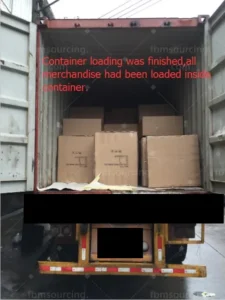
Sometimes, on a large project, the sanitary fixtures and tapware alone fill full containers; sometimes the sanitary fixtures and tapware share containers with the other product categories of the same project; and sometimes, in one batch, we combine a dozen or more product categories from several projects of the same client into a few containers — always full containers, and for us this is routine, well-practised work.
Where FBM Sourcing Fits
FBM Sourcing works as the China sourcing partner for project companies building in Australia. On a sanitary ware package we match each schedule line to the factory that makes it, confirm each model’s WaterMark, Lead Free WaterMark and WELS position before samples are approved, carry out inspection by our own team at the factory before shipment, with photo and video records, and plan several factories’ output into full containers.
Pricing a WaterMark sanitary ware package for an Australian project?
Send us the fixture schedule and we will match each pan, cistern, basin and tap to factories that can show WaterMark evidence for the exact model.
Frequently Asked Questions
Do Chinese sanitary ware manufacturers hold WaterMark licences themselves?
Some do. A WaterMark licence can be held by a manufacturer, assembler, distributor, retailer or importer, so a China-made toilet or tap may be certified in an Australian brand’s name. What matters is that the brand name and model ID on your order appear on an active certificate.
How do you check whether a toilet or tap made in China is WaterMark certified?
Check the product for the WaterMark trademark, licence number and specification, then search the WaterMark Product Database by licence number, model ID, brand name or licence holder. The certificate lists the model IDs it covers and its status; an unlisted model or an inactive certificate does not support installation.
Does the lead free requirement apply to ceramic toilets and basins?
It applies to plumbing products that contain copper alloy and are intended for use in contact with drinking water, which must have a weighted average lead content of not more than 0.25%. Pans and cisterns are not flagged for lead free on the Schedule of Products, and basins are excluded products, although their waste outlets require certification.
When does Lead Free WaterMark become mandatory on Australian projects?
From 1 May 2026 manufacturers can only produce Lead Free WaterMark certified products where the requirement applies. Existing WaterMark products can be installed until 30 April 2028; from 1 May 2028 only products marked with the Lead Free WaterMark are authorised for drinking water installations. States and territories may vary these arrangements, including the dates.
Is WELS registration the same as WaterMark certification?
No. WaterMark covers fitness for purpose and authorisation for installation; WELS covers water efficiency and the star rating label. Taps, toilets, urinals, showers and flow controllers for a reticulated water supply must be WaterMark certified before WELS registration, so those products need both.
About FBM Sourcing
FBM Sourcing manages the entire China procurement package for overseas construction projects. Since 2014 we have worked with developers, general contractors, builders, commercial project owners, interior design and construction companies and FF&E solution providers across more than 20 countries and over 1,000 containers, as their sourcing partner in China — from the schedule or BOQ through factory selection, sampling, inspection by our own team before shipment, consolidation and shipping. All quotations, invoices and shipping documents are issued by FBM Sourcing, and sea freight is quoted to you before shipment. If you have a sanitary ware package to price, start at China building materials and FF&E procurement.