The Chinese manufacturers that supply Australian hotel projects are, with a small number of listed exceptions, privately held factories organised by production line rather than by brand: guest-room casegoods plants in Dongguan and Foshan, upholstery and lounge-seating factories in Shunde, banquet and metal-frame seating producers around Guangzhou and Jiangmen, outdoor and pool furniture makers in Foshan and Zhejiang, and the listed bedding groups Xilinmen and Mlily. What separates a factory that can deliver a Sydney, Melbourne or Gold Coast hotel from one that cannot is not the size of its showroom but four things: AFRDI certification to a commercial severity level for seating, formaldehyde emission evidence to the Australian and New Zealand board standard, a timber due-diligence trail that satisfies the Illegal Logging Prohibition Act, and packaging and container hygiene that will clear Australian biosecurity without being held at the wharf.
This guide is written for developers, general contractors, builders, commercial project owners, interior design and construction companies and FF&E solution providers delivering hotels, serviced apartments and build-to-rent accommodation in Australia. It sets out which manufacturer types make which part of a hotel package, the certification and compliance evidence that decides whether a factory is eligible at all, and how the China end of an Australian hotel order is run.
Why This List Names Only the Listed Manufacturers
Chinese hotel casegoods, seating and outdoor furniture are made almost entirely by privately held factories. There is no exchange filing behind a claim of “400 hotels completed”, and no outside party can audit another factory’s project list. The bedding groups are the exception: Xilinmen (SSE 603008, under an ST risk warning) and Mlily, listed through Healthcare Co. (SSE 603313), publish audited accounts and are the two largest hotel-bedding exporters in the country. Man Wah Holdings (HKEX 1999) is the listed upholstery group with genuine Australian distribution, though its core business is retail lounge rather than contract hospitality seating.
So this page names those companies, describes the other manufacturer types by cluster and capability, and sets out the evidence to request from each before it goes on an Australian hotel shortlist. A numbered Top 10 of private factories would be our opinion presented as a finding. The China-wide shortlist without the Australian lens is at top hotel furniture manufacturers in China, and the Australian commercial furniture view, including AFRDI and AS/NZS detail for office and education seating, is at top commercial furniture manufacturers in China for Australian commercial projects.
What an Australian Hotel Specification Requires Before Any Factory Is Eligible
- AFRDI certification at a commercial severity level. Australian specifiers for hotels, clubs and student accommodation routinely call up certification from the Australasian Furnishing Research and Development Institute. For seating the reference points are AS/NZS 4688 for fixed-height chairs and AS/NZS 4438 for height-adjustable swivel chairs, and the AFRDI “Blue Tick” severe-commercial rating is commonly written into hospitality and club tenders. The evidence is a current certificate naming the exact model and frame build being supplied, not a certificate held by the factory for a different chair.
- Formaldehyde emission class on panel products. Casegoods, wardrobes and vanity carcasses are built from MDF, particleboard or plywood, and the Australian and New Zealand reference is AS/NZS 1859 for the board itself, with E0 and E1 emission classes quoted in specifications. Ask for a test report on the board actually being used in the order. For projects that also carry a North American clause, the overlapping requirement is covered in CARB Phase 2 and TSCA Title VI compliance for furniture and cabinets from China.
- Illegal logging due diligence. Australia’s Illegal Logging Prohibition Act framework requires importers of regulated timber products, which includes most wooden furniture, to carry out and keep records of due diligence on the species and harvest origin of the timber. This is an importer obligation, not a factory obligation, which is exactly why it is missed: the factory will not volunteer species and origin unless it is asked at the brief stage, and retro-fitting the record after the container is loaded is difficult.
- Fire performance of linings and upholstered items. Hotels and motels are Class 3 buildings under the National Construction Code, and apartments and build-to-rent towers are Class 2. Fire-hazard properties of internal linings and surface finishes are regulated under the NCC, with AS 1530.3 and AS/NZS 3837 the usual test references. Upholstered seating in hospitality venues is frequently specified to a cigarette and match ignition resistance standard in addition. The general NCC picture for imported products is set out in can building materials from China comply with the NCC/BCA.
- Biosecurity and packaging. Timber packaging and dunnage entering Australia must be treated and marked under ISPM 15, and containers are subject to biosecurity inspection on arrival. A container held for cleanliness or untreated packaging costs more in demurrage and re-export risk than the packaging saved, and the requirement applies to the pallets and bracing as much as to the furniture.
The Manufacturer Types That Make an Australian Hotel Package
1. Listed hotel-bedding manufacturers: Xilinmen and Mlily
- Who they are: Xilinmen Furniture (SSE 603008, under an ST risk warning, Shaoxing, Zhejiang) and Mlily, listed through Healthcare Co. (SSE 603313, Nantong, Jiangsu), are the two listed mattress and bedding groups, both with hotel divisions supplying international operators.
- Location / Established / Classification: Zhejiang and Jiangsu · founded 1984 and 2003, listed 2012 and 2016 · listed manufacturers with dedicated hotel-project divisions.
- Key products: hotel mattresses, bases, toppers, pillows, protectors and adjustable bed mechanisms.
- Evidence to request: construction specification against the operator’s brand standard, fire test report on the exact quilt-and-foam build, and a flammability statement appropriate to the venue class.
- Verdict: the default choice for the bedding line of an Australian hotel where the operator’s brand standard names a construction. A mattress factory should not be asked to supply casegoods or seating.
2. Guest-room casegoods plants (Dongguan, Foshan, Shenzhen)
- Who they are: privately held joinery and panel-furniture factories, many clustered in Dongguan Houjie, that build the fixed and loose casegoods of a guest room to drawings.
- Location / Established / Classification: Guangdong · typically founded in the 1990s and 2000s · private contract manufacturers, made to order, no retail brand.
- Key products: headboards, wardrobes, luggage benches, desks, bedside and vanity units, minibar joinery, reception and back-of-house joinery.
- Evidence to request: AS/NZS 1859 emission test on the board, substrate and edge-banding specification, moisture content target for solid timber and veneer, timber species and harvest country for the due-diligence record, and a finish schedule.
- Verdict: every hotel and serviced-apartment package needs one of these. Selection should turn on drawing interpretation and finish consistency across a large room count, not on catalogue range.
3. Upholstery and lounge-seating factories (Shunde and Longjiang)
- Who they are: the Shunde and Longjiang district of Foshan is the largest upholstered furniture cluster in China. Man Wah Holdings (HKEX 1999) is the listed group in this cluster; contract hospitality seating is mostly made by private factories alongside it.
- Location / Established / Classification: Foshan, Guangdong · cluster developed from the 1990s · one listed group plus a large number of private contract factories.
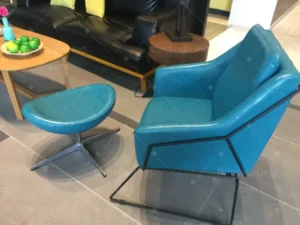
- Key products: guest-room armchairs and ottomans, lobby and lounge seating, banquettes, restaurant and bar seating, headboard upholstery.
- Evidence to request: AFRDI certification to the relevant AS/NZS seating standard at the severity level named in the specification, frame construction and joint detail, foam density and fire performance on the exact foam-and-fabric combination, and a commercial-grade fabric rub-test figure.
- Verdict: this is the line most often rejected at Australian submission stage, because a domestic-market chair frame will not pass a severe-commercial seating test. Confirm the certification scope before sampling, not after.
4. Banquet and metal-frame seating producers (Guangzhou, Foshan, Jiangmen)
- Who they are: metal-fabrication and contract-seating factories that make stackable and folding hospitality furniture at volume.
- Location / Established / Classification: Guangdong · private manufacturers · usually organised around powder-coating and welding capacity rather than design.
- Key products: ballroom and conference seating, folding and round banquet tables, trolleys, function-room bases, outdoor dining frames.
- Evidence to request: stacking and static load test results, coating specification with a salt-spray figure, weld and joint detail, and AFRDI certification where the tender calls it up for function seating.
- Verdict: relevant only to hotels with a ballroom, conference or function programme, but when it is relevant the quantities are large and the specification is unforgiving.
5. Outdoor and pool furniture makers (Foshan, Zhejiang, Jiangsu)
- Who they are: aluminium, rope, teak and resin outdoor furniture factories, a cluster that also supplies the resort market.
- Location / Established / Classification: Guangdong, Zhejiang and Jiangsu · private manufacturers · often export-oriented with their own powder-coating lines.
- Key products: loungers, daybeds, pool and terrace dining, cabanas, bar seating, planters.
- Evidence to request: powder-coat specification with salt-spray hours, solution-dyed acrylic fabric confirmation, UV stabilisation for resin and rope, and timber species and origin for teak items.
- Verdict: Australian coastal and high-UV exposure is more severe than most factory default specifications assume. The material comparison for this line is at aluminium vs teak vs rope outdoor furniture for resort projects.
Sourcing FF&E for a hotel project in Australia?
FBM Sourcing works with developers, general contractors, builders, commercial project owners, interior design and construction companies and FF&E solution providers on hotel, serviced-apartment and build-to-rent projects across Australia. Send the room schedule or BOQ and we will return it priced by production line, with the AFRDI, emission and timber due-diligence evidence and a container plan to your port.
How the Calendar and Shipping Work for an Australian Hotel Order
Production for a full guest-room package typically runs eight to twelve weeks after sample approval, and the sample round itself takes three to six weeks depending on how many finishes have to be matched across factories. Sea freight from South China to Australian east-coast ports is commonly around two to three weeks port to port, with Fremantle shorter and Adelaide often transhipped. The two dates that break Australian hotel programmes are the Chinese New Year shutdown, which stops production for several weeks and slows it either side, and the opening date the operator has already sold rooms against.
Two Australian-specific items belong in the programme rather than in the shipping line. First, the timber due-diligence record has to exist before the goods arrive, not after, so species and origin are collected at the purchase-order stage. Second, biosecurity inspection is a scheduled possibility, not an exception, and a package that lands in a peak inspection period should have float built into it. The general route Australian builders use is described in how Australian commercial builders source FF&E and building materials from China.
Comparison: Which Manufacturer Type for Which Part of an Australian Hotel?
| Manufacturer type | Cluster | What it makes | Key Australian evidence | Which projects need it |
|---|---|---|---|---|
| Listed bedding groups | Zhejiang, Jiangsu | Mattresses, bases, toppers, pillows | Brand-standard construction, fire test on exact build | Every hotel and serviced-apartment package |
| Guest-room casegoods plants | Dongguan Houjie, Foshan, Shenzhen | Headboards, wardrobes, desks, bedside and vanity units | AS/NZS 1859 emission class, timber species and origin, moisture content | Every hotel, serviced apartment and BTR package |
| Upholstery factories | Shunde / Longjiang | Guest-room chairs, lobby and lounge seating, banquettes | AFRDI certification to AS/NZS 4688 or 4438 at the specified severity level | Every hotel; the line most often rejected at submission |
| Banquet and metal-frame producers | Guangzhou, Foshan, Jiangmen | Ballroom and conference seating, folding tables | Stacking and load tests, coating and salt-spray figures | Hotels with ballroom or conference programmes |
| Outdoor and pool furniture makers | Foshan, Zhejiang, Jiangsu | Loungers, daybeds, terrace dining, cabanas | Salt-spray hours, solution-dyed fabric, UV stabilisation | Resorts, rooftop pools, coastal and Queensland properties |
Which Procurement Route Fits Which Australian Hotel Project?
| Project scenario | Which route fits | Why | What would change the answer |
|---|---|---|---|
| 200-key branded hotel in Sydney or Melbourne, full FF&E from China | Five factory types consolidated by a China sourcing partner | No single factory makes casegoods, seating, bedding, banquet and outdoor lines; buying them as one “hotel furniture” order means buying a trading package | If the operator runs a fiduciary purchasing agent, the sourcing partner works alongside it on the China end |
| Build-to-rent tower with joinery, appliances and tiles in the same package | Sourcing partner covering FF&E and building materials together | The building-material lines come from different factories again; one execution partner avoids two supply chains and two shipping plans | — |
| Regional motel or pub accommodation refurbishment, 40 to 80 rooms | Casegoods plant plus one upholstery factory, consolidated into a single container run | Small room counts do not justify five factories; the package is casegoods, seating and bedding only | If the venue has a function room, banquet seating is added |
| Coastal Queensland resort with pool and terrace programme | Outdoor furniture makers with climate evidence, plus a shade and cabana manufacturer | UV and salt exposure decide product life, and shade structures are a separate manufacturer group | — |
Where FBM Sourcing Fits
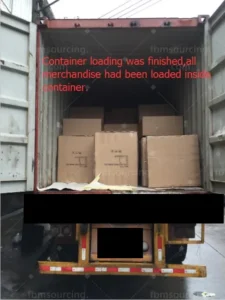
FBM Sourcing is the China sourcing partner in this picture, not a manufacturer and not a showroom. We work for developers, general contractors, builders, commercial project owners, interior design and construction companies and FF&E solution providers, and we do not sell to individual homeowners. On an Australian hotel package we shortlist the factory that runs each production line, confirm the AFRDI scope, emission class, timber origin and finish specification in writing before sampling, run the sample rounds, inspect the bulk order at each factory with photo and video records before it is packed, and plan the loading across factories into full containers for Port Botany, Melbourne, Brisbane or Fremantle. The category is described at hotel furniture sourcing, and the electrical items that travel with an FF&E package are covered in what SAA certification means for lighting and electrical products on Australian projects.
Sourcing FF&E for a hotel project in Australia?
FBM Sourcing works with developers, general contractors, builders, commercial project owners, interior design and construction companies and FF&E solution providers on hotel, serviced-apartment and build-to-rent projects across Australia. Send the room schedule or BOQ and we will return it priced by production line, with the AFRDI, emission and timber due-diligence evidence and a container plan to your port.
Frequently Asked Questions
Which Chinese manufacturers supply hotel furniture to Australia?
Guest-room casegoods come mainly from Dongguan and Foshan plants, upholstered seating from the Shunde cluster, banquet and metal-frame seating from the Guangzhou and Jiangmen area, outdoor furniture from Foshan, Zhejiang and Jiangsu, and hotel bedding from the two listed groups Xilinmen and Mlily. An Australian hotel package is assembled from these specialist factories rather than bought from one hotel furniture supplier.
Does hotel furniture imported into Australia need AFRDI certification?
AFRDI certification is not a legal import requirement, but it is the certification Australian hospitality, club and accommodation specifications most often call up for seating, commonly at a severe-commercial level, against AS/NZS 4688 for fixed-height chairs or AS/NZS 4438 for height-adjustable swivel chairs. The practical test is whether the certificate names the exact model and frame being supplied. A certificate for a different chair from the same factory does not satisfy a specifier.
What does the Illegal Logging Prohibition Act require for furniture from China?
Importers of regulated timber products, which covers most wooden furniture, must carry out due diligence on the species and country of harvest of the timber and keep records of it. The obligation sits with the Australian importer rather than the Chinese factory, so species and origin have to be requested at the brief and purchase-order stage. Collecting it after the container has sailed is much harder, and an incomplete record is a compliance exposure for the importer, not the factory.
How long does a hotel furniture order from China take to reach Australia?
Production usually takes eight to twelve weeks after sample approval, with the sample round adding three to six weeks before that, and sea freight from South China to east-coast Australian ports is commonly around two to three weeks port to port. The Chinese New Year shutdown should be built into the programme, and time should be allowed for biosecurity inspection on arrival rather than assumed away.
Choosing a manufacturer is one step in a longer sequence. The phase-by-phase route for a full hospitality package, from brief to container, is set out in what a whole-hotel FF&E and building materials package covers.
About FBM Sourcing
FBM Sourcing manages the entire China procurement package for overseas construction projects. Sourcing since 2014, we work with developers, general contractors, builders, commercial project owners, interior design and construction companies and FF&E solution providers as their sourcing partner in China — from the room schedule or BOQ through factory selection, sampling, inspection by our own team, consolidation and shipping, with every quotation and shipping document issued in our own name. If you have a hotel, serviced-apartment or build-to-rent package for Australia to price, start at https://fbmsourcing.com/china-building-materials-ffe-procurement/.