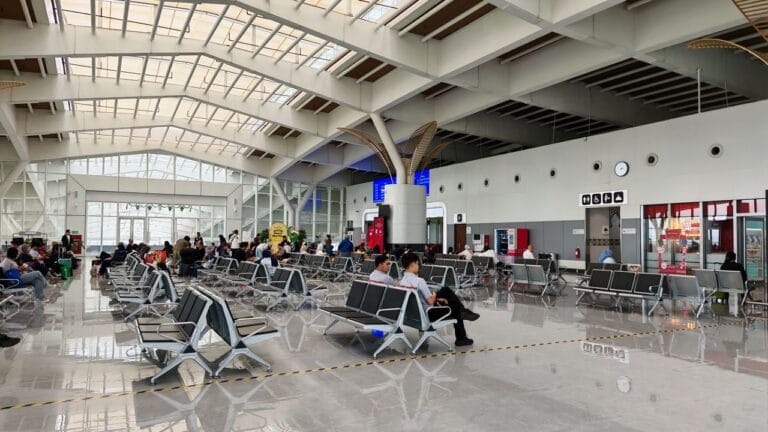
Airport lounge and transport hub fit-outs are procured differently from hotels because the constraint is not budget or design — it is access. The site sits behind security, the possession window is measured in night shifts rather than weeks, the interior finishes have to satisfy a transport operator’s fire and durability rules on top of the local building code, and the opening date is usually contractual with a concession start behind it. This guide sets out how the procurement package is structured, what changes compared with a hotel FF&E order, and the decisions that have to be locked before manufacture.
What makes a transport hub fit-out different from a hotel fit-out?
- Delivery access is the governing constraint. Airside deliveries require security screening of goods, escorted vehicles and staff passes obtained weeks in advance. Rail and metro concourses often only permit deliveries in an engineering-hours window. The practical result is that the packing plan matters as much as the product: a crate that cannot pass a screening machine or fit a service lift will not reach the site whatever it cost.
- Possession is fragmented. Rather than a continuous site, contractors typically get repeated short possessions. Materials must therefore arrive pre-assembled to the maximum extent possible, in the exact installation sequence, and with everything for one zone on one pallet.
- The operator’s standards sit on top of the building code. Airport authorities and rail operators publish their own fit-out manuals covering fire performance, finishes, wayfinding, signage and sometimes even permitted adhesives. These are contractual for the concessionaire, and they are frequently stricter than the national code.
- Footfall is extreme and continuous. A lounge chair in a busy airport lounge may see more use in a year than the same chair in a hotel lobby sees in five. Abrasion, seam strength and foam grade specifications that are adequate for hospitality are often not adequate here.
- The opening date is commercially hard. A concession that opens late loses trading days it cannot recover, which is why sequencing discipline matters more than unit price on these projects.
How is the procurement package usually split?
On a lounge or transport hub concession, the China-sourced package typically divides into five workstreams, each with a different manufacturing base and lead pattern:
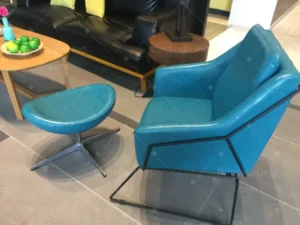
- Loose FF&E. Seating, occasional tables, side tables, luggage-adjacent furniture. Contract-grade, high-abrasion specification; produced in furniture clusters.
- Fixed joinery and casework. Bars, buffet counters, reception desks, shower suite joinery, back-of-house. This is the workstream where survey dimensions matter most and where the possession window bites hardest.
- Surface finishes. Flooring, wall panelling, acoustic treatment, ceilings. Fire performance evidence is the gating item.
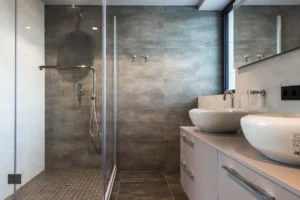
- Sanitary ware and washroom package. Very high duty cycle; specification should be commercial rather than hospitality grade throughout.
- Lighting and electrical accessories. Governed by destination-market conformity requirements and often by the operator’s own approved-product list.
Our overview of what an FF&E procurement company does covers how these workstreams are managed as one package rather than five separate orders.
Sourcing this for a commercial project?
FBM Sourcing works with project owners, developers, main contractors and FF&E contractors on hotel, apartment, school, office and other commercial building projects. Send us your BOQ, drawings or product list — our team will review it and get back to you.
Which specification questions have to be answered before manufacture?
- Fire performance for interior finishes, stated to the correct standard. Transport interiors commonly reference reaction-to-fire classification under EN 13501-1 for wall and ceiling linings and EN 13501-1 with EN ISO 9239-1 for floorings, or the ASTM E84 family in North America. Upholstery is separately regulated — ignition source tests such as EN 1021-1 and -2 or BS 5852, and in the United States often California Technical Bulletin 117-2013. Our guide to fire rating standards for building materials and finishes explains how the families relate.
- Abrasion and durability class for upholstery. Specify a Martindale or Wyzenbeek result and a seam slippage requirement, and confirm the test applies to the fabric actually being supplied, not a range name.
- Access dimensions for every fixed item. Maximum crate size that passes the security screening equipment, service lift internal dimensions, door widths on the escorted route. This should be written into the purchase order as a manufacturing constraint, because it changes how joinery is split into sections.
- Assembly strategy. Whether each item arrives finished, flat-packed or in modules is a design decision, not a packing decision. It has to be resolved before drawings are released to the factory.
- Spares and attic stock. Replacing one damaged chair in a live airside lounge is disproportionately expensive. Agree a spares quantity in the original order while the production batch is still running.
How should the programme be sequenced?
Sequencing is where transport projects are won or lost. Three rules apply consistently:
- Survey before manufacture, not after. Fixed joinery should be manufactured against a site survey of the actual opening, because as-built conditions in an operating terminal almost never match the drawings.
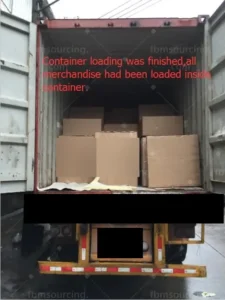
- Group by installation zone, not by product type. The container packing list should mirror the installation programme so that each possession has everything it needs and nothing it does not. Our note on the container loading report on a commercial project shows what that documentation looks like in practice.
- Build in a buffer between arrival and the first possession. Goods have to clear customs, be screened, and be staged before they can go airside. Treating the port arrival date as the installation date is the most common programme error on these projects. Our guide to lead-time buffers in a construction schedule covers how to size that buffer.
Sometimes, on a large project, the lounge furniture alone fill full containers; sometimes the lounge furniture share containers with the other product categories of the same project; and sometimes, in one batch, we combine a dozen or more product categories from several projects of the same client into a few containers — always full containers, and for us this is routine, well-practised work.
What does the buyer need to provide to get a usable quotation?
A transport hub package can be priced accurately from a fairly small document set, provided it includes the constraints rather than only the design:
- The FF&E schedule or BOQ with quantities by zone.
- Elevations and joinery details for fixed items.
- The operator’s fit-out manual extract covering fire, finishes and delivery rules.
- Access constraints: screening equipment aperture, lift dimensions, permitted delivery hours.
- The programme, showing possession windows rather than only an opening date.
Projects that supply the last two items get materially better quotations, because the factory can price the correct packing and sectioning strategy instead of guessing. Our note on the five mistakes buyers make before sending a BOQ to China covers the rest of the document set. If your scheme includes food and beverage units, the same logic applies to that scope — see food hall and food court FF&E procurement.
Sourcing this for a commercial project?
FBM Sourcing works with project owners, developers, main contractors and FF&E contractors on hotel, apartment, school, office and other commercial building projects. Send us your BOQ, drawings or product list — our team will review it and get back to you.
About FBM Sourcing
FBM Sourcing manages the entire China procurement package for overseas construction projects. Sourcing since 2014, we have shipped 1,000+ containers to project sites in 20+ countries, working with project owners, developers, main contractors and FF&E contractors on hotels, apartment buildings, schools, offices and other commercial buildings. All quotations, invoices and shipping documents are issued by FBM Sourcing — you deal with us, and we carry the responsibility. For suppliers you nominate, we charge a 5% commission; for products we source for you, we quote a direct price.
If you have a lounge or transport hub fit-out to price, send us the FF&E schedule, the joinery drawings and the operator’s fit-out manual at https://fbmsourcing.com/china-building-materials-ffe-procurement/.
The seating package should be split by construction before quotations are compared. Our guide to airport seating manufacturers in China covers fixed beam, public lounge, upholstered, powered and outdoor source types and the evidence each needs.
Frequently asked questions
What is the biggest difference between an airport lounge fit-out and a hotel fit-out?
Access. Airside delivery requires security screening, escorted vehicles and advance passes, and installation happens in short possession windows rather than on a continuous site. That changes how items are packed, sectioned and sequenced, not just when they arrive.
Do airport operators have their own fit-out standards?
Usually yes. Airport authorities and rail operators publish fit-out manuals covering fire performance, permitted finishes, signage and delivery rules, and these are contractual for the concessionaire. They are frequently stricter than the national building code, so they should be issued to the supplier with the drawings.
Should furniture for a transport hub be specified to a higher durability class?
Yes. Footfall in a busy terminal is far higher and more continuous than in hospitality, so abrasion resistance, seam strength and foam grade should be specified to a commercial or heavy-contract class, with the test result tied to the fabric actually supplied.
How should fixed joinery be handled when the terminal is operating?
Manufacture against a site survey of the as-built opening, and split each item into sections that pass the screening equipment and service lifts. Both constraints belong in the purchase order as manufacturing requirements.
What is the minimum order for a transport hub package from China?
We do not handle loose freight. The practical minimum is a full container load consolidated for one client, and lounge items can share containers with the other product categories of the same project.