
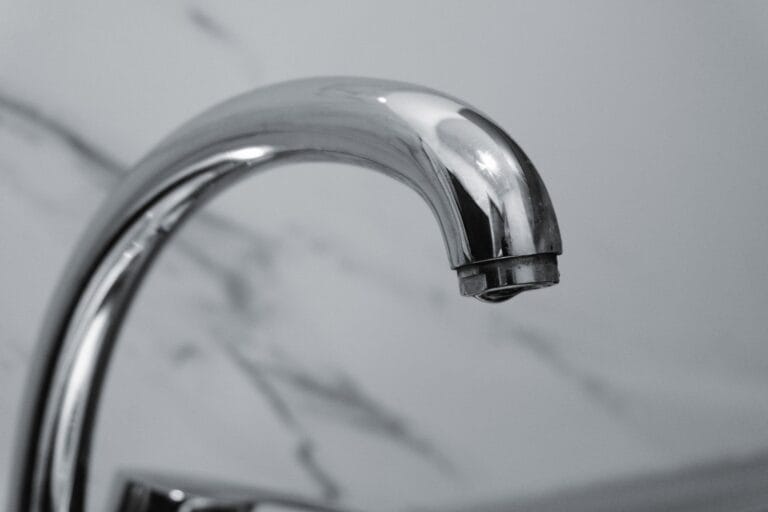
Tapware is bought differently from the rest of a bathroom package. A toilet or a basin is largely settled by shape, glaze and dimension; a faucet is settled by what is inside it — the cartridge, the brass alloy and the plating — none of which is visible in a photograph. That is why the shortlist of faucet manufacturers in China is not the same shortlist as the one for sanitary ware generally, and why the evidence you ask for is different.
This page covers tapware specifically: the supplier types, the industrial clusters they sit in, the compliance regime that applies to anything carrying potable water, and the evidence to request from each candidate. For the broader bathroom package — toilets, basins, shower enclosures — see our commercial sanitary ware manufacturers guide, which is the parent page to this one.
What kinds of faucet manufacturers exist in China?
1. Listed ODM tapware specialists
Two of the largest dedicated faucet and shower manufacturers in China are listed on the Shanghai Stock Exchange, which makes their scale and customer structure a matter of public record rather than sales claim. Both are ODM houses that have manufactured for international bathroom brands for decades:
- Xiamen Solex High-tech Industries Co., Ltd. (SSE: 603992) — faucets, shower systems and bathroom hardware, Xiamen-based, export-oriented ODM.
- Xiamen Runner Industrial Corporation (SSE: 603408) — faucets, shower products and water treatment components, also Xiamen-based, also ODM-led.
These are the suppliers behind a significant share of the tapware sold under Western brand names. They are usually not the cheapest option, and they are usually the only option that can hand over a complete certification file without a delay.
Evidence to request: the listed certification file for the exact model number you are specifying, the annual report page identifying the production base being quoted, and confirmation of which plant will run your order.
2. Listed integrated sanitary ware groups that also make tapware
Several Chinese sanitary ware groups manufacture tapware alongside ceramics, and are listed domestically — among them ARROW Home Group (SZSE: 001322) and Huida Sanitary Ware Co., Ltd. (SSE: 603385). Buying tapware and ceramics from one group simplifies the order and the container, and it means one party is accountable for the whole bathroom.
The trade-off: tapware inside an integrated group is often a smaller product line than the ceramics business, so the model range and the depth of finish options can be narrower than at a dedicated tapware ODM.
Evidence to request: whether the tapware is manufactured in-house or bought in; if bought in, the actual tapware factory name.
3. Cluster manufacturers in Nan’an, Fujian
Nan’an in Fujian province is China’s largest plumbing hardware cluster, with several thousand enterprises across faucets, valves, shower products and fittings, plus the brass foundries and plating lines that supply them. If you are sourcing mid-market tapware in volume, a large part of the market sits here.
The cluster’s strength is price and range. Its risk is that the certification picture is uneven — some plants hold their own current certifications, others rely on a component supplier’s or on a report that has lapsed.
Evidence to request: the certificate itself with issue and expiry dates, the model list annexed to it, and the name of the certification body. A certificate scan without the model schedule is not evidence for your model.
4. Cluster manufacturers in Kaiping and Yuhuan
Two further clusters matter for project tapware:
- Kaiping (Shuikou), Guangdong — a long-established bathroom hardware and tapware base in the Pearl River Delta, convenient where the rest of the FF&E package is also being made in Guangdong.
- Yuhuan, Zhejiang — a brass valve and fitting cluster. Many faucet bodies and valve components originate here even when final assembly happens elsewhere.
Evidence to request: whether the brass body is cast in-house, and the alloy specification — this is the single question that most affects whether the product will pass a lead-content test.
5. Assemblers and trading operations
A significant part of what appears online as a “faucet factory” is an assembly operation buying bodies, cartridges and plating from separate suppliers, or a trading company with no production at all. Neither is automatically disqualifying, but both change who is accountable for a cartridge failure in year three, and neither should be quoting you as a manufacturer.
Evidence to request: a factory visit or production-line photos and video from the plant itself, plus consistency between the business licence scope, the plant address and the certificate holder name. Where those three do not match, ask why before proceeding.
For the treatment equipment upstream of the taps, see our guide to water softener and filtration equipment manufacturers in China.
Sourcing this for a commercial project?
FBM Sourcing works with project owners, developers, main contractors and FF&E contractors on hotel, apartment, school, office and other commercial building projects. Send us your BOQ, drawings or product list — our team will review it and get back to you.
What certifications does commercial tapware from China actually need?
Tapware carries potable water, so it is one of the most heavily regulated categories in a bathroom package. The applicable regime depends entirely on the destination market:
- United States and Canada — NSF/ANSI/CAN 61 (drinking water system components) and NSF/ANSI/CAN 372 (lead content, the “lead-free” requirement). Certification is normally shown as cUPC/UPC listing from IAPMO, against ASME A112.18.1/CSA B125.1. EPA WaterSense applies where a water efficiency credit is being claimed.
- United Kingdom — WRAS approval, or an equivalent Regulation 4 approval scheme, for anything connected to the mains supply.
- Australia and New Zealand — WaterMark certification against AS/NZS 3718 for tapware, plus WELS registration and a star rating for water efficiency. Both are legally required, and they are separate schemes.
- European Union — EN 817 for mechanical mixing valves and EN 200 for single taps, with national drinking-water approvals on top: DVGW in Germany, ACS in France, KIWA in the Netherlands.
- Middle East — typically SASO/SABER for Saudi Arabia and ESMA for the UAE, usually referencing an EN or ASME base standard.
Two questions catch almost every certification mismatch we see, and they are the same two we apply to any certificate: is your exact model number printed on the schedule attached to the certificate, and is the certificate still in date. A supplier answering “our system is similar” or “that is the higher-spec version of the same product” has answered no to the first question. Our sanitary ware certifications guide works through cUPC, WaterMark, WRAS and CE in more detail.
What is inside the faucet, and why does it decide the price?
Two faucets that look identical can differ by a multiple in cost. The difference sits in four components:
- The cartridge. A ceramic disc cartridge is the wear part — it is what fails when a tap starts dripping. Imported cartridges from established European manufacturers are specified on many hotel projects; domestic cartridges span a wide quality range. Ask which brand and model of cartridge is fitted, and what cycle count it is rated to.
- The brass body. Alloy composition determines both durability and lead content. Low-lead brass costs more and is mandatory for the US market. Zinc alloy bodies are cheaper again and are not appropriate for commercial tapware.
- The finish. Standard chrome is electroplated. Brushed, matt black, gunmetal and brass finishes are usually PVD, which is more durable and more expensive. Ask for the salt spray test hours for the specific finish, and check that the tested finish is the one you are buying.
- The flexible hoses and aerator. Frequently the cheapest component and frequently the first failure. Hoses should carry their own approval for the destination market.
Specifying these four lines turns a faucet from a photograph into something two factories can quote comparably. Without them, the cheapest quote is usually the one that has quietly substituted a different cartridge.
What should be in a tapware package sent to quote?
- Quantity by type: basin mixer, bath/shower mixer, concealed valve, shower set, kitchen mixer, utility.
- Mounting: deck-mounted, wall-mounted, or concealed — and for concealed valves, the rough-in body type.
- Spout height and reach, especially where basins are already selected.
- Finish, by name and by reference sample where a non-chrome finish is involved.
- Flow rate limit and the water efficiency scheme being claimed.
- Inlet connection type and thread standard for the destination market.
- The certification scheme required, named explicitly.
- Water pressure at the fixture — low-pressure installations need different valves.
Our sanitary ware brief checklist sets out the full bathroom package, and faucets and mixers sourcing from China covers how we handle the category on a project order. For scale context on the wider category, see the China sanitary ware market and export data page.
Why this page does not rank suppliers
We do not publish scores or league tables for other companies. We have no access to another factory’s order book, defect history or current certificate status, and neither does anyone else writing a public ranking. What we can do is tell you which supplier types exist, where they sit, and precisely what to ask each of them for. A shortlist built from consistent evidence requests, sent to every candidate at the same time on the same specification, produces a better answer than any published ranking.
Sourcing this for a commercial project?
FBM Sourcing works with project owners, developers, main contractors and FF&E contractors on hotel, apartment, school, office and other commercial building projects. Send us your BOQ, drawings or product list — our team will review it and get back to you.
Frequently asked questions
Are there publicly listed faucet manufacturers in China?
Yes. Xiamen Solex High-tech Industries Co., Ltd. (SSE: 603992) and Xiamen Runner Industrial Corporation (SSE: 603408) are both listed dedicated tapware and shower manufacturers. ARROW Home Group (SZSE: 001322) and Huida Sanitary Ware Co., Ltd. (SSE: 603385) are listed integrated sanitary ware groups that also produce tapware.
Where is tapware manufactured in China?
Nan’an in Fujian is the largest plumbing hardware cluster. Kaiping (Shuikou) in Guangdong is a long-established bathroom hardware base, and Yuhuan in Zhejiang is the brass valve and fitting cluster that supplies bodies and valve components to assemblers elsewhere. Xiamen hosts the largest export-oriented ODM tapware manufacturers.
What does “lead-free” mean for faucets going to the United States?
It refers to compliance with NSF/ANSI/CAN 372, which limits the weighted average lead content of wetted surfaces. It is normally evidenced through a cUPC or UPC listing from IAPMO alongside NSF/ANSI/CAN 61. Ask to see the listing with your model number on the attached schedule, not just a certificate cover page.
Does tapware for Australia need WaterMark and WELS?
Yes, and they are two separate requirements. WaterMark certification against AS/NZS 3718 covers the product’s suitability for plumbing installation; WELS registration and star rating covers water efficiency. Both are mandatory, and a supplier holding one does not have the other by implication.
Why do two identical-looking faucets have very different prices?
Usually the cartridge, the brass alloy and the finish process. A ceramic disc cartridge from an established manufacturer, a low-lead brass body and a PVD finish together account for most of the gap. Specifying all three by name is the only way to make two quotes genuinely comparable.
Can I buy tapware and ceramics from the same supplier?
Often yes, through an integrated sanitary ware group. It simplifies the order and the container. Confirm whether the tapware is made in-house or bought in, because that determines who holds the certification and who is accountable if a cartridge fails after handover.
About FBM Sourcing
FBM Sourcing is a China procurement partner for commercial building projects. We manage the entire China procurement package for project owners, developers, main contractors and FF&E contractors — supplier selection, technical review against your specification, order management, pre-shipment quality control and full-container consolidation. Sanitary ware and tapware is one of the categories where we routinely check the certificate schedule against the specified model before an order is placed.
If you have a project package to price, start here: China building materials and FF&E procurement.





