China’s office seating supply is concentrated in a small number of very large chair specialists rather than spread across general furniture factories. For a corporate fit-out, the practical shortlist has three layers: publicly listed chair manufacturers that already export to Western contract brands, unlisted specialists inside the Anji chair cluster in Zhejiang, and systems-furniture factories in Guangdong that supply seating alongside desks and storage. The difference that matters on a project order is not the brochure — it is whether the factory can hand you a current third-party test report against the standard your specification names.
This page sets out the supplier types, the clusters they sit in, and the evidence to request from each. It deliberately does not rank suppliers or publish scores: a chair that is right for a 40-desk office refurbishment is not the same chair that is right for a 1,200-seat headquarters with a 10-year replacement plan.
What kinds of office seating manufacturers exist in China?
1. Listed chair specialists (ODM for international contract brands)
Two office-chair manufacturers are listed on the Shanghai Stock Exchange, which means their production capacity, revenue and customer concentration are set out in public annual reports rather than in a sales presentation:
- UE Furniture Co., Ltd. (Yongyi, SSE: 603600) — office and leisure seating manufacturer based in Anji, Zhejiang. Long-running ODM supplier to overseas brands and retail programmes.
- Henglin Home Furnishings Co., Ltd. (SSE: 603661) — office chair and home furnishing manufacturer, also headquartered in Anji, Zhejiang, with overseas production sites.
Evidence to request: the specific test report number and issuing laboratory for the model you are specifying (not a corporate certificate), the annual report page showing the production base you are being quoted from, and confirmation of which of their plants will actually run your order.
2. Unlisted chair specialists inside the Anji cluster
Anji County in Zhejiang is China’s dominant office-chair manufacturing cluster, with a dense concentration of chair assembly plants plus the local supply chain that feeds them: gas lift cylinder makers, castor and base producers, mesh weavers, moulded foam suppliers and powder-coating lines. Most of the world’s mid-market office seating passes through this cluster at some point.
The practical consequence for a buyer is that a “factory” in Anji may be an assembler buying every component locally. That is not a problem in itself — it is how the cluster is designed to work — but it changes who is accountable when a gas lift fails in year two.
Evidence to request: which components are made in-house versus bought in; the gas lift cylinder supplier name and its cylinder class; whether the factory holds its own test reports or is relying on a component supplier’s.
3. Systems-furniture factories (Guangdong and the Beijing periphery)
Where the scope is a full floor rather than chairs alone, seating is often bought from a factory that also builds workstations, storage and reception joinery. Guangdong — particularly the Foshan and Shunde manufacturing belt — and the Langfang/Xianghe belt outside Beijing both host this type of supplier. Buying seating and casegoods from one source reduces the number of containers and the number of parties involved when something is short-shipped.
The trade-off is that a systems-furniture factory rarely tests seating to the depth a chair specialist does; the chairs may themselves be bought from Anji and re-badged.
Evidence to request: whether the chairs are manufactured in-house or sourced; if sourced, the actual chair factory name so the test evidence can be traced to source.
4. Executive and soft-seating specialists
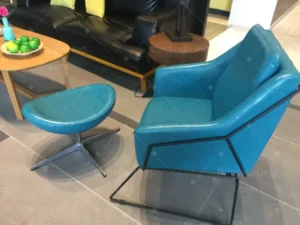
Executive chairs, visitor seating, lounge chairs and sofas for breakout areas come from upholstery factories rather than task-chair plants. The relevant evidence here is fabric and foam performance rather than mechanism cycle counts — see our note on fabric versus vinyl upholstery for commercial seating for how those specifications are usually written.
Evidence to request: the fabric’s abrasion (Martindale or Wyzenbeek) test certificate for the exact fabric being supplied, and the foam density specification in kg/m³.
5. Education and institutional seating factories
Lecture theatre, training room and library seating is a separate production category with its own factories, typically fixed or beam-mounted rather than five-star base. If your fit-out includes both categories, expect two suppliers rather than one.
Sourcing this for a commercial project?
FBM Sourcing works with project owners, developers, main contractors and FF&E contractors on hotel, apartment, school, office and other commercial building projects. Send us your BOQ, drawings or product list — our team will review it and get back to you.
Which test standards should an office seating specification name?
This is the single most useful part of a seating brief, and the part most often left blank. Naming the standard converts a vague quality expectation into something a factory either can or cannot evidence:
- ANSI/BIFMA X5.1 — general-purpose office chairs. The standard most US and Middle East specifications reference.
- ANSI/BIFMA X5.11 — large occupant office chairs, where a heavier user weight rating is required.
- EN 1335-1/2/3 — office work chair dimensions, safety requirements and test methods, used across Europe and the UK.
- EN 16139 — strength, durability and safety for non-domestic seating, which covers visitor and lounge chairs that fall outside EN 1335. We cover this one in detail in what EN 16139 means for contract furniture from China.
- AS/NZS 4438 — height-adjustable swivel chairs, where an Australian specification applies.
- GREENGUARD / GREENGUARD Gold — indoor emissions, where a green building rating is being pursued.
- CARB Phase 2 / TSCA Title VI — formaldehyde emissions on any composite wood component, mandatory for US import.
A report is only meaningful if the model number printed on it is the model you are buying, and the tested dimensions sit within the range you have specified. Those two questions catch most of the mismatches we see.
How is office seating actually verified before a container ships?
Chair specialists run their own in-plant test rigs, and on a project order this is worth seeing rather than reading about. The rigs that matter are:
- Seat and back cycling — weight bags loaded onto the seat, cycled to a set count to prove the frame and mechanism.
- Base and castor durability — the base spun and rolled across a steel plate for thousands of cycles. This is the component that fails first on cheap seating.
- Gas lift cycling — the cylinder pushed up and down on a rig until the specified count is reached.
- Abrasion testing — fabric and finish samples spun under weighted heads, which is what actually answers a rub-count line in your specification.
- Armrest and impact tests — static load and drop tests on arms and castors.
Where a factory has this equipment on site rather than sending samples out, a problem found in the morning can become a line change the same afternoon. Where it does not, every question becomes a two-week laboratory round trip.
What should be in the seating package you send to quote?
Suppliers quote faster and more accurately when the brief is complete. For seating specifically:
- Quantity per chair type, and the split between task, visitor, executive and lounge.
- Mechanism requirement — synchro, multifunction, or basic tilt — and whether seat depth adjustment and adjustable lumbar are required.
- Arm type: fixed, height-adjustable, or 3D/4D.
- Base and castor material, and the floor finish the castors will run on (hard-floor castors are a different part number).
- Upholstery: mesh back or upholstered back, fabric grade, and whether you are supplying COM/COL fabric.
- The test standard the chairs must meet, and the user weight rating.
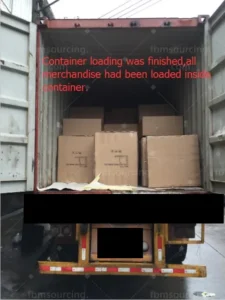
- Delivery format — fully assembled or knocked down. This materially changes container utilisation and therefore landed cost.
Our office furniture brief checklist sets out the full list across seating and casegoods, and the office fit-out cost structure breakdown explains where the money actually sits once freight and duty are added.
How do you shortlist without a rating table?
We do not publish scores for other companies, and we would treat any list that does with caution — the person writing it rarely has access to the factory’s order book, defect history or current test certificates. What works better is a short evidence request sent to every candidate at the same time:
- Send the same specification and quantity to each, so the prices are comparable.
- Ask each for the test report covering the exact model, and check the model number and dimensions on the report itself.
- Ask which plant will run the order and whether any part of it will be subcontracted.
- Ask for the gas lift and castor component suppliers by name.
- Ask for two reference projects of comparable size in a comparable market.
Suppliers that answer all five quickly and consistently tend to be the ones that also answer well when there is a problem mid-production. That is usually a better predictor than any published ranking.
For a wider view of the manufacturing base behind these categories, see our contract furniture manufacturers buyer’s profile guide and the China office furniture market and export data page.
Sourcing this for a commercial project?
FBM Sourcing works with project owners, developers, main contractors and FF&E contractors on hotel, apartment, school, office and other commercial building projects. Send us your BOQ, drawings or product list — our team will review it and get back to you.
Frequently asked questions
Are there publicly listed office chair manufacturers in China?
Yes. UE Furniture Co., Ltd. (SSE: 603600) and Henglin Home Furnishings Co., Ltd. (SSE: 603661) are both listed on the Shanghai Stock Exchange and both are headquartered in Anji, Zhejiang. Because they are listed, their capacity and financial position can be checked in public filings rather than taken from a sales deck.
Where is office seating actually manufactured in China?
Anji County in Zhejiang is the dominant office-chair cluster, supported by a local supply chain of gas lift, castor, base, mesh and foam producers. Systems-furniture factories that also supply seating are concentrated in the Foshan and Shunde belt in Guangdong and in the Langfang/Xianghe belt outside Beijing.
What test standard should I specify for office chairs from China?
ANSI/BIFMA X5.1 for general-purpose office chairs in US-referenced specifications, EN 1335 for European and UK specifications, EN 16139 for non-domestic visitor and lounge seating, and AS/NZS 4438 where an Australian standard applies. Add ANSI/BIFMA X5.11 if a large occupant rating is required, and CARB Phase 2 / TSCA Title VI for any composite wood component going to the US.
What is the minimum order quantity for office seating from China?
FBM Sourcing works on full-container (FCL) project orders and does not handle LCL consolidation, so the practical minimum is what fills a container for your mix of items. Chairs shipped knocked down fit far more units per container than fully assembled chairs, which is why the assembly format should be settled before quantities are finalised.
Can one factory supply both the chairs and the desks?
Sometimes, but it is worth checking whether the chairs are actually made there. Systems-furniture factories frequently buy seating from the Anji cluster and supply it under their own label. Ask for the chair manufacturer’s name so the test evidence can be traced back to the plant that made the chair.
About FBM Sourcing
FBM Sourcing is a China procurement partner for commercial building projects. We manage the entire China procurement package for project owners, developers, main contractors and FF&E contractors — supplier selection, technical review against your specification, order management, pre-shipment quality control and full-container consolidation. Office seating is one of the categories where we routinely inspect the factory’s own test rigs before an order is placed, and where our quality control runs up to pre-shipment inspection.
If you have a project package to price, start here: China building materials and FF&E procurement.