Contract furniture manufacturers in China fall into three broad profiles that matter to project buyers: large OEM/ODM groups that produce across categories, mid-size specialist workshops that focus on one furniture type, and design-led boutique factories for smaller custom runs. Which profile fits a project depends on scale, how many furniture categories are involved, and how much design customization the project needs.
Unlike residential furniture shopping, sourcing contract-grade furniture for a hotel, office, school or apartment project is a structured B2B process built around testing standards, factory qualification and coordinated production schedules across however many manufacturer profiles a project needs. This guide walks through the three profiles, what to check on each, and how a furniture sourcing agent typically coordinates them for a single project.
What makes furniture “contract grade” in the first place?
Contract furniture — also called commercial-grade or non-domestic furniture — is manufactured and tested to standards such as EN 16139 and ANSI/BIFMA for continuous multi-user use. Frame joinery is heavier, foam density is higher, and fire-retardant treatment is standard, because a hotel guest chair or an office task chair sees far more daily use-cycles than a chair in a private home. This is the first filter project buyers should apply before comparing manufacturer profiles: a factory that has never run a BIFMA seating-cycle test is not a contract-furniture manufacturer, whatever else it makes well.
Profile 1: Large OEM/ODM Groups
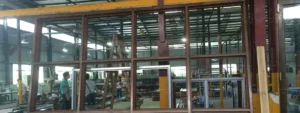
Large OEM/ODM groups run multiple production lines — casegoods, seating, sometimes metal — under one factory group, with in-house testing labs and dedicated export departments used to handling multi-container hotel and office orders.
| Location | Guangdong (Foshan/Dongguan) and Zhejiang furniture clusters |
| Established | Typically fifteen years or more in operation, export-focused since founding |
| Classification | Multi-category OEM/ODM group |
| Key Products | Casegoods, upholstered seating, sometimes metal furniture, under one production umbrella |
| Certifications | ANSI/BIFMA, EN 16139, CARB Phase 2 / TSCA Title VI |
Verdict: a large OEM/ODM group is a solid choice for full-scale hotel FF&E packages above 100 rooms, or any project where consolidating several furniture categories under one factory schedule reduces coordination risk.
Profile 2: Mid-Size Specialist Workshops
Mid-size workshops specialize in one furniture type — casegoods, upholstery, or metal — and typically out-perform generalist factories on finish quality and defect rates within that specialty, at the cost of needing to be coordinated alongside other specialists for a multi-category project.
| Location | Foshan (casegoods/metal), Dongguan and Shunde (upholstery) |
| Established | Typically 8–20 years, single-category focus |
| Classification | Single-category specialist |
| Key Products | One of: casegoods/joinery, upholstered seating, or metal furniture |
| Certifications | Category-relevant: seating-cycle tests for upholstery, panel/finish compliance for casegoods, salt-spray/powder-coat adhesion for metal |
Verdict: mid-size specialists are the stronger choice when finish quality in one category matters more than single-factory convenience — for example, lobby and restaurant seating on a boutique hotel project.
Profile 3: Design-Led Boutique Factories
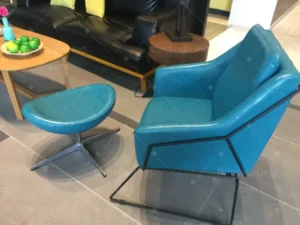
Smaller, design-oriented factories take on lower minimum order quantities and more custom finishes, suited to boutique hotels, restaurant chains and design-forward office fit-outs where every piece is custom-made to a designer’s drawings rather than adapted from a catalog range.
| Location | Foshan and Zhongshan design clusters |
| Established | Often under 10 years, design-studio origin |
| Classification | Design-led / custom-order workshop |
| Key Products | Fully custom casegoods and seating, small-batch runs |
| Certifications | Varies by factory — verified per order, not assumed |
Verdict: a design-led boutique factory is the right fit for a single boutique property or restaurant rollout where design distinctiveness outweighs the economies of scale a large group offers.
Comparison at a glance
| Profile | Best for | Category range | MOQ flexibility |
| Large OEM/ODM Group | 100+ room hotel FF&E packages | Multi-category | Lower flexibility, full-container scale |
| Mid-Size Specialist | Finish-critical single-category orders | Single category | Moderate |
| Design-Led Boutique | Boutique hotels, restaurant chains | Custom casegoods/seating | Highest |
Sourcing this for a commercial project?
FBM Sourcing works with project owners, developers, main contractors and FF&E contractors on hotel, apartment, school, office and other commercial building projects. Send us your BOQ, drawings or product list — our team will review it and get back to you.
If you are specifying this category for a project, our commercial furniture sourcing service page explains how FBM Sourcing handles factory shortlisting, sampling and pre-shipment QC as your sourcing partner.
Do all contract furniture manufacturers in China test to the same standards?
No. Testing depends on the manufacturer’s specialization and the buyer’s specification. A casegoods specialist will have strong finish and panel-compliance testing but may not run seating-cycle tests; an upholstery specialist will be strong on fire-retardant foam and fabric rub count but is not the right choice for structural casegoods. This is exactly why profile-matching — rather than picking one factory for everything — produces better results on multi-category projects.
Can one factory supply casegoods, seating and metal furniture for the same hotel project?
Large OEM/ODM groups can produce across all three categories, but on many projects it works better — and often delivers stronger finish quality — to combine two or three specialist profiles under one project schedule: a casegoods workshop for guest-room furniture, an upholstery workshop for lobby and restaurant seating, and a metal specialist for outdoor areas.
What certifications should I ask for on a hotel or restaurant furniture RFQ?
At minimum, ask for ANSI/BIFMA or EN 16139 test reports for seating, CAL 117 compliance for upholstery foam if the project is in the US, CARB Phase 2 / TSCA Title VI compliance for wood-panel casegoods, and salt-spray or powder-coat adhesion data for any outdoor metal furniture.
How does a sourcing agent coordinate furniture from more than one manufacturer profile?
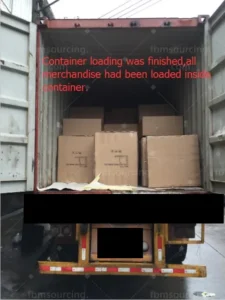
A furniture sourcing agent qualifies each manufacturer profile against the relevant line items on the BOQ, then aligns production and QC schedules across factories so that casegoods, seating and metal pieces are ready to consolidate into the same shipping window rather than arriving on separate, uncoordinated timelines. Sometimes, on a large project, the furniture alone fill full containers; sometimes the furniture share containers with the other product categories of the same project; and sometimes, in one batch, we combine a dozen or more product categories from several projects of the same client into a few containers — always full containers, and for us this is routine, well-practised work.
FBM Sourcing manages the entire China procurement package for overseas construction projects, acting as the single sourcing partner that qualifies and coordinates whichever contract-furniture manufacturer profiles a project’s BOQ calls for.
For the seating side of a corporate fit-out specifically, see our guide to office seating manufacturers in China.