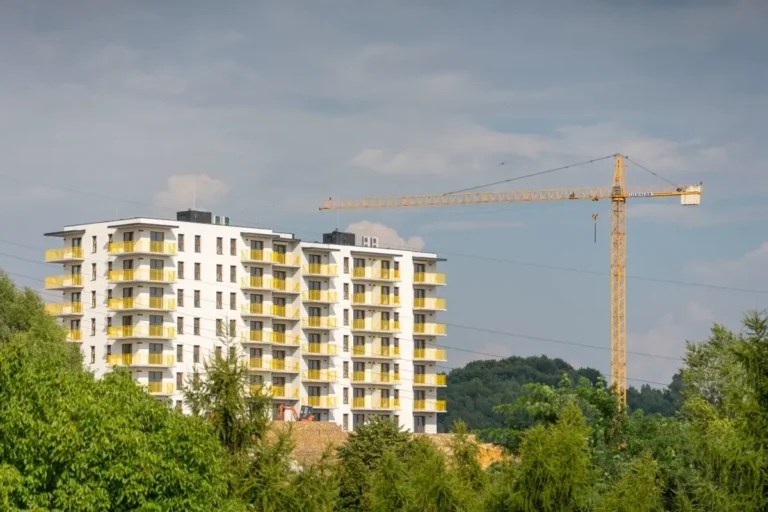
Build-to-rent procurement from China works by consolidating the repeated unit specification of a BTR scheme — flooring, kitchens, wardrobes, doors, bathrooms, and in furnished models the FF&E — into standardised spec packages per unit type, produced in batches that match the development’s handover sequence. Because the developer holds the asset for 10-20 years, the specification is written around durability grades and lifecycle cost, not lowest first price: commercial-grade wear layers, cycle-tested hardware, certified low-emission boards, plus attic stock for the operating period. A sourcing agent and sourcing partner manages factory selection, batch production, pre-shipment inspection and staggered shipping against the construction programme, typically for a 5% commission for suppliers you nominate (products we source for you are quoted at a direct price).
This guide is written for BTR developers, institutional investors and main contractors. If your project is a condominium or build-to-sell scheme, our general guide to apartment development furniture and building materials procurement covers that model; this article deals with what changes when the owner keeps the building.
Why BTR Procurement Is Not the Same as Build-to-Sell
In a build-to-sell project, the developer’s exposure to the materials ends at settlement. In BTR, the developer is also the operator: every delaminated cabinet door, worn floor and failed hinge over the holding period is an operating cost against net rental income. That single fact changes how the procurement should be run.
Three consequences follow. First, the evaluation basis shifts from purchase price to cost per year of service life — a floor that costs more but survives two tenancy cycles longer is the cheaper floor. Second, the specification must be enforceable: durability has to be written as testable numbers (wear-layer thickness, abrasion class, cycle counts, emission limits), not adjectives like “heavy duty”. Third, replacement continuity matters — in year six you will need the same floor plank, the same cabinet front and the same handle, which means batch records, retained specifications and attic stock are part of the original purchase, not an afterthought.
The repetition of a BTR scheme is the leverage that pays for all of this. A 300-unit development with four unit types is not 300 small orders; it is four large, identical production runs. That volume is what lets you demand commercial-grade specifications at costs that one-off buyers of the same grade cannot reach. For orientation on how quantities translate into container volumes and cost structure, see our breakdown of the cost to furnish a 50-unit apartment project from China — BTR schemes simply run the same arithmetic at larger multiples.
What Should a BTR Spec Package Include?
The working document of BTR procurement is the spec package per unit type: one controlled list of every procured item in, say, the one-bed Type A unit, with quantities, dimensions, finishes, durability standards and certification requirements. Multiply by the unit count, add common areas, and you have the full procurement scope.
A complete unit-type package for a typical BTR scheme covers:
- Kitchen: cabinet carcasses and fronts, benchtops, sinks, taps, appliance list — one kitchen layout per unit type, repeated exactly. The framed vs frameless cabinet decision should be made once, at scheme level, because it drives carcass construction, hardware and replacement logic for every unit.
- Wardrobes and joinery: built-in wardrobes, bathroom vanities, entry storage — the largest casegoods volume in the scheme.
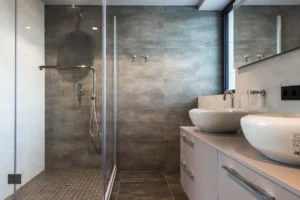
- Flooring and wall finishes: LVT or laminate to living areas, tile to wet areas, with declared wear grades and slip ratings.
- Doors, hardware and windows: internal door sets, cycle-rated hinges and closers, and aluminium windows where the facade package is procured with the interiors.
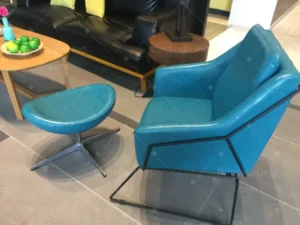
- Furnished-model FF&E: beds, sofas, dining sets, window coverings and lighting for schemes leasing furnished units — structured the same way as student accommodation furniture procurement, which runs on the identical repeated-unit logic.
Standardisation is where the money is. Every variation between unit types that does not earn rent — a second handle style, a third tile format — fragments production runs, adds moulds and setups, and complicates spares. Well-run BTR schemes hold finishes to a tight palette: one floor product in two colours, one tile format for all wet areas, one hardware suite scheme-wide. A four-type scheme with a disciplined palette ships in clean, repeating container loads instead of mixed part-shipments.
Durability Grades: The Numbers That Protect Long-Term Yield
Because the owner absorbs wear, BTR specifications should name the grade, the standard and the number. These are the benchmarks we see institutional owners write into China procurement scopes:
| Item | BTR-grade specification | Why it matters to an operator |
|---|---|---|
| LVT flooring | 0.5 mm (20 mil) wear layer, commercial class | Survives repeated tenancy turnovers; residential 0.3 mm (12 mil) product shows wear paths within a few cycles |
| Laminate flooring | AC4 minimum; AC5 for corridors and amenity areas | Abrasion class is tested and printed on the product data sheet — enforceable at inspection |
| Cabinet and wardrobe boards | E1 formaldehyde class; CARB Phase 2 / TSCA Title VI for North America | Emission compliance is a certification document, verifiable through accredited laboratories before production |
| Cabinet hinges | Cycle-tested to BS EN furniture hardware standards, 40,000-80,000 open-close cycles | Hinges and runners are the highest-frequency maintenance call-outs in rental units |
| Drawer runners | Soft-close, cycle-tested, load-rated per drawer size | Under-specified runners fail before the carcass does, forcing mismatched replacements |
| Wet-area tile | Declared slip rating (R-value or pendulum test) per local code | Slip performance is a liability issue for a landlord, not just a finish choice |
Two practical notes. First, every one of these grades is available from Chinese production at project volumes — the gap between residential and commercial grade at the factory is far smaller than the gap in what the products cost you over ten operating years. Second, grades only protect you if they are checked: certification documents reviewed before production, and the physical goods inspected before shipment by our own team, with photo and video records, so what leaves the factory is what the data sheet promised.
Sourcing this for a commercial project?
FBM Sourcing works with project owners, developers, main contractors and FF&E contractors on hotel, apartment, school, office and other commercial building projects. Send us your BOQ, drawings or product list — our team will review it and get back to you.
How Does Build-to-Rent Procurement From China Handle Phased Handovers?
Most BTR schemes hand over in phases — building by building, or floor block by floor block, across the construction programme. Shipping the entire scheme’s materials in one wave would flood the site with goods that no building can receive, and storing hundreds of cubic metres locally is expensive. The procurement structure that works is batch production locked to the handover sequence.
Batch production against the construction programme
The full scheme quantity is contracted up front — that is what secures project pricing and reserves factory capacity — but production is released in batches sized to each phase. Each batch is scheduled backwards from its building’s fit-out start, using the production lead time the factory confirms in writing and the transit time the carrier confirms at booking. In practice each batch ships well ahead of its installation window.
Factory-held stock between phases
When a construction programme moves — and on multi-building schemes it always moves — the buffer should sit at origin, not on your site. Factories will produce a phase and hold the finished, packed goods under an agreed storage arrangement, releasing containers as buildings become ready. We covered the mechanics of this in detail in our guide to having a China factory hold stock for staggered delivery; for BTR it is close to mandatory, because the alternative is either renting warehouse space in a high-cost destination market or letting containers sit on demurrage.
One batch record for the whole scheme
Phased production creates one risk that BTR owners specifically need managed: batch consistency. Tile and LVT produced months apart can vary in shade; laminates vary by press batch. The procurement plan should fix this contractually — same production line, retained control samples from batch one, and colour checks of later batches against the retained sample as part of pre-shipment inspection. Ten years later, your maintenance team will be matching against those records.
Attic Stock and Replacement Continuity for the Operating Years
Attic stock — the overage of finish materials held for repairs — is a line item build-to-sell developers routinely delete and BTR operators cannot afford to. In practice: order an agreed overage over installed quantity for flooring and tile, a reserve of cabinet fronts and panels in each finish, and a hardware pool of hinges, handles, runners and shower fittings sized to the scheme (these are the items your maintenance team will replace most often).
Buying attic stock with the main production run does three things: it is batch-matched, so repairs are invisible; it is priced at project rates rather than one-off replacement rates; and it ships in the same containers, so the freight cost is marginal. Alongside the physical stock, the operator should hold a procurement dossier per unit type — final specifications, factory item codes, batch numbers, certification documents — so that a year-eight reorder is a purchase order, not a research project.
Key Facts: BTR Procurement From China at a Glance
- Production: confirmed by each factory in writing per batch and category (casegoods and joinery, aluminium windows and doors, tile and flooring).
- Ocean freight: transit time is confirmed by the carrier at booking.
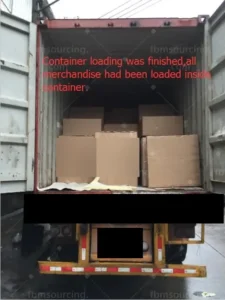
- Container planning: the quantity per container is set in the load plan; a repeated unit type keeps container loads uniform.
- Durability floor for BTR interiors: LVT 0.5 mm (20 mil) wear layer, laminate AC4/AC5, boards E1 or CARB Phase 2, hardware cycle-tested to BS EN standards.
- Attic stock: an agreed overage on flooring and tile, plus a scheme-level hardware reserve, ordered with the main run for batch matching.
- Agency fee: for suppliers you nominate, we charge a 5% commission; for products we source for you, we quote a direct price.
Where a Sourcing Agent Fits in a BTR Procurement
A BTR developer’s team is usually built to acquire sites, finance schemes and operate buildings — not to run multi-batch production across a dozen Chinese factories in a different language and time zone. A china sourcing agent covers that gap as a single accountable counterpart: consolidating the unit-type packages into factory-ready specifications, matching each product category to factories that genuinely produce commercial grade, negotiating scheme-level pricing on the full quantity, scheduling batches against the construction programme, and inspecting every batch before shipment by our own team, with photo and video records shared before goods leave the factory.
For the institutional investment committees behind most BTR schemes, the structure matters as much as the price: one contract, one point of accountability, documented inspections, and a certification file per product — the audit trail an asset manager expects. FBM Sourcing charges a 5% commission for suppliers you nominate (products we source for you are quoted at a direct price) on the purchase value; the leverage of buying a few hundred repeated units at project volumes, at grades chosen for the holding period rather than the sale date, is where a BTR scheme’s procurement returns show up — first in capex, then every operating year after.
Kitchens are the joinery line where a BTR brief differs most from build-to-sell — re-orderable finishes, a spares allowance and archived drawings — and the factory tiers that suit an Australian apartment or BTR package are compared in top kitchen cabinet manufacturers in China for Australian apartment and build-to-rent projects.
Get a China Procurement Quote for Your Project
If you are developing a build-to-rent, multifamily or co-living scheme and want to see what your unit-type packages cost, start with our china sourcing agent service for building materials and FF&E procurement. Submit your drawings, unit schedule and quantities, destination port and construction timeline — our team will review the scope, flag the durability grades that matter for a held asset, and come back with a structured procurement proposal covering specification, batching, inspection and shipping.