On a typical hotel project sourcing FF&E from China, the split works like this: the sourcing agent and sourcing partner handles everything from the factory floor to the destination port — or to the project door under DDP terms — including container loading plans, shipping documents and logistics coordination; warehousing is arranged only when the site cannot receive goods on arrival, usually through a third-party warehouse near the port; and on-site installation is carried out by the owner’s local contractor or a specialist FF&E installer, working from the installation drawings, room-by-room packing lists and spare-hardware kits that ship with the goods. The agent does not field an installation crew overseas — its job is to make sure the local crew can install without calling China. Good ff&e installation coordination is therefore less about who holds the screwdriver and more about whether the handover documents were planned before the containers were packed.
This article maps the delivery, warehousing and installation phase in detail — who does what, where the handover points sit, and what a china sourcing agent should be preparing during production so the final phase runs clean. For the earlier phases of the responsibility chain, see who is responsible for FF&E on a hotel project; this piece picks up where production ends.
What Does the Sourcing Agent Handle After Production Ends?
Once goods pass final inspection, the sourcing agent’s post-production scope covers five things:
- Container planning and loading — deciding what ships in which container, sequenced for how the site will unload and install
- Export documentation — commercial invoice, packing list, certificates and test reports required at destination
- Freight coordination — booking, tracking and keeping the project team informed of vessel schedules
- Customs and delivery coordination — through the destination broker under CIF/DAP/DDP terms as agreed
- Installation support pack — assembly drawings, room-by-room packing lists, hardware kits and spare parts shipped inside the containers
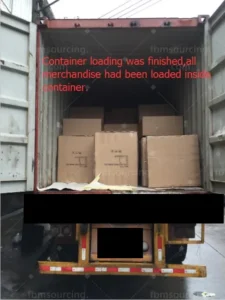
At FBM Sourcing, final inspection before loading is carried out by our own QC team in the factory, documented in photos and video, so what leaves China is verified against the specification before it is sealed into a container. Loading itself is supervised: a 40ft high-cube holds roughly 65 to 68 cubic metres, and a supervised loading plan routinely recovers 10–15% of container space compared with letting the factory load unplanned — which on a multi-container hotel package can mean shipping one container fewer.
FF&E Delivery: From Factory Floor to Destination Port
Delivery terms decide where the agent’s logistics responsibility formally ends. Under FOB the buyer’s forwarder takes over at the Chinese port; under CIF the agent’s side manages ocean freight to the destination port; under DAP/DDP coordination runs to the project door. For hotel projects without an in-house logistics team, door delivery is usually worth the coordination it saves — one party is accountable for the goods until they reach site.
The numbers that matter for the project schedule: ocean transit runs roughly 30 to 40 days to the US East Coast, 20 to 30 days to the US West Coast and the Caribbean, and 14 to 20 days to Australia, and customs clearance plus inland haulage typically adds another 7 to 10 days after vessel arrival before goods actually stand at the site. Those figures need to sit inside the master programme from day one — the full sequence from deposit to delivery is laid out in our hotel FF&E procurement timeline.
Delivery sequencing is the other planning decision. A 150-room hotel does not want every container arriving the same week if the site can only unload one per day; staggering shipments by floor or by phase is a container-planning decision made before loading, not a delivery-day improvisation. See hotel FF&E container planning for how package volume translates into container counts and arrival sequencing.
Sourcing this for a commercial project?
FBM Sourcing works with project owners, developers, main contractors and FF&E contractors on hotel, apartment, school, office and other commercial building projects. Send us your BOQ, drawings or product list — our team will review it and get back to you.
Who Provides Warehousing — and When Do You Need It?
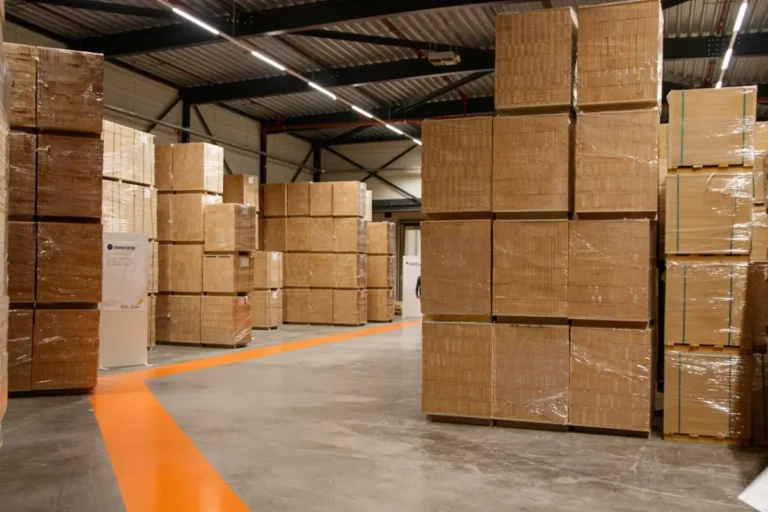
Warehousing is the phase most projects hope to skip, and the well-run ones usually can. The clean scenario is direct-to-site delivery: containers arrive when the building can receive them, goods move straight from the container to the floors they belong on, and nothing is double-handled. Double-handling through a warehouse adds cost and — more importantly for FF&E — adds a second round of loading and unloading where damage can occur.
Warehousing becomes necessary in three situations: the construction programme slips and the site cannot receive goods when the vessels arrive; the site has no laydown space and containers must be drip-fed; or the project deliberately orders early to de-risk the schedule. In all three cases the warehouse is a local third-party facility near the destination port, contracted by the owner or their logistics provider — the sourcing agent’s role is to plan around it: sequencing shipments to minimise storage weeks, and labelling cartons so goods can be retrieved from racking by room number rather than opened and searched. As a budgeting rule, treat any buffer longer than two to four weeks of storage as a schedule warning sign rather than a plan.
Who Installs the FF&E On Site?
On-site installation is performed by local trades, not by the factory and not by the agent. Depending on the project, that means the main contractor’s fit-out crew, a specialist FF&E installation company, or the owner’s own facilities team on smaller properties. This is the correct arrangement, not a gap: installers working in your market carry local insurance, know local building practice, and are on hand for the snagging period after handover.
What the China side owes the installers is completeness. A local crew can set casegoods and hang headboards efficiently if — and only if — every carton is labelled to a room, every assembly has drawings, and every fixing is in the box. The installation support pack FBM Sourcing ships with hotel FF&E packages includes:
- Assembly and fixing drawings for every knocked-down or wall-fixed item
- Packing lists organised by room number and floor, matching the carton labels
- Hardware kits with roughly 3–5% spare fittings, fixings and touch-up materials over counted requirements
- A component contact sheet so queries route back through one channel instead of stalling on site
How Installation Coordination Works in Practice
Coordination between the China side and the site crew is a sequence of small, dated commitments rather than one big handover. In practice it looks like this. Four to six weeks before vessel arrival, the site receives the final packing lists and assembly drawings, so the installation company can plan crew size and programme against real carton counts instead of estimates. Two weeks out, delivery bookings are confirmed — dock or crane time, container drop-off windows, and the unloading order if multiple containers arrive together. On arrival day, containers are opened against the packing list, and goods move by the floor sequence that was decided back at loading in China.
The single highest-value habit is the first-room protocol: before the crew installs at full speed, one room is completed end to end and checked against the drawings — fixings, alignments, power cutout positions, headboard heights. Any systematic issue surfaces in room one, where it costs an hour, instead of in room sixty, where it costs a week. The same logic that drives a mock-up room before production drives a first-room check at installation.
Throughout the phase, queries route through one channel back to the sourcing agent — not from the installer to the factory directly. The agent holds the shop drawings, the change history and the spare-parts inventory, and can answer most questions from documents within hours; the alternative is site staff messaging a factory sales contact across a 12-hour time difference. On a well-coordinated package the installer should never need to know which factory made the goods; they need drawings that match the cartons and cartons that match the rooms.
How Should Damage and Shortages Be Handled at Delivery?
Even with supervised loading, ocean freight is a rough environment and hotel packages are large; plan the exception process before the first container arrives. The receiving crew should photograph containers at seal-breaking, check goods against the packing list as they come off, and log damage or shortage with photos within 7 days of unloading — documentation made during unloading is what carrier and insurance claims are built on, and late, undocumented claims are the ones that fail. Attic stock ordered with the main production run covers minor damage immediately, and the factory remake channel covers the rest; the full process is covered in what to do when hotel FF&E arrives damaged.
The coordination point here is speed of decision: a remake order placed within a week of discovery ships with weeks to spare before opening; the same order placed a month later becomes an air-freight problem. This is why the exception process — who inspects, who reports, who authorises remakes — should be written down at contract stage, not improvised at delivery.
What Goes Wrong Without Clear Handover Points?
The failure pattern on this phase is rarely one party doing bad work — it is two parties each assuming the other held a task. The recurring gaps: nobody books the crane or dock time for unloading day; cartons arrive labelled by product instead of by room, and the installers spend days sorting instead of setting; assembly hardware for wall-fixed items was never specified into the shipment; the customs broker is appointed after the vessel sails instead of before. Each of these is trivial to prevent in planning and expensive to fix in the field — sorting a mislabelled multi-container package on site can absorb hundreds of crew hours.
The prevention is a one-page handover matrix agreed at order stage: factory-to-port, port-to-door, warehouse (if any), and site installation, with a named responsible party and the documents each handover requires. As a sourcing agent, FBM Sourcing builds this matrix into the order documents and works on a 5% commission for suppliers you nominate (products we source for you are quoted at a direct price), so responsibility for the delivery chain is priced and assigned before production starts rather than negotiated at the port.
Get a China Procurement Quote for Your Project
If you are planning a hotel, apartment or other commercial building project and want the delivery, warehousing and installation phase mapped before you commit to production, send us your drawings, product list, quantities, destination port and target on-site date. FBM Sourcing manages China building materials and FF&E procurement end to end — factory shortlisting, quotation, in-factory quality control by our own team with full photo and video documentation, supervised container loading and delivery coordination to your port or site — and our team will review your requirements and get back to you.
Where goods go straight to a live site rather than through a warehouse, the access constraints are set out in how door-to-site delivery works for construction project orders.