
Do you need a window sourcing agent in China, or can your team run the order directly? It is a fair question — windows look like a defined commodity, factories answer emails in English, and the unit prices coming out of Chinese fabricators are compelling. The honest answer depends on what the role actually covers, because a window sourcing agent in China does very little “finding factories” and a great deal of specification enforcement, certification verification and coordination with the rest of the opening schedule. This article lays out the job in practical terms so developers and contractors can decide whether to buy it or staff it.
What Windows Share with Doors — and Why It Matters
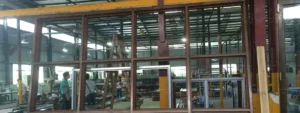
Aluminum windows come out of the same fabrication clusters, extrusion supply chains and hardware markets as glazed doors. The fabricator quoting your window line is often the same one quoting the entrance systems we cover under aluminum glass door sourcing from China, and the balcony products in sliding door sourcing from China. That overlap is the single biggest reason window sourcing belongs inside the project’s door and window package rather than running as a separate purchase: one fabricator audit, one submittal standard, one inspection protocol and shared containers.
What a Window Sourcing Agent in China Actually Does
Translates the Specification into a System
Drawings say “aluminum window, double glazed, grey.” Fabricators work in named frame series with defined profile depths, wall thicknesses, thermal breaks and hardware compatibility. The agent’s first job is converting design intent into system parameters that two factories can quote comparably — otherwise the low bid is simply the thinnest profile.
Verifies Performance Evidence per Market
Wind load, water penetration, impact zones and energy performance are certified per destination market, not globally. US hurricane zones and Australian cyclonic regions require tested assembly reports matching your opening sizes and pressures; a GB-standard test report from the domestic Chinese market satisfies neither. Checking the report against the actual opening schedule — size by size — is unglamorous work that prevents the worst category of facade problem. For a recent example of this check in practice, see our boutique hotel construction materials Miami case study, where aluminum window and door frames were matched against Florida Building Code and Miami-Dade wind-load requirements before factory confirmation.
Enforces the Glass Specification
Glass is roughly half the value of a window and the easiest substitution to hide. Tempered certification marks, low-E coatings, insulated unit build-ups and warm-edge spacers are all invisible in photographs. Agents verify glass at the factory — markings, spacer prints, thickness gauges — because no one can verify it after installation without cutting a unit out.
Runs Hardware and First-Article Checks
Rollers, hinges, multi-point locks and restrictors decide how a window performs in year five. On our inspections, hardware substitution is the most frequent finding across the entire window and door category — the same pattern we see in folding door sourcing from China, where hardware is effectively the product. First-article approval with the actual hardware fitted, before mass production, closes the gap.
Coordinates Consolidation and Site Sequencing
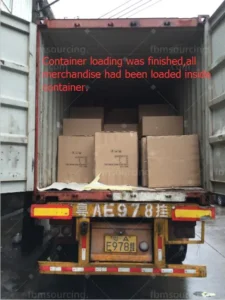
Windows arrive with the door package, labeled by opening number, loaded by building zone. On multi-container programs this is the difference between an installation sequence and a warehouse puzzle at the destination port.
When You Probably Do Not Need One
Honest scoping cuts both ways. A buyer ordering a repeat specification from a fabricator they have used before, with in-house QC in China and freight already organized, gains little from an agent. The role pays for itself on first-time factory relationships, multi-type opening schedules, certified performance requirements and any project where the window line must land on site in sequence with doors, joinery and finishing trades.
Sourcing this for a commercial project?
FBM Sourcing works with project owners, developers, main contractors and FF&E contractors on hotel, apartment, school, office and other commercial building projects. Send us your BOQ, drawings or product list — we’ll come back with a sourcing plan and budget estimate.
What the Engagement Looks Like
On FBM Sourcing projects the window scope typically runs inside the full opening package: fabricator shortlist and audit, submittal and first-article approval, in-production and pre-shipment inspection, consolidation and zone-loaded containers, with one reporting line to the project team. The full opening category — windows alongside every door type — is on our door sourcing from China page.
What the Role Costs — and What Its Absence Costs
Sourcing agents in this category typically work on a disclosed fee of 5–8% of order value, or a fixed project fee on larger programs. Against that, the routine failure modes of unsupervised window orders each carry their own price tags: a glass substitution discovered after installation means cutting units out of finished facades; a design-pressure report that does not cover your largest opening size means re-testing or re-fabrication measured in months; hardware failures across a 200-unit window line mean a trade call-back at destination labor rates. None of these are exotic risks — they are the standard findings of first-time orders run on price alone. The honest framing is not that an agent makes the order cheaper per unit; it is that the fee buys enforcement of a specification that otherwise exists only as good intentions in a PDF the factory has never been held to.
Window Types the Role Typically Covers
The same fabrication clusters produce the full commercial range: fixed and awning windows for facades, casement and tilt-turn units for apartments and student accommodation, sliding windows for balconies and corridors, curtain-wall infill units, and acoustic or cyclone-rated variants of each. Specification logic is constant across all of them — frame series, thermal break, glass build-up, hardware, tested performance — which is why one submittal standard and one inspection protocol can govern the whole window line. Where the project also carries glazed doors, the overlap is nearly total: the folding wall in the restaurant and the awning windows above it can come off the same fabricator’s line, in the same finish batch, in the same containers.
Timing matters as much as selection. The window line should be engaged at the same time as the door package — ideally when the opening schedule is roughly 80% frozen — because fabricator shortlisting, system confirmation and first-article approval consume four to six weeks before production even starts. Buyers who bring the window scope to a sourcing agent after the doors are already in production give away the consolidation savings and the shared audit; buyers who bring both together get one program, one inspection calendar and containers that arrive in installation order.
Five Questions to Ask Before Engaging Any Agent
Whether you engage FBM Sourcing or anyone else, the same five questions sort the field quickly. One: is the fee disclosed and separate from the factory invoice, or buried in a marked-up price you cannot audit? Two: who performs the factory audits and inspections — the agent’s own staff, or a subcontracted inspection company reporting to nobody in particular? Three: can they show anonymized inspection reports from previous window and door programs, with real findings, not blank checklists? Four: how do they handle certification mapping for your specific market — ask them to explain, concretely, what evidence your destination requires for your opening types. Five: what happens when an inspection fails — who pays for re-work, re-inspection and schedule recovery, and is that written down before the first purchase order? Clear answers to those five identify an agent who has run this scope before; vague ones identify a commission structure.
For system-specific sourcing detail, see our product pages on aluminum windows from China and uPVC windows from China, or start with the China window buyer’s guide.
Get a China Procurement Quote for Your Door Package
FBM Sourcing manages door and window procurement from factory shortlist to container loading for hotels, apartments, schools and commercial buildings in the USA, Australia, Europe and the Caribbean. Send us your door schedule, drawings, quantities, destination port and project timeline, and we will come back with a sourcing plan and quotation support. Submit your project requirements here.
Related reading