Every article of foreign origin imported into the United States has to tell the person who ends up with it where it was made, unless an exception applies. The rule sits in section 304 of the Tariff Act of 1930 (19 U.S.C. 1304), and US Customs and Border Protection (CBP) implements it in 19 CFR Part 134, “Country of Origin Marking”. For a project buyer that orders doors, tiles, fittings or furniture from China for a US job, Part 134 answers practical questions that a factory’s artwork file cannot: what has to be marked, when the carton is enough, which items are excepted and how the mark has to be made.
This article reads Part 134 as published in the Electronic Code of Federal Regulations, in the full text as of 26 August 2026, which was the latest issue date for Title 19 when we downloaded it on 16 October 2026. We quote or closely paraphrase the text. It is a reading of the regulation for procurement planning, not legal advice, and it does not decide how any particular product must be marked. We did not read the statute itself, CBP rulings or part 102 of the same chapter, which sets origin rules for goods of USMCA countries, and we do not set out the penalty provisions. For the invoice filed with the entry, see our reading of 19 CFR 141.86, and for preferential origin documents see our guide to certificates of origin and import duty.
The basic rule in § 134.11
Section 134.11 states the requirement in one sentence. Unless excepted by law, every article of foreign origin, or its container, imported into the United States “shall be marked in a conspicuous place as legibly, indelibly, and permanently as the nature of the article (or container) will permit, in such manner as to indicate to an ultimate purchaser in the United States the English name of the country of origin of the article, at the time of importation into the Customs territory of the United States.” The same section adds that containers of articles excepted from marking must be marked with the name of the country of origin of the article, unless the container is also excepted.
Four ideas in that sentence carry most of the weight, and each is defined or explained elsewhere in the part: the country of origin, the ultimate purchaser, what “conspicuous” means and the moment at which the obligation applies, which is the time of importation. Section 134.0 says the part implements section 304 together with certain marking provisions of the Harmonized Tariff Schedule, and that falsely marked articles are dealt with in § 11.13 of the same chapter, not in Part 134.
Country of origin, ultimate purchaser and “conspicuous”: § 134.1
Section 134.1(b) defines the country of origin as “the country of manufacture, production, or growth of any article of foreign origin entering the United States.” Further work or material added in another country must effect a substantial transformation before that other country becomes the country of origin; for a good of a NAFTA or USMCA country, the part 102 rules decide instead. Section 134.1(k) defines conspicuous as “capable of being easily seen with normal handling of the article or container.”
The ultimate purchaser is defined in § 134.1(d) as “generally the last person in the United States who will receive the article in the form in which it was imported.” The text says it is not feasible to state who the ultimate purchaser will be in every circumstance and gives examples. If an imported article is used in manufacture and the process results in a substantial transformation, the manufacturer may be the ultimate purchaser. If the manufacturing process is minor and leaves the identity of the imported article intact, the consumer or user who obtains the article after processing is the ultimate purchaser. If an article is sold at retail in its imported form, the retail purchaser is the ultimate purchaser.
The definition does not mention construction projects. Who the ultimate purchaser is for a door, a tile or a chair that is installed in a building, and whether installation is a minor process or something more, are questions for your customs broker or adviser. The answer matters, because the mark has to be visible to that person.
Containers and cartons: subpart C
Section 134.22(a) says that when an article is excepted from marking by subpart D, the outermost container or holder in which it ordinarily reaches the ultimate purchaser must be marked to indicate the country of origin of the article. Section 134.22(c) says that containers bearing the name and address of an importer, distributor or other person or company in the United States must be marked, in close proximity to the US address, with the country of origin of the contents, with a marking such as “Contents made in France”. Section 134.22(d) defines a usual container as the container in which a good will ordinarily reach its ultimate purchaser.
Two further rules matter for packaged goods. Section 134.23 requires containers designed for or capable of reuse, such as heavy-duty steel drums and tanks, to be individually marked with the country of their own origin, with a marking such as “Container Made in (name of country)”, except for goods of a NAFTA or USMCA country that are usual containers. Section 134.24(d)(2) requires sealed disposable containers that are sold without normally being opened by the ultimate purchaser to be marked with the country of origin of their contents.
Where goods are to be repacked after release, sections 134.25 and 134.26 require the importer to certify to CBP that the new containers will be marked as the part requires, or that any purchaser or repacker will be told in writing, at the time of sale or transfer, that repacking must conform. The sections set out the wording of the certificate and allow it to be filed in blanket form for a period such as a calendar year.
Exceptions: § 134.32 and the J-List in § 134.33
Section 134.32 lists general exceptions. Among them are articles that are incapable of being marked; articles that cannot be marked before shipment to the United States without injury, or except at an expense economically prohibitive of their importation; articles for which the marking of the containers will reasonably indicate their origin; crude substances; articles imported for use by the importer and not intended for sale in their imported or any other form; articles to be processed in the United States by the importer, otherwise than to conceal their origin, in a way that would necessarily obliterate, destroy or permanently conceal the mark; and articles produced more than 20 years before their importation. The containers of excepted articles remain subject to subpart C, as § 134.22(a) states.
Section 134.33, the “J-List”, names classes of articles excepted under section 304(a)(3)(J). Entries a building or furnishing order may meet include:
- bolts, nuts and washers; screws; rivets; and nails, spikes and staples;
- wire, except barbed;
- dowels, wooden; laths; lumber, sawed; and timbers, sawed;
- flooring, not further manufactured than planed, tongued and grooved;
- glides, furniture, except glides with prongs;
- metal bars, except concrete reinforcement bars, and metal in forms such as plates and sheets, except galvanized sheets.
The same section states that where a J-List article is imported in a container, the outermost container in which it ordinarily reaches the ultimate purchaser must be marked to indicate the origin of its contents. Section 134.31 adds that nothing in the exceptions removes marking requirements under any other law, naming the Federal Trade Commission and the Food and Drug Administration as examples of other agencies.
Sourcing this for a commercial project?
FBM Sourcing manages the entire China procurement package for overseas construction projects. We work with Developers · General Contractors · Builders · Commercial Project Owners · Interior Design & Construction Companies · FF&E Solution Providers. Send your BOQ, drawings or product schedule for review.
How the mark is made: subpart E
Section 134.41(a) repeats that the marking must be legible, indelible and permanent, and says that marking requirements are best met by marking worked into the article at the time of manufacture. It suggests die sinking, moulding or etching on metal articles, glazing on in the firing process for earthenware and chinaware, and imprinting on paper articles. Section 134.41(b) says the marking must survive normal distribution and store handling, and that the ultimate purchaser “must be able to find the marking easily and read it without strain.”
For articles not covered by § 134.43 or by a specific ruling, § 134.44 accepts any method at any location that ensures the country of origin will conspicuously appear. Paper sticker or pressure-sensitive labels must be affixed in a conspicuous place and so securely that, unless deliberately removed, they remain on the article while it is in storage or on display and until it is delivered to the ultimate purchaser; tags must be attached in the same way.
Section 134.43(a) prescribes specific methods, such as die stamping, cast-in-the-mold lettering, etching or engraving, for a named list of articles that includes knives, scissors, pliers, surgical, dental and laboratory instruments and vacuum containers, other than goods of a NAFTA or USMCA country. Section 134.43(e) allows an article whose country of origin is the country of final assembly to be marked “Assembled in (country of final assembly)”, “Assembled in (country of final assembly) from components of (name of country or countries)” or “Made in, or product of, (country of final assembly)”.
Section 134.45 requires the full English name of the country of origin unless CBP authorises another marking; abbreviations that unmistakably indicate the country and variant spellings that clearly indicate the English name are acceptable, and the adjectival form is accepted provided it does not refer to a kind or species of product. Section 134.46 applies where “United States”, “American”, “U.S.A.”, the name of a US city or location, or the name of a foreign country or locality other than the country of origin appears on an imported article or its container and may mislead the ultimate purchaser: the name of the country of origin must then appear legibly and permanently in close proximity, in at least a comparable size, preceded by “Made in”, “Product of” or words of similar meaning.
When goods are found not legally marked
Section 134.2 provides that articles not marked as required are subject to additional duties of 10 percent of the final appraised value, unless they are exported or destroyed under Customs supervision before liquidation of the entry. Under § 134.3, an article held in CBP custody for inspection, examination or appraisement is not delivered until it is marked, or until the estimated additional duties or adequate security for them are deposited, and an authorised CBP official may demand redelivery of released goods that are found not legally marked so that they can be marked.
Section 134.51 says that when articles or containers are found on examination not to be legally marked, the Center director notifies the importer on Customs Form 4647, or its electronic equivalent, to arrange proper marking or to return released articles to Customs custody for marking, exportation or destruction. Verification is at the importer’s expense and under Customs supervision unless a certificate of marking, supported by samples, is accepted under § 134.52. The part also contains penalty and liquidated damages provisions, which we do not set out here; your customs broker is the right person to explain them.
Questions to settle with the factory before production
Marking is decided at the specification stage, because the method, the position and the wording are built into the article, the label or the carton before it leaves the factory. These are the questions we would put in writing for each item code, with your broker’s view beside the ones that depend on the facts of the import.
- Which items will the factory mark, and which does your broker treat as excepted under § 134.32 or the J-List in § 134.33?
- Where on each article will the mark appear, and will it still be conspicuous to the ultimate purchaser in the form in which that person receives it?
- Which method will be used: moulded or etched, printed, a permanent label or a tag, and how will it survive transport, storage and handling?
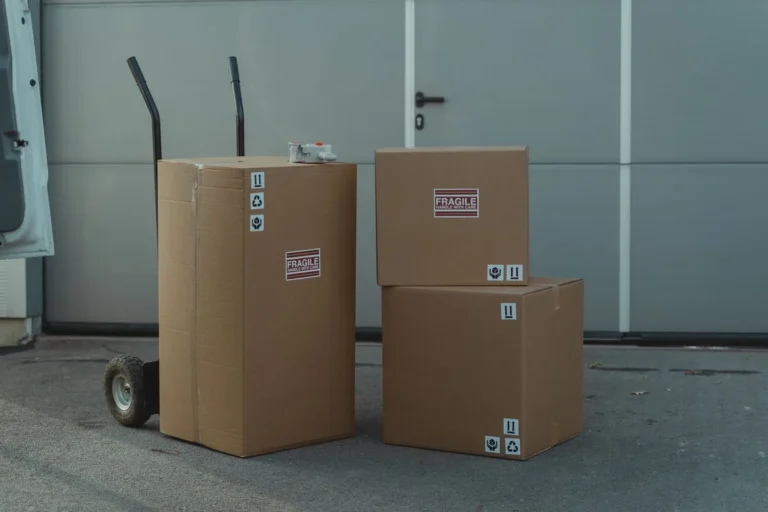
- Which outer carton reaches the ultimate purchaser, and is it marked with the country of origin of the contents?
- Does any carton, label, manual or product carry a US address, a US place name, a brand that uses “America” or another country’s name, so that a “Made in” marking is needed next to it?
- If goods will be repacked or kitted in the United States, who signs the certificate described in § 134.25 or § 134.26?
- Who approves the marking artwork before production, and which photograph of the marked article and carton goes into the inspection report?
Write the answers into the specification next to each item code, so that the factory’s artwork, the carton print and the final check all refer to the same decision. Our own team performs one inspection after bulk production is complete and before shipment, checking labels and packing against the signed-off specification, and the client’s project team is welcome to attend. For how duty and customs responsibilities are split on a project import, see our guides to who clears customs on a project import and the US import duty structure for furniture and building materials.
Questions about country of origin marking and 19 CFR Part 134
Does every imported article need a country of origin mark?
Not every one. Section 134.11 requires the mark unless an exception applies, and sections 134.32 and 134.33 list exceptions. Where an article is excepted, the outermost container in which it ordinarily reaches the ultimate purchaser is generally still marked, under § 134.22(a) and § 134.33.
Is a mark on the carton enough?
Only where the article itself is excepted or the part allows the container to carry the mark. Section 134.32(d) excepts articles for which the marking of the containers will reasonably indicate their origin; whether that applies to a given product is a question for your customs broker.
Does the mark have to say “Made in China”?
Part 134 requires the English name of the country of origin, and § 134.45 accepts the full English name, unmistakable abbreviations and some variant spellings. Wording such as “Made in” or “Product of” is required where § 134.46 applies, for example where a US address or place name on the article or its container may mislead.
Who is the ultimate purchaser for items installed in a building?
Part 134 does not say. Section 134.1(d) defines the ultimate purchaser generally as the last person in the United States who will receive the article in the form in which it was imported, and gives examples. Ask your customs broker or adviser how that applies to your goods.
How does FBM Sourcing support this kind of project?
We review the brief, collect comparable quotations and manage the package for the project. For suppliers you nominate, we charge a 5% commission; for products we source for you, we quote a direct price. Our own team performs one inspection after bulk production is complete and before shipment, and the client’s project team is welcome to attend.
FBM Sourcing manages the entire China procurement package for overseas construction projects. We work with Developers · General Contractors · Builders · Commercial Project Owners · Interior Design & Construction Companies · FF&E Solution Providers.