
School furniture for a Middle East project is bought in China as a package rather than as a product: classroom tables and chairs in several size marks, teacher desks, science and art room furniture, library shelving, cloakroom and corridor storage, staff and administration furniture, hall or lecture seating, and dormitory beds and wardrobes where the school boards students. No single Chinese factory makes all of that well. The useful question is therefore not which factory is best, but which manufacturer type owns each part of the schedule, and what each one can put on paper for a regional school project.
This article is written for developers, general contractors, builders, commercial project owners, interior design and construction companies and FF&E solution providers delivering schools, academies, international curriculum campuses and university buildings in the Gulf and the wider Middle East. It deals with the supply side in China: how the manufacturing base is divided, which standards a Chinese factory can genuinely evidence, and what to ask for before production starts.
What Does a Middle East School Package Actually Contain?
Most school schedules in the region break into eight groups, and each group tends to be made by a different kind of Chinese factory:
- General classroom seating and tables — steel frame with moulded polypropylene shells or laminated panel tops, usually specified in more than one size mark because a single campus covers several age groups.
- Specialist teaching rooms — science benches with chemical resistant tops and services, art room tables, design and technology benches, and computer or robotics furniture.
- Library and resource areas — shelving bays, study carrels, soft seating and issue counters.
- Storage — classroom cupboards, tray storage units, book lockers and cloakroom lockers, in steel, laminated panel or compact laminate.
- Halls and lecture theatres — stacking or linked chairs, tiered or fixed seating, lecterns and stage furniture.
- Staff and administration — desks, task chairs, meeting tables, reception counters and filing.
- Dining and outdoor — canteen tables and benches, shaded outdoor seating and waste units.
- Boarding accommodation — beds, wardrobes, study desks and bedside storage, which is a different discipline again and is covered in our article on dormitory and classroom furniture sourcing from China.
Treating these as one line item is the most common reason a school programme slips. Seating and casegoods run on different tooling, different lead times and different approval routes.
Why We Have Not Published a List of Named Factories Here
Our editorial rule for manufacturer round-ups is simple: we name a Chinese company only where we can verify the exchange and the ticker ourselves, confirm the listing is still live, and find the product category written into the company’s own reported revenue breakdown. School furniture does not pass that test.
We checked the Shanghai-listed furniture groups whose ranges touch education seating. In the 2025 annual report where a school chair appears at all, it appears in the new product and research narrative, and in the section describing the company’s participation in drafting a national standard for primary and secondary school midday-rest desks and chairs. The report’s revenue-by-product table lists office furniture, upholstered furniture, panel furniture, new-material flooring, and integrated home products. There is no school or education furniture category of its own in that table. An annual report mentioning a school chair is not the same thing as a reported school furniture business, so we have not named the company as a school furniture manufacturer.
The rest of this article therefore describes manufacturer types, the industrial clusters they sit in, and the evidence to request from any candidate. Our general round-up of school and education furniture manufacturers in China covers the same supply base without a destination filter, and the destination variant for Australian school projects deals with a different rule set entirely.
Which Manufacturer Types Cover the Parts of a School Schedule?
The Chinese school furniture base divides into recognisable types. Knowing which type you are talking to changes what you should ask for.
- Steel-frame classroom furniture plants. Tube bending, welding, powder coating and assembly in house; shells, tops and glides bought in. Strongest on repeat classroom sets, weakest on bespoke joinery. Concentrated in Guangdong, Zhejiang, Hebei and Henan. Evidence to request: coating specification and adhesion test records, weld sample photographs, and the size marks the frame tooling actually exists for.
- Panel furniture plants. Board cutting, edge banding and drilling lines producing teacher desks, cupboards, library shelving and dormitory casegoods. Evidence to request: the board supplier, the board grade, and the current emission test report for the board used on your order rather than a generic sample report.
- Seating specialists. Injection moulding for shells plus frame lines, often supplying the classroom furniture plants above as a component maker. Evidence to request: the mould list, the resin grade, and strength and stability test reports against the standard your schedule names.
- Laboratory and technical furniture makers. A separate discipline covering worktops, fume extraction furniture and services. Evidence to request: the worktop material and its chemical resistance test report, and the services drawing agreed with the mechanical and electrical package.
- Metal storage and locker plants. Sheet metal lines producing lockers, cupboards and tray units. Evidence to request: sheet thickness, coating system and the storage furniture standard the unit was tested to.
- Fixed and tiered seating contractors. Hall, auditorium and lecture theatre seating is a project trade, not a catalogue trade, and is usually quoted against a seating layout rather than a unit count.
Which Standards Can a Chinese School Furniture Factory Actually Document?
Two families of documents exist, and they answer different questions. European furniture standards tell you whether a chair or a cupboard survives school use. Chinese national standards tell you what the factory is already obliged to meet at home. Both are worth naming in a schedule, because both are testable.
If your specification calls European furniture standards, these are the current editions as published by BSI at the time of writing:
- BS EN 1729-1:2015, Furniture. Chairs and tables for educational institutions. Functional dimensions. Listed by BSI as not withdrawn and under review. This is the part that carries the size mark system, so it is the part that decides whether the chairs you receive match the age groups on your room data sheets.
- BS EN 1729-2:2023, Furniture. Chairs and tables for educational institutions. Safety requirements and test methods. Listed by BSI as not withdrawn and under review. It replaced BS EN 1729-2:2012+A1:2015, which BSI records as withdrawn on 9 June 2023. If a factory sends a test report written against the 2012 edition, it is testing to a withdrawn document.
- BS EN 16121:2023, Non-domestic storage furniture. Requirements for safety, strength, durability and stability. Listed by BSI as current. It supersedes BS EN 16121:2013+A1:2017, which BSI records as withdrawn on 15 January 2024. This is the standard that matters for classroom cupboards, book lockers and library shelving.
Pricing a school furniture package for a Middle East campus?
Send us the furniture schedule or BOQ and we will split it across the manufacturer types that actually make each group, collect samples and dimensioned drawings for approval, and run the package through to consolidation and shipment.
Which Chinese National Standards Already Apply Inside the Factory?
On the Chinese side, the national standards database operated by the State Administration for Market Regulation shows the following as current, and a Chinese plant is already working to them for its domestic orders:
- GB/T 3976-2014, functional dimensions and technical requirements for school desks and chairs, in force since 1 May 2015. It replaced GB/T 3976-2002, which is recorded as abolished. This is the sizing document a Chinese factory works to by default.
- GB/T 46016-2025, general technical requirements for midday-rest desks and chairs for primary and secondary school students, issued 1 August 2025 and in force from 1 February 2026.
- GB 28007-2024, safety technical specification for infant and children’s furniture, a mandatory standard in force from 1 January 2026. It replaced GB 28007-2011, which is recorded as abolished. For a primary school package this is the one to name, because a factory quoting the 2011 edition is quoting a superseded document.
- GB 18580-2025, formaldehyde emission limits for wood-based panels and finished products used in interior decoration, a mandatory standard in force from 1 June 2026, replacing GB 18580-2017, which is recorded as abolished.
Why the Chinese Sizing Default Matters on a Middle East Schedule
A Chinese classroom furniture plant that has never exported to a European specification will build to GB/T 3976-2014 by habit. A consultant in the Gulf writing an international curriculum school will often write the size mark system from BS EN 1729-1:2015 instead. Both documents are real and current; they are simply not the same document, and their height steps are set out differently.
The failure mode is quiet. The factory quotes, the sample is approved on appearance, and the size discrepancy only surfaces when a year group sits down. The fix is procedural rather than technical: state in the schedule which sizing document governs, ask the factory to confirm in writing that its tooling covers those sizes, and approve dimensioned drawings rather than photographs. Frame material is the other early decision, and the trade-offs are set out in our comparison of steel and wood frame furniture for school and university projects.
Heat, Storage and the Shipping Leg
Middle East school projects share three practical conditions that change how a Chinese order should be built and packed.
The first is heat and dry air. Panel furniture that is manufactured and packed in a humid Chinese coastal province and then stored in an unconditioned site compound before handover moves. Specify the panel construction and the edge banding, and ask where the goods will sit between port and installation, because that is usually where damage happens rather than in transit.
The second is programme. School handovers are tied to an academic calendar, which makes the delivery date immovable in a way that most commercial interiors are not. That pushes the sampling and drawing approval stages earlier than teams expect.
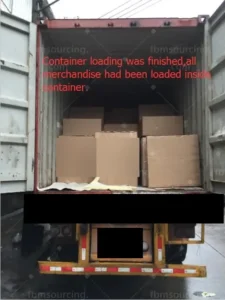
The third is consolidation. Sometimes, on a large project, the school furniture items alone fill full containers; sometimes the school furniture items share containers with the other product categories of the same project; and sometimes, in one batch, we combine a dozen or more product categories from several projects of the same client into a few containers — always full containers, and for us this is routine, well-practised work. Port choice follows from that, and the options are compared in our article on shipping from China to Saudi Arabia.
What About Conformity Documentation?
Conformity requirements in the region are set country by country, and the applicable route for a given product and destination has to be read from the current official rules for that country rather than assumed from a neighbouring market. We deliberately do not paraphrase national conformity clauses we have not read in the original. Our overview of conformity rules in Qatar, Kuwait, Oman and Bahrain sets out how that varies. For a school package the practical step is to confirm, before the order is placed, which documents the consultant and the authority having jurisdiction will accept, and then to write those documents into the purchase order as a condition of shipment.
Evidence to Request Before Production Starts
- Test reports issued in the factory’s own name, against the standard edition your schedule names, with the report date visible.
- The accreditation status and scope of the laboratory that issued each report, not only its logo.
- Board grade and current emission test documentation for the actual board used on your order.
- Coating specification and adhesion results for powder-coated steel components.
- Dimensioned production drawings for every size mark, signed off before tooling or cutting.
- A packing proposal showing carton construction, edge protection and labelling by room or by phase.
- Confirmation of which items are made in house and which are bought in, by line item.
How FBM Sourcing Runs a Middle East School Furniture Package
We work from the schedule or BOQ. Each group in the package goes to the manufacturer type that actually makes it, rather than to one factory that will quote everything and subcontract most of it. We collect samples and dimensioned drawings for approval, hold the standard editions named in the specification as an order condition, and keep the size mark decision explicit in writing.
After bulk production is finished and before shipment, our own team inspects at the factory, with photo and video records, and the inspection report goes to the client before the balance is paid. Consolidation, packing and shipping are then handled as one movement, and sea freight is quoted before shipment. For a school programme with multiple buildings or phases, that single point of coordination is usually the difference between a handover date and a partial handover, which is the part of the work a sourcing partner is actually for.
Pricing a school furniture package for a Middle East campus?
Send us the furniture schedule or BOQ and we will split it across the manufacturer types that actually make each group, collect samples and dimensioned drawings for approval, and run the package through to consolidation and shipment.
Frequently Asked Questions
Can one Chinese factory supply a complete school furniture package?
Rarely, and where a factory offers to, most of the package is subcontracted. Classroom seating, panel casegoods, laboratory furniture, metal storage and fixed hall seating are made on different production lines by different kinds of plant, so a realistic package is split across several manufacturers and then consolidated for shipment.
Which standards should a school furniture specification for a Middle East project name?
Name the edition, not just the number. For classroom chairs and tables, BS EN 1729-1:2015 covers functional dimensions and BS EN 1729-2:2023 covers safety requirements and test methods, and BSI records both as not withdrawn. For classroom cupboards, lockers and shelving, BS EN 16121:2023 is listed by BSI as current. Conformity documentation for the destination country is a separate question and is set nationally.
Do Chinese factories build school furniture to Chinese or European sizes?
By default to the Chinese national standard GB/T 3976-2014, which the State Administration for Market Regulation database lists as current and in force since 1 May 2015. If the schedule requires the size mark system in BS EN 1729-1:2015 instead, that has to be stated explicitly and confirmed against the factory’s existing tooling before the order is placed.
Why does this article not name specific Chinese school furniture manufacturers?
Because we name companies only where the listing and the ticker can be verified and the category appears in the company’s own reported revenue breakdown. For school furniture, the annual report we checked mentions a school chair in its new product narrative but reports no school or education furniture revenue category, so naming it as a school furniture manufacturer would overstate what the document says.
What is the most common cause of delay on a school furniture order from China?
Late approval of dimensioned drawings and samples for the seating sizes. Because a school handover is tied to an academic calendar, the approval stages have to start earlier than on a commercial interior of the same value, and the sizing document has to be settled before tooling rather than after the first sample.
About FBM Sourcing
FBM Sourcing manages the entire China procurement package for overseas construction projects. Since 2014 we have worked with developers, general contractors, builders, commercial project owners, interior design and construction companies and FF&E solution providers across more than 20 countries and over 1,000 containers, as their sourcing partner in China — from the schedule or BOQ through factory selection, sampling, inspection by our own team before shipment, consolidation and shipping. All quotations, invoices and shipping documents are issued by FBM Sourcing, and sea freight is quoted to you before shipment. If you have a school furniture package to price, start at China building materials and FF&E procurement.